Turkish commandos working from a frigate off the coast of Somalia retook the cargo ship Lutuf, which had been seized nearly two weeks ago by Somali pi...
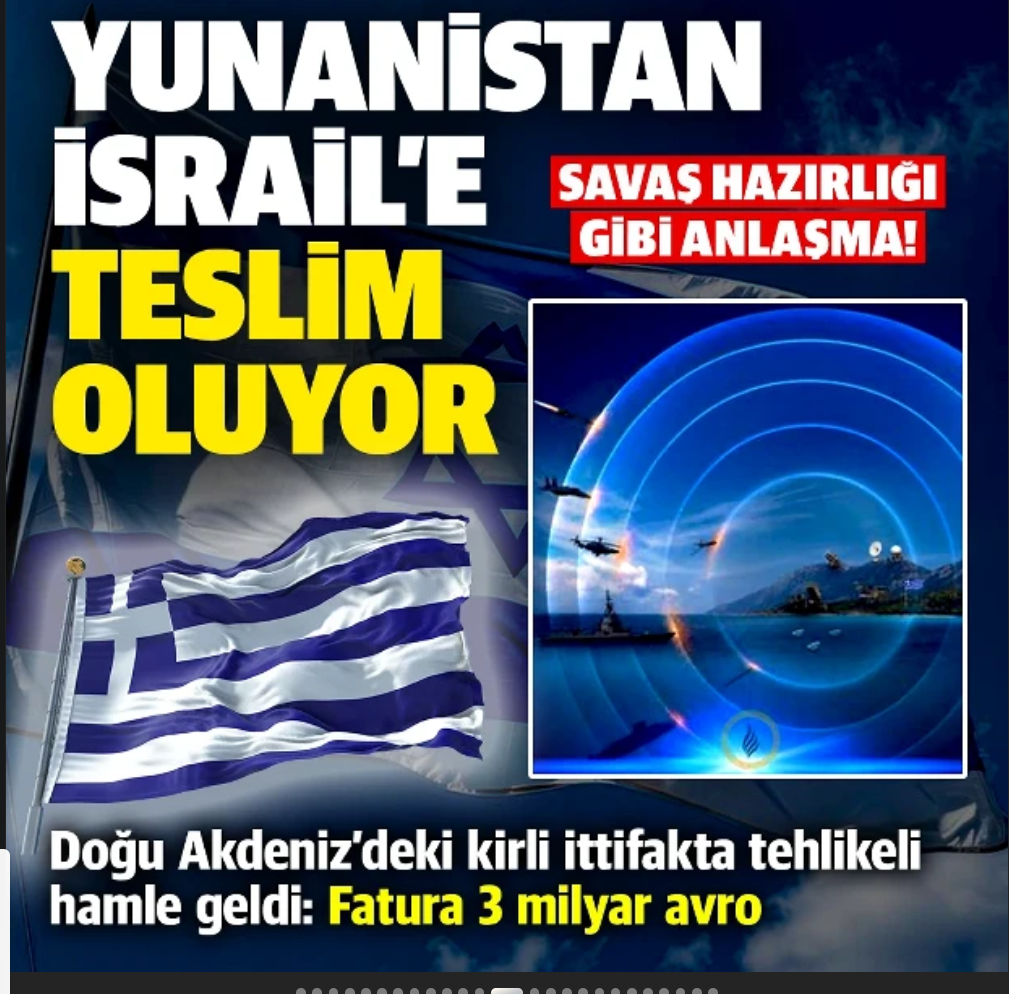
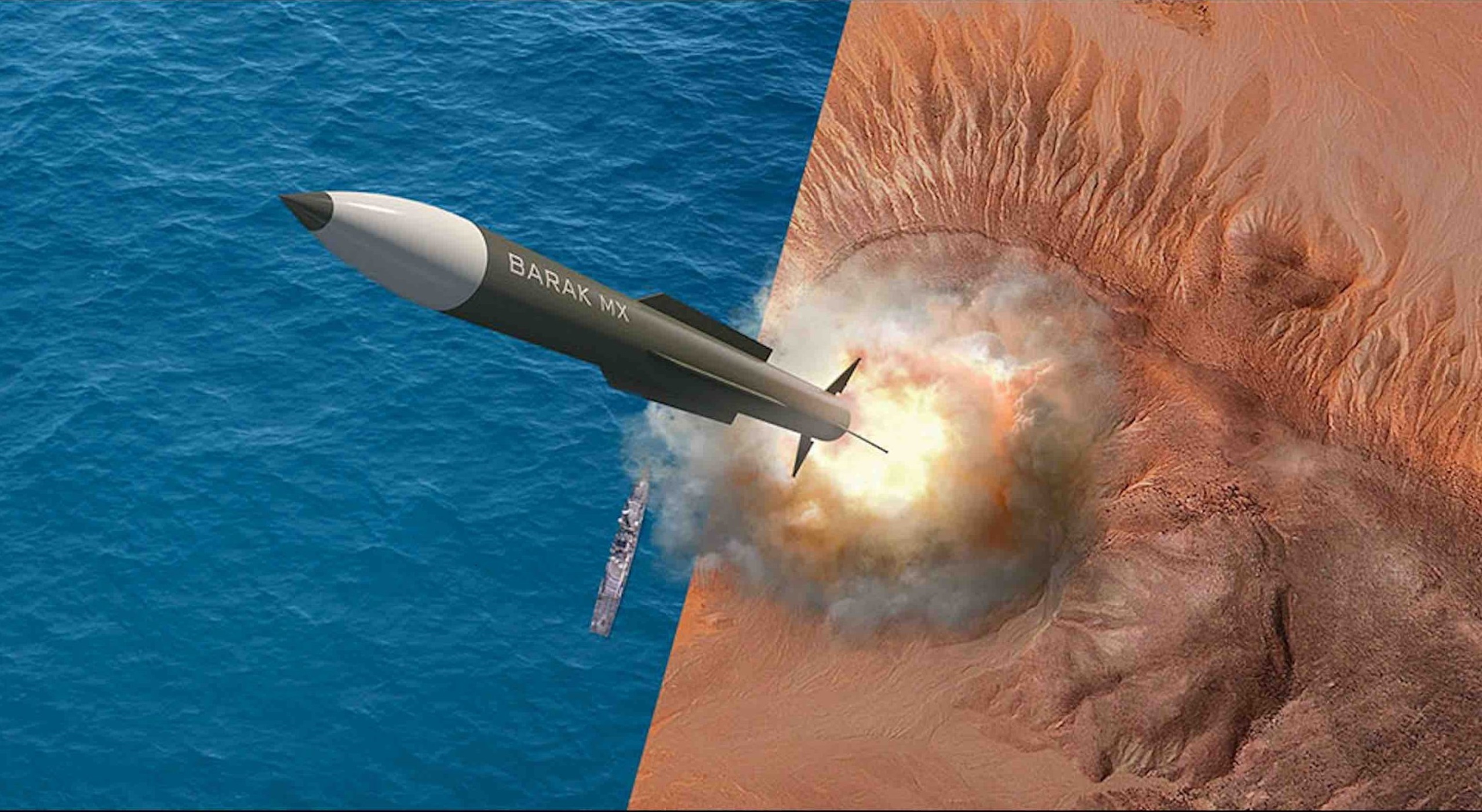
However, the pro-government Yeni Şafak, with the main headline "Greece surrenders to Israel", presents the agreement as a cession of Greek strategic autonomy. With the comment that the "agreement is a preparation for war" and a description in a second headline of "a dangerous move by the dirty alliance in the Eastern Mediterranean".
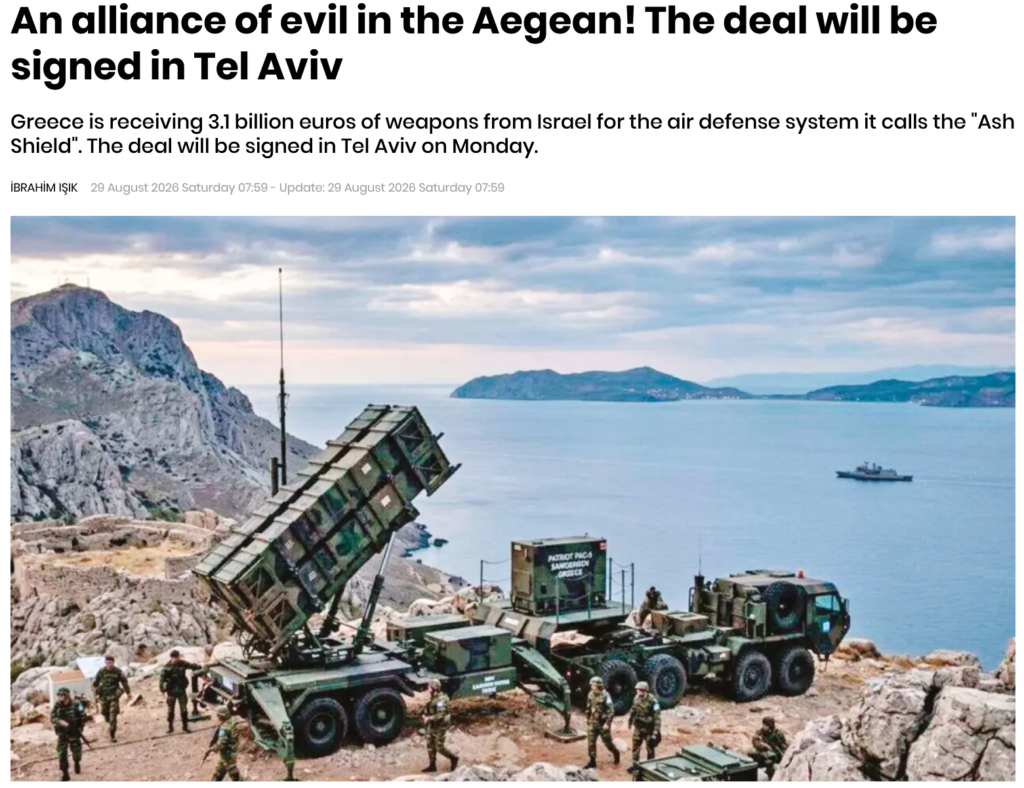
The Star followed a similar line, using the headline “Alliance of Evil in the Aegean.” The newspaper argued that Athens was seeking a counterweight to the development of the Turkish defense industry and that with the agreement it was “surrendering” its air defense to Israeli technology. The GZT website adopted similar terminology, presenting the agreement as a development that could change the balance in the Eastern Mediterranean.
Haber Global went a step further, questioning whether a “surrounding plan through the islands” is underway. In its analysis, the deployment of Greek systems with Israeli support creates a line from the Aegean to Cyprus and the Eastern Mediterranean, limiting Turkey’s operational freedom.
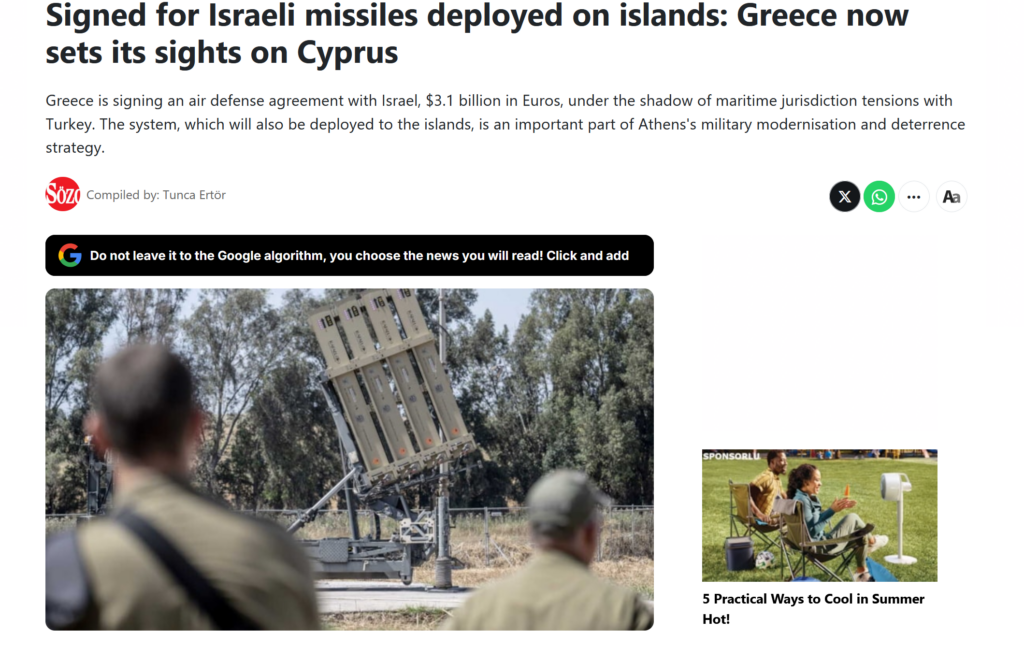
Sözcü also focused on the geographical dimension. The newspaper had a headline about “Israeli missiles to be deployed on the islands”, linking the “Shield” to the Greek-Turkish disputes over maritime zones and to the developments in Cyprus. At the same time, it covered the purchase of PULS launchers with a headline that emphasized that these can hit Turkish cities on the Aegean coast and in Thrace.
In the same vein, Habertürk had raised in a televised debate the questions of whether Greece is attempting to “lock the Aegean with missiles” and whether the “Achilles Shield” is being turned against Turkey.
The English-language Daily Sabah used more restrained vocabulary, but a similar geopolitical context. It characterized the agreement as an upgrade of the Greek-Israeli “defense alliance” and a move that “will likely anger Ankara.” It pointed out that both Greece and Israel are at odds with Turkey, despite the efforts of Athens and Ankara to improve their relations. It also linked the agreement to the warnings of the Turkish leadership about Israel’s regional ambitions.
However, not all Turkish media outlets adopted a bellicose tone. Cumhuriyet, despite its headline a few days ago that Greece “trusts its air defense to Israel,” focused mainly on the cost of the deal and operational capabilities. While the state-run Anadolu Agency, Bloomberg HT and Haberler followed a conventional news approach, documenting the systems, the projected 35-month timeline and the participation of Greek companies in the project.
Αρκετά έντονη ήταν η αντίδραση κάποιου μέρους του τουρκικού Τύπου στη σημερινή συμφωνία Ελλάδας–Ισραήλ για την «Ασπίδα του Αχιλλέα», καθώς εντάσσεται σε ένα αφήγημα περί “αντιτουρκικού άξονα στο Αιγαίο και στην Ανατολική Μεσόγειο”. Άλλα τουρκικά Μέσα, πάντως, ακολούθησαν περισσότερο ουδέτερη...
Greece doesn't have its own defense industry... they'll have to buy Air Defense Systems from somewhere, either the US, France, or Israel
If this step had been taken in the 2000s, given Turkiye's situation at that time, it would have been effective.
But as of 2026, this step is simply wasted money
Turkiye now has the strongest fire power in NATO after USA
Achilles Shield never can stop thousands of Turkish kamikaze Drones , guided Munitions , Cruise Missiles , supersonic and hypersonic Ballistic Missiles in a war
Türkiye currently has more than 20 different types of alternative Weapons in its inventory, with ranges from 40 km to 2000 km to hit everything in the Greek mainland and islands
This site uses cookies to help personalise content, tailor your experience and to keep you logged in if you register.
By continuing to use this site, you are consenting to our use of cookies.