Turkish UAV/UCAV Projects

In a few years, we won't need foreign jet engines, especially for jet-powered drones. After 2035, we won't need foreign engines for any military fighter aircraft (manned or unmanned).
 

Turkey’s TAI, UK’s BAE Systems join forces for collaborative drone ‘opportunities’​

As part of the agreement, TAI will share its experience in unmanned aircraft development and production, while BAE Systems will support through coordination of regional sales to Europe and other regions, a TAI official told Breaking Defense.
By Agnes Helou and Tim Martin on November 07, 2025 12:04 pm

Share
230221_turkish_drone-1024x576.png
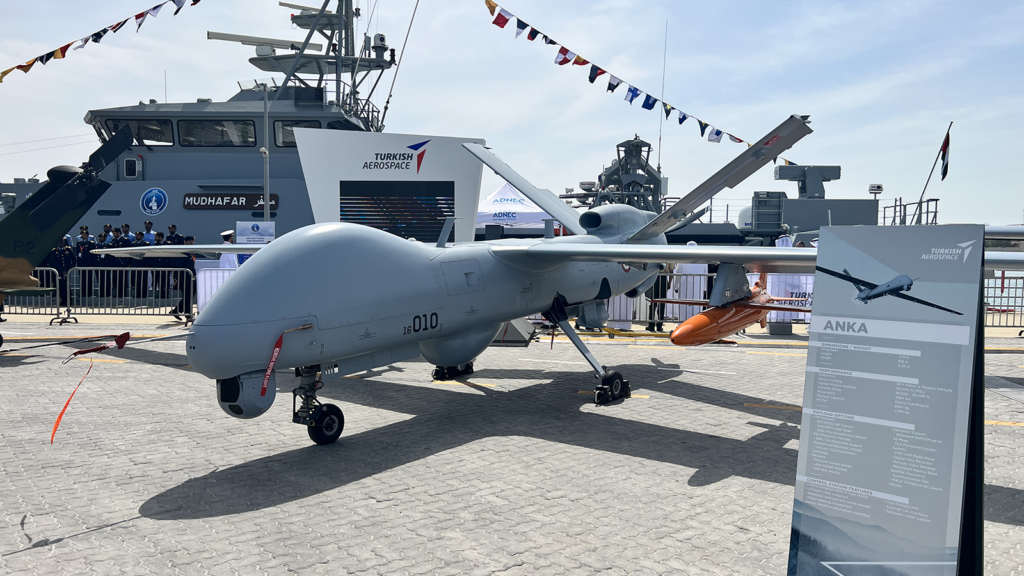
Turkish Aerospace's Anka drone, spotted at IDEX 2023, can fly for 30-plus hours at around 20,000 feet, the company says. (Lee Ferran / Breaking Defense)
BEIRUT and BELFAST — Turkey’s Turkish Aerospace Industries and the UK’s BAE Systems have inked a plan to team up and assess “joint opportunities” related to developing drones.

“We have signed a strategic Memorandum of Understanding (MoU) with BAE Systems to collaborate on the development of uncrewed air systems,” TAI said in a Thursday post on its X account.

The firm added that under the MoU, both firms “will target joint opportunities in the field of future uncrewed air systems.”

The new agreement “will see both organisations determine objectives, responsibilities and goals to explore opportunities to collaborate in uncrewed air systems (fixed wing, rotary and hybrid) and related technologies,” a BAE Systems spokesperson said.

A TAI official told Breaking Defense that as part of the pact, TAI will share its experience in unmanned aircraft development and production, while BAE Systems will support through coordination of regional sales to Europe and other regions. The agreement between the two firms will cover TAI’s entire UAV product range and not a single aircraft, the official said.

“It’s a long-term process, and we are still at the very beginning. Both companies will act jointly — we have the UAVs, and they have the connections. Together, we’ll see what can be achieved,” the official said.

The agreement comes amid Turkey’s increasing defense ties with Europe, exemplified by its recent deal to procure 20 Eurofighter Typhoons worth $10.7 billion, and after Spain’s cabinet approved the procurement of 45 Hurjet trainers worth $3.62 billion. In July, TAI inked a strategic partnership agreement with Airbus, formalizing the collaboration on joint production of the Hurjet.

For BAE, the latest drone tie up with TAI comes two months after it announced plans, under the company’s FalconWorks rapid prototyping division, to link arms with Lockheed Martin’s Skunk Works to codevelop a family of autonomous drones, beginning with an aircraft equipped with electronic attack capabilities.

FalconWorks drone portfolio also includes the fixed wing Koios Intelligence, Surveillance and Reconnaissance (ISR) system, the Malloy Aeronautics produced T-Series all electric designed, heavy lift cargo type and the PHASA-35 High Altitude Pseudo Satellite (HAPS) platform.

BAE is also set to flight test an Autonomous Collaborative Platform (ACP) in the next year, after revealing a design of the drone wingman in 2024, according to Flight Global.

The ACP program is guided by the UK’s strategic defense review and is based around the premise of acquiring systems that are capable of collaborating with in-service and future generations of combat aircraft, like the trilateral Global Combat Air Programme (GCAP) sixth-generation platform, while also being able to operate off British aircraft carriers.

The latest European-Turkish drone partnership also bears similarity to Italy’s Leonardo and Turkish prime Baykar’s move to establish a drone joint venture, in a bid to take advantage of a European aerial uncrewed systems market valued in excess of $100 billion.
 
To view this content we will need your consent to set third party cookies.
For more detailed information, see our cookies page.


Under the agreement, 🇹🇷 TUSAŞ's experiences in the UAV field will be shared with 🇬🇧 BAE Systems. BAE Systems will provide support through coordination of sales to Europe and other regions.
 
To view this content we will need your consent to set third party cookies.
For more detailed information, see our cookies page.

And more importantly, we be able to produce enough drones to support that many pilots. LOL
 
And more importantly, we be able to produce enough drones to support that many pilots. LOL

I think they are talking about hobbyists and those flying FPVs.

Most of those drones are probably DJI types from China.
 
Of course, they're talking about hobbyists. However, I know that the Turkish government, through the Ministry of Education, has been training drone pilots for the last three years. I know this because I've come across several official correspondence on this subject.

Regarding drone production, we've reached a point where we can produce enough FPV drones to satisfy the needs of these pilots, thanks to both the facility Baykar established in Ukraine and the facilities our companies have established domestically.
 
Of course, they're talking about hobbyists. However, I know that the Turkish government, through the Ministry of Education, has been training drone pilots for the last three years. I know this because I've come across several official correspondence on this subject.
Does the Turkish government implement a tiered management system for UAVs?

If ordinary people use recreational UAVs (small UAVs similar to DJI's), do they need operational certification or government registration?
If certification or government registration is not required, how do you count the number of people?
 
Yes, a certificate and flight permit are required. Don't assume everyone flies drones just by looking at the number of pilots. Just like with an infantry rifle, the government trains as many people as possible but allows as few people as possible to fly drones. How do we count them? It's simple: we count those who can obtain a drone flight certificate.
 
Thanks to TURAN OGUZ ( Defence and Security Policy Analyst )


His great Post

1) KIZILELMA has been flying with TOYGUN for weeks. It was first seen on GJ-11 about a week ago.

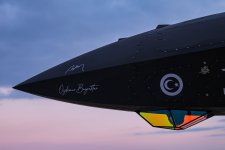
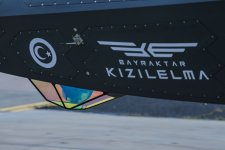
2) The faceted glass module on GJ-11 was hollow (Figure 1). Similarly, KIZILELMA was first photographed with a hollow module a year ago.

3) Integration has been completed on KIZILELMA. There's no news of its integration on GJ-11. The only thing that exists is a hollow module seen from afar.

It seems to have been implemented before...

When foreigners write about it, we immediately accept it as completely true and spread it without any research or investigation. But we never defend our own products.

We are tired of this "learned helplessness" among our people, this feeling of helplessness, resignation, and inferiority. ENOUGH!

To view this content we will need your consent to set third party cookies.
For more detailed information, see our cookies page.


KIZILELMA is the first unmanned stealth Fighter Jet in the world performed test flights with AESA Radar and EOTS

To view this content we will need your consent to set third party cookies.
For more detailed information, see our cookies page.

1763399545174.jpeg
1763399555336.jpeg
KIZILELMA with Aselsan TOYGUN EOTS
1763399423341.jpeg
Moments when the domestic AESA Radar integrated into KIZILELMA scans the area within a range of 230 km
1763399802095.png
 
It is going fast, after test with PT i want to see it with serial production firing from IWB.

To view this content we will need your consent to set third party cookies.
For more detailed information, see our cookies page.


It's coming, it's on its way!

— The Bayraktar KIZILELMA Unmanned Combat Aircraft has begun performance tests along with the GÖKDOĞAN Beyond Visual Range Air-to-Air Missile and the MURAD AESA Radar.

— KIZILELMA is preparing for air-to-air engagement!
 

Users who are viewing this thread

Latest Posts

Back
Top