Navigation
Install the app
How to install the app on iOS
Follow along with the video below to see how to install our site as a web app on your home screen.
Note: This feature may not be available in some browsers.
More options
Style variation
You are using an out of date browser. It may not display this or other websites correctly.
You should upgrade or use an alternative browser.
You should upgrade or use an alternative browser.
United States elections 2024: Donald Trump Wins
- Thread starter _NOBODY_
- Start date
More options
Who Replied?


EugeneP
Trusted Member

Is your political science degree from University of Bangladesh or Norway?If Trump dosent win its gonna be a civil war in Washington again
The democrats really made it difficult for themselves. Didnt learn anything from Hillarys’ loss against Trump. American is still lil bit more agressive and macho cultured nation than forexample Europe. It isnt ready for a female President or Commander in Chief, yet.

Mero
Registered Member

Did the Abraham Accords Pave the Way for Total War?
Many conservatives saw the Abraham Accords as a way to get U.S. forces out of the Middle East. Now the architect of the agreement is pushing for a regime change campaign in Lebanon—and maybe Iran.
Matthew Petti | 9.30.2024 4:05 PM
Share on FacebookShare on XShare on RedditShare by emailPrint friendly versionCopy page URL
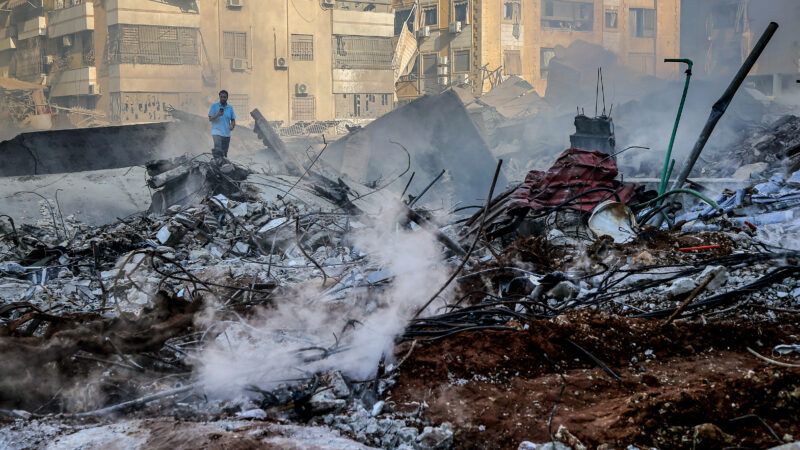
A Lebanese man stands among rubble, debris and smoke that is still billowing from the site of the massive Israeli air strike that killed pro-Iranian Hezbollah chief Hassan Nasrallah in Beirut's southern suburb. (SANDRO BASILI/OLA NEWS/SIPA/Newscom)
The Abraham Accords, the U.S.-sponsored alliance between Israel and several Arab states, were supposed to get the United States out of the Middle East. At least, that's what many conservative proponents argued.
In 2020, neoconservative writer Michael Doran argued in Tablet magazine that the accords were an agreement to "step up and bear more of the burden so that America can step back." Two years later, the hawkish Washington Institute for Near East Affairs claimed that the accords were allowing Washington "to gradually withdraw from the Middle East to focus its efforts and resources on the Pacific Ocean, the rise of China, and the consequences of the Russian invasion of Ukraine."
Sen. J.D. Vance (R–Ohio) has even made this strategy a large part of his foreign policy pitch. A few months before being nominated as former President Donald Trump's running mate, Vance told the antiwar Quincy Institute for Responsible Statecraft that "combining the Abraham Accords approach with the enduring defeat of Hamas" will ensure that "Israel, with the Sunni nations, can actually police their region of the world. That allows us to spend less time and less resources in the Middle East."
That's not how former Trump administration official Jared Kushner, a key architect of the accords, sees it. Over the weekend, he posted an essay to social media arguing that the United States should build on the "Abraham Accords breakthrough" by backing an Israeli war in Lebanon, and hinted that the time is ripe for a wider U.S. war. "Iran is now fully exposed," he wrote, adding that "it's not only Israel's fight."
Of course, the Trump administration has never pretended that the Abraham Accords were meant to allow U.S. disengagement; then-Secretary of State Mike Pompeo bragged about unlocking more "defense cooperation." The Biden administration itself promised a permanent U.S. military commitment to Abraham Accords member Bahrain in order to entice Saudi Arabia to join the alliance.
But Kushner's essay moves the goalposts from a defensive commitment to an offensive one. It's now hard to pretend that the vision is anything less than a regime change campaign on the scale that old-fashioned neoconservatives could only dream of.
Kushner wrote his essay in response to the Israeli assassination of Hezbollah commander Hassan Nasrallah. Hezbollah, a Lebanese militia backed by Iran, had been engaged in a low-grade border war with Israel for the past year. Israel decided to assassinate Nasrallah after he kept demanding an end to the Israeli war in Gaza in exchange for a ceasefire in Lebanon, an Israeli official told NBC.
The Israeli army is now beginning a ground incursion into Lebanon, after the Biden administration reportedly talked Israel out of a full-on ground invasion. However, Israeli Prime Minister Benjamin Netanyahu has hinted at even larger plans, calling Nasrallah's assassination "Operation New Order" and stating that the fall of the Iranian government "will come a lot sooner than people think."
Nasrallah's assassination "is significant because Iran is now fully exposed. The reason why their nuclear facilities have not been destroyed, despite weak air defense systems, is because Hezbollah has been a loaded gun pointed at Israel," Kushner wrote. "The right move now for America would be to tell Israel to finish the job. It's long overdue. And it's not only Israel's fight," he added.
Kushner added that Iran is the "main issue between Lebanon and Israel" and brought up Hezbollah's role in killing U.S. Marines in 1983, during the last U.S. military intervention in Lebanon.
That incident, of course, demonstrates exactly why Kushner's vision might not go as planned. In 1982, before Hezbollah existed, Israel invaded Lebanon to root out Palestinian guerrillas. Israeli Defense Minister Ariel Sharon envisioned an operation aimed at "transforming Lebanon into a reliable ally," assassinating Palestinian leadership, expelling Palestinians, and eventually overthrowing the government of Jordan, according to Rise and Kill First by Ronen Bergman.
After Israeli forces stormed Beirut, the Lebanese capital, they successfully installed their ally, Bachir Gemayel, as prime minister and forced the Palestine Liberation Organization to withdraw from the country. (U.S. Marines were sent to oversee the Palestinian withdrawal.) But Gemayel was assassinated by one of his own countrymen, and a new militia called Hezbollah emerged to fight both the Israeli and U.S. presence.
Kushner's reference to Iranian nuclear sites points to another, greater danger. As of this spring, the U.S. government believes that Iran could build a nuclear bomb within several months but has not yet made the decision to do so. The Israeli attacks on Hezbollah and the hints that more is coming have almost certainly changed Iran's calculations.
It's a given that any military campaign against the Iranian nuclear program would require direct U.S. involvement, since Israel could not do it alone, as former Israeli Prime Minister Ehud Barak and retired Israeli military analyst Danny Citrinowicz point out. Iranian nuclear facilities are hardened and scattered throughout the country; only the United States has enough aircraft, air bases within range, and bunker-busting bombs to hit all of these sites.
The U.S. president may very soon face a choice between allowing Iran to build a nuclear bomb or bombing Iran, a prospect that suits Kushner, Pompeo, and Netanyahu well. The question for Trump and Vance is whether they support this vision, too.
Did the Abraham Accords pave the way for total war?
The Abraham Accords, the U.S.-sponsored alliance between Israel and several Arab states, were supposed to get the United States out of the Middle East. At
 reason.com
Mero
Registered Member
No, Trump did not bring peace to the Middle East
Despite his claims, Trump’s policies only fueled regional instability
Hamas leader Yahya Sinwar’s death will hopefully energize hostage-release efforts, but it is unlikely to end the war that has been ravaging the Middle East under President Joe Biden’s watch. Still, for all the shortcomings of Biden’s Middle East policies, he did not inherit a good hand from his predecessor, former President Donald Trump. Even if one believes Biden’s approach to the Gaza war and the ever-expanding regional conflict has been disastrous, it is dangerous to engage in revisionism about the wreckage Trump left in the region as he seeks a return to the presidency. The reality is that Trump’s policies further fueled the repression and instability that continue to devastate the region and threaten American interests to this day.This hasn’t stopped Trump and his surrogates from touting his achievements in the Middle East. Richard Grennell, a former Trump administration official likely to have a very senior role if Trump is elected in November, told Al Arabiya last month that, “Donald Trump delivered peace” when he was President and would be pushing for “total peace” if he’s back in the White House. Such boasts ring hollow when examining Trump’s actual record.
Take, for instance, what some claim as his signature achievement, the Abraham Accords, establishing formal diplomatic ties between several Arab states and Israel. Normalization is in and of itself a positive development. But the way the Accords unfolded did little to advance a genuine region-wide peace. They emerged as a last-ditch effort to stave off a formal Israeli annexation of the West Bank, but did not stop continuing settlement expansion and settler violence that undermines the possibility of a durable peace settlement. Instead, the Accords sidelined the Palestinians, providing a useful distraction for an Israeli government under Prime Minister Benjamin Netanyahu averse to addressing the core of the conflict.
Meanwhile, the Trump administration’s transactional approach to diplomacy committed the United States to pay a high price for these deals — in the currency of arms sales and bilateral political compromises with authoritarian rulers. During Trump’s tenure devastating regional civil wars intensified — fought through proxies backed in some cases by regional powers aligned with Washington—while new rifts emerged among American partners, most notably with Egypt, the UAE, Saudi Arabia, and Bahrain leading a costly blockade on Qatar, host to the largest U.S. military base in the region. The brazenness of authoritarian leaders only seemed to grow with Trump’s embrace, perhaps on most shocking display with the murder of Washington Post columnist Jamal Khashoggi at the Saudi consulate in Istanbul; Trump refused to condemn Riyadh despite US intelligence assessments that the Saudi government was behind the killing.
Trump’s promised “deal of the century,” his son-in-law Jared Kushner’s effort to supposedly resolve the Israeli-Palestinian conflict, was a complete failure. Kushner’s plan reflected the hubris of Trump officials, promising grandiose development projects but producing no tangible progress. Kushner’s initiative was so biased toward hardline Israeli positions that it was dead on arrival. Top advisors in the Trump administration were well-known supporters of Israeli settlements in the West Bank, forming an ideologically aligned group of aides who backed policies inimical to the creation of a viable Palestinian state. Trump’s policies supported Netanyahu’s misguided belief that the Palestinian issue could be wished away, and that Israel could gain regional acceptance without serious compromise because the region—and the world—had moved on.
The Trump administration went out of its way to humiliate the Palestinians, undermining the Palestinian national project at every turn. He cut funding to the Palestinian Authority, the main — though flawed — governing alternative to Hamas. He closed the American consulate in Jerusalem that was the principal vehicle for official US engagement with Palestinians. At the same time, Trump moved the American Embassy from Tel Aviv to Jerusalem with great fanfare not only in the absence of a political settlement, but even as Israeli-Palestinian relations worsened. Previous administrations — Democrat and Republican — had avoided such a provocative step absent a political settlement that would also address Palestinian claims to the city.
The Trump administration claimed the alarmists were wrong — that the move would not trigger serious violence. But the unpredictability of the simmering tensions concerning Jerusalem should never be underestimated. Terrorist groups like Hamas evoke Muslim claims to the city as a rallying call to attract wider regional support; Hamas labeled its heinous attack on Oct. 7 “Operation Al-Aqsa Flood,” referencing the most sensitive holy site in Jerusalem.
Trump’s policies across the region proved just as dangerous. He unilaterally withdrew the United States from the Iran nuclear agreement (JCPOA) despite Iranian compliance and against the advice of several of his early senior advisors. Even former Israeli officials who opposed the initial deal believed a withdrawal from the agreement once it was in place was irresponsible. Trump promised to bring about a “better deal” and pursued a “maximum pressure” campaign — an onerous set of sanctions targeting Iran’s banking and oil sectors in particular. The effort succeeded in devastating the Iranian economy, but it failed to bring about a stronger agreement.
What it did do was unleash more destructive Iranian activity across the region, including Iranian strikes on oil tankers and production facilities in Saudi Arabia and the shootdown of a US drone. Perhaps worst of all for global security, by the end of the Trump presidency, Iran accelerated its uranium enrichment activities beyond the restrictions of the nuclear agreement, setting the stage for Iran’s steadily advancing nuclear program.
And despite all the talk of Trump being averse to dragging the United States into another war, Trump approved military actions that provoked regional escalation on several occasions. His decision to kill Iranian Revolutionary Guard Corps (IRGC) commander Qassem Soleimani in the last year of his presidency proved particularly risky.
After the attack, Trump issued what his former advisors considered reckless statements to warn the Iranians against retaliating, even tweeting threats to strike cultural and historical sites in Iran. Iran still retaliated, launching 16 ballistic missiles at Al-Asad airbase in Iraq housing US forces. While the response was believed to be calibrated, senior US military officials did not take the attack lightly and assessed that it was designed to kill Americans. While it did not lead to deaths, the attack caused significant brain injuries for over a hundred US military personnel and put the United States on the path toward direct military conflict with Iran. Iran and the “resistance axis” only became stronger, not weaker, during Trump’s presidency.
Biden’s policies may not have helped stem the regional carnage unleashed since the start of the Gaza war; the Middle East is currently facing a dangerous escalatory moment. But Trump’s talk of peace is just that — talk. His policies as president left the region unsettled and prone to future conflict. There is little reason to believe a future Trump administration would look any different.

No, Trump did not bring peace to the Middle East
Despite his claims, Trump’s policies only fueled regional instability
 forward.com
The peace that Trump offers is submission to Zionism. The same peace that Trump offers to Ukraine and Europe, submission to Putin winning.
The Trump Peace Plan: Muslims in the Middle East have to allow Netanyahu to win. Putin is going to be protectors of Muslims and Muslims get a few big scraps and be happy about it.
So long as Netanyahu, Putin and Trump win, that means peace to Trump, that is the peace Trump offers to Arab Americans - peace in submission to Zionism:
Netanyahu, Trump and Putin: A love story
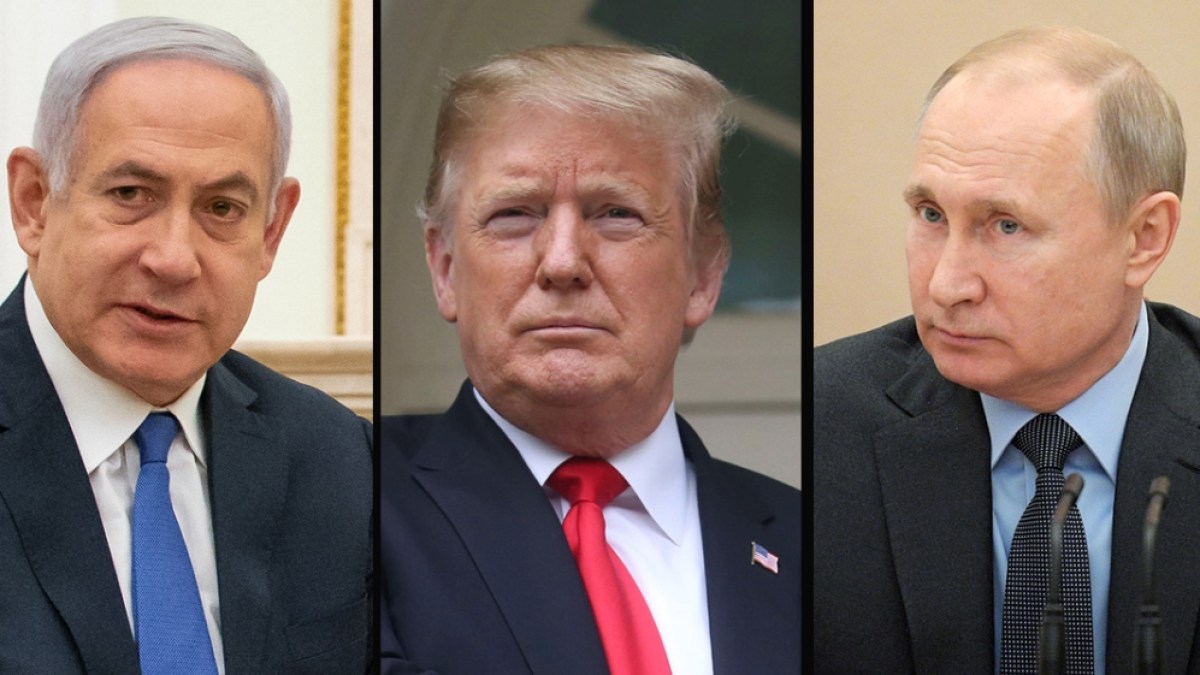
Netanyahu, Trump and Putin: A love story
The Israeli prime minister has worked hard to grow his political bromance with the presidents of Russia and the US.
Muslim Americans are voting for a Trump-Netanyahu-Putin peace plan of Israel getting much of what the Israelis want. Often Israel asking for too much so Muslims believe the deal is an acceptable deal.
Users who are viewing this thread
Total: 2 (members: 0, guests: 2)
Pakistan Defence Latest
-
 Federal cabinet gives nod to imposition of emergency in KP; summary sent to president (7 Viewers)
- Latest: Goenitz
-

-


Country Watch Latest
-
-
 Turkey, Pakistan, Qatar, and Indonesia forge ‘Badr’ Pact to Jointly Produce Weapons (14 Viewers)
- Latest: MS Sandhu
-
-
-

Latest Posts
-
-
-
Turkey, Pakistan, Qatar, and Indonesia forge ‘Badr’ Pact to Jointly Produce Weapons (14 Viewers)
- Latest: MS Sandhu
-

-
