
Navigation
Install the app
How to install the app on iOS
Follow along with the video below to see how to install our site as a web app on your home screen.
Note: This feature may not be available in some browsers.
More options
Style variation
You are using an out of date browser. It may not display this or other websites correctly.
You should upgrade or use an alternative browser.
You should upgrade or use an alternative browser.
US Defence related thread
- Thread starter Hendarto
- Start date
More options
Who Replied?

AZ_HighCountry
INT'L MOD
Unlike some of the posters in this thread, this General knows what he's talking about. And, he's not crying wolf to get more money:

 www.twz.com
China is America’s Military Equal Now And In Any Future Fight, Marine General Warns
Faced with the rapidly growing China threat, the U.S. has to start hardening its bases now, said Marine Lt. Gen. Stephen Sklenka.
www.twz.com

Watandar
SpeedLimited

China does not seek wars with the US, nor to replace it as hegemon. China also doesn't need to constantly look for new enemies so as to satisfy a gargantuan military budget.Unlike some of the posters in this thread, this General knows what he's talking about. And, he's not crying wolf to get more money:
China is America’s Military Equal Now And In Any Future Fight, Marine General Warns
Faced with the rapidly growing China threat, the U.S. has to start hardening its bases now, said Marine Lt. Gen. Stephen Sklenka.
AZ_HighCountry
INT'L MOD
Not the point that I'm making.China does not seek wars with the US, nor to replace it as hegemon. China also doesn't need to constantly look for new enemies so as to satisfy a gargantuan military budget.


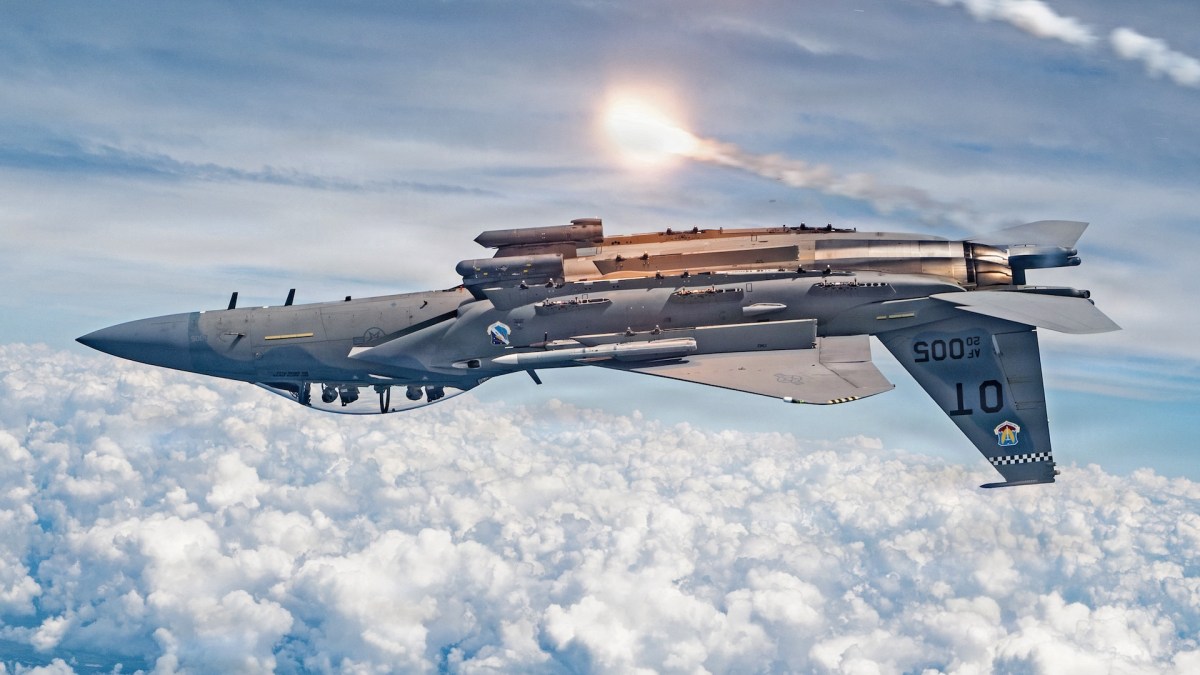
F-15EX Buy Was Just Doubled By The USAF, Which Makes Perfect Sense
While it is initially replacing the F-15C, more F-15EXs will provide a ready successor to aging F-15E Strike Eagles and possibly other types. While it is initially replacing the F-15C, more F-15EXs would provide a readymade successor to aging Strike Eagles.
www.twz.com
Despite the race to induct fifth generation fighters USA is still betting on the fifty year highly upgraded Eagles to fight future wars
I noticed Israel and others like South Korea or Japan intend to keep these kings of the fourth generation era crucial part of future war fighting fleet alongside their fifth generation fighters
Huge payload
Range
Combat proven
But most importantly three times the sorte rate of fifth generation fighters at half thf flight time Cost per hour
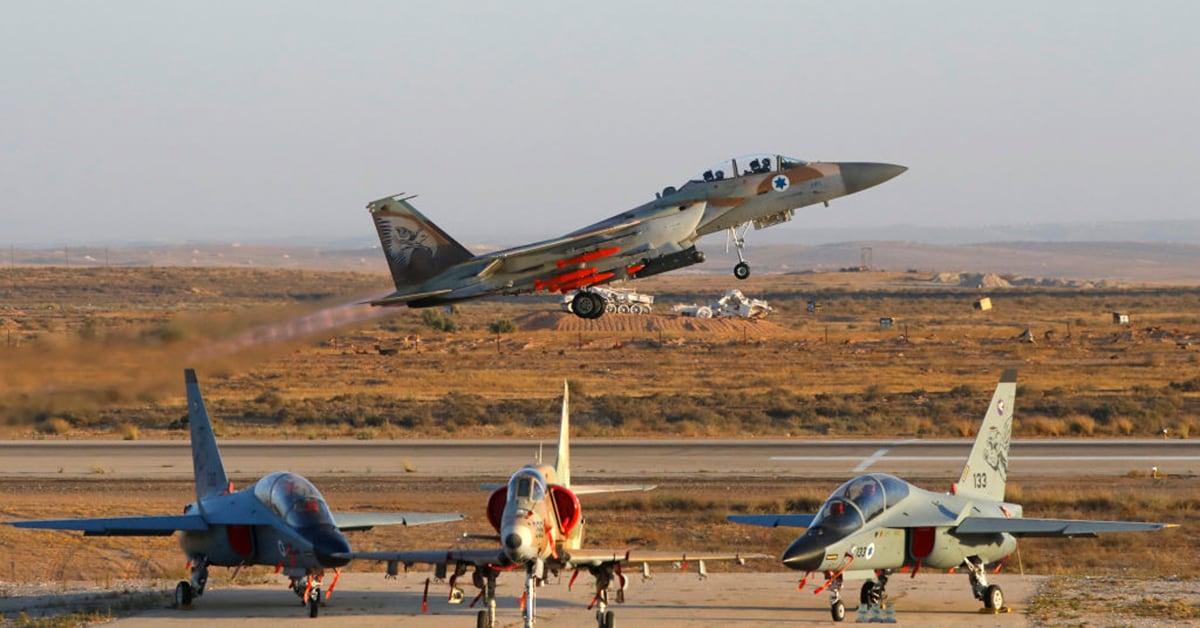
US taps Boeing to build F-15s for Israel under $8.6 billion contract
The Pentagon announcement came at the end of U.S. President Donald Trump’s meeting with Israeli Prime Minister Benjamin Netanyahu at Mar-a-Lago, Florida.
 www.defensenews.com
I always smile and think how completely logical of thought and understanding of warfare costs sortie rates and mixed force structure some posters are when they claim posts like
We will have all fifth generation fleet of J35 kaan etcetc in 10 years of 15 years blah blah..
Folkes every air force in the world bar none will still be operating both twin engines and single engine fighters part of fleets even in 2045/2050
Their lower cost and efficiency of sorties and weapons load simply make them. Indespensible
USA will have even loaded fleet
Upgraded F15 ex
Upgraded F16s block 70
F35 fifth generation
Of 100 each type in 2040
F-22Raptor
Elite Member
US military to purchase nearly 50,000 offensive strike weapons from 2027-2031
AZ_HighCountry
INT'L MOD
Look how long Japan and South Korea flew the F-4 Phantom. Tough. Reliable. Dependable.F-15EX Buy Was Just Doubled By The USAF, Which Makes Perfect Sense
While it is initially replacing the F-15C, more F-15EXs will provide a ready successor to aging F-15E Strike Eagles and possibly other types. While it is initially replacing the F-15C, more F-15EXs would provide a readymade successor to aging Strike Eagles.
Despite the race to induct fifth generation fighters USA is still betting on the fifty year highly upgraded Eagles to fight future wars
I noticed Israel and others like South Korea or Japan intend to keep these kings of the fourth generation era crucial part of future war fighting fleet alongside their fifth generation fighters
Huge payload
Range
Combat proven
But most importantly three times the sorte rate of fifth generation fighters at half thf flight time Cost per hour
F15 have very large radar cross section it's very old platform
But
It has the best Ew suites and Aesa radars on the planet giving it situations awareness tracking enhance engagement ranges at 300km plus to remain crucial to USA combat doctrines
F15 combined with F35 is the preferred combat force mix of Japan Israel and South Korea
For USA is ridiculous combinations including stealth bombers raptors and super hornets
But
It has the best Ew suites and Aesa radars on the planet giving it situations awareness tracking enhance engagement ranges at 300km plus to remain crucial to USA combat doctrines
F15 combined with F35 is the preferred combat force mix of Japan Israel and South Korea
For USA is ridiculous combinations including stealth bombers raptors and super hornets
F-22Raptor
Elite Member

MANILA, Philippines — American special forces used unmanned surface vessels equipped with explosive charges against a maritime target in the Luzon Strait.
U.S. Army Green Berets with the 1st Special Forces Group (Airborne) controlled the explosive-laden drone and other unmanned maritime systems from Batan Island, one of several territories that make up the Batanes archipelago near Taiwan. These islands have seen increased U.S.-Philippine military exercises in response to Manila’s concerns over a conflict spillover and refugee repatriation during a potential Chinese invasion of Taiwan. From its northernmost point, the Batanes archipelago is located within 88 miles of Taiwan.
H I Sutton, an open-source naval analyst, identified the drones used were derived or sourced from the Armed Forces of Ukraine’s Magura class of USVs. These drones have gained notoriety for their attacks against larger Russian warships in the Black Sea over the last few years. Alongside Ukrainian missile strikes and additional unmanned efforts, the Magura has played a crucial role in constraining Russia’s larger fleet. The U.S. Indo-Pacific command wants to replicate these types of operations within its hellscape concept in the event of a potential Chinese invasion of Taiwan, USNI News has reported.
Army-controlled unmanned aerial vehicles from Laoag International Airport on Luzon and U.S. Navy Combatant Craft Mediums were also used during the sinking exercise of MV Manfil, a decommissioned commercial vessel. American special forces also coordinated strikes from the Philippine Coast Guard (PCG) patrol boat BRP Cabra (MRRV 4409). According to the PCG and additional media from the 1st Special Forces Group, strikes against Manfil also included the use of guided-missiles, rockets and gunships.
The deployment of U.S. kamikaze drones to the Luzon Strait marks the latest debut of new American capabilities to the Philippines. This trend has extended across the services in recent years, which have used deployments to the Southeast Asian archipelago to test and demonstrate advanced missile systems, logistical techniques and formations designed to defeat Chinese naval and area denial forces.
During this year’s Balikatan iteration, U.S. Marine Corps, Army and Air Force units are coordinating their sensing, long-range strike and transportation capabilities to simulate the defense of Manila’s northernmost island chain.
While these low-range unmanned aerial and maritime systems may be ineffective in the open waters of the Indo-Pacific, the littoral nature of the Batanes Island Group could allow U.S. and Philippine forces to deploy drones in a similar nature to the methods used by Ukraine in the Black Sea and Houthis in the Red Sea. U.S. Indo-Pacific Command leadership previously envisioned the use of these unmanned systems in a “hellscape” concept, a plan that relies on the mass deployment of attack drones to disrupt and defeat attacks from larger Chinese naval forces.

The SC
INT'L MOD

The US Army seeks to deploy the Dark Eagle hypersonic missile for the first time in the Middle East for use against Iran
The weapon, known as the Long-Range Hypersonic Weapon or Dark Eagle, has a range of about 1,725 miles and is designed to carry out long-range precision conventional strikes against time-sensitive and heavily fortified targets, according to the US Library of Congress.
The cost of one missile is about 15 million dollars, with the United States possessing a limited number of missiles not exceeding eight, according to the same source, while the cost of each battery reaches about 2.7 billion dollars.
It is noteworthy that the US Army recently awarded a production contract worth $2.7 billion for the Dark Eagle hypersonic missile, also known as the Long-Range Hypersonic Weapon (Long-Range Hypersonic Weapon), and the contract includes development and production work together.
This weapon will be deployed within the US Army's Multidisciplinary Task Force (MDTF) formations, as well as within the US Navy's Conventional Immediate Strike Program (Conventional Prompt Strike). As part of the MDTF, the missile will operate alongside the Typhoon medium-range launch pad, which is capable of launching Tomahawk cruise missiles and SM-6 missiles.
Technically, Dark Eagle is a joint development project between the US Army and Navy. The Navy led the development of the "Common Hypersonic Glide Body" (Common Hypersonic Glide Body) in collaboration with Dynetics (a subsidiary of Leidos) and based on a design from Sandia National Laboratory. Lockheed Martin manufactures the booster and launch pad, and connects all components of the missile system together.
Contrary to previous reports that indicated the missile's range was 2,775 kilometers, its true range is 3,500 kilometers. In this context, Lieutenant General Francisco Lozano, Director of the Hypersonic Weapons, Directed Energy, Space and Rapid Acquisition Programs, stated, "I can target mainland China from Guam", confirming the range number at the same time.
The missile is based on a hypersonic glide vehicle launched by a two-stage booster to the peak point. After the sliding object is released, it begins to slide back towards the ground at hypersonic speeds of at least 6,115 km/h. For comparison, the average speed of the Tomahawk missile is about 885 km/h. The missile can cover its maximum range in 20 minutes, with an average speed of 175 kilometers per minute, but any changes in trajectory may negatively affect this speed and perhaps the range.
The glide vehicle carries a kinetic energy warhead and a small explosive charge of about 14 kg, designed to fire projectiles. Once released, these projectiles can have an effect within an area roughly the size of a football field.
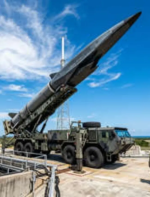
Dark Eagle travels at speeds greater than Mach 5, placing it in the hypersonic category. It uses a glide body that separates from the booster rocket and moves at high altitude with the ability to change direction. This makes it extremely difficult for traditional air defence systems to detect and intercept.
The weapon, known as the Long-Range Hypersonic Weapon or Dark Eagle, has a range of about 1,725 miles and is designed to carry out long-range precision conventional strikes against time-sensitive and heavily fortified targets, according to the US Library of Congress.
The cost of one missile is about 15 million dollars, with the United States possessing a limited number of missiles not exceeding eight, according to the same source, while the cost of each battery reaches about 2.7 billion dollars.
It is noteworthy that the US Army recently awarded a production contract worth $2.7 billion for the Dark Eagle hypersonic missile, also known as the Long-Range Hypersonic Weapon (Long-Range Hypersonic Weapon), and the contract includes development and production work together.
This weapon will be deployed within the US Army's Multidisciplinary Task Force (MDTF) formations, as well as within the US Navy's Conventional Immediate Strike Program (Conventional Prompt Strike). As part of the MDTF, the missile will operate alongside the Typhoon medium-range launch pad, which is capable of launching Tomahawk cruise missiles and SM-6 missiles.
Technically, Dark Eagle is a joint development project between the US Army and Navy. The Navy led the development of the "Common Hypersonic Glide Body" (Common Hypersonic Glide Body) in collaboration with Dynetics (a subsidiary of Leidos) and based on a design from Sandia National Laboratory. Lockheed Martin manufactures the booster and launch pad, and connects all components of the missile system together.
Contrary to previous reports that indicated the missile's range was 2,775 kilometers, its true range is 3,500 kilometers. In this context, Lieutenant General Francisco Lozano, Director of the Hypersonic Weapons, Directed Energy, Space and Rapid Acquisition Programs, stated, "I can target mainland China from Guam", confirming the range number at the same time.
The missile is based on a hypersonic glide vehicle launched by a two-stage booster to the peak point. After the sliding object is released, it begins to slide back towards the ground at hypersonic speeds of at least 6,115 km/h. For comparison, the average speed of the Tomahawk missile is about 885 km/h. The missile can cover its maximum range in 20 minutes, with an average speed of 175 kilometers per minute, but any changes in trajectory may negatively affect this speed and perhaps the range.
The glide vehicle carries a kinetic energy warhead and a small explosive charge of about 14 kg, designed to fire projectiles. Once released, these projectiles can have an effect within an area roughly the size of a football field.
Dark Eagle travels at speeds greater than Mach 5, placing it in the hypersonic category. It uses a glide body that separates from the booster rocket and moves at high altitude with the ability to change direction. This makes it extremely difficult for traditional air defence systems to detect and intercept.
AZ_HighCountry
INT'L MOD
It should also be noted that Dark Eagle deployment has to be approved at a higher level. Theater commanders cannot order it on their own.

KAL-EL
VIP Member
That's a mighty weapon and I hope it's never used.The US Army seeks to deploy the Dark Eagle hypersonic missile for the first time in the Middle East for use against Iran
View attachment 195552
The weapon, known as the Long-Range Hypersonic Weapon or Dark Eagle, has a range of about 1,725 miles and is designed to carry out long-range precision conventional strikes against time-sensitive and heavily fortified targets, according to the US Library of Congress.
The cost of one missile is about 15 million dollars, with the United States possessing a limited number of missiles not exceeding eight, according to the same source, while the cost of each battery reaches about 2.7 billion dollars.
View attachment 195553
It is noteworthy that the US Army recently awarded a production contract worth $2.7 billion for the Dark Eagle hypersonic missile, also known as the Long-Range Hypersonic Weapon (Long-Range Hypersonic Weapon), and the contract includes development and production work together.
This weapon will be deployed within the US Army's Multidisciplinary Task Force (MDTF) formations, as well as within the US Navy's Conventional Immediate Strike Program (Conventional Prompt Strike). As part of the MDTF, the missile will operate alongside the Typhoon medium-range launch pad, which is capable of launching Tomahawk cruise missiles and SM-6 missiles.
Technically, Dark Eagle is a joint development project between the US Army and Navy. The Navy led the development of the "Common Hypersonic Glide Body" (Common Hypersonic Glide Body) in collaboration with Dynetics (a subsidiary of Leidos) and based on a design from Sandia National Laboratory. Lockheed Martin manufactures the booster and launch pad, and connects all components of the missile system together.
Contrary to previous reports that indicated the missile's range was 2,775 kilometers, its true range is 3,500 kilometers. In this context, Lieutenant General Francisco Lozano, Director of the Hypersonic Weapons, Directed Energy, Space and Rapid Acquisition Programs, stated, "I can target mainland China from Guam", confirming the range number at the same time.
The missile is based on a hypersonic glide vehicle launched by a two-stage booster to the peak point. After the sliding object is released, it begins to slide back towards the ground at hypersonic speeds of at least 6,115 km/h. For comparison, the average speed of the Tomahawk missile is about 885 km/h. The missile can cover its maximum range in 20 minutes, with an average speed of 175 kilometers per minute, but any changes in trajectory may negatively affect this speed and perhaps the range.
The glide vehicle carries a kinetic energy warhead and a small explosive charge of about 14 kg, designed to fire projectiles. Once released, these projectiles can have an effect within an area roughly the size of a football field.
View attachment 195554
Dark Eagle travels at speeds greater than Mach 5, placing it in the hypersonic category. It uses a glide body that separates from the booster rocket and moves at high altitude with the ability to change direction. This makes it extremely difficult for traditional air defence systems to detect and intercept.

大汉奸柳传志
Registered Member


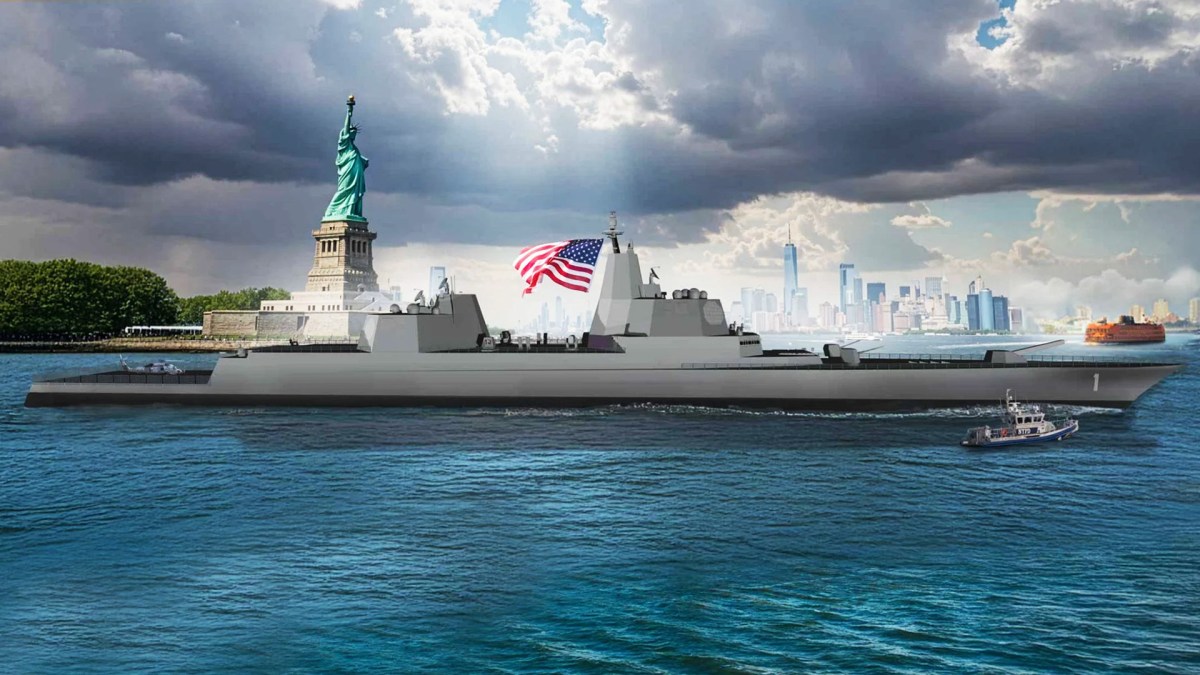
Trump Class Battleships Will Be Nuclear Powered (Updated)
Equipping the Trump class with nuclear propulsion presents benefits, but also massive challenges, and Navy officials had been pushing back against the idea.
www.twz.com
Trump Class Battleships Will Be Nuclear Powered

Ali_Baba
VIP Member
It should also be noted that Dark Eagle deployment has to be approved at a higher level. Theater commanders cannot order it on their own.
Odd deployment given that at most the USA has 2 dozen missiles as of now ( according to Scott Rittler, not sure how true that is ).
The USA may want to test it under combat conditions.
Users who are viewing this thread
Total: 7 (members: 1, guests: 6)
Pakistan Defence Latest
-

-

-
 PTI Murad Saeed in Afghanistan, was 'controlling KP govt' from there: Rana Sanaullah (3 Viewers)
- Latest: prothought
-

-
Federal cabinet gives nod to imposition of emergency in KP; summary sent to president (41 Viewers)
- Latest: prothought


