US Defence related thread

To view this content we will need your consent to set third party cookies.
For more detailed information, see our cookies page.


The massive bow of the first Columbia class submarine


lol - so now you are hunting for information on sensitive US development from a chinese located poster ?
 
lol - so now you are hunting for information on sensitive US development from a chinese located poster ?
If not for Twitter, where else would he be able turn?

Most likely the Chinese Twitter poster obtained the photos from an official General Dynamics press release.
 
If not for Twitter, where else would he be able turn?

Most likely the Chinese Twitter poster obtained the photos from an official General Dynamics press release.

Looking for problems where there are none per usual eh AZ? X is actually the best source for military news and developments outside a select few sites like InsideDefense, TWZ, AviationWeek, and BreakingDefense.
 
You have demonstrated numerous occasions where some of the sources are questionable.

Suggest you stop with the trolling right now, comprende' amigo?
 
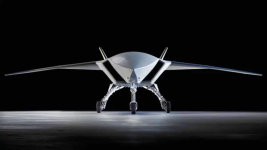
Boeing unveils a new version of the MQ-28 Ghost Bat combat drone capable of carrying AMRAAM missiles internally.

1781364773037.png

The MQ-28 will transform from a mere support aircraft into a platform capable of directly participating in air superiority missions, and serving as a force multiplier for advanced fighters such as the F-35, F-22, and future sixth generation fighters.
 

Why dropping ‘Indo-Pacific’ clarifies the Pentagon’s China strategy​

By removing ‘Indo’ from the name of its largest command, US has told India, China, its allies and Pakistan exactly where they stand
avatar
by Ken MoriyasuJune 18, 2026
US-Pacific-Command-PACOM.jpg
Admiral Samuel Paparo arrives for a change of command ceremony at what was then known as INDOPACOM, May 3, 2024, in Hawaii. Photo: US DoD / US Air Force Tech. Sgt. Jack Sanders

On June 16, the US Department of Defense announced that the US Indo-Pacific Command (INDOPACOM) will officially revert to its previous name, the US Pacific Command (PACOM).

The move reverses a decision made during President Donald Trump’s first term to include “Indo” in the name of its largest combatant command.

This publication reported in June 2018 that the original change “highlights the increasing significance of India in Washington’s strategic thinking and also marks India’s re-entry into the American government’s ‘Asia Nexus.’”

As much as New Delhi may protest, this change signals the opposite: the decreasing significance of India in Washington’s strategic thinking – and its exit from the American government’s “Asia Nexus.”

There were already hints of this in US Defense Secretary Pete Hegseth’s speech at the Shangri-La Dialogue in late May. “India was mentioned last,” an Asian diplomat in attendance recalled.

Hegseth praised the efforts of South Korea, the Philippines, Japan, Australia, Singapore, Indonesia, Malaysia, Thailand and Vietnam before finally turning to India.

A strong India, “acting in its own self-interest,” advances a shared goal of maintaining a regional balance of power, he said – hardly a description of a core ally in a coordinated strategy.

This name change, however, does not represent a toning down of competition with Beijing. On the contrary, it clarifies where competition with China will actually be fought — and where it will not.

The decision moves the strategy in the right direction. There are three key takeaways.

First, the fact that the Pentagon made this significant move absent any immediate trigger suggests it is sending a deliberate message: the Indian Ocean is not central to dealing with China.

That message is aimed at both allies and Beijing itself. To its allies, it signals that in a potential conflict with China, the United States will concentrate on the Taiwan Strait, operating primarily from Japan and the Philippines.

In all other regions, allies and partners will be expected to take primary responsibility for conventional defense. South Korea will deter North Korea, Europe will confront Russia and the Indian Ocean will largely fall to India to monitor and control.

Symbolically, Hegseth made no mention of “Indo-Pacific” in his Shangri-La speech, nor did he reference Japanese Prime Minister Sanae Takaichi’s efforts to “update” the Free and Open Indo-Pacific concept championed by her mentor, the late Shinzo Abe. Japan’s region-wide strategic framing may soon require a rethink.

To China, the message is equally clear: the US is laser-focused on the Taiwan Strait.

Second, the shift signals that India is being written out of the core contingency that matters most: Taiwan.

Washington believes Chinese President Xi Jinping has instructed the People’s Liberation Army to be ready to take Taiwan by force, if necessary, by 2027. The Trump administration has little patience for fence-sitters.

It is prioritizing allies such as South Korea and the Philippines – who act like they “live on the front lines,” as Hegseth said. India is not aligned, and Washington is no longer hoping that one day it will be.

Third – and most intriguingly – by treating India as a normal partner rather than a strategic centerpiece, Washington gains greater flexibility in dealing with Pakistan, India’s archrival.

Trump has turned to Pakistan’s Field Marshal Asim Munir as a key backchannel to Tehran, relied on him in defusing the 2025 India-Pakistan crisis and invited him to discussions on expanding the Abraham Accords.

Pakistan matters not because of India, but because of China’s westward pivot.

Over the past 15 years, China has steadily reduced its reliance on maritime energy routes through Indian Ocean chokepoints, such as the Malacca and Hormuz straits, shifting instead toward overland pipelines across Central Asia.

In responding to this Chinese pivot to Eurasia, Pakistan – not India – emerges as the more relevant partner.

The return to PACOM reflects these strategic realities. It is a recognition that clarity, not geographic sprawl or vague values-based alignments, will define how the US competes with China. And it is the right move.

Ken Moriyasu, a former correspondent for the Japanese newspaper Nikkei, is a senior fellow at the Hudson Institute.
 
To view this content we will need your consent to set third party cookies.
For more detailed information, see our cookies page.
 

U.S. Air Force Expands F-15EX Fleet to 267 Fighter Jets in One of Its Largest Procurement Plans​


Boeing's F-15EX Eagle II is poised to become one of the U.S. Air Force's largest tactical fighter programs after the service proposed expanding procurement to 267 aircraft under the Trump administration's Fiscal Year 2027 defense budget request. The move would significantly strengthen America's capacity to field heavily armed fighters capable of carrying large numbers of long-range air-to-air and strike weapons, enhancing combat power for potential conflicts against near-peer adversaries.

The expanded fleet would provide the U.S. Air Force with a high-payload platform optimized for air superiority, homeland defense, and long-range strike missions. As missile-centric air warfare continues to evolve, the F-15EX offers a cost-effective way to increase weapon-carrying capacity and reinforce deterrence alongside fifth-generation fighters in future high-intensity operations.

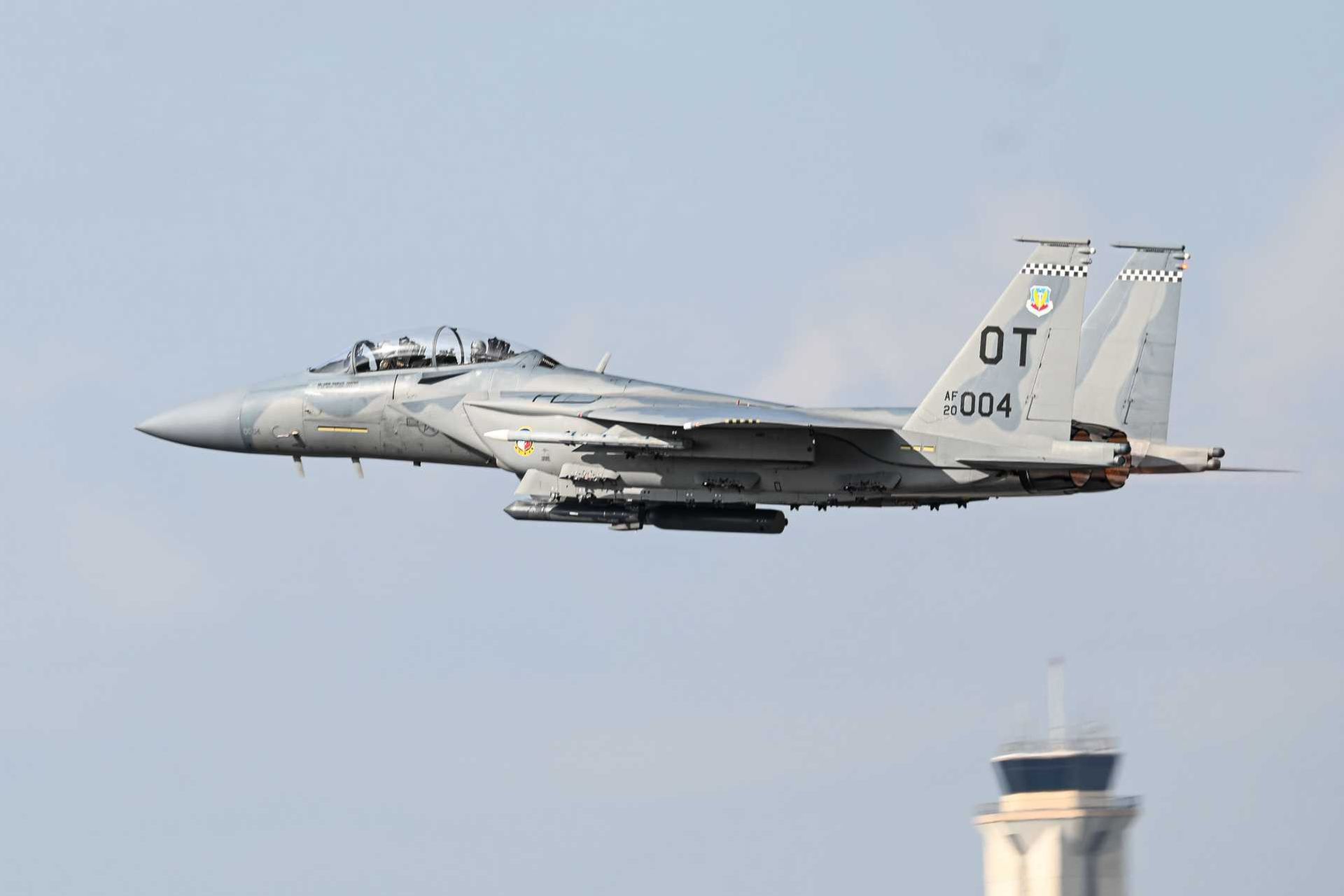
An F-15EX Eagle II fighter assigned to the U.S. Air Force. Under the Trump administration's proposed FY2027 defense budget, the U.S. Air Force plans to expand its F-15EX acquisition objective to 267 aircraft, significantly increasing its capacity to deploy heavily armed fighters capable of carrying large numbers of long-range air-to-air and stand-off missiles. (Picture source: U.S. DoD)

An F-15EX Eagle II fighter assigned to the U.S. Air Force. Under the Trump administration's proposed FY2027 defense budget, the U.S. Air Force plans to expand its F-15EX acquisition objective to 267 aircraft, significantly increasing its capacity to deploy heavily armed fighters capable of carrying large numbers of long-range air-to-air and stand-off missiles. (Picture source: U.S. Department of War/Defense)


The proposed expansion forms part of the administration's broader $1.5 trillion defense budget proposal and marks a dramatic reversal from previous plans that would have limited the F-15EX fleet to fewer than 100 aircraft. If approved by Congress, the new objective would transform the Eagle II from a replacement aircraft for aging F-15C/D fighters into a major component of future U.S. Air Force combat aviation.

The F-15EX Eagle II provides capabilities that remain highly relevant despite the U.S. Air Force's continued investment in stealth aircraft. Equipped with the AN/APG-82(V)1 Active Electronically Scanned Array radar, Eagle Passive Active Warning Survivability System electronic warfare suite, digital fly-by-wire controls, and open mission systems architecture, the fighter combines advanced sensors with exceptional payload capacity and operational flexibility.


One of the aircraft's most important advantages is its ability to carry significantly more weapons than most fighters currently in U.S. service. The F-15EX can transport up to 29,500 pounds (13,380 kg) of air-to-air and air-to-ground munitions, including AIM-120 AMRAAM missiles, AIM-9X Sidewinders, AGM-158 Joint Air-to-Surface Standoff Missiles, and Long Range Anti-Ship Missiles. The aircraft can carry up to 12 AMRAAMs in its current configuration and potentially more through future advanced weapons racks, giving the U.S. Air Force an airborne missile magazine capable of supporting large-scale air combat operations.

This capability is becoming increasingly important as the U.S. Air Force prepares for potential operations in the Indo-Pacific theater. Future conflicts against advanced adversaries could require the employment of hundreds of long-range missiles across vast operational areas. In such scenarios, stealth aircraft such as the F-35A and the future F-47 could locate and engage targets deep inside contested airspace while F-15EX fighters provide additional missile capacity from stand-off distances, significantly increasing the volume of weapons available to U.S. forces.


The F-15EX also offers growth potential that few tactical combat aircraft can match. Its large payload capacity and robust airframe make it a candidate for integrating future hypersonic weapons and oversized long-range strike munitions currently under development by the U.S. military. As the Pentagon expands investments in precision-strike capabilities designed to defeat sophisticated anti-access and area-denial networks, the Eagle II could become an important launch platform for next-generation weapons.

Beyond combat capability, the larger acquisition objective would help the U.S. Air Force address growing concerns regarding fighter force structure. Many F-15C/D fighters have already reached the end of their operational lives, while large portions of the F-15E Strike Eagle fleet have accumulated extensive combat hours over decades of operations. Expanding F-15EX procurement provides the U.S. Air Force with a low-risk and rapidly available solution for maintaining fighter inventory levels while next-generation systems enter service.

The proposal also represents a major boost for Boeing's fighter aircraft production line in St. Louis, Missouri. A fleet requirement of 267 aircraft would secure production well into the next decade, strengthen the U.S. defense industrial base, and preserve critical fighter aircraft manufacturing expertise considered essential for future combat aviation programs.


The U.S. Air Force's revised F-15EX strategy highlights a broader evolution in American airpower doctrine. Rather than relying solely on stealth, future air operations are expected to combine stealth aircraft, collaborative combat aircraft, advanced networking, and large missile inventories. Within this force structure, the F-15EX Eagle II is emerging as a critical force multiplier capable of providing the combat mass, weapons capacity, and operational endurance required for future high-intensity warfare.


Written by Alain Servaes – Chief Editor, Army Recognition Group
Alain Servaes is a former infantry non-commissioned officer and the founder of Army Recognition. With over 20 years of experience in defense journalism, he provides expert analysis of military equipment, NATO operations, and the global defense industry.
 

U.S. Army Orders More M109A7 Paladin Howitzers in $535M Firepower Sustainment Deal​


BAE Systems will continue building M109A7 Paladin 155mm self-propelled howitzers and M992A3 ammunition carriers for U.S. armored brigade combat teams under a $535 million U.S. Army contract announced on June 16, 2026, keeping heavy tracked artillery aligned with the pace and protection of armored forces. The award strengthens the Army’s ability to deliver mobile indirect fire from formations that can maneuver with tanks and infantry fighting vehicles instead of relying on fixed or road-bound firing positions.

The contract sustains production of digitally controlled Paladin artillery sets after a $473 million order in January 2026, preserving near-term firepower while the Army studies longer-range self-propelled howitzers. It reflects a broader push to maintain survivable cannon artillery for high-intensity warfare as future fires programs evolve.


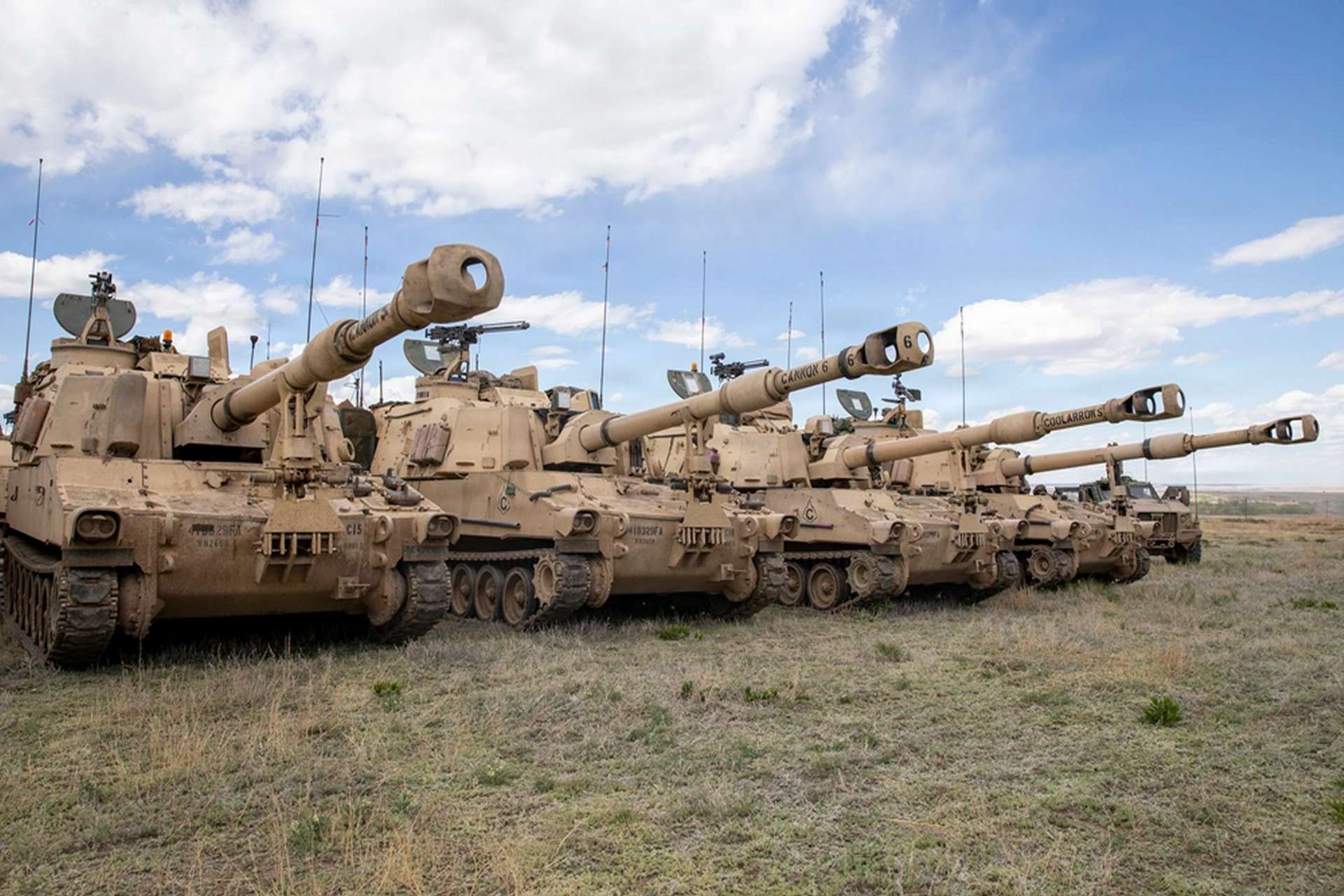
BAE Systems has received a $535 million U.S. Army contract to continue production of M109A7 Paladin 155mm self-propelled howitzers and M992A3 ammunition carriers, sustaining armored brigade artillery capability while the Army evaluates future longer-range cannon systems (Picture source: U.S. DoW).

BAE Systems has received a $535 million U.S. Army contract to continue production of M109A7 Paladin 155mm self-propelled howitzers and M992A3 ammunition carriers, sustaining armored brigade artillery capability while the Army evaluates future longer-range cannon systems (Picture source: U.S. DoW).


The latest award should be read less as a new artillery modernization breakthrough than as a production and readiness decision. BAE Systems identified the order as covering additional M109A7 howitzers and M992A3 ammunition carriers, while earlier contract reporting described the same production line as including vehicles, support vehicles, and total package fielding kits through December 31, 2029. That distinction matters for Army procurement analysis: a Paladin set is not only a gun vehicle, but a fielded artillery package with ammunition handling, technical documentation, spares, training equipment, and unit-level support needed to turn factory output into deployable fires capacity.


The M109A7 retains the 155mm M284/M284A2 cannon and M182A1 gun mount associated with the M109A6 Paladin, rather than introducing a new long-barrel weapon. This gives the Army a known 39-caliber artillery configuration with established ammunition compatibility, maintenance procedures, and fire-control integration, but it also means the vehicle remains range-limited compared with newer 52-caliber European and South Korean self-propelled howitzers. The practical value of the A7 upgrade is therefore concentrated in mobility, electrical power, survivability, digital fire control, and supportability, not in a major increase in gun range.

In firing terms, the M109A7 provides conventional 155mm high-explosive, smoke, illumination, and precision-guided fires at the brigade level. A U.S. Army Center for Army Lessons Learned study identifies the M109A7 as a self-propelled 155mm howitzer with an M284 cannon, a maximum range of 30 km for standard munitions, a maximum firing rate of four rounds per minute for three minutes, and a sustained rate of one round per minute. The same source describes a standard Paladin combat load of 42 projectiles and 31 propellant canisters, with U.S. battalions normally organized around 18 howitzers divided among three batteries.


The armament package gives commanders several tactical options, but each has a different operational implication. Standard 155mm high-explosive ammunition remains the volume-fire option for suppression, neutralization, and destruction of area targets such as mortar positions, infantry concentrations, assembly areas, exposed logistics nodes, and lightly prepared defensive positions. Precision munitions change the employment model: the M982 Excalibur family provides a GPS-guided, unitary high-explosive projectile for point targets, while the M1156 Precision Guidance Kit converts selected conventional 155mm rounds into near-precision weapons by replacing the fuze with a GPS-guided course-correcting fuze.

This ammunition mix is central to the M109A7’s operational relevance. Excalibur is useful when a battery must engage a command post, radar, bridge span, urban firing point, or target close to friendly troops with fewer rounds and lower collateral risk. PGK is less precise than Excalibur but can reduce round expenditure and logistics demand when the target does not require a unitary precision projectile. For a brigade commander, the result is a fire-support tool that can alternate between massed fires and selected precision engagements without shifting the mission to rockets, aircraft, or higher-echelon strike assets.

The vehicle specifications show why the Army continues buying the A7 even without a new cannon. BAE Systems lists the M109A7 at 84,000 lb, with a crew of four, a 675 hp engine, a 145-gallon fuel capacity, 38 mph maximum road speed, 186-mile estimated cruising range, 60 percent slope capability, 40 percent side slope, 72-inch trench crossing, 42-inch fording depth, and a 70 kW 600 VDC/28 VDC generator. The same data sheet states that the M109A7 and M992A3 have greater commonality with the Bradley Fighting Vehicle through shared power pack, drive train, track, and suspension components, reducing the number of unique items carried by sustainment units inside an armored brigade.


The 600-volt architecture is more than an engineering footnote. Earlier Army reporting stated that the onboard power system was designed to support emerging technologies and battlefield network requirements, while replacing older hydraulic functions with electric drives, and an electric rammer improves maintainability and consistency in gun operation. BAE’s data sheet says the M109A7 can receive a fire mission, compute firing data, transition from travel to firing configuration, lay the cannon, and fire within 60 seconds from movement. In an environment shaped by counter-battery radar, acoustic detection, unmanned aerial vehicles, and loitering munitions, that timeline is directly tied to crew survival.

The M992A3 ammunition carrier is therefore not an accessory but part of the tactical system. It carries and transfers 155mm ammunition under armor, allowing resupply closer to the gun line while reducing exposure compared with truck-based ammunition handling. In high-intensity operations, the limiting factor for a Paladin battery is often not the cannon itself but the ability to move ammunition, maintain communications, select viable position areas, and displace before enemy fires arrive. Army lessons from training areas in Europe also show that terrain, slope, concealment, road access, and communications coverage can constrain Paladin employment as much as range.

The contract also reflects an industrial-based calculation. BAE has previously identified production and support work across York, Pennsylvania; Anniston Army Depot, Alabama; Elgin, Oklahoma; Minneapolis, Minnesota; Sterling Heights, Michigan; Endicott, New York; and Aiken, South Carolina. Keeping that network active preserves welding, tracked-vehicle integration, turret refurbishment, electronics, and depot-level skills relevant not only to Paladin but also to other armored vehicle programs.


The main limitation remains range. A 39-caliber M109A7 cannot match the reach of 52-caliber systems being promoted for the Army’s future Mobile Tactical Cannon requirement, and the ERCA cancellation left the service without a near-term tracked 70 km cannon solution. The Paladin order, therefore, represents a risk-management choice: maintain a known, supportable tracked 155mm self-propelled howitzer for armored brigades while the Army tests whether newer wheeled or tracked artillery designs can provide greater range, faster automation, smaller crews, and better survivability under drone observation. For Congress and Army planners, the question is not whether the M109A7 is modern in every respect; it is whether enough reliable armored cannon artillery can be fielded now while the next fires system remains under evaluation.
 

Users who are viewing this thread

Country Watch Latest

Back
Top