US Defence related thread

$35 Billion THAAD Seven-Year Procurement Award Propels Acceleration Of Critical Missile Defense Interceptor Production

Today, the U.S. government awarded Lockheed Martin (NYSE: LMT) a seven-year undefinitized contract action (UCA) for up to $35 billion to quadruple production of Terminal High Altitude Area Defense (THAAD) interceptors. The award is one of the first major multiyear procurement contracts executed under the Department of War's Acquisition Transformation Strategy and represents one of the first full-scale transitions from framework agreement to contract execution under the initiative. It demonstrates Lockheed Martin's commitment to building the Arsenal of Freedom.

The contract puts into action the THAAD framework agreement signed in Januarybetween the Department of War and Lockheed Martin, providing the long-term demand signal needed to accelerate production capacity, strengthen the defense industrial base and deliver critical missile defense capability at speed and scale for the U.S. and its allies.

The award comes weeks after Lockheed Martin broke ground on a new Munitions Production Center in Troy, Alabama, as part of the company's more than $9 billion investment through 2030. This investment is already delivering tangible results to meet heightened munitions demand, including more than 20 new or modernized facilities across the United States. Lockheed Martin also recently opened the Next Generation Interceptorfacility in Courtland, Alabama, and the Munitions Acceleration Center in Camden, Arkansas.

WHY IT MATTERS

THAAD is the only U.S. system designed to intercept threats both inside and outside the atmosphere, providing a critical layer of missile defense. Its performance has been demonstrated in operations including Operation Epic Fury, where it continues to defend forces and key infrastructure against evolving threats.

EXPERT PERSPECTIVE

"This award reflects our shared vision with the Department of War to strengthen America's Arsenal of Freedom through a transformational shift to multiyear procurement," said Tim Cahill, president, Lockheed Martin Missiles and Fire Control. "This new approach propels our efforts to strengthen the defense industrial base, expand production and deliver capabilities to the American warfighter at unprecedented speed and scale."

ADDITIONAL CONTEXT

  • Acquisition Transformation Leadership: Lockheed Martin was the first in the industry to announce a framework agreement for munitions acceleration under the Department of War's Acquisition Transformation Strategy. Since January, landmark framework agreements have been established to expand production capacity for PAC-3® MSE, the THAAD interceptor and Precision Strike Missile (PrSM). In April, the U.S. government awarded Lockheed Martin a $4.7 billion contract to continue critical accelerated production of PAC-3 MSE this year.
  • American Job Growth: Lockheed Martin continues to expand its workforce, creating tens of thousands of high-quality American jobs across manufacturing, engineering and skilled trades. These investments ensure America and its allies have the proven capabilities needed to protect people, infrastructure and freedom around the globe.
  • Supply Chain Resilience: Lockheed Martin is strengthening resilience of our supply chain, deepening collaboration with suppliers and driving innovation across operations. Lockheed Martin is engaging regularly with suppliers critical to scaling munitions production, focusing on building stronger relationships, emphasizing speed and driving solutions to better prepare for current and future threats.

THAAD production to quadruple
 
To view this content we will need your consent to set third party cookies.
For more detailed information, see our cookies page.

All that bragging of not needing china REE only to become smuggler lol. China has a full monopoly on rare earths.
 
To view this content we will need your consent to set third party cookies.
For more detailed information, see our cookies page.

Yawn. It's only going to be a dozen or so and they will be used for training until the APG-85 is ready. Lot 17 F-35's which consist of 190-200 are APG-85 capable.

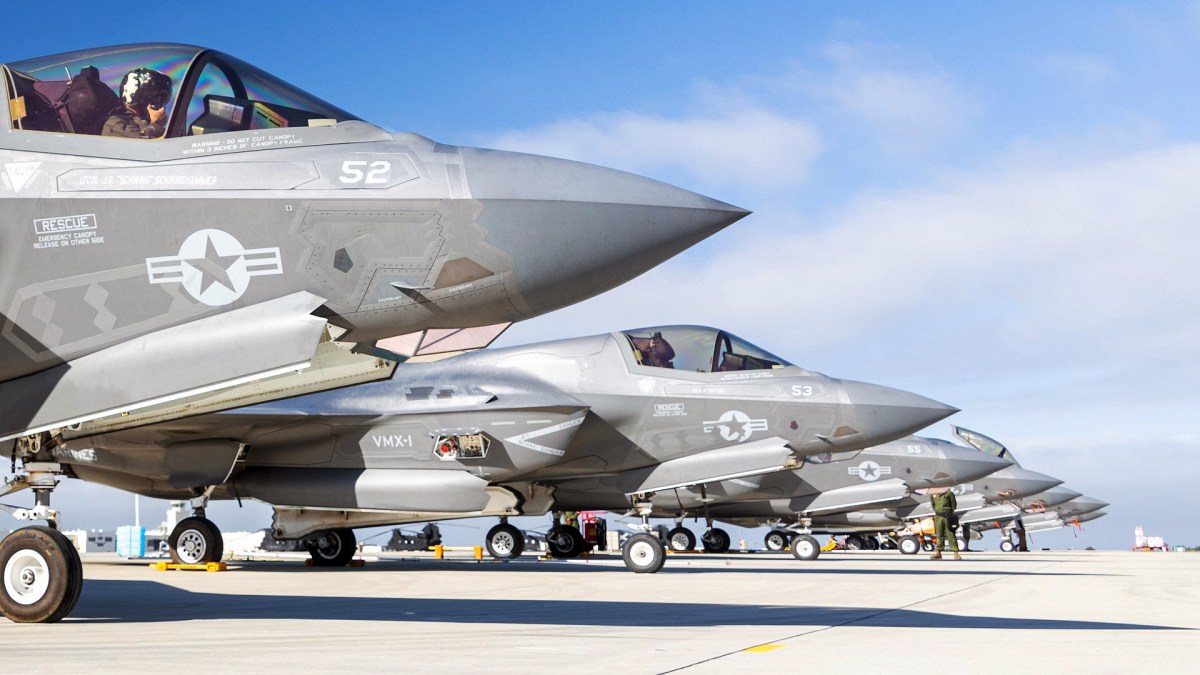
- The U.S. Marine Corps thus far has received six F-35B fighters without radars, as the service waits on Northrop Grumman‘s delivery of the AN/APG-85 radar, which is to replace the current APG-81, also by Northrop Grumman.

“The Marine Corps has been accepting airplanes with no radar in it, is that correct?” Sen. Mark Kelly (D-Ariz.), ranking member of the Senate Armed Services Committee’s (SASC) airland panel, asked Marine Lt. Gen. Gregory Masiello, the F-35 program executive officer, at a June 23 hearing.

“We have accepted six aircraft for the Marine Corps that do not have a radar installed,” Masiello replied. “That is correct.”

Kelly then stated that his assumption was that the Marines “want to wait for the APG-85.”

“They do,” Masiello said.

Radar mountings in the F-35’s nose are different for the APG-81 and the APG-85 radar–a difference which has helped complicate fielding of the new radar which was to deliver with F-35 Lot 17.

The Air Force has been considering an APG-81/APG-85 dual-mount bulkhead, though the latter may take two years to field.

The service’s fiscal 2027 future years defense plan (FYDP) contains $133 million in fiscal 2031 for retrofitting 14 F-35As with APG-85s–a unit cost of $9.5 million per radar, and outside the FYDP the service said it plans to spend about $1.6 billion to retrofit another 167 jets with the APG-85.

The Air Force, Navy, and Marine Corps have 832 F-35s out of a global inventory of more than 1,300 on 42 bases and 13 ships–10 U.S. ones and three allied ones, according to the F-35 program.

The APG-85 is critical to the 55 upgrades in the Block 4 program–22 of which have fielded so far, including seven last year, and six on target for this year, Masiello testified on June 23. For full functionality, the APG-85 and Block 4 require 62 kilowatts to 80 kilowatts (kW) of cooling, however, versus the 32 kW on the plane now.-

The APG-85 is in a whole other lever of power output and capability and so is the APG-81 compared to foreign fighter AESA's including their supposed "GaN" which doesn't have the capabilities of the APG-81 a non-GaN AESA.
 
An old online buddy posted this about the article....


"Now that was interesting article with a lot of interesting details. What caught my attention wasn't so much that some F-35Bs were delivered without radars, but the implications of the cooling numbers discussed during the hearing.

If APG-85 were simply an APG-81 with GaN T/R modules replacing older GaAs modules, I wouldn't expect such a dramatic increase in thermal requirements. Modern GaN devices are substantially more efficient (often around 50-60% PAE versus roughly 25-35% for older GaAs designs), so a straight technology refresh would tend to reduce waste heat for a given RF output.

The fact that Kelly was talking about eventual PTMS capability in the 62-80 kW range suggests that APG-85 is doing much more than just generating more radar power. My guess is that we're looking at a combination of significantly higher RF output, much more onboard signal processing, and greatly expanded electronic attack/electronic warfare functionality.

For comparison, if APG-81 has roughly 1,676 T/R modules and produces on the order of 15-20 kW RF output, then a similarly sized GaN array could potentially produce 35-50 kW RF output without requiring proportionally more electrical input. The interesting question is therefore not "why does a GaN radar need more cooling?" but rather "what additional functions are consuming all that power?"

The nose structure modifications are another clue. If this were merely a drop-in GaN replacement for APG-81, redesigning internal bulkheads would seem excessive. That points toward significant hardware changes beyond the T/R modules themselves. Basically APG-85 could be just APG-81 with GaN modules, which would not require any changes to the structures. And there has to be significant reason to do such structural change.

My suspicion is that APG-85 is much less a conventional fighter radar upgrade and more a next-generation electromagnetic warfare aperture that happens to perform radar functions incredibly well. In that context, the cooling figures start to make a lot more sense. The biggest gains may (and like will) be in electronic attack, simultaneous radar/EW operation, LPI performance, and processing capacity rather than simply a 20-40% increase in detection range.

The fact that the USMC is apparently willing to park aircraft without radars rather than accept APG-81-equipped jets also suggests they view APG-85 as a major capability step, not an incremental refresh. And most of that added capability does not come from being a better radar. It's likely something way beyond that. What is written in that article suggests that from enemy PoV an F-35 with APG-85 will totally crush the enemy situational awareness while maintaining a much better situational awareness than F-35 with APG-81 can. And that is scary given how good F-35 with APG-81 already is."
 
Yawn. It's only going to be a dozen or so and they will be used for training until the APG-85 is ready. Lot 17 F-35's which consist of 190-200 are APG-85 capable.

- The U.S. Marine Corps thus far has received six F-35B fighters without radars, as the service waits on Northrop Grumman‘s delivery of the AN/APG-85 radar, which is to replace the current APG-81, also by Northrop Grumman.

“The Marine Corps has been accepting airplanes with no radar in it, is that correct?” Sen. Mark Kelly (D-Ariz.), ranking member of the Senate Armed Services Committee’s (SASC) airland panel, asked Marine Lt. Gen. Gregory Masiello, the F-35 program executive officer, at a June 23 hearing.

“We have accepted six aircraft for the Marine Corps that do not have a radar installed,” Masiello replied. “That is correct.”

Kelly then stated that his assumption was that the Marines “want to wait for the APG-85.”

“They do,” Masiello said.

Radar mountings in the F-35’s nose are different for the APG-81 and the APG-85 radar–a difference which has helped complicate fielding of the new radar which was to deliver with F-35 Lot 17.

The Air Force has been considering an APG-81/APG-85 dual-mount bulkhead, though the latter may take two years to field.

The service’s fiscal 2027 future years defense plan (FYDP) contains $133 million in fiscal 2031 for retrofitting 14 F-35As with APG-85s–a unit cost of $9.5 million per radar, and outside the FYDP the service said it plans to spend about $1.6 billion to retrofit another 167 jets with the APG-85.

The Air Force, Navy, and Marine Corps have 832 F-35s out of a global inventory of more than 1,300 on 42 bases and 13 ships–10 U.S. ones and three allied ones, according to the F-35 program.

The APG-85 is critical to the 55 upgrades in the Block 4 program–22 of which have fielded so far, including seven last year, and six on target for this year, Masiello testified on June 23. For full functionality, the APG-85 and Block 4 require 62 kilowatts to 80 kilowatts (kW) of cooling, however, versus the 32 kW on the plane now.-

The APG-85 is in a whole other lever of power output and capability and so is the APG-81 compared to foreign fighter AESA's including their supposed "GaN" which doesn't have the capabilities of the APG-81 a non-GaN AESA.
Top-tier Chinese fighters like J-20, J-16, J-15T , and J-35 already utilized GaN-based AESA arrays since 2022 while AN/APG-85 systemwon't begin production until April 2028. 🤣 Ask yourself who produces 98 percent of the gallium.
 

Pentagon Confirms Radarless F-35B Deliveries as Block 4 Crisis Threatens U.S. Air Dominance in Indo-Pacific

The Pentagon has confirmed that six U.S. Marine Corps F-35B stealth fighters were delivered without the AN/APG-85 AESA radar, exposing growing Block 4 modernization risks, degraded combat readiness, and mounting pressure on America’s Indo-Pacific airpower strategy.

On Jun 27, 2026

— The Pentagon has confirmed that six U.S. Marine Corps F-35B stealth fighters were delivered without their primary AN/APG-85 AESA radars, exposing deepening modernization risks inside America’s most strategically important fifth-generation combat aircraft programme.

The unprecedented acceptance of radarless F-35Bs marks a significant escalation in the concurrency risks surrounding the F-35 Joint Strike Fighter programme, particularly as the Pentagon attempts to field Block 4 capabilities while sustaining expanding Indo-Pacific force posture requirements.

Speaking before the Senate Armed Services Committee on June 23, F-35 Joint Program Office chief Marine Corps Lt. Gen. Gregory Masiello acknowledged the aircraft cannot be considered “fully mission capable” because they lack the fighter’s principal fire-control and targeting radar.

The six aircraft belong to Lot 17 production batches and were accepted by the Marine Corps earlier this year after acceptance testing reportedly began around February 2026 amid mounting delays surrounding the next-generation AN/APG-85 radar programme.

Instead of carrying operational radar arrays, the aircraft reportedly contain ballast weights installed inside the nose cone to preserve aerodynamic balance, center-of-gravity tolerances, and short takeoff and vertical landing flight characteristics required by the F-35B variant.

The decision transforms the aircraft into partially operational stealth airframes capable of limited flight training missions but unable to conduct full-spectrum combat operations expected from modern network-centric fifth-generation fighter platforms.

The development underscores intensifying Pentagon pressure to maintain F-35 production momentum despite unresolved Block 4 modernization bottlenecks involving radar integration, thermal management systems, software instability, sustainment shortfalls, and escalating lifecycle costs.
 

China Blinds American F-35? PLA Fighters Edge Out U.S. Jets in Active Combat​

Jun 29, 2026, 01:22:31 PM | TOI.in
To view this content we will need your consent to set third party cookies.
For more detailed information, see our cookies page.


The United States military has officially confirmed a jaw-dropping compromise in its premier stealth fighter fleet, admitting that it is accepting brand-new F-35 Lightning II aircraft completely lacking their primary radars.

Because Northrop Grumman’s next-generation AN/APG-85 AESA radar is running years behind schedule, the F-35 Joint Program Office has taken delivery of at least six Marine Corps F-35Bs with chunk blocks of literal ballast weights bolted into their nose cones just to preserve balance.

Incapable of independent long-range targeting or frontline combat deployments, these high-tech jets are being fielded as multi-million-dollar training placeholders while a massive maintenance logjam looms ahead of a projected 2028 radar rollout.


It’s Official: F-35s Are Now Being Delivered Without Radars

Delays in the delivery of new AN/APG-85 radars are deeply intertwined with other woes that continue to hound the F-35 program.
Joseph Trevithick
Published Jun 26, 2026 2:41 PM EDT

The U.S. military has now confirmed the acceptance of at least six F-35 Joint Strike Fighters for the U.S. Marine Corps without radars. This is due to issues tied to the development of the new AN/APG-85 radar, the first production lot of which is scheduled to be delivered in 2028. The prospect of radarless F-35s had first emerged publicly back in February. The AN/APG-85 is a critical component of the larger Block 4 upgrade package for all variants of the F-35, an effort that has been mired in cost growth and delays.

Marine Corps Lt. Gen. Gregory Masiello, head of the F-35 Joint Program Office (JPO), disclosed the acceptance of the six radarless F-35Bs at a hearing before members of the Senate Armed Services Committee earlier this week. This came as part of a larger back-and-forth between Masiello and Senator Mark Kelly, an Arizona Democrat and a retired naval aviator, about F-35 readiness rates across the U.S. Air Force, Marine Corps, and Navy, which have long been a point of concern.

Two weeks ago, the Government Accountability Office (GAO), a Congressional watchdog, released a report stating that the average F-35 full mission capable (FMC) rate across all variants had fallen from 38 to 25 percent between Fiscal Years 2020 and 2025. GAO defines FMC as an aircraft “that can perform all of its missions.” The F-35 JPO has not disputed GAO’s figures directly, but has openly disagreed with the methodology it uses to determine FMC.

 
USA is very transparent on such things.... they are not hiding this....

In China we never know how many Chinese jets are flying without radars just like few years back we didn't know their missiles had a water instead of fuel,...
How many Indian jets are flying without engines :ROFLMAO: :ROFLMAO: :ROFLMAO:


Kill Chain Dominance: China’s is Producing More ‘Flying Radar’ Systems Than the World Combined Under the KJ-500 Program​

June-26th-2026

 
  • Like
Reactions: ety

Users who are viewing this thread

Pakistan Defence Latest

Country Watch Latest

Latest Posts

Back
Top