US Defence related thread

Yes, Hegseth was the one who sold the Iran war to Trump as an easy and quick victory, like Venezuela, and who pressured and fired officials like this general, who offered different assessments.

Else Trump can himself take the blame for this fiasco.
Irrelevant.

The shortages were reported before Iran War 2 started. Which, as Solarwarden points out, started back during the Biden administration transferring weapons to Ukraine as fast as they could send them over without any mechanisms in place to replenish.

I warned of this not only here but another forum as well.
 

F-22 directs Collaborative Combat Aircraft in airborne tactical-control demonstration​


ARLINGTON, Va. (AFNS) --
The Department of the Air Force executed airborne tactical command and in-flight control of a YFQ-44A Collaborative Combat Aircraft from an F-22 Raptor earlier this month, advancing efforts to rapidly develop, evaluate and deliver mission-autonomy capabilities to the warfighter.

During the demonstration, an F-22 pilot served as an airborne “quarterback,” issuing high-level tactical directives to a single YFQ-44A. The aircraft’s onboard autonomy software interpreted and executed those directives in real time, conducting dynamic flight maneuvers and simulated combat tasks.

“This achievement demonstrates what is possible when we are aligned with industry on a shared imperative: delivering capability to the warfighter at unprecedented speed,” said Secretary of the Air Force Troy Meink. “We are driving urgency into every part of acquisition from rapid integration and flight learning to disciplined assessment, so we can turn promising technology into combat capability at the pace the threat demands.”

The event brought together personnel from the 412th Test Wing, 422nd Test and Evaluation Squadron, 309th Software Engineering Group, Experimental Operations Unit, F-22 System Program Office and the CCA Software Autonomy and Teaming Branch.

The Department will use data from this test milestone to inform continued software integration, developmental testing and the Air Force’s future CCA concepts.

“This flight shows the power of crewed-uncrewed teaming and the advantage it provides our warfighters,” said Air Force Chief of Staff Gen. Ken Wilsbach. “We must test often, learn fast and give commanders what they need, when they need it.”

The CCA program is part of a broader Department of the Air Force effort to deliver affordable, adaptable and combat-ready capability at speed. The Air Force intends to have 500 combat-ready, semi-autonomous systems by 2032, with an overall fleet size of 1000 that will extend reach, awareness and survivability of American airpower in contested environments.


F-22 has integrated with YFQ-44 CCA and delegated combat tasks. Big milestone

Absolutely incredible that this plane is almost three decades old
 
Absolutely incredible that this plane is almost three decades old
F- Dick Cheney for cutting the fleet to 187. A good number would have been 300 F-22's with 40 of them being for training, air shows and weapons/technology testing.
 
F- Dick Cheney for cutting the fleet to 187. A good number would have been 300 F-22's with 40 of them being for training, air shows and weapons/technology testing.
Cheney did not cut the fleet to 187. What he did do was delay the production and reduce the annual number produced from 72 to 48. The Soviet threat was receding, budget pressures on the DOD, and existing aircraft could remain in service longer.

It was former SecDef Robert Gates who capped the fleet at 187. This was in 2009 under the Obama administration. The factors that led to the decision included cost, the F-35 program was underway and deemed a cheaper alternative, the Afghanistan and Iraq Wars demanded capabilities not suited to the F-22 mission, and lastly, Gates saw, or thought he saw, threats that were different from what the F-22 was developed to address.

So, in reality, you can blame both Cheney and Gates for this.
 
F- Dick Cheney for cutting the fleet to 187. A good number would have been 300 F-22's with 40 of them being for training, air shows and weapons/technology testing.

I agree, there should have been at least 300 if not 400 planes made before production shut down.
 
Cheney did not cut the fleet to 187. What he did do was delay the production and reduce the annual number produced from 72 to 48. The Soviet threat was receding, budget pressures on the DOD, and existing aircraft could remain in service longer.

It was former SecDef Robert Gates who capped the fleet at 187. This was in 2009 under the Obama administration. The factors that led to the decision included cost, the F-35 program was underway and deemed a cheaper alternative, the Afghanistan and Iraq Wars demanded capabilities not suited to the F-22 mission, and lastly, Gates saw, or thought he saw, threats that were different from what the F-22 was developed to address.

So, in reality, you can blame both Cheney and Gates for this.
Forgot about Gates had the final say.

I take back my colorful word on Cheney when it comes to the F-22 same with Gates. Post war on terror the F-22 lack of capabilities has handicapped it from participating in US military adventures. Come to think of it F-22's escorting B-2's over Iran was charity given to the F-22's the F-35's would have been better escorts because of its ISR, SA and EW capability.
 

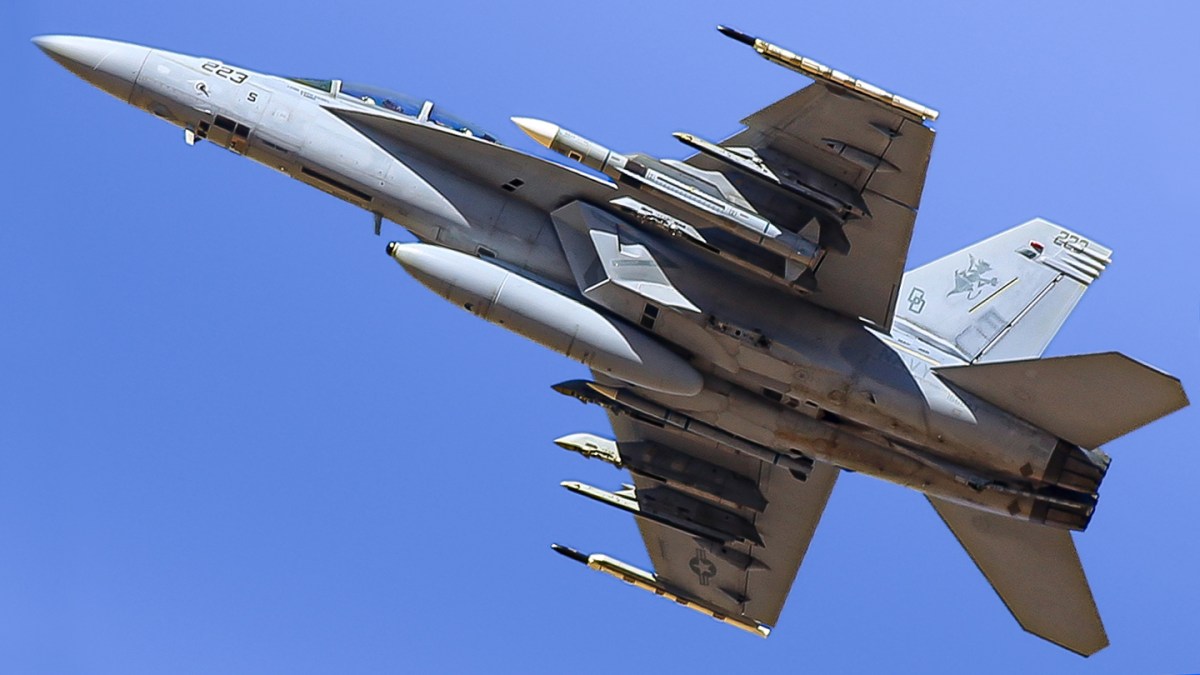
Navy F/A-18 Super Hornet Spotted Carrying New AIM-174B And AIM-260 Long-Range Missiles Together​

The image of the VX-31 Super Hornet gives us a glimpse of what's soon to appear in the fleet, and the two missiles will also be joined by the AIM-424 Malice.
1792632960582.png

This two-year-old video explains it perfectly
 

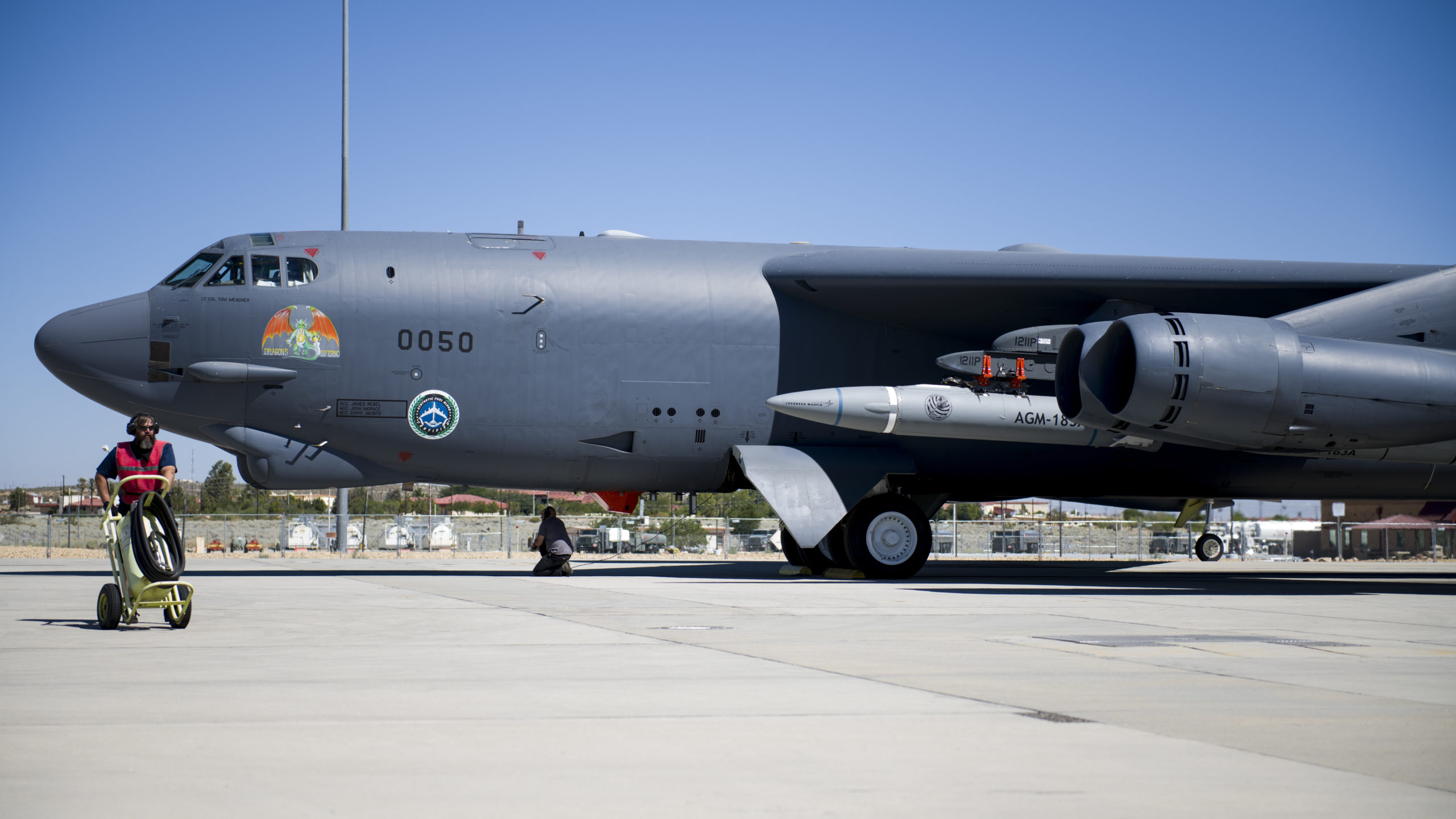
Air Force Launches ARRW, Its First Hypersonic Weapon, into Production​


The Air Force awarded Lockheed Martin a $694 million contract to produce its first-ever hypersonic missile, the Air-Launched Rapid Response Weapon, the service announced Oct. 26.

The decision advances ARRW from testing into production, a major milestone for a long-sought capability. The Air Force, citing operational security concerns, withheld details on how many it ordered or when they must be delivered.

Budget documents describe ARRW as a standoff weapon and “a lethal capability against high-value time-sensitive
targets.” It is too large to go on most fighter jets and will initially be fielded on the B-52 and has also reportedly been tested on the B-1. A multistage boost-glide weapon, it uses a rocket booster to accelerate to hypersonic speed, when the booster separates and falls away, leaving a glide vehicle that can maneuver to its target at five times the speed of sound. or greater—at least 3,800 miles per hour or just over a mile per second.

“This is a turning point in our advanced weapons roadmap,” said Secretary of the Air Force Troy Meink in a statement. “By moving ARRW from test to production, we’re providing our combatant commanders with a credible, high-speed strike weapon capable of penetrating the most advanced anti-access and area-denial systems.”

ARRW development began in 2018 when the Air Force signed Lockheed to a design contract worth up to $480 million. The program built on the joint DARPA-Air Force X-51, and sought to deliver a prototype capability by 2021.

The Air Force conducted captive carry tests in 2019 and that same year awarded Lockheed a $988.8 million contract modification for critical design review. The first operational flight test was planned by the end of 2020, with initial operational capability projected in 2022.

But the first launch test, delayed to April 2021, failed and two more failures followed. The first successful test came in May 2022—at which point funding became a problem. In 2021, Congress stripped funds for 12 ARRW missiles from the fiscal 2022 budget plan, and the Air Force zeroed out funds for 2023.

In March 2023, the Air Force’s top civilian acquisition executive, Andrew Hunter, said the program would end without purchases. Air Force leaders said they would focus instead on the smaller Hypersonic Attack Cruise Missile and other reusable hypersonic systems.

In 2025, however, then-Chief of Staff of the Air Force Gen. David Allvin told Congress the Air Force would buy ARRW, and the fiscal 2026 budget allotted $362 million for that purpose. The contract was awarded Sept. 29, 2026, but the decision was not announced until a month later.

The Air Force’s 2027 budget request included $452 million for ARRW production. That budget is currently stalled in Congress, and the Pentagon is operating under a continuing resolution based on 2026 funding levels. The Future Years Defense Plan projects procurement from 2028 to 2031 to range from $556 million to $621 million per year. Quantities are dubbed “controlled unclassified information,” and not publicly released.

“Fielding ARRW enhances our ability to hold targets at risk anywhere around the world,” Chief of Staff of the Air Force Gen. Kenneth Wilsbach said in a statement. “This hypersonic weapon provides the Joint Force a flexible and rapid response option for highly contested environments.”


ARRW hypersonic weapon is now in production
 

Users who are viewing this thread

Pakistan Defence Latest

Country Watch Latest

Back
Top