Navigation
Install the app
How to install the app on iOS
Follow along with the video below to see how to install our site as a web app on your home screen.
Note: This feature may not be available in some browsers.
More options
Style variation
You are using an out of date browser. It may not display this or other websites correctly.
You should upgrade or use an alternative browser.
You should upgrade or use an alternative browser.
US Economy - News, Updates and Discussion
- Thread starter Get Ya Wig Split
- Start date
More options
Who Replied?

Davey Crockett
Elite Member

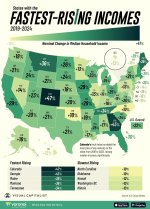
Have been trying to tell people in Oklahoma our wages have not been keeping up with the cost of living for some years now.
 www.zerohedge.com
Which US States Are Seeing Incomes Rise The Fastest (And Slowest)<!-- --> | ZeroHedge
ZeroHedge - On a long enough timeline, the survival rate for everyone drops to zero
www.zerohedge.com

ghazi52
THINK TANK: CONSULTANT

US trade deficit hits fresh high despite Trump's tariffs
Natalie Sherman
BBC Business reporter
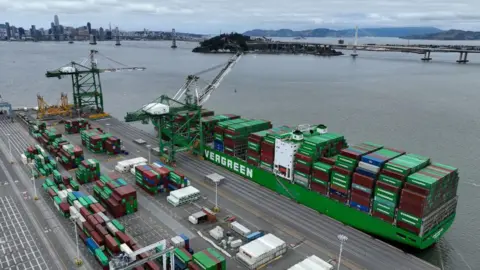
US goods imports continued to outpace its exports last year, sending the country's trade deficit to a new high despite sweeping tariffs introduced by US President Donald Trump.
The gap between the value of goods imported into the US and American products sold to other countries widened by 2.1% compared to 2024, hitting roughly $1.2 trillion (£890bn), official figures show.
The rise emerged despite a sharp drop in trade with China, one of the earliest targets of the tariffs.
The gap runs counter to one of the White House's key aims which is to reduce the deficit, arguing that US reliance on overseas goods has hollowed out the country's production abilities and put national security at risk.
Last year, Trump introduced tariffs of at least 10% on goods from nearly every country in the world.
At the time, he said the new taxes on products coming into the US would help boost local manufacturing and make it easier for American firms to sell abroad.
The measures - which in some cases were much higher than before trade deals were struck - sparked widespread turmoil for businesses and global economies.
But while trade flows swung wildly, they did not stop.
ghazi52
THINK TANK: CONSULTANT
Imports of goods - some of which US firms had rushed at the start of last year to get ahead of Trump's tariff regime - reached a record $3.4tn, according to the Bureau of Economic Analysis.
Business investment in artificial intelligence helped drive demand, as US imports of computer parts and equipment surged.
Exports also hit a new high, despite a drop in shipments of US food, cars and car parts, two of the sectors most exposed to the trade changes.
US trade with China, including imports and exports, fell to reduce the deficit by roughly 30% to $202.1bn. This was the smallest deficit for around in two decades.
But the US still recorded record trade gaps with several countries, including Mexico, Vietnam and Taiwan.
Overall, the deficit in goods and services - which takes into account things like travel and digital services - was $901.5bn last year, almost unchanged from $903.5bn in 2024.
The White House has also said it will take time for its efforts to pay off.
But Trump's frequent revisions to the tariffs have raised uncertainty about the strategy.
The president has used the threat of tariffs during international negotiations. Most recently, he signed an executive order stating the US would impose additional taxes on countries that continue to trade with Iran.
Business investment in artificial intelligence helped drive demand, as US imports of computer parts and equipment surged.
Exports also hit a new high, despite a drop in shipments of US food, cars and car parts, two of the sectors most exposed to the trade changes.
US trade with China, including imports and exports, fell to reduce the deficit by roughly 30% to $202.1bn. This was the smallest deficit for around in two decades.
But the US still recorded record trade gaps with several countries, including Mexico, Vietnam and Taiwan.
Overall, the deficit in goods and services - which takes into account things like travel and digital services - was $901.5bn last year, almost unchanged from $903.5bn in 2024.
The White House has also said it will take time for its efforts to pay off.
But Trump's frequent revisions to the tariffs have raised uncertainty about the strategy.
The president has used the threat of tariffs during international negotiations. Most recently, he signed an executive order stating the US would impose additional taxes on countries that continue to trade with Iran.
ghazi52
THINK TANK: CONSULTANT
The Supreme Court is also currently weighing a challenge to the duties brought by a group of businesses and states, which could lead to the bulk of last year's tariffs being struck down.
If the Trump administration loses the case, White House officials have said they are prepared to reinstate the tariffs using different tools.
"Looking ahead there will inevitably be more rejiggering in supply chains, but we see scope for a modest ascent in imports in spite of tariffs in the year ahead," analysts at investment bank Wells Fargo wrote.
Meanwhile on Thursday, a report by the JP Morgan Chase Institute focusing on mid-size firms, found that many businesses had started shifting business away from China before the new tariffs went into effect.
Overall, the bank's data suggested foreign imports appeared little changed last year, despite monthly tariff payments roughly tripling.
"The broader effects of trade policy changes may only become apparent with a significant lag," the report concluded, noting policy uncertainty and the difficulty of finding alternate suppliers.
If the Trump administration loses the case, White House officials have said they are prepared to reinstate the tariffs using different tools.
"Looking ahead there will inevitably be more rejiggering in supply chains, but we see scope for a modest ascent in imports in spite of tariffs in the year ahead," analysts at investment bank Wells Fargo wrote.
Meanwhile on Thursday, a report by the JP Morgan Chase Institute focusing on mid-size firms, found that many businesses had started shifting business away from China before the new tariffs went into effect.
Overall, the bank's data suggested foreign imports appeared little changed last year, despite monthly tariff payments roughly tripling.
"The broader effects of trade policy changes may only become apparent with a significant lag," the report concluded, noting policy uncertainty and the difficulty of finding alternate suppliers.
ghazi52
THINK TANK: CONSULTANT
Costs from Trump's tariffs paid mainly by US firms and consumers, NY Fed says
Kali HaysBBC News

As President Donald Trump changed tariff agreements with a number of countries, there was one constant: goods became more expensive for US companies and consumers.
In research released Thursday by the Federal Reserve Bank of New York, a group of analysts and economists found that in 2025, the average tariff rate on imported goods rose to 13% from just 2.6% at the start of the year.
The New York Fed found that 90% of the cost of increased tariffs, which Trump imposed on goods from Mexico, China, Canada and the European Union, was paid for by US companies.
"US firms and consumers continue to bear the bulk of the economic burden of the high tariffs imposed in 2025."
As tariff rates changed and increased last year, exporting countries did not lower the cost of goods in an attempt to ward off any drop in US demand.
Instead, exporters kept their prices the same, passing off the cost of tariffs to any company importing their goods, which in turn responded by increasing the price of those goods to shoppers.
The reaction from exporters in 2025 was essentially the same in 2018, when Trump imposed certain tariffs during his first term in office – the cost of goods for consumers rose, with little other economic impact recorded, the New York Fed said at the time.
Its Thursday findings match research from other recent analyses.
ghazi52
THINK TANK: CONSULTANT
The Kiel Institute for the World Economy, an independent research firm in Germany, said in a report last month that it had found "near-complete pass-through of tariffs to US import prices."
Kiel researchers analysed 25 million transactions and found that in exporting countries like Brazil and India, the price of goods from those countries did not decline.
"Trade volumes collapsed instead," the Kiel report said, meaning exporters preferred to cut the amount of goods being shipped into the US rather than lower prices.
The National Bureau of Economic Research also found that the pass-through of tariffs was "almost 100%", meaning the US is paying for the increase in prices, not exporting countries.
Similarly, the Tax Foundation, a Washington DC-based think tank focused on US tax policy, found that increased tariffs on goods in 2025 increased costs for every American household.
Defining tariffs as a new tax on consumers, the Tax Foundation said the 2025 increases cost the average household $1,000 (£734.30). In 2026, tariffs will cost the same household $1,300.
The Tax Foundation said even the "effective" tariff rate, an average rate that takes into account people buying fewer goods in response to increased prices, is now 9.9%, making it the "the highest average rate since 1946".
With such impacts on people, the Tax Foundation said any economic benefits of tax cuts included in Trump's "Big Beautiful Bill" will be offset entirely.
Kiel researchers analysed 25 million transactions and found that in exporting countries like Brazil and India, the price of goods from those countries did not decline.
"Trade volumes collapsed instead," the Kiel report said, meaning exporters preferred to cut the amount of goods being shipped into the US rather than lower prices.
The National Bureau of Economic Research also found that the pass-through of tariffs was "almost 100%", meaning the US is paying for the increase in prices, not exporting countries.
Similarly, the Tax Foundation, a Washington DC-based think tank focused on US tax policy, found that increased tariffs on goods in 2025 increased costs for every American household.
Defining tariffs as a new tax on consumers, the Tax Foundation said the 2025 increases cost the average household $1,000 (£734.30). In 2026, tariffs will cost the same household $1,300.
The Tax Foundation said even the "effective" tariff rate, an average rate that takes into account people buying fewer goods in response to increased prices, is now 9.9%, making it the "the highest average rate since 1946".
With such impacts on people, the Tax Foundation said any economic benefits of tax cuts included in Trump's "Big Beautiful Bill" will be offset entirely.
ghazi52
THINK TANK: CONSULTANT
Court's decision represents rare check on Trump's power
Anthony ZurcherNorth America correspondent
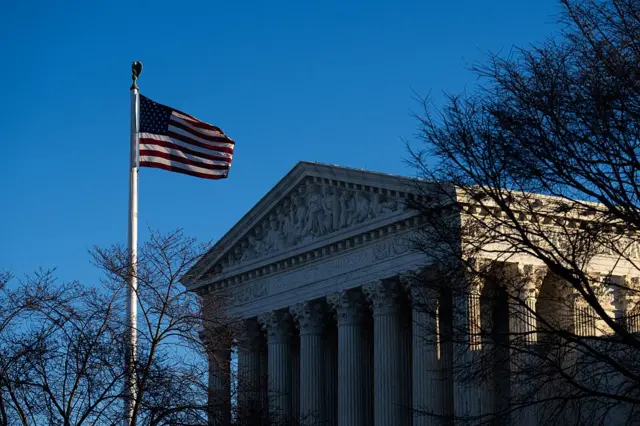
Donald Trump had been warning for months that a Supreme Court decision curtailing his ability to impose tariffs would be an “economic and national security disaster” with “catastrophic” consequences.
A six-justice majority of the Supreme Court, in ruling against the president today, didn’t care much about his concerns.
Congress, not the president, has the power to impose tariffs, the justices held. And nothing in the law that the president cited in his legal defence, the Emergency Economic Powers Act of 1977, delegated such sweeping powers to Trump.
The court’s decision represents a rare check on this president’s broad use of executive authority.
A majority of the justices over the past year have shown a willingness to allow Trump to press ahead with his agenda, particularly on immigration and reshaping the federal government, even as legal challenges work their way through the court system.
This case, considered on an expedited basis, slams the door on one such expansive use of presidential authority.
With several other major cases involving controversial uses executive power – such as efforts to end birthright citizenship and to dismiss a Federal Reserve governor based on alleged improprieties – this may not be Trump’s only setback in the coming months.
ghazi52
THINK TANK: CONSULTANT
Emergency law doesn't authorise Trump to impose tariffs, ruling says
In its ruling, the US Supreme Court says Trump exceeded his authority in imposing sweeping tariffs through a law reserved for a national emergency.The high court rules the International Emergency Economic Powers Act "does not authorize the President to impose tariffs".
ghazi52
THINK TANK: CONSULTANT
ghazi52
THINK TANK: CONSULTANT
How the justices voted
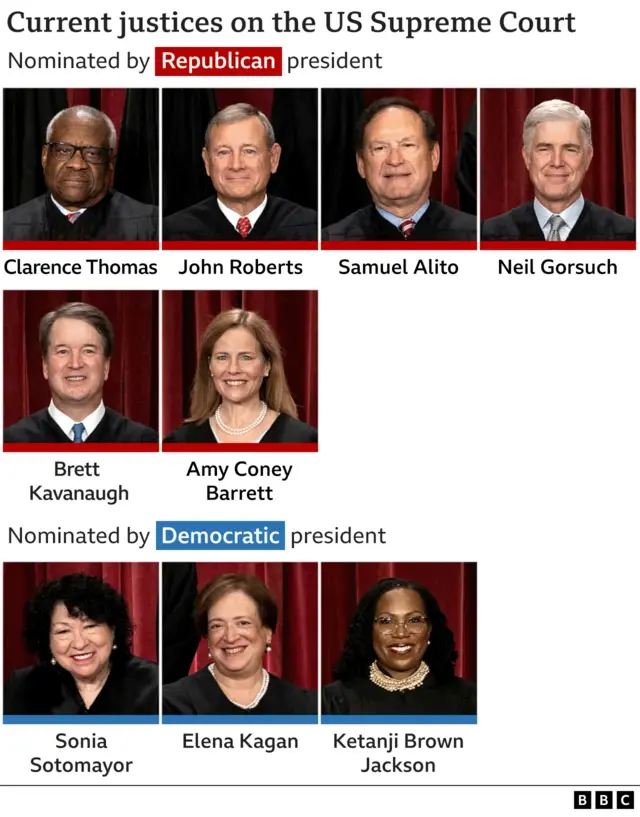
The Supreme Court ruled against Trump's tariffs in a 6-3 majority.The three liberal justices, Ketanji Brown Jackson, Elena Kagan and Sonia Sotomayor, joined by three conservative justices, Amy Coney Barrett, Neil Gorsuch and John Roberts, voted to strike down the tariffs.
Justices Brett Kavanaugh, Samuel Alito and Clarence Thomas dissented.
ghazi52
THINK TANK: CONSULTANT
Wall Street reacts positively after Supreme Court strikes down Trump's tariffs
Wall Street has responded quickly and positively to the court's ruling.Here is how the main indexes are performing currently:
- The S&P 500 index is up 0.45%
- Dow Jones is up 0.07%
- Nasdaq is 0.42%
ghazi52
THINK TANK: CONSULTANT
The decision impacts some, but not all of Trump’s tariffs
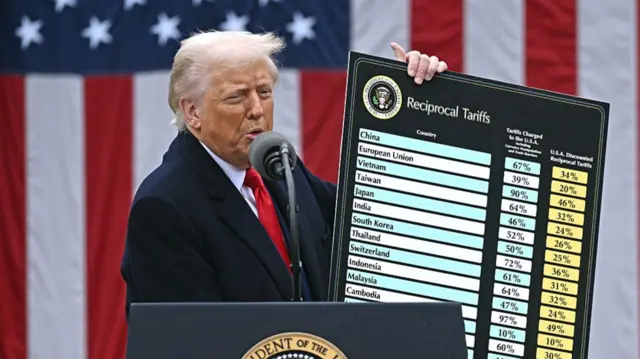
The tariffs affected by Friday's ruling:
The country-wide tariffs Trump imposed on most of the world.
The ruling centres on Trump’s use of a 1977 law, the International Emergency Economic Powers Act (IEEPA), that gives the president the power to "regulate" trade in response to an emergency.
Trump first invoked it in February 2025 to tax goods from China, Mexico and Canada, saying drug trafficking from those countries constituted an emergency.
He deployed it again in April, ordering levies from 10% to 50% on goods from almost every country in the world. He said the US trade deficit – where the US imports more than it exports – posed an "extraordinary and unusual threat".
The unaffected tariffs
The industry-specific steel, aluminium, lumber and automotive tariffs, which were implemented under Section 232 of the Trade Expansion Act of 1962, citing national-security concerns.
ghazi52
THINK TANK: CONSULTANT
White House waits for Trump's reaction
Bernd Debusmann JrBBC Reporting from the White House
I'm currently at the White House, where President Trump is at a working breakfast alongside state governors.
The media caught only a brief glimpse of him earlier, before he abruptly told reporters "you can leave now" so that he could speak to the governors candidly.
We have yet to hear his reaction or that of White House officials to the tariffs news - which marks a significant blow to his agenda.
The president often remarks that he views tariffs as extremely important to the US economy, as well as a key foreign policy tool that he claims to have used, for example, to bring warring countries to the negotiating table.
I've just asked the White House for their comment.
I also expect that we will soon hear from President Trump on Truth Social. It is unclear if the media will be allowed back into his ongoing event.
Users who are viewing this thread
Total: 3 (members: 0, guests: 3)
Pakistan Defence Latest
-
KP govt backs out of counterterrorism commitments during talks: Naqvi (20 Viewers)
- Latest: SteppeWolff
-

-

-

Country Watch Latest
-
 Iran - Israel/US War: Israel-US declare war on Iran, Iran responds (96 Viewers)
- Latest: Persian Gulf
-
-

-
-

Latest Posts
-
-

-
KP govt backs out of counterterrorism commitments during talks: Naqvi (20 Viewers)
- Latest: SteppeWolff
-
 FlyDubai Incident: Pilot was stabbed on flight to Israel - diverted to Saudi Arabia (29 Viewers)
- Latest: Raj-Hindustani
-
Iran - Israel/US War: Israel-US declare war on Iran, Iran responds (96 Viewers)
- Latest: Persian Gulf