Navigation
Install the app
How to install the app on iOS
Follow along with the video below to see how to install our site as a web app on your home screen.
Note: This feature may not be available in some browsers.
More options
Style variation
You are using an out of date browser. It may not display this or other websites correctly.
You should upgrade or use an alternative browser.
You should upgrade or use an alternative browser.
US Political News and Trump’s China visit
- Thread starter RabzonKhan
- Start date
More options
Who Replied?

Hamartia Antidote
Elite Member

So a historical building means nothing?? Amazing that he is allowed to do this-do the Americans not have listed building status in the US?
It's not an original part of the building. They tore out a fountain area to build it.
What the East side traditionally looked like before the building that was demolished.
Anyways this new ballroom talk is just a cover story for them to rebuild/modernize the underground bunker area.
Last edited:
j_hungary
Professional

The question is, why do they need to cover the fact that they want to upgrade the bunker facilities by building a ballroom on top of it? If that is the case, then come out just say it, the public will be more than willing to rebuild/upgrade a bunker under the white house than to build the ballroom.Anyways this new ballroom talk is just a cover story for them to rebuild/modernize the underground bunker area.
You don't cover an act with another act that will both draw more attention to it, and be less likely to be explained.......

AZ_HighCountry
INT'L MOD
Good for you.You know I am a 4th generation farmer from Kansas and a lot of my relative still have farm, both crops and cattle farm in the US, and my family had a 650 acre co-op farms in Kansas. I actually work for JBS (Premier Australian Meat Company) for a few years in Strategic Management because of my background in farming.
In case you are wondering, US Beef price high because of 2 different issues, firstly and most importantly, US is losing pastureland for herding, which mean losing herd number, field that allow livestock herding is disappearing in favor of real estate development, that come from 2 different factors, 1.) Average land price is high leading to US dependence of importation, Pastureland in the US cost about $2000/acre, comapre to Australia about A$6400/hectare (1 hectare = 2.47 acre), you are talking about US$1000 different per hectare, average farm is about 500 acres, which mean the different is about $250,000 per pasture, another reason is rancher number declining, weather factor (although not really concerning this price hike) also contributing to the higher price. That contribute to why US so depends on Meat Product import from overseas.
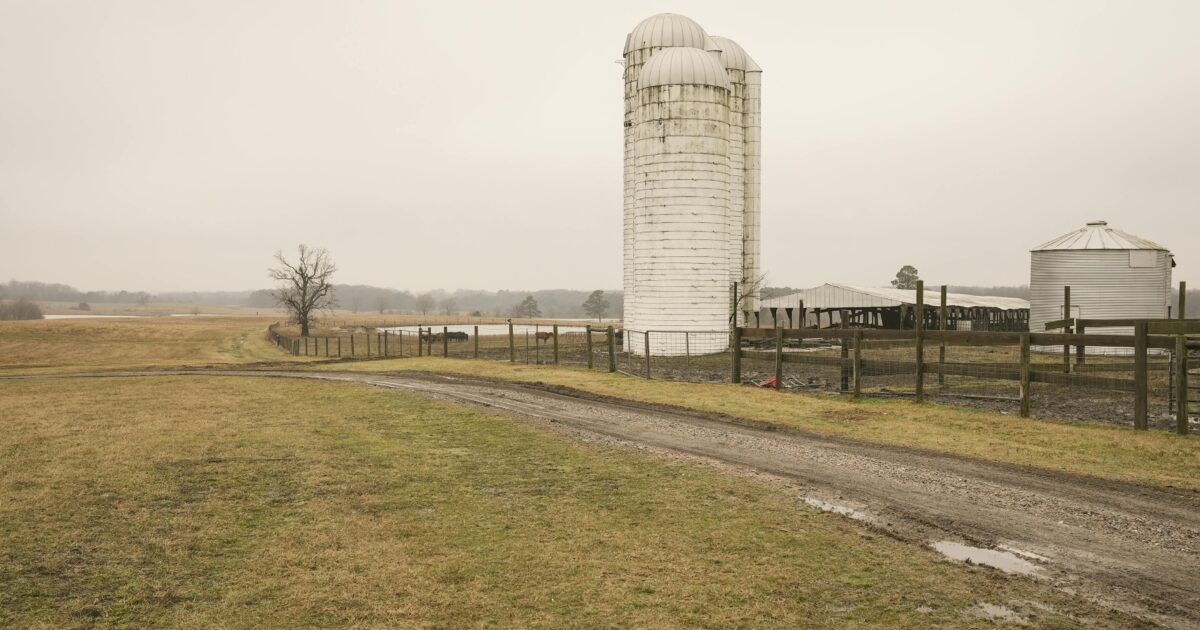
Over 140,000 Farms Lost in 5 Years
www.fb.org
And it's simple, if cost of Beef is high before the offset of Beef import, what do you think will happen when you tariff that import? Only one of the two things can happen, either you eat less meat, or you pay a higher price, I don't think you need to hold a degree in economics to figure this out.
Please, do have your wife read these article and come back to me, yes, we probably will have a lot to talk about.
Do you think after 30 years of marriage with Mrs. AZ that I didn't pick up a thing or two? Especially with her employer from having been invited to numerous events so I know many of them personally.
AZ_HighCountry
INT'L MOD
It's sad how many people in the US have bought into the lie that our government is a democracy.
It is not.
It is a constitutional representative republic. There is indeed a difference.
It is not.
It is a constitutional representative republic. There is indeed a difference.

muhammed45
Elite Member

At least someone had the guts to confess.It's sad how many people in the US have bought into the lie that our government is a democracy.
It is not.
It is a constitutional representative republic. There is indeed a difference.
However the concept of Republic has been challenged on multiple occasions by electoral college that makes it an indirect vote for presidential elections.
It actually destroys the opportunity for a fair election competition through enforcing a two-party system. An election regime in which minority's power always defeats the majority depending on where they live.
In a system that majority's vote doesn't make sense, maniacs can win.
That's how sane people like Sanders are removed from competition easily and someone like Trump that posts a Tweet unloading sh!t on US citizens can be president.
So its not a Republic at all. If it were, a cuckold pimp couldn't be president of a 350million people.
AZ_HighCountry
INT'L MOD
Our founders were very wise in the creation of our system of government. They foresaw what a "democracy" could lead to.
KingQamaR
Elite Member
It's not an original part of the building. They tore out a fountain area to build it.

What the East side traditionally looked like before the building that was demolished.
Anyways this new ballroom talk is just a cover story for them to rebuild/modernize the underground bunker area.
I’m a bit confused on this , Isn't he simply a tenant of the White House - how does he get to unilaterally destroy your historic buildings? According to reports I read , No congress consent, money funnelled from who knows where? Diabolical.
j_hungary
Professional
Mate, I don't know what you know about Farming and Cattle raising. I know what I know, and I had already laid it out in my previous post. If you want to talk about it, we can talk about it, or if you want to have your wife talk about it like you said before, that's fine with me too.Good for you.
Do you think after 30 years of marriage with Mrs. AZ that I didn't pick up a thing or two? Especially with her employer from having been invited to numerous events so I know many of them personally.
I don't really need to know what you pick up from your wife, or what I picked up from mine........So, what is this post is about?
j_hungary
Professional
Democracy is a political system in which laws, policies, leadership, and major undertakings of a state or other polity are directly or indirectly decided by the “people.”

 www.britannica.com
A republic is a government structure in which a state is ruled by a representative from the citizen bodies.
 www.britannica.com
Those two aren't really about the same thing. You can be a Republic and ruled by a Democratic Government, and you can be a republic and ruled by a Communist or Authoritarian Government. China, for example, is a republic where the government is led by the the people's assembly, which elects a leader, a Permier, the only different is that you are not allow to have a say in "voting in" the People's Assembly in China, you can choose who you vote in the US in term of Senate and Congressional Election. And in the US, a President is directly elected by a Presidential Election via the electoral college. Or you can be a Republic and be ruled by a Parliamentary System, like Singapore......
Democracy | Definition, History, Meaning, Types, Examples, & Facts | Britannica
Democracy is a system of government in which power is vested in the people and exercised by them directly or through freely elected representatives. The term is derived from the Greek ‘demokratia,’ which was coined in the 5th century BCE to denote the political systems of some Greek city-states...
www.britannica.com
A republic is a government structure in which a state is ruled by a representative from the citizen bodies.
Republic | Definition, History, & Facts | Britannica
Republic, form of government in which a state is ruled by representatives of the citizen body. Modern republics are founded on the idea that sovereignty rests with the people, though who is included and excluded from the category of the people has varied across history.
www.britannica.com
Those two aren't really about the same thing. You can be a Republic and ruled by a Democratic Government, and you can be a republic and ruled by a Communist or Authoritarian Government. China, for example, is a republic where the government is led by the the people's assembly, which elects a leader, a Permier, the only different is that you are not allow to have a say in "voting in" the People's Assembly in China, you can choose who you vote in the US in term of Senate and Congressional Election. And in the US, a President is directly elected by a Presidential Election via the electoral college. Or you can be a Republic and be ruled by a Parliamentary System, like Singapore......
Hamartia Antidote
Elite Member
I’m a bit confused on this , Isn't he simply a tenant of the White House - how does he get to unilaterally destroy your historic buildings? According to reports I read , No congress consent, money funnelled from who knows where? Diabolical.
Which is why I think it probably wasn't his call. Security required it so they dreamed up this Trump ballroom cover story thing.

FuturePAF
THINK TANK: CONSULTANT

Democrats need to learn from what Zohran and from what MAGA are doing. Always reaching out to people that may not vote for you now, but you will need them to support or at least not object to your policies down the line:
Always be campaigning (as Vaush mentioned in a recent YouTube video, doesn’t matter if your candidate or party had a good day or bad day, stand by your team and always be promoting); Keep pushing the Overton window your way, hoping the opposition stumbles and allows the shift to happen dramatically.
ABC always be closing
AIDA Attention, interest, decision, action
to quote Glen Gary Glen Ross
Always be campaigning (as Vaush mentioned in a recent YouTube video, doesn’t matter if your candidate or party had a good day or bad day, stand by your team and always be promoting); Keep pushing the Overton window your way, hoping the opposition stumbles and allows the shift to happen dramatically.
ABC always be closing
AIDA Attention, interest, decision, action
to quote Glen Gary Glen Ross
Last edited:
Hamartia Antidote
Elite Member

77-year-old attacked after "No Kings" protest on Cape Cod, suspect charged
A 77-year-old Cape Cod man is recovering after he was attacked after a "No Kings" protest in Hyannis.
 www.cbsnews.com
77-year-old attacked after "No Kings" protest on Cape Cod, suspect charged

Victim says he touched suspect's car
"I used my cardboard sign like a hand to go, 'slow down,' and I touched his car," he recalled. "[The driver] immediately came to a screeching halt."
driver got out of his SUV and punched Smith several times in the face, causing him to fall to the ground.
I took one for team democracy," he said. "That's my part in standing up for freedom for all."


MNZGamerX
Registered Member

October 21, 2025
By: Mathew Burrows

Violent threats against lawmakers hit a record high last year. Since the 2020 election, state and local election officials have become targets of violent threats and harassment, as have federal judges, prosecutors, and other court officials. As of April, there have been more than 170 incidents of threats and harassment targeting local officials across nearly 40 states this year, according to data gathered for the Bridging Divides Initiative at Princeton University.
The Capitol Police investigated over 9,000 threats against members of Congress in 2024, a sharp rise from previous years. The Department of Homeland Security reported a rise in threats and harassment aimed at election workers during the 2024 election cycle. As fears of a political violence contagion grow, House leaders announced after the Kirk killing that Congressional members will get “$10,000 per month to cover personal security costs,” doubling the $5,000 currently available. The White House has also recently asked for “an additional $58 million in security funding for the executive and judicial branches.”
Yet, according to CSIS’s Warfare, Irregular Threats, and Terrorism Program, the first half of 2025 “was marked by an increase in left-wing terrorist attacks and plots.” Although less deadly historically than right-wing violence, recent left-wing killings—Luigi Mangione’s assassination of United Healthcare CEO Brian Thompson in New York City in December 2024, the fatal shooting of right-wing protester Aaron Danielson in Portland, Oregon, in August 2020, and possibly the Kirk murder—could signal a growing, broad-based conflict. By contrast, many left-wing extremist attacks in the 1990s and 2000s were tied to anarchist or environmental movements.
Most of the attackers, left-wing or right-wing, have acted as “lone wolves.” The United States is not the only country experiencing a rise in such attacks. According to the Institute for Economics and Peace, “In the West, terrorist incidents dropped significantly since their peak in 2017. However, the number of attacks has increased by 20 to 52 in 2024 when compared to the prior year. Attacks in the West peaked in 2017 with 176 attacks recorded.”
These “lone wolves” self-radicalize via online engagement rather than joining a group. According to Rachel Kleinfeld at the Carnegie Endowment for International Peace, “White-supremacist ideas, militia fashion, and conspiracy theories spread via gaming websites, YouTube channels, and blogs, while a slippery language of memes, slang, and jokes blurs the line between posturing and provoking violence, normalizing radical ideologies and activities.” A University of Chicago analysis of participants in the 2021 insurrection at the US Capitol found that these insurrectionists tended to be older than 1960s extremists and often held jobs and self-identified as Christians.
What’s also concerning about recent violence is its growing societal acceptance. Luigi Mangione, charged with the murder of United Healthcare CEO Brian Thompson, “has become a left populist folk hero,” according to Georgetown University’s Bruce Hoffman. Now, “Luigi: The Musical” is selling out, and terrorist organization flags fly at demonstrations and protests. Trump has “encouraged attendees at his rallies to ‘knock the hell’ out of protesters, praised a lawmaker who body-slammed a reporter, and defended and pardoned the rioters of January 6, 2021, who clamored to ‘hang Mike Pence.’”
It’s little wonder an American Psychological Association survey found that the 2024 election was a significant source of stress in Americans’ lives. More than 7 in 10 adults (72 percent) were worried the election results could lead to violence.
By 2019, the decline of the white share had accelerated, losing almost 20 percentage points from 20 years earlier. By contrast, the shares of the Latino or Hispanic and Asian American populations grew to 18.5 percent and nearly 6 percent, respectively, while the Black share remained stable. Most significantly, for the under-16-year-olds, over 50 percent identified as a racial or ethnic minority.
On top of the actual changes that are shifting America from a majority white country to a majority minority one, there is a tendency to overestimate the percentage of the population that is Black or from an ethnic minority group. A nationwide 2022 YouGov America survey recorded that adult respondents believed that 41 percent of Americans are Black, when the figure is close to 12 percent. The findings from a 2016 academic psychology study of public attitudes in Western countries found that “the increasing diversity of the nation may actually yield more intergroup hostility.”
Fear of economic loss is also part of that hostility, and once again, those fears are not unfounded. Inequality has been growing in the United States at a faster rate than in other countries. There remains a huge wealth gap between whites and racial and ethnic minorities (except Asians) despite some gains by minorities. Harvard’s Raj Chetty has shown that children born in lower-income white families not only fell behind higher-income white peers but also their Black peers. Fewer were married, fewer had graduated from college, more have been incarcerated, and many face lower life expectancy than those who are wealthy and better educated.
Disadvantaged whites often see the world in zero-sum terms, blaming the success of other communities for their misfortune. According to a University of Chicago study of the 2021 Capitol insurrectionists, “Believing that Blacks and Hispanics are overtaking whites increases odds of being in the insurrectionist movement three-fold.” This is one reason for the popularity of Trump’s crusade against DEI (diversity, equality, and inclusion) among his base.
In today’s United States, those same class divisions seem to be at work. A recent academic study has shown that “Children from families in the top 1 percent are more than twice as likely to be admitted and attend” an Ivy League university as those from middle-class families with comparable SAT/ACT scores. “Average wealth of the top 0.0001 per cent of the global population grew on average 7.1 per cent a year between 1987 and 2024, compared to 3.2 per cent for the average adult,” according to French researcher Gabriel Zucman.
Zucman also found that the top 400 wealthiest Americans had a total effective tax rate of 23.8 percent on their income, similar to the rate paid by the middle class. Middle-class children born in 1984 have struggled to attain better life outcomes than their parents, and only 50 percent succeed, compared to 90 percent born in 1940.
America has been here before. During the Gilded Age (1876–1900), the great industrialists or “robber barons” flaunted their wealth gained from monopolizing recent technological breakthroughs—railways, steel, and oil—widening the gap with the ordinary middle class and the poor. Like today, the two major parties were evenly divided, making it impossible to pass reforms. Immigration was at its height, as well as violence and discrimination against newcomers.
A populist party emerged among farmers and workers. Political violence also grew; one historian, Beverly Gage, has written that, “Left-wing radical and revolutionary groups—anarchists, syndicalists, Wobblies, militant trade unionists—erupted with remarkable frequency.” This turmoil culminated in the assassination of President William McKinley by self-proclaimed anarchist Leon Czolgosz.
Why didn’t this eruption of violence result in a widespread revolution? Most historians credit the Progressive Era and its numerous reforms with halting the drift toward revolution. Theodore Roosevelt, who assumed the presidency after McKinley, made reform a centerpiece of his administration. The Progressive Era witnessed improved labor conditions and workers’ rights, increased regulation of big business, the enactment of consumer protection laws, and the conservation of natural resources. By 1920, American women had gained the right to vote.
Coups are the likeliest way for violent revolutions to start. Examples include the Bolshevik seizure of power in October 1917 and Franco’s war against Spain’s Second Republic in 1936. A contested election is sometimes the prelude, as happened in Myanmar when the military seized power after its side lost the 2020 election. Whether a coup succeeds or fails depends on the “presence of popular nonviolent mobilization.” According to the IMF, there has been a secular decline in coups. Still, many of the underlying factors that contribute to coups exist in the United States, such as political polarization and growing class divisions.
Trump’s unprecedented deployment of the military to counter crime in US cities is a move that risks undermining the military’s position a politically neutral actor. At the recent military offsite, Trump told the military chiefs that they should be prepared to battle “the enemy within,” an ominous phrase with a fraught history. Moreover, Trump’s pardoning of the protesters who invaded the Capitol sends a dangerous signal, since it effectively sanctions an attempted coup. Not ignoring the warning signs is the first step toward preventing coups and revolutions.
By: Mathew Burrows
Economic and demographic trends in the United States mirror those of other pre-revolutionary societies in the past.
The Red Cell series is published in collaboration with the Stimson Center. Drawing upon the legacy of the CIA’s Red Cell—established following the September 11 attacks to avoid similar analytic failures in the future—the project works to challenge assumptions, misperceptions, and groupthink with a view to encouraging alternative approaches to America’s foreign and national security policy challenges. For more information about the Stimson Center’s Red Cell Project, see here.Red Cell
Charlie Kirk’s killing last month has sparked fears that the United States is headed to an all-out second civil war or revolution. According to a YouGov survey earlier this year, “more Americans than not believe it is likely that the United States will see a civil war over the next decade,” while several hundred political scientists and historians in an April 2025 survey saw the United States slipping into authoritarianism with Trump’s second term. Trump’s deployment of military and National Guard forces at home, combined with his vow to suppress “the enemy within” while his domestic advisor, Stephen Miller, labels the Democratic Party a “domestic extremist organization,” can easily be seen as setting the stage for an authoritarian takeover. Revolutions don’t come out of nowhere. Yet, the how and the when often come as surprises.Political Violence Exploding
Even before the Kirk killing, the number of assassinations was climbing, according to the academic Peter Turchin’s US Political Violence Database (USPVDB). The five years from 2020 to 2024 saw seven assassinations, higher than the previous peak during the 1960s, although only half as large as that of the late 1860s.Violent threats against lawmakers hit a record high last year. Since the 2020 election, state and local election officials have become targets of violent threats and harassment, as have federal judges, prosecutors, and other court officials. As of April, there have been more than 170 incidents of threats and harassment targeting local officials across nearly 40 states this year, according to data gathered for the Bridging Divides Initiative at Princeton University.
The Capitol Police investigated over 9,000 threats against members of Congress in 2024, a sharp rise from previous years. The Department of Homeland Security reported a rise in threats and harassment aimed at election workers during the 2024 election cycle. As fears of a political violence contagion grow, House leaders announced after the Kirk killing that Congressional members will get “$10,000 per month to cover personal security costs,” doubling the $5,000 currently available. The White House has also recently asked for “an additional $58 million in security funding for the executive and judicial branches.”
Right-Wing Violence More Prevalent
Both government and academic research have shown that the majority of extremist violence since 1994 has been linked to right-wing extremists. The Anti-Defamation League’s Center for Extremism indicated in its 2024 report that “All the extremist-related murders in 2024 were committed by right-wing extremists of various kinds.” In recent years, there has been a drop-off in Islamist-fueled violence domestically.Yet, according to CSIS’s Warfare, Irregular Threats, and Terrorism Program, the first half of 2025 “was marked by an increase in left-wing terrorist attacks and plots.” Although less deadly historically than right-wing violence, recent left-wing killings—Luigi Mangione’s assassination of United Healthcare CEO Brian Thompson in New York City in December 2024, the fatal shooting of right-wing protester Aaron Danielson in Portland, Oregon, in August 2020, and possibly the Kirk murder—could signal a growing, broad-based conflict. By contrast, many left-wing extremist attacks in the 1990s and 2000s were tied to anarchist or environmental movements.
Most of the attackers, left-wing or right-wing, have acted as “lone wolves.” The United States is not the only country experiencing a rise in such attacks. According to the Institute for Economics and Peace, “In the West, terrorist incidents dropped significantly since their peak in 2017. However, the number of attacks has increased by 20 to 52 in 2024 when compared to the prior year. Attacks in the West peaked in 2017 with 176 attacks recorded.”
These “lone wolves” self-radicalize via online engagement rather than joining a group. According to Rachel Kleinfeld at the Carnegie Endowment for International Peace, “White-supremacist ideas, militia fashion, and conspiracy theories spread via gaming websites, YouTube channels, and blogs, while a slippery language of memes, slang, and jokes blurs the line between posturing and provoking violence, normalizing radical ideologies and activities.” A University of Chicago analysis of participants in the 2021 insurrection at the US Capitol found that these insurrectionists tended to be older than 1960s extremists and often held jobs and self-identified as Christians.
What’s also concerning about recent violence is its growing societal acceptance. Luigi Mangione, charged with the murder of United Healthcare CEO Brian Thompson, “has become a left populist folk hero,” according to Georgetown University’s Bruce Hoffman. Now, “Luigi: The Musical” is selling out, and terrorist organization flags fly at demonstrations and protests. Trump has “encouraged attendees at his rallies to ‘knock the hell’ out of protesters, praised a lawmaker who body-slammed a reporter, and defended and pardoned the rioters of January 6, 2021, who clamored to ‘hang Mike Pence.’”
It’s little wonder an American Psychological Association survey found that the 2024 election was a significant source of stress in Americans’ lives. More than 7 in 10 adults (72 percent) were worried the election results could lead to violence.
Losing Out
Kleinfeld believes the right-wing extremists are united by a belief that, as Christian white males, they are losing their “cultural power and status” to other groups, including women, ethnic minorities, and Black communities. There is strong evidence to reinforce their views. The 2020 census showed the United States was diversifying faster than anticipated. In 1980, white residents constituted almost 80 percent of the national population, with Black residents accounting for 11.5 percent, Latino or Hispanic residents at 6.5 percent, and Asian Americans at 1.8 percent.By 2019, the decline of the white share had accelerated, losing almost 20 percentage points from 20 years earlier. By contrast, the shares of the Latino or Hispanic and Asian American populations grew to 18.5 percent and nearly 6 percent, respectively, while the Black share remained stable. Most significantly, for the under-16-year-olds, over 50 percent identified as a racial or ethnic minority.
On top of the actual changes that are shifting America from a majority white country to a majority minority one, there is a tendency to overestimate the percentage of the population that is Black or from an ethnic minority group. A nationwide 2022 YouGov America survey recorded that adult respondents believed that 41 percent of Americans are Black, when the figure is close to 12 percent. The findings from a 2016 academic psychology study of public attitudes in Western countries found that “the increasing diversity of the nation may actually yield more intergroup hostility.”
Fear of economic loss is also part of that hostility, and once again, those fears are not unfounded. Inequality has been growing in the United States at a faster rate than in other countries. There remains a huge wealth gap between whites and racial and ethnic minorities (except Asians) despite some gains by minorities. Harvard’s Raj Chetty has shown that children born in lower-income white families not only fell behind higher-income white peers but also their Black peers. Fewer were married, fewer had graduated from college, more have been incarcerated, and many face lower life expectancy than those who are wealthy and better educated.
Disadvantaged whites often see the world in zero-sum terms, blaming the success of other communities for their misfortune. According to a University of Chicago study of the 2021 Capitol insurrectionists, “Believing that Blacks and Hispanics are overtaking whites increases odds of being in the insurrectionist movement three-fold.” This is one reason for the popularity of Trump’s crusade against DEI (diversity, equality, and inclusion) among his base.
Cyclical Factors
Quantitative historians have examined the correlation between such factors as demography and inequality with societal breakdown. Peter Turchin, perhaps the best-known, places great emphasis on what he calls elite overproduction in the disintegration of advanced societies. As more and more people strive to improve their station, they find fewer openings at the top. Aristocratic privilege in ancien regime France prevented the rise of the bourgeoisie, while the gentry’s impoverishment in pre-revolutionary Russia radicalized figures like Vladimir Lenin.In today’s United States, those same class divisions seem to be at work. A recent academic study has shown that “Children from families in the top 1 percent are more than twice as likely to be admitted and attend” an Ivy League university as those from middle-class families with comparable SAT/ACT scores. “Average wealth of the top 0.0001 per cent of the global population grew on average 7.1 per cent a year between 1987 and 2024, compared to 3.2 per cent for the average adult,” according to French researcher Gabriel Zucman.
Zucman also found that the top 400 wealthiest Americans had a total effective tax rate of 23.8 percent on their income, similar to the rate paid by the middle class. Middle-class children born in 1984 have struggled to attain better life outcomes than their parents, and only 50 percent succeed, compared to 90 percent born in 1940.
America has been here before. During the Gilded Age (1876–1900), the great industrialists or “robber barons” flaunted their wealth gained from monopolizing recent technological breakthroughs—railways, steel, and oil—widening the gap with the ordinary middle class and the poor. Like today, the two major parties were evenly divided, making it impossible to pass reforms. Immigration was at its height, as well as violence and discrimination against newcomers.
A populist party emerged among farmers and workers. Political violence also grew; one historian, Beverly Gage, has written that, “Left-wing radical and revolutionary groups—anarchists, syndicalists, Wobblies, militant trade unionists—erupted with remarkable frequency.” This turmoil culminated in the assassination of President William McKinley by self-proclaimed anarchist Leon Czolgosz.
Why didn’t this eruption of violence result in a widespread revolution? Most historians credit the Progressive Era and its numerous reforms with halting the drift toward revolution. Theodore Roosevelt, who assumed the presidency after McKinley, made reform a centerpiece of his administration. The Progressive Era witnessed improved labor conditions and workers’ rights, increased regulation of big business, the enactment of consumer protection laws, and the conservation of natural resources. By 1920, American women had gained the right to vote.
No Clear Pattern to How Revolutions Start
The self-immolation of a fruit seller in Tunisia was the spark that started the Arab Spring uprisings, overthrowing the Ben Ali and Mubarak regimes in Tunisia and Egypt. However, in the decade since, the Middle East still appears far from democracy. Revolutions don’t require mass rebellions. Germany and Italy slipped into fascism and dictatorship through electoral manipulation and political intimidation. The collapse of the Soviet Union was largely peaceful, triggered by a stagnant economy, the failure of Gorbachev’s reforms, and disunity among the Soviet republics.Coups are the likeliest way for violent revolutions to start. Examples include the Bolshevik seizure of power in October 1917 and Franco’s war against Spain’s Second Republic in 1936. A contested election is sometimes the prelude, as happened in Myanmar when the military seized power after its side lost the 2020 election. Whether a coup succeeds or fails depends on the “presence of popular nonviolent mobilization.” According to the IMF, there has been a secular decline in coups. Still, many of the underlying factors that contribute to coups exist in the United States, such as political polarization and growing class divisions.
Is a Second American Revolution So Hard to Imagine?
According to the Pew Research Center, “Trust in our nation’s institutions has never been lower.” Only 22 percent of US adults said they trust the federal government to do the right thing most of the time, down from 77 percent six decades ago. It’s not just the federal government; Gallup reports that only 36 percent of people have trust in churches and organized religions, down from 65 percent in 1973. Over roughly the same time, trust in the medical system has fallen from 80 percent to 36 percent.” Trump’s MAGA base sees him as a savior rescuing America from its dysfunction and decline, and even some of Trump’s opponents are entranced by his energy in defying the usual political sluggishness. Revolutions start when the old order becomes part of the problem.Trump’s unprecedented deployment of the military to counter crime in US cities is a move that risks undermining the military’s position a politically neutral actor. At the recent military offsite, Trump told the military chiefs that they should be prepared to battle “the enemy within,” an ominous phrase with a fraught history. Moreover, Trump’s pardoning of the protesters who invaded the Capitol sends a dangerous signal, since it effectively sanctions an attempted coup. Not ignoring the warning signs is the first step toward preventing coups and revolutions.
Pakistan Defence Latest


Country Watch Latest
-
-

-
 Bangladesh Keen To Join Saudi-Pak-Turkey Defence Alliance, Says PM's Top Aide (11 Viewers)
- Latest: El Sidd
-
-
Latest Posts
-
 Joint Defense Agreement: Turkey, Saudi Arabia, and Pakistan, news & updates (24 Viewers)
- Latest: Foinikas
-

-
-
-