US sanctions International Criminal Court president and trial lawyer

Beijingwalker

VIP Member
Joined
Nov 4, 2011
Messages
93,091
Reaction score
113,550
Reputation
2,129.7
Country of Origin
Country of Residence

US sanctions International Criminal Court president and trial lawyer

The Trump administration has led a campaign to ‘dismantle’ the court, calling it a threat to US national sovereignty.
18 Aug 2026

The Trump administration has added the head of the International Criminal Court (ICC) and one of its senior lawyers to a list of sanctioned individuals.

United States Secretary of State Marco Rubio framed the widening sanctions on Tuesday as part of his campaign to “dismantle” the ICC.

“The Trump Administration is sanctioning ICC President Tomoko Akane and Senior Trial Lawyer Abdoulaye Seye in our unwavering mission to protect Americans from this sham of a court,” Rubio wrote on social media.

“In honor of our Declaration of Independence, Americans will never be transported beyond seas to be tried for pretend offenses.”

Akane, a Japanese judge, has served as the ICC’s president since her election in March 2024. Seye is a Senegalese lawyer at the court.

The sanctions freeze any assets they may have in the US and limit US-based entities from conducting transactions with them, starting on September 17.

Japan’s foreign ministry said the decision to sanction Akane and Seye was “very unfortunate.”

“Japan has consistently supported the ICC, which is a permanent international criminal court, in its efforts to prosecute and punish ‌the most serious crimes of concern to the international community,” Japan’s foreign ministry said in a statement.

The US has sanctioned more than a dozen ICC judges and prosecutors, triggering a response from financial institutions that cuts them off from much of the international banking system.

It has also imposed financial restrictions on human rights groups and figures such as United Nations Special Rapporteur Francesca Albanese, citing their cooperation with the ICC.

In June, three ICC judges sued the Trump administration over the sanctions, calling them an “arbitrary and capricious” means of curtailing the court’s judicial independence.

International legal order ‘at risk’​

The ICC has denounced the Trump administration’s efforts as a means of eroding the rule of law.

“When judicial actors are threatened for applying the law, it is the international legal order itself that is placed at risk,” the court said in a statement.

Dutch Foreign Minister Tom Berendsen said on X that the Netherlands, which hosts the court, disapproved of the latest US sanctions and he had invited Akane to “discuss our continued support”.

“International courts and tribunals must be able to freely carry out their mandates,” Berendsen wrote.

The Trump administration, however, has argued that the ICC overstepped its authority by opening investigations into actions committed by the US and its close ally, Israel. Neither country is a member of the court, which is based in The Hague.

But proponents have argued that the court has jurisdiction to investigate and prosecute actions carried out in its 125 member states, even if the perpetrators fall outside its membership.

The court’s mandate is to investigate grievous international crimes, including genocide, war crimes and crimes against humanity.

In 2020, for instance, the ICC opened an inquiry into allegations of US war crimes in Afghanistan, where it had led a 20-year war that ended in 2021. More recently, in 2024, the ICC issued arrest warrants for Israeli Prime Minister Benjamin Netanyahu and his former Defence Minister Yoav Gallant for alleged war crimes during Israel’s genocidal war on Gaza.

In an X post on Tuesday evening, Netanyahu applauded the US sanctions and called the ICC “a kangaroo court that cloaks its abuse of power in the language of international law”.

US hints at more measures​

The Trump administration has also protested against investigations into US and Israeli actions.

In July, Rubio issued a statement calling the court an “intolerable threat” to the countries’ sovereignty and pledging to dismantle it.

Several countries, including Chad and Venezuela, have since announced plans to withdraw from the ICC, with critics citing the US’s influence as a motivating factor.

But in Tuesday’s statement, Rubio doubled down on his criticism, hinting at more punitive measures to come.

“The Trump Administration has been clear: the International Criminal Court (ICC) is a corrupt and fatally politicized supranational court that has maliciously abused its authority and exceeded its mandate,” he said. “We will not tolerate its assault on state sovereignty.”

Last week, four human rights groups sued US President Donald Trump in a New York court over his sanctions targeting the ICC, saying the measures block victims of war crimes from pursuing justice.

One of the plaintiff groups, Human Rights Watch (HRW), issued a statement on Tuesday decrying the new sanctions.

The sanctions are “just the latest example of the Trump administration’s utter contempt for international law and a naked attempt to shield American and Israeli officials implicated in serious crimes from justice”, HRW’s Middle East and North Africa director Balkees Jarrah said.
 

Trump administration issues fresh sanctions against the International Criminal Court​


Aug 20, 2026

The International Criminal Court has criticized the US for imposing new sanctions on its president and a senior prosecutor. It's the Trump Administration's latest effort to undermine the ICC.

The court is under intense pressure from the US government primarily because of its investigation into the Israeli Prime Minister Benjamin Netanyahu over alleged war crimes in the Gaza Strip.

One of the court members targeted in these latest sanctions was a lead prosecutor in the Netanyahu investigation.
To view this content we will need your consent to set third party cookies.
For more detailed information, see our cookies page.
 

International Criminal Court: New US sanctions ‘a flagrant attack’ against its independence​

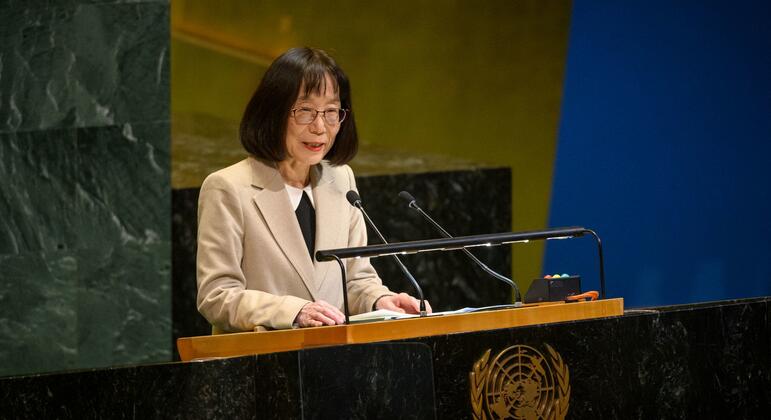
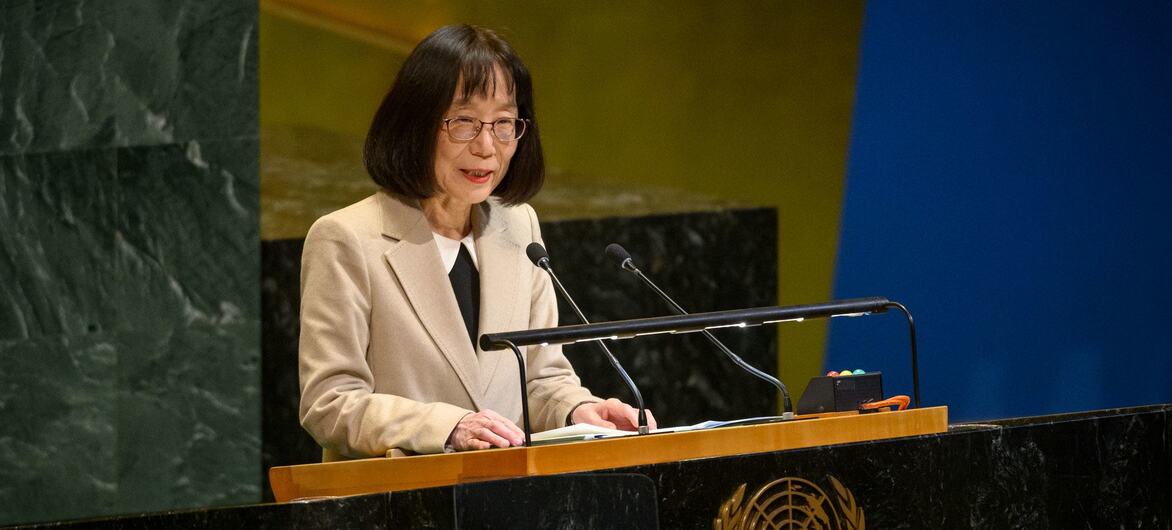
Japanese woman Tomoko Akane speaks at a podium bearing the United Nations emblem.

UN Photo/Loey Felipe Judge Tomoko Akane, President of the International Criminal Court, delivers the court's report to the UN General Assembly.

19 August 2026

These sanctions are a flagrant attack against the independence of an impartial judicial institution which operates pursuant to the mandate conferred by its States Parties from across regions,” the ICC wrote in a statement.

Established in 2002 under the Rome Statute, the ICC is a separate institution and not part of the UN, although the Security Council may refer cases to the court.

With the consent of countries that have signed the Rome Statute, the ICC prosecutes individuals for genocide, war crimes, crimes against humanity and the crime of aggression.

See our explainer, here.

UN Spokesperson Stéphane Dujarric told reporters on Wednesday that Secretary-General António Guterres was seriously concerned at the latest US action “as well as the ongoing designation of other International Criminal Court employees.”

US steps up attack

The US, which is not a party to the Rome Statute, has expressed concerns that the ICC is a threat to its national sovereignty. It worries the Court could prosecute US citizens for grave crimes allegedly committed in countries that – unlike the US – recognize the court’s authority.

On Tuesday, US Secretary of State Marco Rubio announced fresh sanctions against ICC President Tomoko Akane and senior trial lawyer Abdoulaye Seye. Washington had previously sanctioned former top prosecutor Karim Khan, who has since been dismissed from his post.

According to media reports, Mr. Seye has played a role in the investigation into Israeli funding for illegal settlements in the West Bank and the alleged distribution of weapons to settlers.

In November 2024, the ICC led by prosecutor Khan issued arrest warrants for Israeli Prime Minister Benjamin Netanyahu and former defence minister Yoav Gallant, alleging war crimes relating to the war against Hamas in Gaza.

“The Trump Administration has been clear: the International Criminal Court is a corrupt and fatally politicised supranational court that has maliciously abused its authority and exceeded its mandate,” Mr. Rubio wrote in a statement.

The sanctions build on previous US sanctions against the ICC under both terms of President Donald Trump, as well as Mr. Rubio’s statement on 13 July that the US intended to “dismantle” the court’s threat to US sovereignty.

Nine of the court’s 18 judges, along with both deputy prosecutors, the former prosecutor and one staff member are now barred from transacting with US citizens and face onerous restrictions in the global financial system.

ICC is ‘key pillar’: Dujarric

“While the United Nations and the International Criminal Court are separate institutions, with separate and distinct mandates, as we often said, the United Nations considers the ICC a key pillar of international criminal justice and the Secretary-General very much respects its work,” Mr. Dujarric said.

US officials including Mr. Rubio have defended US sanctions by asserting that some of the court’s investigations and arrest warrants have been politically motivated, and that the Court’s power infringes upon national constitutional systems.

On Wednesday, the court pushed back, saying that “the international legal order itself is placed at risk” when judges are threatened for applying the law.

“Threats and coercive measures also impact the ability of victims to seek justice, as they turn to the court when all other avenues have been exhausted,” the ICC wrote.

The court said it stands behind its personnel and victims of “unimaginable atrocities,” adding that it will continue to carry out its mandate “with independence and impartiality.”

The ICC values the consistent demonstrations of solidarity of States Parties, civil society and all those who support the rule of law and justice for the victims of international crimes,” it wrote. “The Court will continue its work, with all partners and with the unwavering support of its States Parties, to ensure the effective and independent implementation of its mandate.”

 
Trump says he will dismantle the ICC ‘brick by brick’. It could be his most chilling move of all
Fri 24 Jul 2026 08.00 BST

Barely a month appears to go by without Donald Trump making a fresh attempt to destroy the international rules-based order. The US has pulled funding from dozens of international institutions, shut down USAID and withdrawn from the Paris climate agreement. Nato may survive on paper, but Trump has made clear that he has little interest in coming to the aid of any ally that is attacked. The Board of Peace is clearly an attempt to sideline the United Nations.

But the state department’s announcement last week that it wishes to dismantle the international criminal court “brick by brick” could be Trump’s most frightening move of all.

This is not an idle social media post sent out late at night; there is no chance that the next person to speak to Trump might change his mind. It is now official US policy to destroy the ICC, and the administration is prepared to go to extraordinary lengths to do so.

Nations that do not fall into line will be punished. The state department has promised “increased scrutiny of nations that refuse to reject the ICC’s false authority while relying on US assistance”, particularly targeting those countries that “enjoy the benefits of the US security umbrella”. That will include the UK, a country that contributes just over £15m a year to the ICC, making it the fourth largest donor after Japan, Germany and France.

Travel and sanctions bans have already been imposed on judges and senior officials; now more will be targeted. As one of those previously threatened with sanctions told me, it can result in individuals being completely cut off from modern life. Personal bank accounts are shut down, while a whole host of US apps and websites, from Uber to booking.com, are off-limits. Email accounts can be blocked – Microsoft and Google are US companies. For the court itself, it means backing up evidence previously held on Microsoft systems.

The state department campaign also includes working with other nations that are not part of the ICC, suggesting that the US could ally itself with Russia and China.

Make no mistake, this is an existential crisis not just for the ICC but the very idea of international justice. The most powerful nation on Earth and the supposed leader of the democratic west is aligning itself with dictators and autocrats to prevent those accused of genocide, ethnic cleansing and war crimes from ever facing justice.

The US has had a complicated history with international justice. It was integral in the establishment of the post-second world war Nuremberg trials but was reluctant to ratify the genocide convention, only doing so in 1988, four decades after it was passed by the UN general assembly.

The issue was always one of self-preservation, rather than principle. For generations of US politicians, mainly Republicans but including some Democrats, the very idea that judges in other countries could hold American citizens to account was a non-starter. Until now, successive US presidents have generally accepted the idea of international justice even if, hypocritically, they did not want it to apply to them.

The US refused to sign the Rome statute that created the ICC in 2002, but it did not use its power to prevent its birth. In 2005, at the height of the Darfur genocide, it allowed the UN security council to pass a resolution authorising the ICC to investigate, and if necessary prosecute, those accused of war crimes in Sudan. Under Joe Biden’s presidency, it also encouraged the ICC to prosecute Vladimir Putin for alleged war crimes committed in Ukraine.

For Trump, though, the ICC has always been a threat. He imposed sanctions on court officials during his first term, following an investigation into alleged war crimes committed by US troops in Afghanistan.

The campaign against the court ratcheted up after his return to office last year. The ICC’s chief prosecutor, Karim Khan, had issued an arrest warrant for Israel’s prime minister, Benjamin Netanyahu, accusing him of committing war crimes in Gaza. In response, Trump imposed fresh sanctions on ICC officials including Khan.

The threats to the ICC are not just coming from its enemies – many of them are self-inflicted. Two women, one a staffer at the ICC, have accused Khan of sexual abuse. The executive committee of the ICC’s governing body last month voted to suspend Khan, who denies any wrongdoing, after concluding that he had committed serious misconduct. The court’s 125 member states will, this Friday, vote on whether to remove him from office.

Staff in The Hague say the ICC has become an increasingly high-pressure place to work, with one former senior official describing the atmosphere as toxic.

There are also concerns from international law and human rights experts over its record. It has botched many of its big cases, including against Uhuru Kenyatta and William Ruto, two opposing politicians who were both accused of fomenting Kenya’s post-election violence in 2007-8. As the ICC dithered, witnesses disappeared and the two men joined forces to run for election. Their election as president and vice-president in 2012 eventually led to the case collapsing.

The question now is what the “rest of the west” will do in response to Trump’s attacks. The court’s biggest donors need to stay strong and not give in to intimidation. It will be an early test for Ed Miliband, who said upon his appointment as foreign secretary on Monday that “we face a time of greater instability and threat to international law … than at any time since the second world war”.

The ICC’s imperfections undoubtedly make it a harder institution to defend. Those weaknesses can be magnified and targeted, making the court’s natural defenders reluctant to man the barricades.

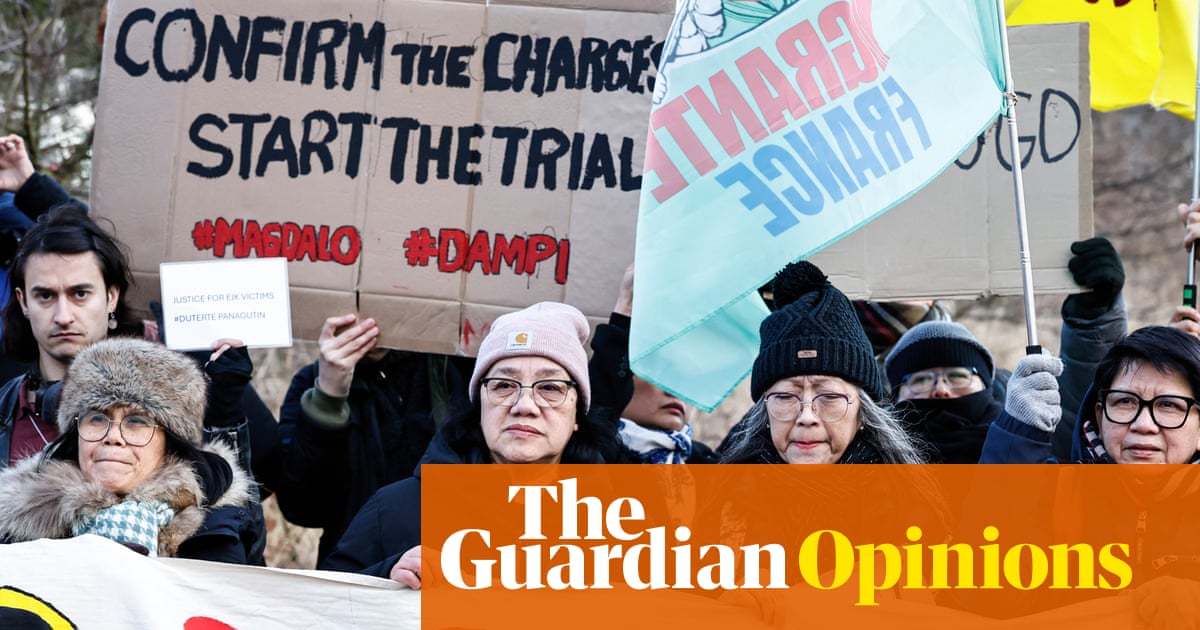
Yet that is exactly what needs to happen. Even when it is badly run or cases are poorly constructed, the ICC’s very existence can have an impact. Netanyahu and Putin will for ever be referred to as men indicted for war crimes. Their worlds have shrunk thanks to the threat of arrest. The Philippines’ former president, Rodrigo Duterte, is on trial, accused of crimes against humanity during his “war on drugs”.

This is why Trump is so determined to shut it down, argues Luis Moreno Ocampo, the court’s first chief prosecutor. “Trump knows he could be a target after he leaves office,” he told me. “The ICC is a huge obstacle for him.”

And that’s another reason why it’s so important the ICC is saved. Actions need to have consequences. After the midterm elections in the US, a Democrat-led Congress is likely to hold hearings and open investigations into a whole host of Trump’s actions, from his murky dealings to his use of paramilitaries against his own citizens.

But the rest of the world needs to hold him accountable too – whether it’s for bombing boats in the Caribbean, striking a school in Iran or indeed any fresh horror he commits in the next two and a half years. Just as Putin and Netanyahu will live out the rest of their days knowing the threat of arrest could lie just around the corner, Trump fears this might be his fate. He cannot be allowed to escape it.


Users who are viewing this thread

Pakistan Defence Latest

Country Watch Latest

Back
Top