
F-22Raptor
Elite Member

The Pentagon has reached new framework agreements with three defense contractors as part of a strategy to acquire thousands of lower-cost air-launched cruise missiles in the coming years. The deals are directly in support of the U.S. Air Force’s Family of Affordable Mass Missiles (FAMM) program. The Air Force has already said that it is aiming to buy nearly 28,000 FAMM munitions in the next five years.
Under FAMM, the Air Force plans to acquire multiple types of lower-cost cruise missiles in different configurations. This will include ‘lugged’ types (FAMM-L) designed to be launched directly from hardpoints on aircraft, as well as ones intended to be employed from cargo planes via palletized munitions systems(FAMM-P). The service is also pursuing extended-range FAMM-BAR designs, with BAR here standing for “Beyond Adversary’s Reach.”
“Through [FAMM] agreements with Anduril, CoAspire, and Zone 5, the DoW will accelerate rapid validation of a new family of low-cost, air-launched cruise missiles – capabilities that will strengthen the Arsenal of Freedom,” according to a press release from the Pentagon today. “The agreements are a direct outcome of several Acquisition Transformation Strategy initiatives, including stabilizing demand signals, procuring industry-driven solutions, and maximizing flexible contracting.”
Anduril, CoAspire, and Zone 5 were also among the companies to receive framework deals from the Pentagon in May as part of plans to buy 10,000 lower-cost ground-launched cruise missiles through 2029. This is under a separate program called Low-Cost Containerized Missiles (LCCM). Leidos is part of the LCCM effort, as well. At that time, the Pentagon announced an additional agreement with Castelion regarding the production of 12,000 Blackbeard lower-cost hypersonic missiles. It’s also worth noting here that, since then, Norwegian defense contractor Kongsberg has aquired Zone 5.
“A key feature of these [FAMM] deals is the establishment of seven-year, multi-year agreements which, subject to congressional appropriations and enactment of all necessary authorizations, will be awarded upon the successful validation and competitive selection of the munitions,” today’s release adds. “The Department was granted 5-year authorization for FAMM in the Fiscal Year 2026 National Defense Authorization Act (NDAA) and is actively seeking congressional approval in the FY27 NDAA and Appropriations Bill for a 7-year multi-year procurement program to provide stability to new entrants.”
The Pentagon’s press release does not name any specific munitions.
Anduril has confirmed that its contribution will be versions of its Barracuda-500 design, and that is aiming to start making deliveries under FAMM next year. The company will also be delivering a surface-launched version of the Barracuda-500 for the LCCM effort. Anduril first unveiled the full Barracuda family, which includes several tiers of what it calls “expendable autonomous air vehicles,” back in 2024, as you can read more about here. There are reports that at least one version of the Barracuda-500 has received an official U.S. military designation, AGM-189A.
“We joined the FAMM-L program in February 2026 and will execute the first ground and flight tests for Lug-Launched Barracuda-500M in the next several months,” Anduril noted in its release. “We completed the first successful flight test of Pallet-Launched Barracuda-500M in September 2024 and have since conducted dozens of successful flight tests that have further validated the maturity, performance, and modularity of the Barracuda-500 system, including Networked Collaborative Autonomy flights, terminal engagements, and payload performance validation testing.”
Zone 5 has also confirmed that it will be supplying its AGM-188A Rusty Dagger missile.
“By leveraging modern manufacturing and commercial technology, we are breaking the traditional cost curve, enabling the Department of War to field scalable, affordable capacity. The AGM-188 Rusty Dagger will deliver thousands of weapons per year for fighter and cargo aircraft employment but importantly without sacrificing exquisite performance,” Zone 5’s CEO Thomas Akers said in a statement. “Modern conflict has made one thing clear – the ability to rapidly scale production without sacrificing capability is critically important for air superiority. Rusty Dagger is built to deliver affordable, adaptable, highly survivable, incredibly lethal and rapidly deployable weapons that give the U.S. and our allies the ability to outpace and overwhelm evolving threats without being constrained by cost or production limitations.”
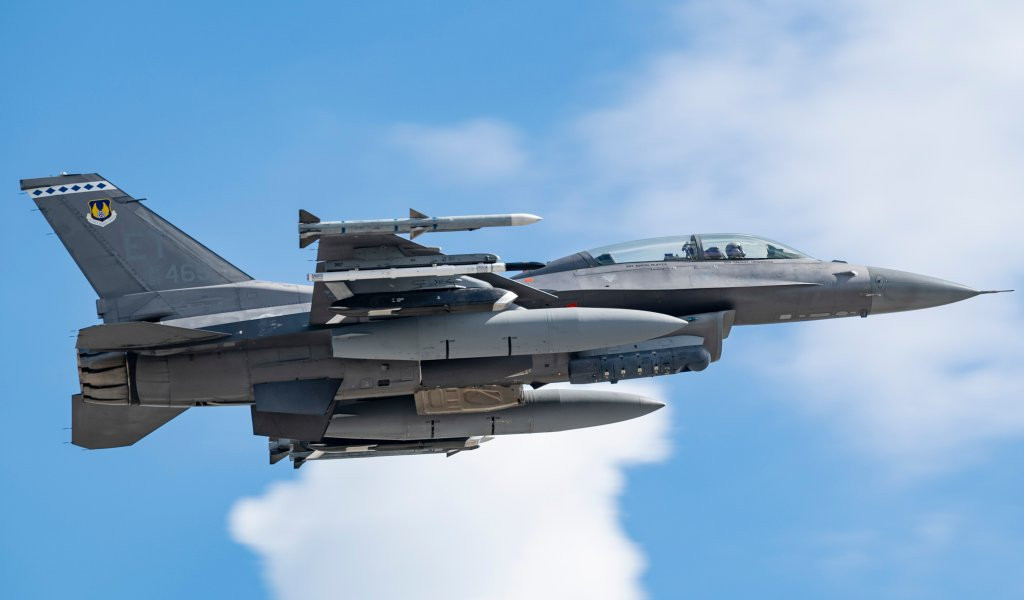 An AGM-188A Rusty Dagger missile seen under the right wing of a US Air Force F-16 Viper, just outboard of the drop tank, during testing. USAF
The deal with CoAspire is for that company’s Rapidly Adaptable Affordable Cruise Missile.
“The inclusion of CoAspire in this groundbreaking FAMM program multi-year agreement underscores CoAspire’s ability to revolutionize our country’s strike capabilities, offering a long-range solution that can be deployed across multiple platforms,” Doug Denneny, CoAspire’s CEO, Owner, and Founder, said in his own statement. “We, and our 56 first-tier suppliers across almost every state are excited to support the Air Force’s need to affordably procure thousands of FAMM cruise missiles over seven years. We applaud the Department’s inclusion of CoAspire as the only small business in this historic production opportunity. This is a true commitment to expand the defense industrial base while growing jobs across the US and bringing affordable cruise missile capabilities to the Air Force.”
Rusty Dagger and RAACM were both developed initially under the Air Force’s Extended Range Attack Munition (ERAM) program. ERAM’s main initial focus has been on delivering lower-cost air-launched strike capabilities to Ukraine. Zone 5 has previously confirmed that AGM-188A deliveries to Ukraine have begun, but it is unclear whether they are now being employed operationally. ERAM is known to be feeding into the FAMM effort, as well.
Overall, “offering both lugged and palletized variants, the FAMM provides the Air Force with flexible logistics, handling, and deployment options,” the Pentagon’s press release today notes.
“The multi-year approach utilizes firm-fixed-price contracting with a minimum quantity floor. Shares are split among all qualified vendors to ensure multiple production lines are positioned to surge,” the release further explains. “Contractors that meet or exceed production schedules will be eligible for additional procurement quantities – pending congressional appropriations – fostering a competitive environment that rewards efficiency and speed.”
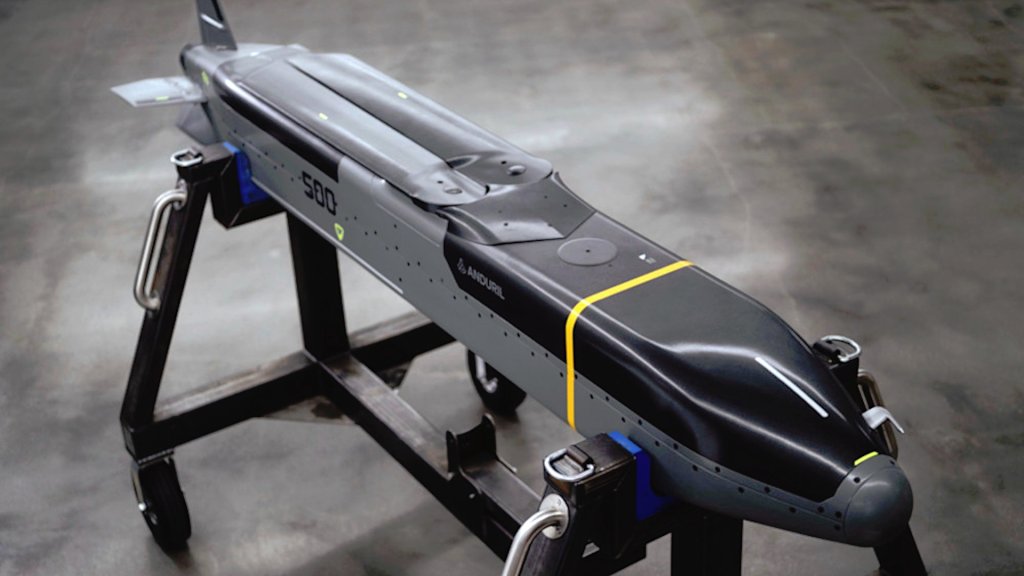 Another look at Anduril’s Barracuda-500. Anduril
These latter points highlight the fact that the FAMM program, as well as the LCCM effort, has a larger goal of addressing the critical need for strike munitions that can be produced at scale and in a cost-effective manner. TWZ has been calling attention to this broader reality for years, which has only been underscored by the latest conflict with Iran and a succession of other global crises. As we previously wrote after the announcement of the LCCM framework deals:
“Expenditures of critical air-to-surface and surface-to-surface munitions, as well as anti-air interceptors, by the U.S. military, as well as its allies and partners, in conflicts in recent years have only underscored the vital need to bolster these inventories. Demand for stand-off munitions, in particular, would be far greater in any future high-end fight against a near-peer adversary like China. That is a scenario where American forces could easily find themselves tasked to prosecute tens of thousands of targets, just in the opening phase.”
“Furthermore, existing munitions are often exquisite in design, and take months, or more often years, of lead time to produce. The Pentagon’s focus on “disruptive new entrants and commercial innovators,” rather than any of America’s long-established prime defense contractors, with its newly announced framework deals, is extremely significant in its own right. This is the latest example of a major shift away from awarding high-profile contracts to large legacy providers, helping to diversify the industrial base and promote competition. This also means moving away from companies accustomed to very long lead procurement and production arrangements.”
The Pentagon has also made clear that the FAMM framework agreements with Anduril, CoAspire, and Zone 5 do not preclude other companies from being brought into the program in the future. “The Department will also preserve competition opportunities for new vendors to be onboarded for additional quantities and new capabilities in the future as technology continues to advance,” per today’s release.
The market space for lower-cost cruise missiles has exploded in recent years in the United States and elsewhere globally. Relevant designs also occupy a space where the defining lines between these weapons and long-range kamikaze drones, as well as decoys, are increasingly blurry. Overlap between the FAMM and LCCM programs also highlights how many of these weapons are being adapted for launch from air, land, and maritime domains, which can help streamline production and supply chains, as well as offer operational benefits.
Taking deliberate steps to leave the door open to future competition reflects a larger push to avoid so-called ‘vendor lock’ in the U.S. defense contracting space. This has also been punctuated by moves to ensure greater government control of intellectual property rights and a focus on modular, open-architecture systems across major U.S. military acquisition efforts.
With the FAMM framework deals announced today, on top of the LCCM agreements back in May, the Pentagon is continuing to lay a vital foundation for the procuremnt of thousands of lower-cost strike munitions for years to come.
Under FAMM, the Air Force plans to acquire multiple types of lower-cost cruise missiles in different configurations. This will include ‘lugged’ types (FAMM-L) designed to be launched directly from hardpoints on aircraft, as well as ones intended to be employed from cargo planes via palletized munitions systems(FAMM-P). The service is also pursuing extended-range FAMM-BAR designs, with BAR here standing for “Beyond Adversary’s Reach.”
“Through [FAMM] agreements with Anduril, CoAspire, and Zone 5, the DoW will accelerate rapid validation of a new family of low-cost, air-launched cruise missiles – capabilities that will strengthen the Arsenal of Freedom,” according to a press release from the Pentagon today. “The agreements are a direct outcome of several Acquisition Transformation Strategy initiatives, including stabilizing demand signals, procuring industry-driven solutions, and maximizing flexible contracting.”
Anduril, CoAspire, and Zone 5 were also among the companies to receive framework deals from the Pentagon in May as part of plans to buy 10,000 lower-cost ground-launched cruise missiles through 2029. This is under a separate program called Low-Cost Containerized Missiles (LCCM). Leidos is part of the LCCM effort, as well. At that time, the Pentagon announced an additional agreement with Castelion regarding the production of 12,000 Blackbeard lower-cost hypersonic missiles. It’s also worth noting here that, since then, Norwegian defense contractor Kongsberg has aquired Zone 5.
“A key feature of these [FAMM] deals is the establishment of seven-year, multi-year agreements which, subject to congressional appropriations and enactment of all necessary authorizations, will be awarded upon the successful validation and competitive selection of the munitions,” today’s release adds. “The Department was granted 5-year authorization for FAMM in the Fiscal Year 2026 National Defense Authorization Act (NDAA) and is actively seeking congressional approval in the FY27 NDAA and Appropriations Bill for a 7-year multi-year procurement program to provide stability to new entrants.”
The Pentagon’s press release does not name any specific munitions.
Anduril has confirmed that its contribution will be versions of its Barracuda-500 design, and that is aiming to start making deliveries under FAMM next year. The company will also be delivering a surface-launched version of the Barracuda-500 for the LCCM effort. Anduril first unveiled the full Barracuda family, which includes several tiers of what it calls “expendable autonomous air vehicles,” back in 2024, as you can read more about here. There are reports that at least one version of the Barracuda-500 has received an official U.S. military designation, AGM-189A.
“We joined the FAMM-L program in February 2026 and will execute the first ground and flight tests for Lug-Launched Barracuda-500M in the next several months,” Anduril noted in its release. “We completed the first successful flight test of Pallet-Launched Barracuda-500M in September 2024 and have since conducted dozens of successful flight tests that have further validated the maturity, performance, and modularity of the Barracuda-500 system, including Networked Collaborative Autonomy flights, terminal engagements, and payload performance validation testing.”
Zone 5 has also confirmed that it will be supplying its AGM-188A Rusty Dagger missile.
“By leveraging modern manufacturing and commercial technology, we are breaking the traditional cost curve, enabling the Department of War to field scalable, affordable capacity. The AGM-188 Rusty Dagger will deliver thousands of weapons per year for fighter and cargo aircraft employment but importantly without sacrificing exquisite performance,” Zone 5’s CEO Thomas Akers said in a statement. “Modern conflict has made one thing clear – the ability to rapidly scale production without sacrificing capability is critically important for air superiority. Rusty Dagger is built to deliver affordable, adaptable, highly survivable, incredibly lethal and rapidly deployable weapons that give the U.S. and our allies the ability to outpace and overwhelm evolving threats without being constrained by cost or production limitations.”
The deal with CoAspire is for that company’s Rapidly Adaptable Affordable Cruise Missile.
“The inclusion of CoAspire in this groundbreaking FAMM program multi-year agreement underscores CoAspire’s ability to revolutionize our country’s strike capabilities, offering a long-range solution that can be deployed across multiple platforms,” Doug Denneny, CoAspire’s CEO, Owner, and Founder, said in his own statement. “We, and our 56 first-tier suppliers across almost every state are excited to support the Air Force’s need to affordably procure thousands of FAMM cruise missiles over seven years. We applaud the Department’s inclusion of CoAspire as the only small business in this historic production opportunity. This is a true commitment to expand the defense industrial base while growing jobs across the US and bringing affordable cruise missile capabilities to the Air Force.”
Rusty Dagger and RAACM were both developed initially under the Air Force’s Extended Range Attack Munition (ERAM) program. ERAM’s main initial focus has been on delivering lower-cost air-launched strike capabilities to Ukraine. Zone 5 has previously confirmed that AGM-188A deliveries to Ukraine have begun, but it is unclear whether they are now being employed operationally. ERAM is known to be feeding into the FAMM effort, as well.
Overall, “offering both lugged and palletized variants, the FAMM provides the Air Force with flexible logistics, handling, and deployment options,” the Pentagon’s press release today notes.
“The multi-year approach utilizes firm-fixed-price contracting with a minimum quantity floor. Shares are split among all qualified vendors to ensure multiple production lines are positioned to surge,” the release further explains. “Contractors that meet or exceed production schedules will be eligible for additional procurement quantities – pending congressional appropriations – fostering a competitive environment that rewards efficiency and speed.”
These latter points highlight the fact that the FAMM program, as well as the LCCM effort, has a larger goal of addressing the critical need for strike munitions that can be produced at scale and in a cost-effective manner. TWZ has been calling attention to this broader reality for years, which has only been underscored by the latest conflict with Iran and a succession of other global crises. As we previously wrote after the announcement of the LCCM framework deals:
“Expenditures of critical air-to-surface and surface-to-surface munitions, as well as anti-air interceptors, by the U.S. military, as well as its allies and partners, in conflicts in recent years have only underscored the vital need to bolster these inventories. Demand for stand-off munitions, in particular, would be far greater in any future high-end fight against a near-peer adversary like China. That is a scenario where American forces could easily find themselves tasked to prosecute tens of thousands of targets, just in the opening phase.”
“Furthermore, existing munitions are often exquisite in design, and take months, or more often years, of lead time to produce. The Pentagon’s focus on “disruptive new entrants and commercial innovators,” rather than any of America’s long-established prime defense contractors, with its newly announced framework deals, is extremely significant in its own right. This is the latest example of a major shift away from awarding high-profile contracts to large legacy providers, helping to diversify the industrial base and promote competition. This also means moving away from companies accustomed to very long lead procurement and production arrangements.”
The Pentagon has also made clear that the FAMM framework agreements with Anduril, CoAspire, and Zone 5 do not preclude other companies from being brought into the program in the future. “The Department will also preserve competition opportunities for new vendors to be onboarded for additional quantities and new capabilities in the future as technology continues to advance,” per today’s release.
The market space for lower-cost cruise missiles has exploded in recent years in the United States and elsewhere globally. Relevant designs also occupy a space where the defining lines between these weapons and long-range kamikaze drones, as well as decoys, are increasingly blurry. Overlap between the FAMM and LCCM programs also highlights how many of these weapons are being adapted for launch from air, land, and maritime domains, which can help streamline production and supply chains, as well as offer operational benefits.
Taking deliberate steps to leave the door open to future competition reflects a larger push to avoid so-called ‘vendor lock’ in the U.S. defense contracting space. This has also been punctuated by moves to ensure greater government control of intellectual property rights and a focus on modular, open-architecture systems across major U.S. military acquisition efforts.
With the FAMM framework deals announced today, on top of the LCCM agreements back in May, the Pentagon is continuing to lay a vital foundation for the procuremnt of thousands of lower-cost strike munitions for years to come.


