---
There was no battle in WW1 more important than Vimy Ridge?
---
Vimy Ridge was a tactical victory at best:
The importance of the Battle of Vimy Ridge in the broader context of Great War
military history is straightforward. It was an unquestioned victory for British Empire
forces in a year marked for the most part by disheartening setbacks, and in the process
vindicated the new ‘bite-and-hold’ attack doctrine that had emerged from the bitter
lessons of the Somme in 1916. For the Canadian Corps, it had a profound impact on the
collective spirit of officers and men, and marked the beginning of a string of victories
that would solidify the Corps’ reputation as a premier fighting force. Ironically, while
the British Empire saw Vimy as a notable victory, for Germany it was seen, at worst, as
a minor setback, its adverse consequences quite easily contained.
Link
---
The Germans practically gave up after losing Passchendaele?
---
The German forces recovered all lands lost in the Battle of Passchendaele during their push known as the German Spring Offensive that was launched on
March 1918 and concluded in
July 1918:
Link
American General John Pershing was a military genius of his time. He was well-versed in history and proposed a shift in approach from
Trench Warfare to Combined Arms Tactics in line with his Open Warfare Doctrine in World War 1. General Pershing proved himself to all sides in
the Battle of St. Mihiel on
September 1918:
The Battle of St. Mihiel (September 12-15, 1918) involving the American Expeditionary Force (AEF) and 110,000 French colonial troops under the command of U.S. General John J. Pershing. The reduction of the salient near the village of St. Mihiel would facilitate communication and logistics between various French corps at Nancy and Verdun. Yet Pershing also saw an opportunity for the AEF to break through the German lines and capture the fortified city of Metz. The attack caught the outnumbered Germans in the process of retreating to join the larger body of the German army behind the Hindenburg Line, so that their artillery was out of place and the infantry was generally disorganized. Thus, the American attack proved more successful than expected. The offensive also saw the use of the newly-created U.S. tank battalions under then-Colonel George S. Patton. The AEF also relied heavily on the U.S. Army Air Service to conduct visual reconnaissance before the battle began and provide bombing support during the offensive. In the end, the AEF captured 15,000 German prisoners and 450 artillery in the reduction of the salient. The great success of the St. Mihiel attack further established the effectiveness of the AEF in the minds of the French and British commanders.
Link
- and finished the job with
the Meuse-Argonne Offensive that was launched on
September 1918 and concluded in
November 1918:
Pershing’s First and Second Armies had cleared the Meuse-Argonne sector and positioned themselves to take Sedan and Metz, moves that would have threatened Germany’s very ability to wage the war. In the course of operations, they shattered the German Fifth Army; inflicted 100,000 casualties; and captured 26,000 men, 974 guns, and 3,000 machine guns. The AEF, in turn, suffered 117,000 dead and wounded. In many ways, the greatest accomplishment was logistical. Pershing and his staff pulled the AEF out of one area, moved the army dozens of miles to north, and commenced an entirely new offensive within weeks.
Pershing’s own summation of the Meuse-Argonne campaign, and indeed the entire AEF, takes up only a few pages at the end of his two-volume, Pulitzer Prize-winning memoirs. Like Ulysses S. Grant’s post-Civil War memoirs, they are a literary achievement as well as a historical record. The immense pride Pershing felt in his officers and men shines through the last paragraphs. Humble to the end, Pershing points out that the AEF was not perfect: “The divisions with little training, while aggressive and courageous they were capable of powerful blows, but their blows were apt to be awkward and teamwork was often not well understood.” Despite his quibbles, the battles in the Meuse-Argonne should be better remembered than they are by Americans, taking a place alongside such other forest battles as the Wilderness and the Bulge in the nation’s other two great wars.
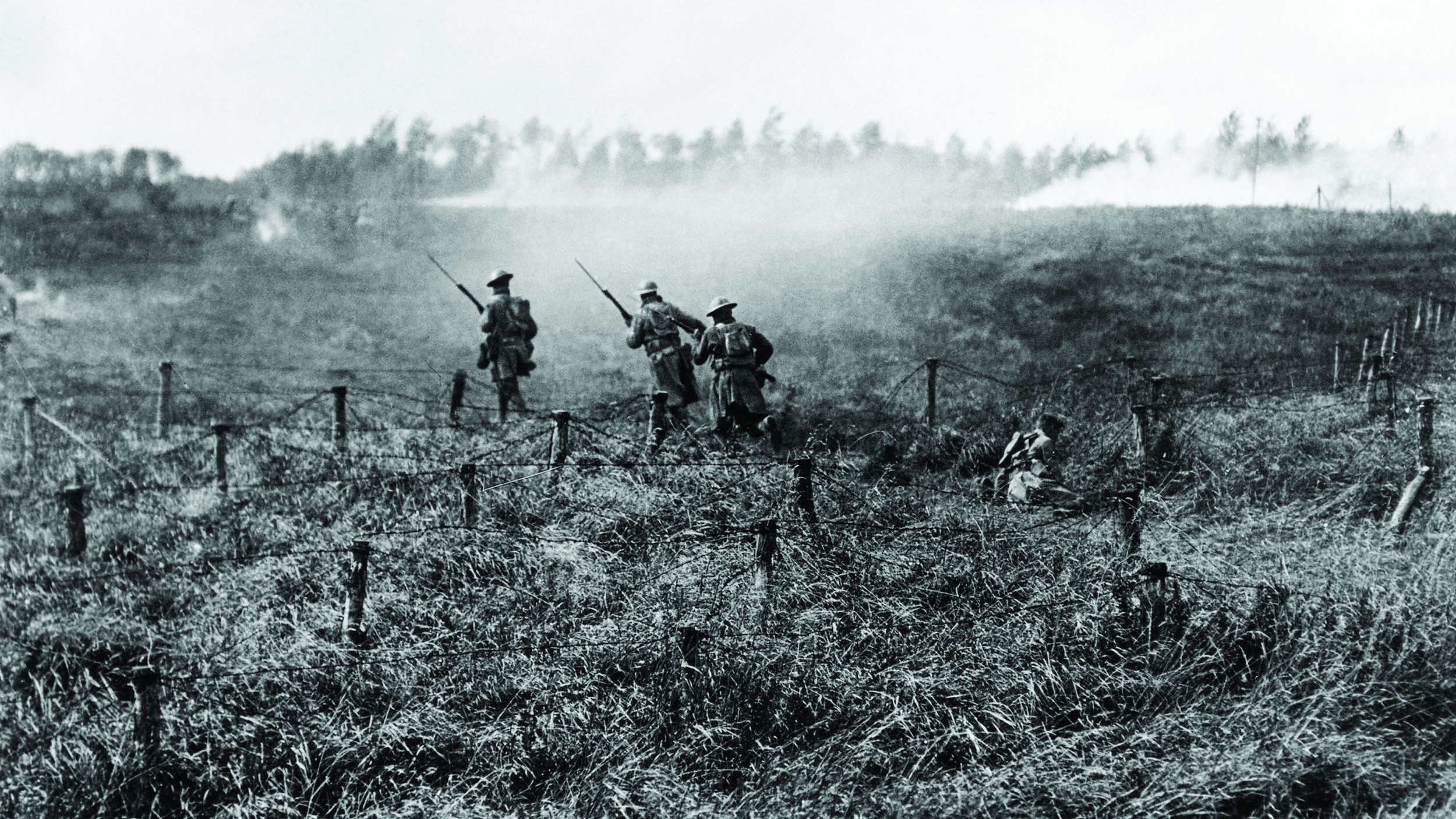
On Sept. 12, 1918, AEF commander John J. Pershing launched a large attack through the Meuse-Argonne section of northeastern France

warfarehistorynetwork.com