And you repeat the same Americanised revsionist narrative.
Do you honestly believe for a second that the USA would have stood any chance at all against the Nazi Beast if the Soviets had not wrestled it to the ground at a great cost of 25 MILLION dead? Let alone the combined onslaught of the Nazis and the Imperial Japan.
Admit it, Soviet Russia and China, along with the Europeans, paid a huge price to defeat the Nazis and Imperial Japan. If they had decided to take North America instead, the USA would have surrendered within a few weeks or after about 3 to 5 million casualties.
I have posted well-documented facts that you conveniently ignore and repeat questionable claims in every post. Soviet forces and Chinese forces were under-equipped in times of WW2 and the Axis Powers were absolutely brutal in their conduct of war in Soviet lands and Chinese lands. However, the US restructured Allied resistance effort in Afro-Eurasia (see below) and made it possible for the Soviet Union to rebuild its military capability with the Lend-Lease Act (see post # 218). The US-led forces clashed with the Axis Powers in Afro-Eurasia (Western Front) and the Pacific (Eastern Front) and the Axis Powers had no choice but to divert their resources from Soviet lands and Chinese lands to confront US-led forces [and lost]. Therefore, the US had a pivotal role in defeat of the Axis Powers in WW2.
---- ---- ---- ---- ---- ----
Let's have a RECAP of the American war effort in Afro-Eurasia. To refresh your memory, German forces had overwhelmed Poland, France, Luxembourg, the Netherlands and Belgium by 1940. British forces were routed from France but managed to counter Italian forces in Libya in 1940. However, German forces arrived in Libya in support of Italian forces to establish Afrika Corps and pushed the British back into Egypt in 1941. However, American forces arrived in the region to restructure Allied resistance effort and challenge the Afrika Korps and details are provided below.
---- ---- ----
The US-led forces defeated the legendary Afrika Korps in Africa in 1942
---- ---- ----
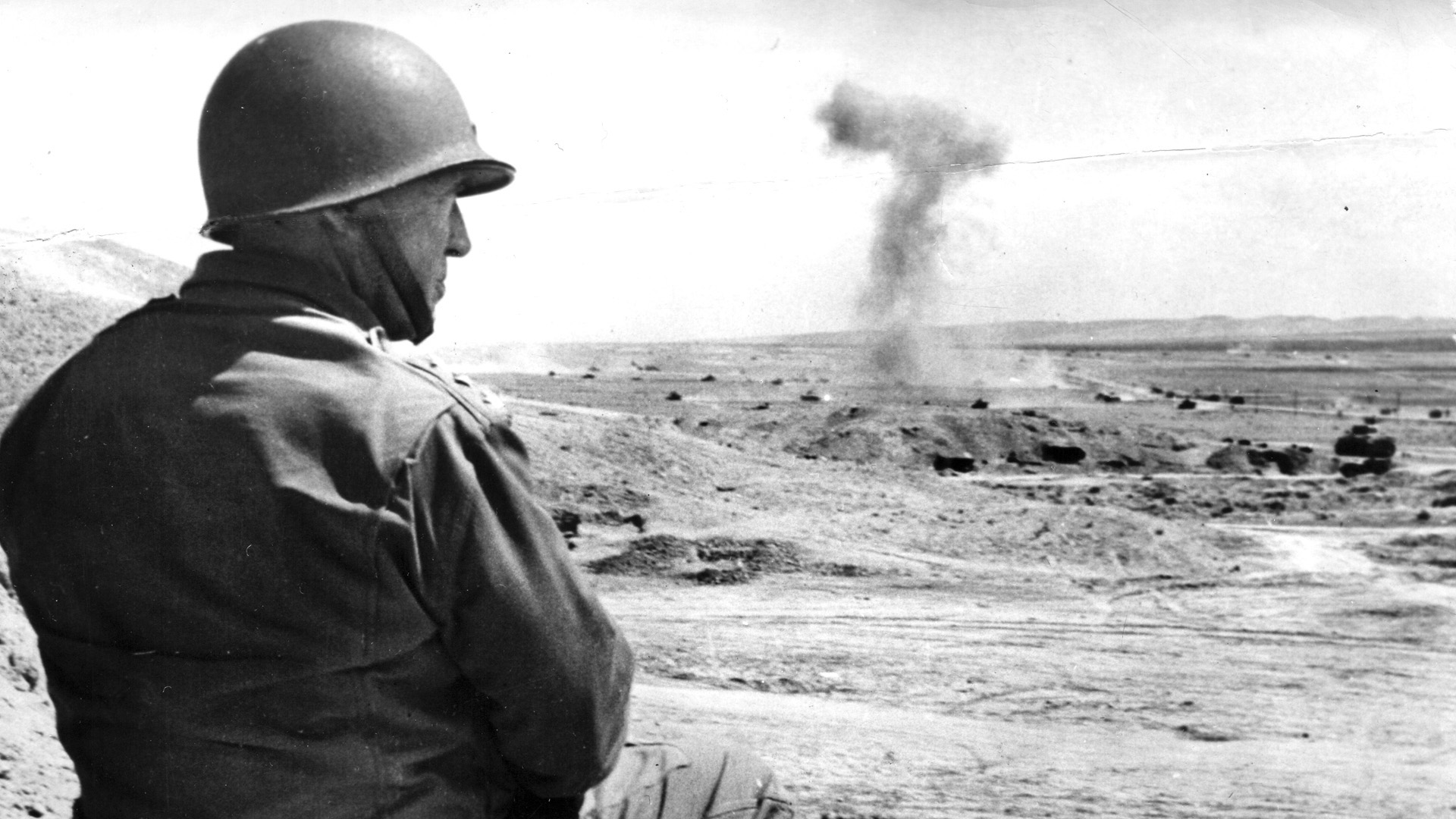
Lieutenant General George S. Patton, Jr., led the American II Corps though Tunisia and defeated the Germans in the first American victory since the debacle at Kasserine Pass.
warfarehistorynetwork.com
"With victory in Tunisia, the Allies had expelled Axis forces from North Africa and thereby taken a giant step toward victory in the Mediterranean Theater of Operations. The United States Army had contributed mightily toward that accomplishment. The victory in northwest Africa, however, did not come cheaply. Of 70,000 Allied casualties, the United States Army lost 2,715 dead, 8,978 wounded, and 6,528 missing. At the same time, however, the Army gained thousands of seasoned officers, noncommissioned officers, and troops whose experience would prove decisive in subsequent campaigns. These seasoned soldiers of all ranks would not have long to wait or far to go, for the next test was only two months and 150 miles away: the island of Sicily." Link
---- ---- ----
The US-led forces defeated the Axis Powers in the Italian Campaign (1943 - 1945)
---- ---- ----
"Operation Avalanche was a joint Allied action. Overall command of the ground forces was given to Lieutenant General Mark Clark commanding US Fifth Army. Vice Admiral Henry Kent Hewitt oversaw the naval component. With the Fifth Army, Clark had two Corps under his command: US VI Corps commanded by Major General Ernest J. Dawley and British X Corps. X Corps was commanded by Lieutenant General Richard McCreery. X Corps consisted of 46th Infantry Division, 56th (London) Infantry Division, 7th Armoured Division, No. 2 Commando, No. 41 Commando, and 3 US Ranger battalions. All told some 170,000 men were assembled by the Allies for Operation Avalanche." Link
"The success of Husky opened the door for the Allies to invade Italy and caused Germany to shift forces from Western Europe and Russiato defend against the Allied offensive in the Mediterranean. With the collapse of the Vichy French in North Africa and the surrender of Italy, Germany was compelled to fight the war alone on multiple fronts with decreasing resources. On 9 September 1943a combined British and American Task Force, commanded by Lt Gen Mark Clark, conducted an amphibious assault, landing south of Naples, Italy, on the beaches of Salerno Bay. Operation Avalanche allowed the Allies to maintain the momentum gained in Sicily by securing valuable airfields that would be used to support future operations in southern France, Austria, and the Balkans. The operation forced Germany to move forces from the eastern front to Italy and provided a shorter sea-supply route to the Soviet Union. The soft underbelly of Germany was exposed." Link
---- ---- ----
The US-led forces invaded France in 1944
---- ---- ----
"The view that Germany was the more dangerous of the Axis powers was a foundation of Allied strategic planning assumptions at the Arcadia Conference, held in Washington, DC, in late December 1941.Thus, an eventual large-scale Anglo-American landing in northwestern Europe was seen as inevitable. By early 1942, Allied operational planning was in progress, assessing three different operations: Bolero, the build-up of Allied forces in Britain, which commenced in early 1942; Sledgehammer, the establishment of a defensive salient on the French Cotentin peninsula with the intent to pin down German forces; and Roundup, in which broad beachheads were to be seized on the French Channel coast, enabling a breakout into German-occupied France. The latter was eventually to become Operation Overlord." Link
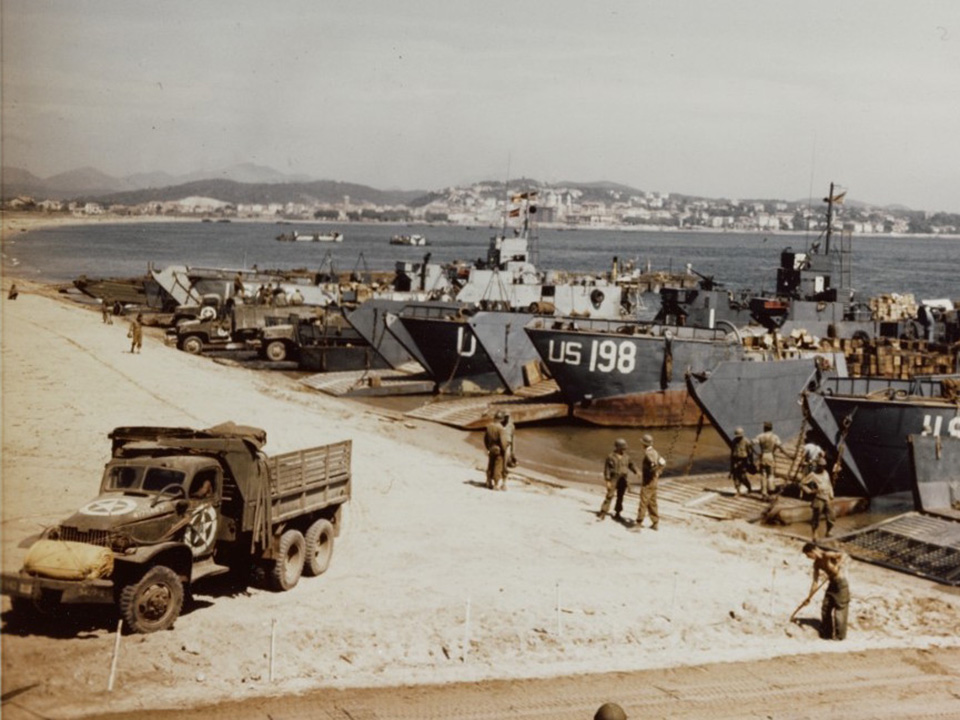
The US-led forces invaded France from the North (Operation Overlord) and also from the South (Operation Dragoon) with the intent to defeat German forces in this region. Operation Overland was the HAMMER and Operation Dragoon was the ANVIL in this initiative.
Battle of the Bulge Microsite | The United States Army
www.army.mil
"Through January, American troops, often wading through deep snow drifts, attacked the sides of the shrinking bulge until they had restored the front and set the stage for the final drive to victory. Never again would Hitler be able to launch an offensive in the west on such a scale." Link
----
Emphasis mine. The US made it possible for the Soviet Union to rebuild its military capability with the Lend-Lease Act (see post # 218), and the US-led forces clashed with the Axis Powers such as Italy and Germany in Afro-Eurasia on a massive scale (see above) and the Axis Powers had no choice but to divert their resources from Soviet lands to confront US-led forces in the Western Front [and lost]. The US also used its Air Power to bomb German cities and industrial capability (see post # 218).
To refresh your memory, the US and the British joined hands to defeat the legendary Afrika Corps in Libya in 1942 (Operation Torch). The US-led forces invaded Italy in 1943 (Operation Husky followed by Operation Avalanche) - this development made it impossible for Germany to resupply its forces in the Eastern Front to overcome Soviet forces in the Battle of Kursk and the tide turned in the Eastern Front. The US-led forces overthrew Mussolini setup in Italy but were facing heavy German resistance in the region so they opened another front in France in 1944 (Operation Overlord followed by Operation Dragoon) in an attempt to stretch German defenses and advance towards Germany from both directions. These developments broke the back of German forces as they lost their best mechanized divisions in clashes with Allied Forces in the Western Front and exposed Germany to invasion from all directions.
---- ---- ---- ---- ---- ----
Let's have a RECAP of the American war effort in the Pacific. Japanese forces attacked Pearl Harbor and defeated American forces in the Battle of Wake Island in 1941. Japanese forces also defeated the US-led forces in the Battle of Bataan and Java Sea in 1942. However, the US Navy regrouped and bombed Tokyo in 1942 (Doolittle Raid) and prepared for a series of operations that are described below.
---- ---- ----
The US-led forces defeated a large Japanese force in the New Guinea campaign (1942 - 1945)
---- ---- ----
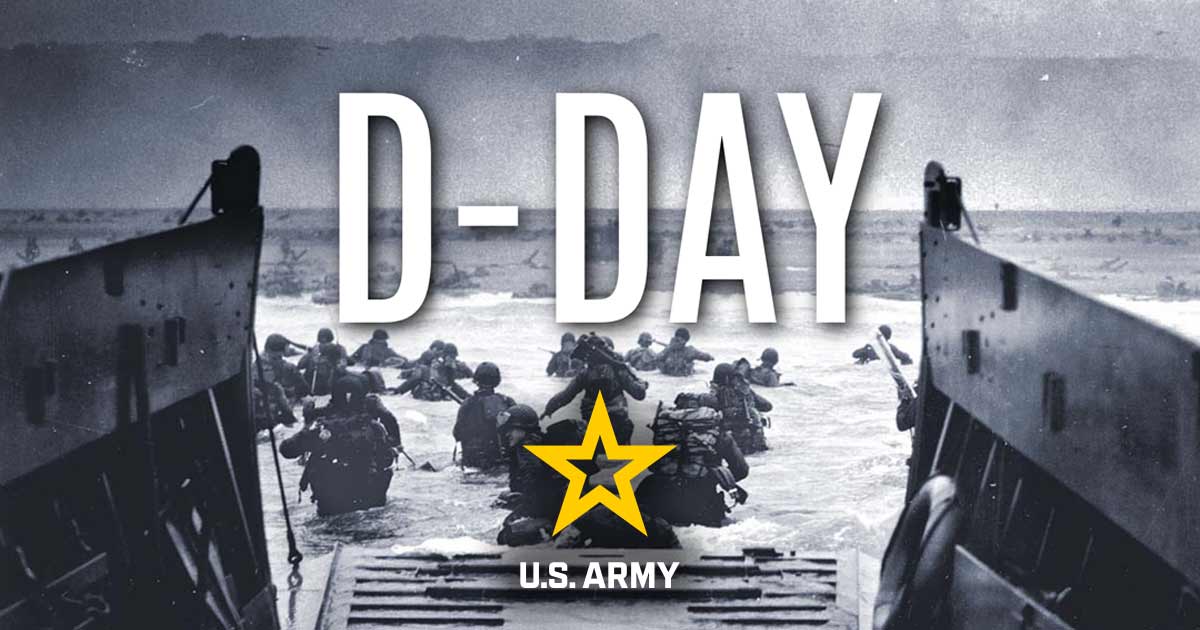
Joint Base Lewis-McChord, WASH. — As the U.S. Army recently commemorated the 80th Anniversary of D-Day, it's also an opportune moment to reflect on the...
www.army.mil
This campaign spanned multiple battles and America’s First Corps played a critical role in it. American exploits in the Battle of the Coral Sea are particularly noted.
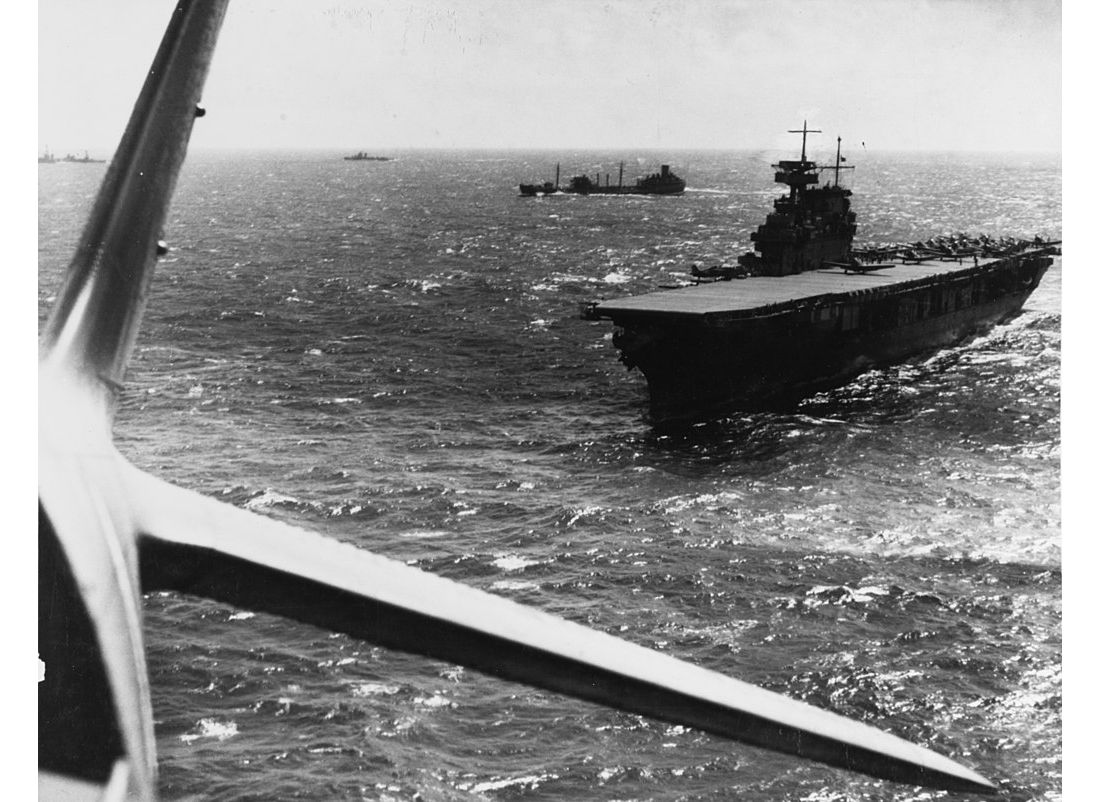
Often overshadowed by the Battle of Midway, the hard-fought carrier naval battle in May 1942 in the waters of the Coral Sea north of Australia marked the end of the phase of Japanese triumphs in the Pacific War and proved to be of strategic significance.
www.nationalww2museum.org
"The Battle of the Coral Sea was a series of naval engagements off the north-east coast of Australia between 4 and 8 May 1942. It was fought by Allied (United States and Australian) and Japanese aircraft against four different major groups of warships. Some of the aircraft involved were land-based, but most were from the opposing aircraft carriers. It was the first aircraft carrier battle ever fought, and the first naval battle in which the opposing forces of surface ships at no stage sighted or fired at each other. All attacks were carried out by aeroplanes. It is also the largest naval battle that has ever been fought off Australia’s shores. The battle was significant for two main reasons:it was the first time in World War 2 that the Japanese experienced failure in a major operation; and the battle stopped the Japanese sea-borne invasion of Port Moresby." Link
Both sides suffered heavy losses in this campaign but the US-led forces thwarted Japanese invasion of Australia in the end.
---- ---- ----
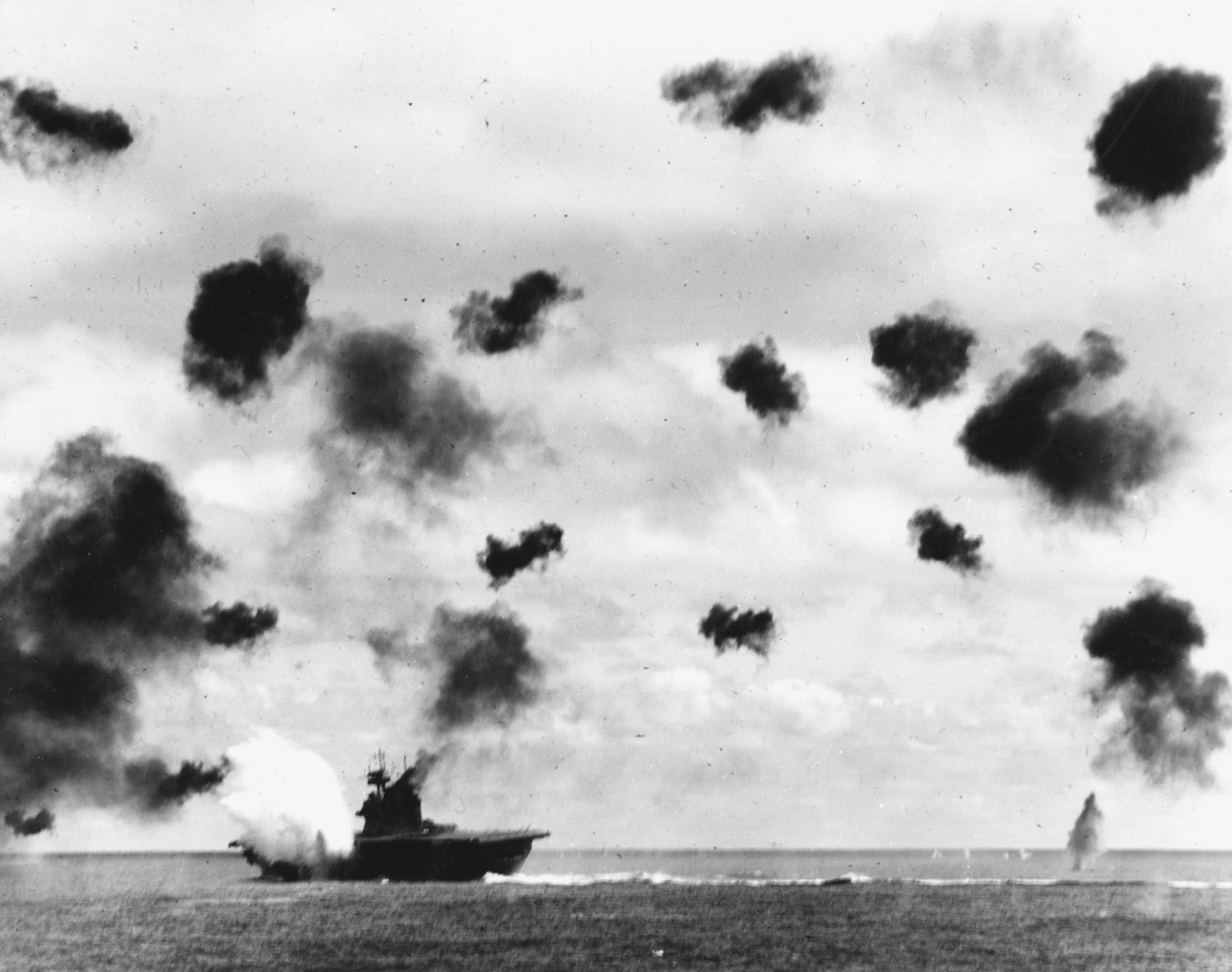
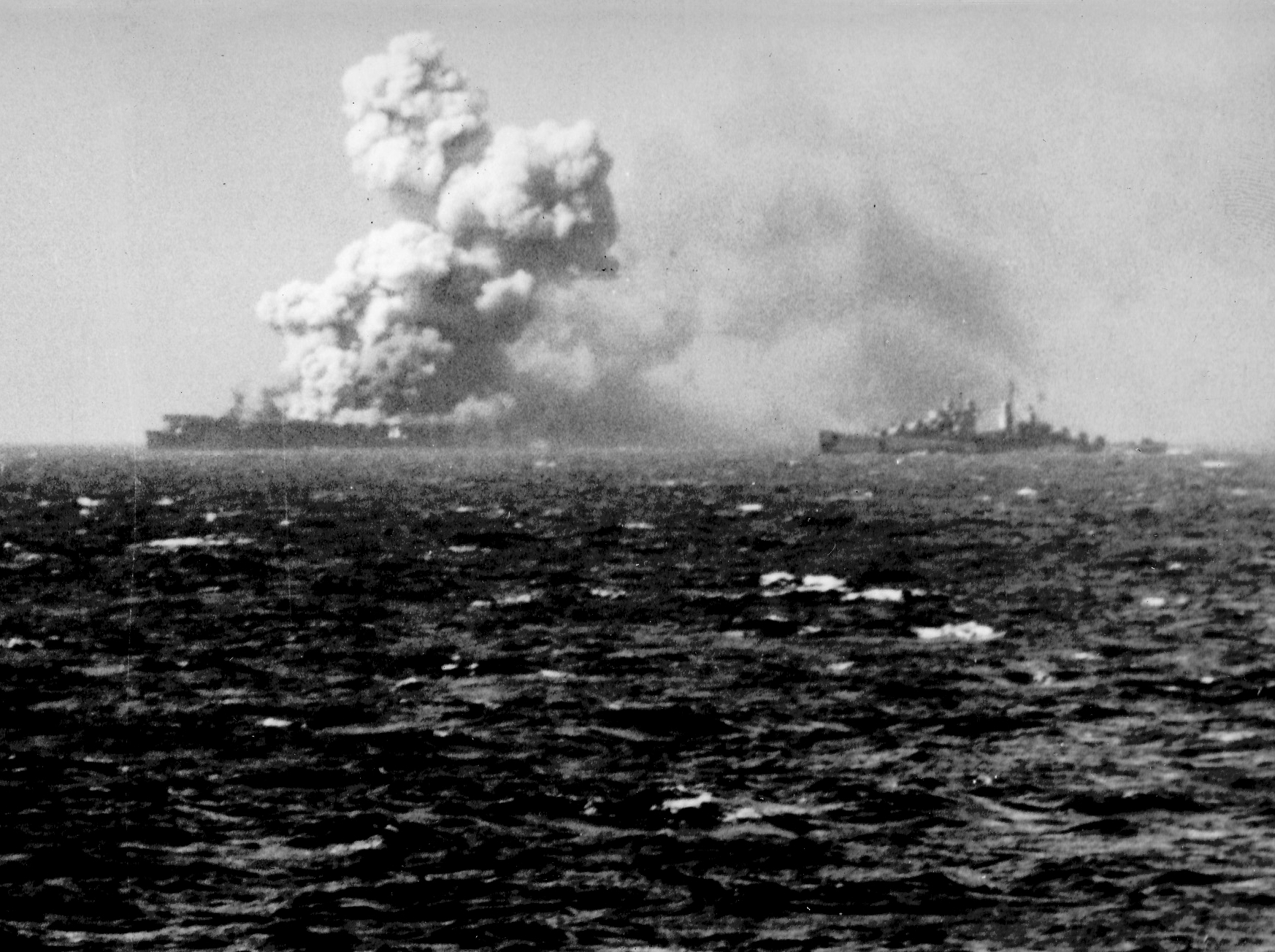
The US Navy defeated a large Japanese force in the Battle of Midway in 1942
---- ---- ----
"A major turning point came June 4-7, 1942, at the Battle of Midway Island with an attempt by the Japanese naval command to draw the American navy out, thereby making it more vulnerable. However, the Japanese did not know that the United States had cracked their intelligence codes and that the Americans were ready for their attack on the island. In the ensuing battle, Japan lost four precious aircraft carriers, along with a heavy cruiser and over 300 planes." Link
One of Japan’s main goals during World War II was to remove the United States as a Pacific power in order to gain territory in east Asia and the southwest Pacific islands. Japan hoped to defeat the US Pacific Fleet and use Midway as a base to attack Pearl Harbor, securing dominance in the region...
www.nationalww2museum.org
"The Battle of Midway was an epic clash between the U.S. Navy and the Imperial Japanese Navy that played out six months after the attack on Pearl Harbor. The U.S. Navy’s decisive victory in the air-sea battle (June 3-6, 1942) and its successful defense of the major base located at Midway Islanddashed Japan’s hopes of neutralizing the United States as a naval power and effectively turned the tide of World War II in the Pacific." Link
Chinese view:
"They note that less capable and older aircraft on Midway performed critical duties that contributed to the American success. Long-range reconnaissance by flying boats and bombers provided an early warning screen and detected the incoming enemy fleet, buying precious time for the defenders to respond. Although the aircraft launched from Midway were tactically ineffective against the Japanese carriers, they knocked the attacking fleet sufficiently off balance to pry open the chance to deliver a decisive blow by carrier aviation." Link
---- ---- ----
The US Navy defeated a large Japanese force in the Solomon Islands campaign (1942 - 1945)
---- ---- ----
"After the US strategic victories at the Battles of the Coral Sea (May 7–8, 1942) and Midway (June 4–7, 1942),the Japanese Imperial Navy was no longer capable of major offensive campaigns, which permitted the Allies to start their own offensive in the Pacific." Link
This campaign spanned multiple battles and America’s First Corps played a critical role in it. American exploits in the Battle of the Guadalcanal are particularly noted.
"The Solomon Islands Campaign ended in an Allied victory, ended Japan's hopes of cutting off Australia, and paving the way for the Allied liberation of the Philippines." Link
Chinese view:
"At Guadalcanal, U.S. forward basing, convoying, and sea lane defense allowed for the constant flow of materiel and troops to the island. The Japanese, by contrast, were ill-equipped to resupply their forces on Guadalcanal while American interdiction worsened Japan’s logistical predicament. Dwindling supplies and reinforcements sapped the Japanese army, leaving soldiers without food and ammunition in the campaign’s closing months. Chinese analysts also criticize the Imperial Japanese Navy (IJN) for failing to attack vulnerable American resupply efforts and exposed supply dumps on the island during the battle’s early stages." Link
---- ---- ----
The US Navy defeated a massive Japanese force in the Philippine Sea and liberated Philippines in 1944
---- ---- ----
This campaign spanned multiple battles and America’s First Corps played a critical role in it. American exploits in the Battle of Leyte Gulf are particularly noted.
In October 1944, the largest naval battle ever fought raged in the Pacific. The Battle of Leyte Gulf ended in American victory—but the outcome could have been very different.
www.nationalww2museum.org
---- ---- ----
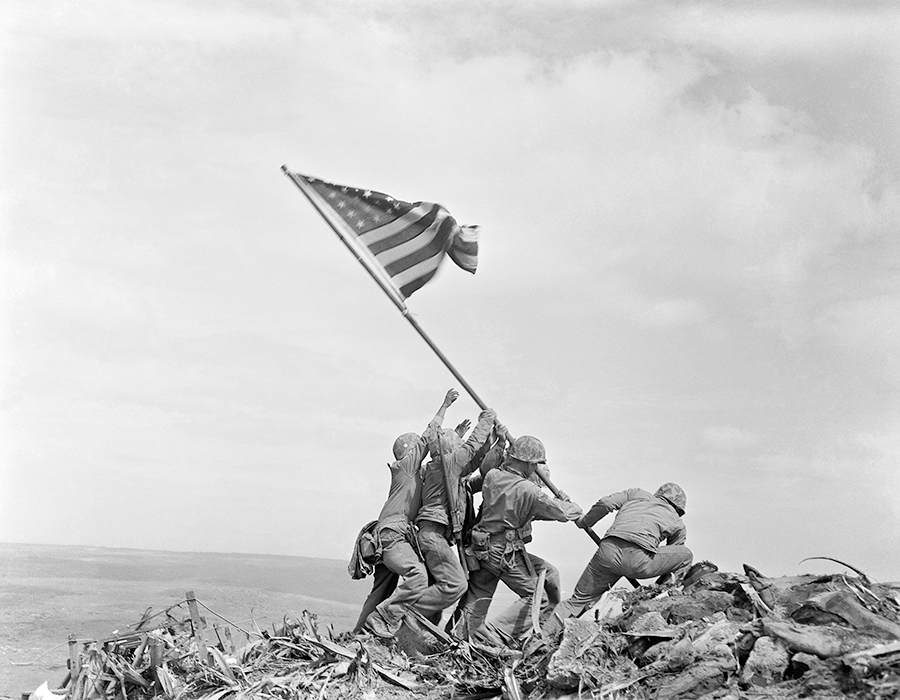
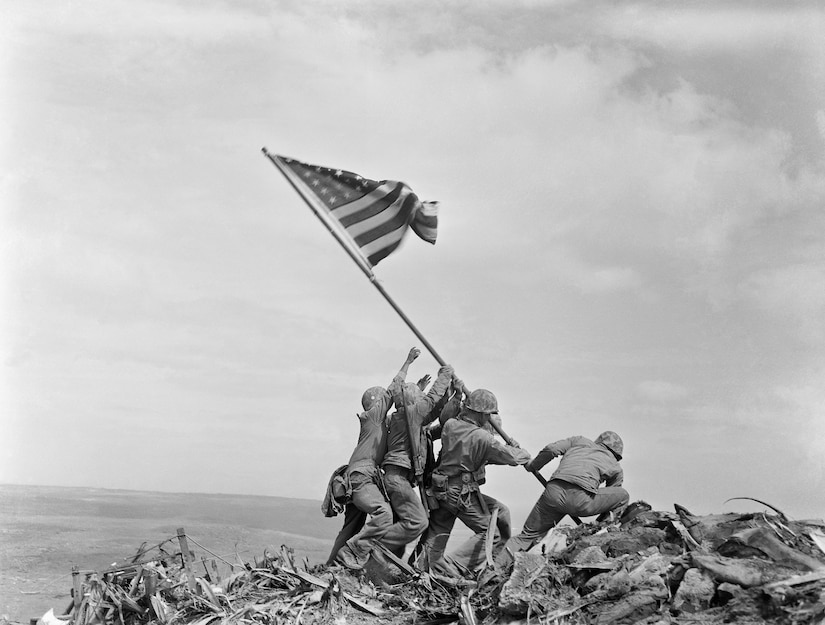
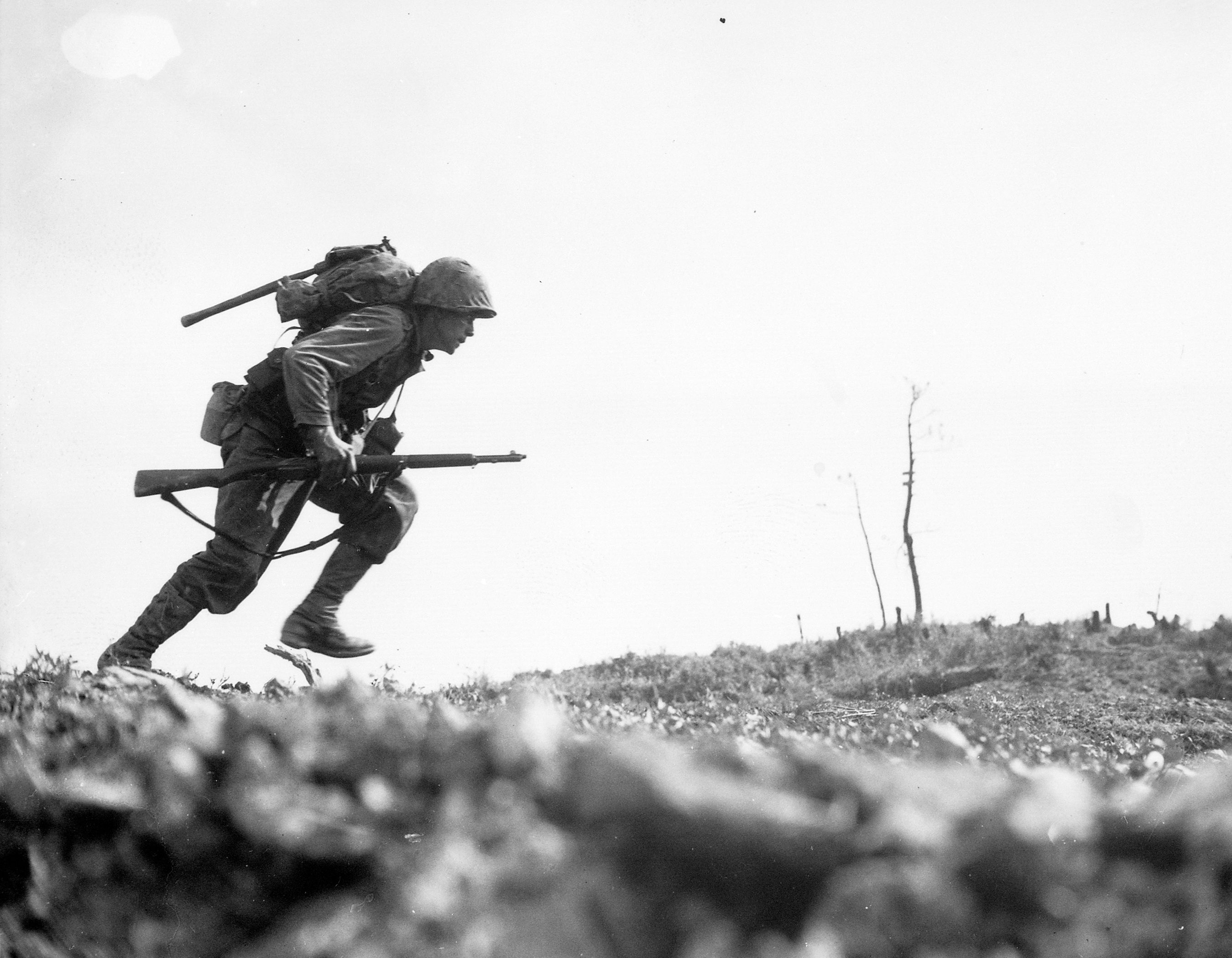
The US Navy invaded Iwo Jima in 1945
---- ---- ----
On April 1, 1945, more than 60,000 soldiers and US Marines of the US Tenth Army stormed ashore at Okinawa, in the final island battle before an anticipated invasion of mainland Japan.
www.nationalww2museum.org
Chinese view:
"Chinese commentators extol America’s overwhelming logistical power during the conquest of Okinawa. They are uniformly impressed by the forward basing at the Kerama Islands, the entire logistical infrastructure across the Pacific, including the great anchorage at Ulithi, the at-sea replenishment fleet, the massive amphibious assault force, and the follow-on resupply efforts to keep the ground offensives going. The administrative and logistical systems needed to sustain the supply chain that stretched from the West Coast through various intermediary bases all the way to Okinawa are awe-inspiring to them." Link
----
Emphasis mine. The US-led forces clashed with the Imperial Japanese Empire in the Pacific on a massive scale (see above) and the Imperial Japanese Empire lost much of its war-fighting capability in this experience. The US also used its Air Power to bomb Japanese cities and industrial capability (see post # 218).
Chinese acknowledge the same:
"Chinese analysts acknowledge the importance of economic power and industrial strength in carrying out a protracted war at sea. To them, the mismatch between Imperial Japan’s economy and its ambitions led to severe overextension at Guadalcanal. The destruction of transports and ground forces there accelerated the consumption of scarce resources and compounded Japan’s overreach. The cumulative effects of attrition spilled over into Japanese campaign plans on the Asian continent, compelling Tokyo to call off offensives against Nationalist positions in southcentral China.Losses that Japan could ill afford thus sharpened its dilemma of fighting a two-front war on the mainland and in the Pacific.
Chinese observers have analyzed the interplay between industrial capacity and attrition of forces on the battlefield. They find that Japan’s lack of industrial depth and personnel to recover from combat losses was a critical factor in the conduct and the outcome of the war. Imperial Japan’s inability to rapidly reconstitute its forces had a particularly baneful impact on Japanese warfighting. The loss of irreplaceable pilots at Midway and Guadalcanal was a major contributing factor to Japan’s declining fortunes. To mainland analysts, Japan’s struggle with material and manpower shortfalls illustrates the importance of harnessing all elements of national strength in fighting protracted great power wars." Link
This is well-documented history and it is common sense to accept facts.
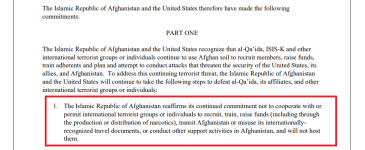
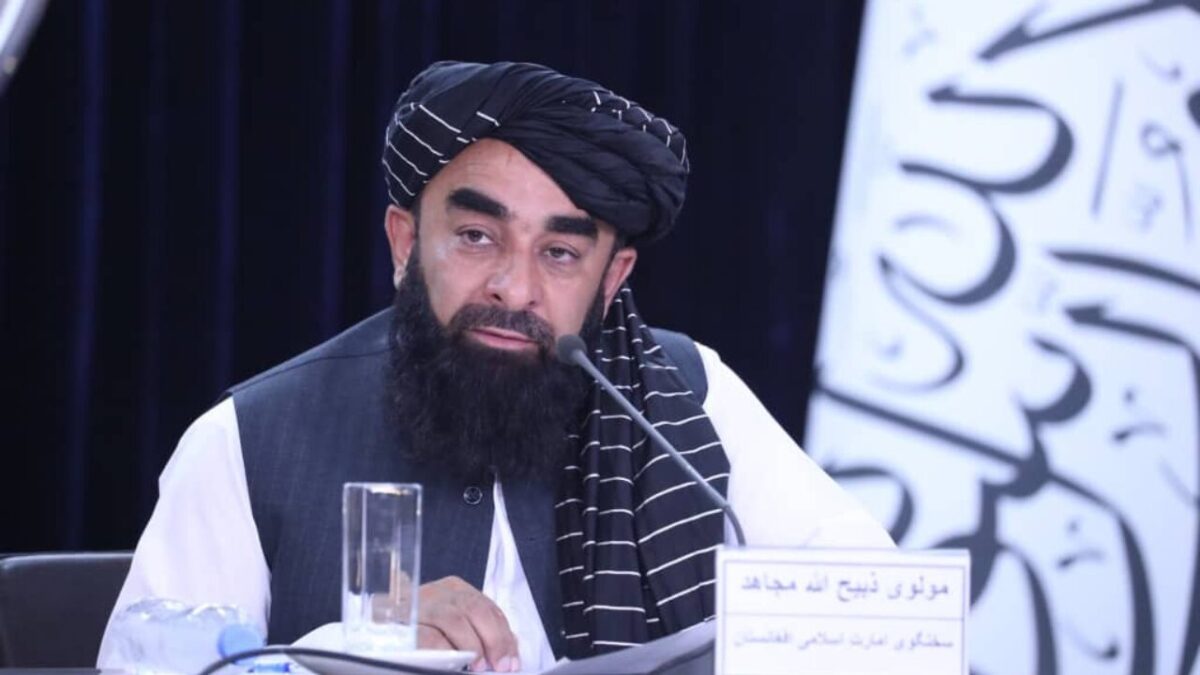
You are comparing apples with oranges. The war can be fought in ALL OUT format and LIMITED format. The Axis Powers had well-developed military forces and had the capacity to overwhelm other countries and even challenge the US in open confrontation. The US had no choice but to use all options at its disposal to confront and defeat the Axis Powers in war. But the US conducted a military operation on a much smaller scale in Afghanistan in line with theAmerican theory of limited war because Taliban groups are a localized threat. The American agenda was to cripple the Al-Qaeda Network and reduce its support base in Afghanistan. The US-led forces toppled Taliban setup in 2001 and conducted a prolonged COIN campaign to cripple the Al-Qaeda Network in the region (see this and this). Taliban elements are certainly adept in guerilla warfare and challenged the US-backed Afghan setup but understood that the way forward with the US is through negotiations and accepted the original American demand to not allow the Al-Qaeda Network to rebuild and threaten the US in exchange for relief and withdrawal of American troops from Afghanistan in Doha Accords in 2020.
Afghanistan is a deeply conservative society that is resistant to change:
"The Taliban resistance to the American military occupation gathered strength also because of Washington’s misguided attempt to transform an extremely conservative and religious Afghan society by imposing Western liberal and cultural values. This clash of values alienated many Afghans who otherwise might have kept aloof from the Taliban-led resistance." Link
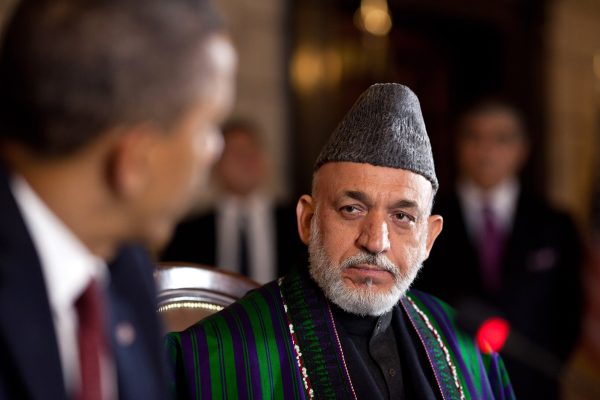
The US had poor understanding of Afghan customs and political matters. However, the US still has cards to play in Afghanistan.
Karzai’s influence is not just historical; it lies in his ability to mediate Afghanistan’s current power struggles.
thediplomat.com
The US is certainly capable of fighting a war on a larger scale and defeat forces stronger than Taliban elements if it chooses to. The US-led forces dismantled Saddam setup in Iraq and changed the political landscape of the country (Operation Iraqi Freedom). In contrast, Iraq and Iran were unable to do the same in war in the 1980s. The US-led forces also challenged and defeated the ISIL movement across Syria and Iraq (Operation Inherent Resolve), this campaign continues:
Army Special Operations Forces (ARSOF) deployed continuously to Iraq from March 2003 to December 2011 as part of Operations IRAQI FREEDOM (OIF) and NEW...
The U.S. Central Command said the airstrike, in cooperation with Iraq, killed ISIS leader Abdellah Maki Muslih al-Rifai.
www.usatoday.com
These interventions are also in line with the American theory of limited war but the US showed greater commitment to these fronts than Afghanistan. The US is also capable of defeating much stronger powers than Iraq as the US have a massive arsenal of destructive weapons and continues to develop more advanced weapons.
Now what do you want to see? The US should wipe out a country to prove something to naysayers? Be careful what you wish for. Humanity should be top priority.
The US has a substantial military footprint in the Middle East. This is unlikely to change unless the US decides to withdraw its forces from the region. This is not to be confused with defeat/destruction/surrender of US forces in the region. I don't wish to write about American military exploits all the time but naysayers of this forum are next level. It is OK to disagree with American politics but it is WILFUL IGNORANCE to deny American military exploits and strength. Realistic analysis is necessary.
This site uses cookies to help personalise content, tailor your experience and to keep you logged in if you register.
By continuing to use this site, you are consenting to our use of cookies.


 warfarehistorynetwork.com





 www.army.mil






 www.history.com

 amu.tv



 www.usatoday.com


