Vietnam Defense and News forum

Maybe.

Let's wait and see if the North-South high-speed rail project in Vietnam can be completed before 2040 without China's participation.
Why so negative?
construction of HSR northern and southern sections have started with completion in 5 years.
To view this content we will need your consent to set third party cookies.
For more detailed information, see our cookies page.
 
Why so negative?
I have no political bias regarding the Vietnam North-South High-Speed Rail project; my analysis and research are based solely on data.

1. Total investment: US$67 billion.
The Vietnam North-South High-Speed Rail project has a very high proportion of bridges and tunnels. According to Vietnam's plan, bridges account for 60% and tunnels 10%. This results in extremely high construction costs.
However, compared to similar high-speed rail lines in China with a similar proportion of bridges and tunnels, the cost is still 2-3 times higher than in China.
The biggest cost difference in the Vietnam North-South High-Speed Rail project is not in the engineering and construction itself, but in land costs. Vietnam has a private land ownership system, and compensation negotiations will be very difficult, leading to extremely high land premiums. This aspect requires government intervention. Private companies or foreign investors simply have no way to solve this problem.

2. Operating cost assessment (including only the direct costs of daily operations, excluding indirect expenses such as return on investment and loan interest rates).
Vingroup's estimated cost is $4.2 billion per year, equivalent to approximately $27 million per year per kilometer.
This estimated figure is severely underestimated. The operating cost of China's Beijing-Shanghai High-Speed Railway is approximately $38 million per year per kilometer. The difference between the two figures is enormous. (The operating costs of Japanese high-speed rail are comparable to those of China, while the operating costs of European high-speed rail are significantly higher than those of China.)

3. Revenue Assessment.
Vingroup's estimate is approximately $5.6 billion in annual ticket sales.
Given Vietnam's population mobility and economic capacity, achieving this level of ticket revenue is almost impossible.

Much of the data lacks scientific analysis. Therefore, people are questioning the motives behind it.
 
Why so negative?
construction of HSR northern and southern sections have started with completion in 5 years.
To view this content we will need your consent to set third party cookies.
For more detailed information, see our cookies page.

I think building HSR in Vietnam is similar to the situation in India. Vietnam like India will run into lots of difficulties trying to acquire land for the HSR route from private owners esp in the middle section of the country where lots of land are owned by the "heroes" families of the Vietnam war . They might not so easily agree to vacate their land. I think that's one of the reasons Chinese HSR companies opted out the North South HSR project giving some Chinese companies had unpleasant and long delay experience building Hanoi metro partly due to land acquisition problem.
 
I have no political bias regarding the Vietnam North-South High-Speed Rail project; my analysis and research are based solely on data.

1. Total investment: US$67 billion.
The Vietnam North-South High-Speed Rail project has a very high proportion of bridges and tunnels. According to Vietnam's plan, bridges account for 60% and tunnels 10%. This results in extremely high construction costs.
However, compared to similar high-speed rail lines in China with a similar proportion of bridges and tunnels, the cost is still 2-3 times higher than in China.
The biggest cost difference in the Vietnam North-South High-Speed Rail project is not in the engineering and construction itself, but in land costs. Vietnam has a private land ownership system, and compensation negotiations will be very difficult, leading to extremely high land premiums. This aspect requires government intervention. Private companies or foreign investors simply have no way to solve this problem.

2. Operating cost assessment (including only the direct costs of daily operations, excluding indirect expenses such as return on investment and loan interest rates).
Vingroup's estimated cost is $4.2 billion per year, equivalent to approximately $27 million per year per kilometer.
This estimated figure is severely underestimated. The operating cost of China's Beijing-Shanghai High-Speed Railway is approximately $38 million per year per kilometer. The difference between the two figures is enormous. (The operating costs of Japanese high-speed rail are comparable to those of China, while the operating costs of European high-speed rail are significantly higher than those of China.)

3. Revenue Assessment.
Vingroup's estimate is approximately $5.6 billion in annual ticket sales.
Given Vietnam's population mobility and economic capacity, achieving this level of ticket revenue is almost impossible.

Much of the data lacks scientific analysis. Therefore, people are questioning the motives behind it.
$27 million?
Where you get those financial figures?
That’s unrealistic if you multiply 2,000km the length of Vietnam’s future HSR.
A quick search shows operating cost excluding financial expenditure is about 20,000-50,000 USD per km per year in China, Japan and Europe.
I assume Vietnam’s cost expenditures are around that figure.
 
I think building HSR in Vietnam is similar to the situation in India. Vietnam like India will run into lots of difficulties trying to acquire land for the HSR route from private owners esp in the middle section of the country where lots of land are owned by the "heroes" families of the Vietnam war . They might not so easily agree to vacate their land. I think that's one of the reasons Chinese HSR companies opted out the North South HSR project giving some Chinese companies had unpleasant and long delay experience building Hanoi metro partly due to land acquisition problem.
What’s the solution? Wait and see? Land prices will not become cheaper. That’s why the gov is under pressure to move quick with infrastructure spendings.
The HCM city gov just releases a new land price table 2026. All land lots see increase with some over 800% compared to last table 2024.

To view this content we will need your consent to set third party cookies.
For more detailed information, see our cookies page.
 
“Đây không phải Trung Quốc”
This isn't China. A close-up look at the construction of Vietnam's most BEAUTIFUL and MODERN expressway: the 49.3km Dien Chau - Bai Vot expressway passes through Nghe An and Ha Tinh provinces, part of the Eastern and Western North-South expressway systems.
(video posted a year ago, construction probably completed)
To view this content we will need your consent to set third party cookies.
For more detailed information, see our cookies page.
 
Su27 in deep dive exercise
To view this content we will need your consent to set third party cookies.
For more detailed information, see our cookies page.
 
“QPVN” Vietnam military educational video

How to detect and combat enemy unmanned submarines UUVs?

Unmanned submarines pose increasing threat at sea, they can dive as deep as 2,000m, hide and attack from ambush. UUVs are becoming strategic weapons that can change the balance of power at sea.

Major military powers as the US, Russia, China, France and the UK are competing to develop UUVs that can operate autonomous, stealthy, and even carry nuclear warheads.

To view this content we will need your consent to set third party cookies.
For more detailed information, see our cookies page.
 
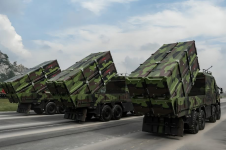
VCM-1 range 80km
VCM-2 range 300km
VCM-3 with range of 600km cruise missiles probably will be introduced next year.

1767112264394.png
 
Opinion
Vietnam needs more public investment in order to grow 10% a year and to become $1 trillion economy in 6 or 7 years. Investment must increase from 32-33% of GDP to 36-37% of GDP. 4 percentage points more a year.
That’s about the level of investment China, Korea and Japan did during their development stage.
As government debts currently well below 50%, the threshold set by the parliament, it can borrow more to support growth rate.

To view this content we will need your consent to set third party cookies.
For more detailed information, see our cookies page.
 
The ministry of construction reports land settlements and terrain clearance under way for the north south high speed rail.

Following withdrawal of Vingroup, 4 bidders remain committed to the $67 billion HSR. This 1,541km is the longest HSR sections. There are many other.

Thaco, the most potent bidder, promises to complete the construction in 7 years. It will contribute 20% of own financing while 80% will be borrowed on capital markets. Most of materials, tracks, locomotives, workers will be sourced locally in Viet Nam.

To view this content we will need your consent to set third party cookies.
For more detailed information, see our cookies page.
 
Vingroup plans $14.3 billion container port investment in Hai Phong.
The port will handle 42 million TEUs a year, more than the current capacity of all ports in Vietnam combined, and once completed it will even surpass the port of Singapore.
The company apparently anticipates more exports of automobiles and electric vehicles.
To view this content we will need your consent to set third party cookies.
For more detailed information, see our cookies page.
 
Ccp is super rich.
Since Xi Jinping launched BRI grand scheme in 2013 China loans 920 billion euros to the world in total. Vietnam takes loans from China as well, especially for the Hanoi city train. But unlike many other countries Vietnam can pay back the debt. No further BRI project was approved since then.
Chinese high interest rates, combined with obligations to use Chinese technology, employ Chinese workers push many countries deeper into debt crisis with no way out.

 
Construction update
$1.2 billion, the most expensive US embassy in history
2.5 years into the construction
Obviously multiple floors are secretly built under the earth surface.
Once completed the US will host 1.800 personnel in the complex, the most in the world.

To view this content we will need your consent to set third party cookies.
For more detailed information, see our cookies page.
 

Users who are viewing this thread

Back
Top