Vietnam Unveils K Vietnam Valley Project In South Korea
Key Points
- Unveil the 'Làng Việt (K-Vietnam Valley)' project on September 12, 2025, by USSH-VNU HCM and Bonghwa county to celebrate Vietnam-South Korea cultural ties.
- Highlight the project's preservation of Ly Hoa Son clan relics and recreation of Vietnamese landmarks across 118,000 square meters to promote heritage and education.
- Emphasize the project's role in strengthening Vietnam-South Korea relations, marking nearly 800 years of cultural exchange and recent strategic partnership upgrades.
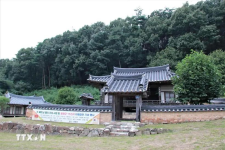
On the morning of September 12, 2025, the University of Social Sciences and Humanities – Vietnam National University Ho Chi Minh City (USSH-VNU HCM) joined hands with the government of Bonghwa county in South Korea to unveil a remarkable initiative: the "Làng Việt (K-Vietnam Valley)" project. The event, held at USSH-VNU HCM, was more than just a ceremonial introduction—it marked a significant milestone in the evolving relationship between Vietnam and South Korea, as both nations approach the 33rd anniversary of their official diplomatic ties, first established in 1992.
Do Ngoc Luyen, a 47-year-old professor at Kwangwoon University originally from Vietnam, poses for photos during an interview with the JoongAng Ilbo at the Chunghyo House, or Chunghyodang, in Bonghwa County, North Gyeongsang, on Aug. 18. [KIM JUNG-SEOK]
At its core, the "Làng Việt" project is a living testament to the deep-rooted historical and cultural bonds that have connected the two countries for centuries. According to
Thanh Niên, the site in Bonghwa is not only a modern-day cultural hub but also the preservation ground for the Ly Hoa Son clan relics, a lineage with a storied past that traces back nearly 800 years. The historical link, as emphasized by Mr. Kwon Tae Han, Acting Consul General of South Korea in Ho Chi Minh City, began with Prince Ly Long Tuong’s migration to Goryeo, Korea, an event that has since become a symbol of enduring friendship and cross-cultural exchange.
Do Ngoc Luyen, a 47-year-old professor at Kwangwoon University originally from Vietnam, poses for photos during an interview with the JoongAng Ilbo at the Chunghyo House, or Chunghyodang, in Bonghwa County, North Gyeongsang, on Aug. 18. [KIM JUNG-SEOK]
“The project is not just a cultural and historical work but also a symbol of nearly 800 years of exchange between the two peoples,” said Professor Dr. Ngo Thi Phuong Lan, Rector of USSH-VNU HCM, during the event. She added, “This introduction program is an opportunity to spread the special meaning of the project, inspire national pride, and raise awareness among the younger generation about the responsibility to preserve and promote heritage.” Her remarks, as reported by
Người Lao Động, captured the essence of what "Làng Việt" aspires to be: a bridge between past and future, fostering pride and a sense of duty among Vietnamese youth to safeguard their cultural legacy.
The scale and ambition of the "Làng Việt" project are nothing short of impressive. Construction began in 2018, and the site now spans more than 118,000 square meters. Within this expansive area, visitors will find faithful recreations of iconic Vietnamese structures, including the One-Pillar Pagoda and a statue of King Ly Thai To. There’s also a Vietnamese museum and a cultural center, each designed to serve as focal points for education, tourism, and ongoing cultural exchange. These features, detailed in
Thanh Niên, are intended to create a unique space where the history of the Ly clan can be honored and where both Vietnamese and Korean visitors can experience the richness of shared heritage.
Do Ngoc Luyen, a 47-year-old professor at Kwangwoon University originally from Vietnam, poses for photos with Park Hyun-guk, the Mayor of Bonghwa County, after being appointed the honorary ambassador for the North Gyeongsang region on Aug. 6. [BONGHWA-GUN]
But why Bonghwa? The answer lies in its historical significance. Bonghwa is home to the relics of the Ly Hoa Son clan, descendants of Prince Ly Long Tuong, who fled Vietnam in the 13th century and eventually settled in Korea. This connection has been a touchstone for Vietnamese-Korean relations, providing a tangible link that both nations have sought to celebrate and preserve. As Mr. Kwon Tae Han noted, “Bonghwa plays an important role in Vietnam-Korea cultural exchange,” underscoring the county’s status as a living symbol of the two countries’ intertwined histories.
It’s not every day that a project manages to encapsulate centuries of history, the aspirations of two nations, and the promise of future collaboration. Yet "Làng Việt (K-Vietnam Valley)" appears poised to do just that. As the site continues to develop and attract visitors from both Vietnam and Korea, it stands as a powerful reminder of what can be achieved when countries come together to celebrate their shared heritage.
With its grand vision, historical resonance, and commitment to fostering understanding between peoples, "Làng Việt" is set to become not just a landmark in Bonghwa, but a lasting emblem of the Vietnamese-Korean friendship for generations to come.
For both countries, "Làng Việt" is more than a construction project—it’s a multifaceted symbol. It stands as a testament to the power of cultural diplomacy, serving as a beacon for educational and tourism initiatives while also strengthening the comprehensive strategic partnership that now defines Vietnam-South Korea relations. The project’s educational mission is particularly noteworthy; by offering a space where young people can learn about the shared history of the two nations, it aims to “raise awareness of the younger generation about the responsibility to preserve and promote heritage,” as Professor Dr. Ngo Thi Phuong Lan put it.
The project’s potential impact on tourism and cultural exchange is equally significant. As
Người Lao Động reported, the hope is that "Làng Việt" will become a “typical cultural and educational work, contributing to strengthening friendship, tourism development, and the comprehensive strategic partnership between the two countries.” In a world where international relations are often shaped by economics and politics, cultural projects like this offer a softer, yet no less powerful, means of bringing people together.
Of course, the project is also about honoring the past. The inclusion of structures such as the One-Pillar Pagoda and the statue of King Ly Thai To serves as a reminder of the rich cultural traditions that both Vietnam and Korea share. The museum and cultural center are designed not only to educate but also to inspire—a place where visitors can reflect on the journey of the Ly clan and the broader narrative of Vietnamese-Korean relations.
In the words of Professor Dr. Ngo Thi Phuong Lan, “I hope the project will become a typical cultural-educational work, contributing to strengthening friendship, developing tourism, and promoting the comprehensive strategic partnership between the two countries.” Her optimism is echoed by officials on both sides, who see "Làng Việt" as a model for future cooperation and a catalyst for even deeper ties.


 tinhte.vn



![Do Ngoc Luyen, a 47-year-old professor at Kwangwoon University originally from Vietnam, poses for photos during an interview with the JoongAng Ilbo at the Chunghyo House, or Chunghyodang, in Bonghwa County, North Gyeongsang, on Aug. 18. [KIM JUNG-SEOK]](https://koreajoongangdaily.joins.com/data/photo/2025/08/19/2faefc44-46d9-4d1a-bbd0-8a4f9b485ab8.jpg "Do Ngoc Luyen, a 47-year-old professor at Kwangwoon University originally from Vietnam, poses for photos during an interview with the JoongAng Ilbo at the Chunghyo House, or Chunghyodang, in Bonghwa County, North Gyeongsang, on Aug. 18. [KIM JUNG-SEOK]")
![Do Ngoc Luyen, a 47-year-old professor at Kwangwoon University originally from Vietnam, poses for photos during an interview with the JoongAng Ilbo at the Chunghyo House, or Chunghyodang, in Bonghwa County, North Gyeongsang, on Aug. 18. [KIM JUNG-SEOK]](https://koreajoongangdaily.joins.com/data/photo/2025/08/19/b869916d-3c5b-4948-b617-a1262256a8e0.jpg "Do Ngoc Luyen, a 47-year-old professor at Kwangwoon University originally from Vietnam, poses for photos during an interview with the JoongAng Ilbo at the Chunghyo House, or Chunghyodang, in Bonghwa County, North Gyeongsang, on Aug. 18. [KIM JUNG-SEOK]")
![Do Ngoc Luyen, a 47-year-old professor at Kwangwoon University originally from Vietnam, poses for photos with Park Hyun-guk, the Mayor of Bonghwa County, after being appointed the honorary ambassador for the North Gyeongsang region on Aug. 6. [BONGHWA-GUN]](https://koreajoongangdaily.joins.com/data/photo/2025/08/19/c5916ba4-9d9d-4748-9e79-0051c840b528.jpg "Do Ngoc Luyen, a 47-year-old professor at Kwangwoon University originally from Vietnam, poses for photos with Park Hyun-guk, the Mayor of Bonghwa County, after being appointed the honorary ambassador for the North Gyeongsang region on Aug. 6. [BONGHWA-GUN]")


