Vietnam's first chip plant unlikely to meet 2027 target, sources say no deal yet with ASML
Satellite imagery shows wild vegetation and a white concrete slab at the site of Vietnam's first semiconductor fabrication plant where the country held a groundbreaking ceremony in January, in Hanoi, Vietnam October 15, 2026/Handout via REUTERS
HANOI/AMSTERDAM, Oct 26 (Reuters) - Vietnam is unlikely to meet a 2027 target for its first semiconductor plant to embark on a trial production run, with people saying that a deal to buy chipmaking equipment from ASML has yet to be reached.
The site of the plant on the outskirts of Hanoi remains covered in wild vegetation, a Reuters visit there last week showed. Satellite images taken in January by Planet Labs PBC and by Airbus in October also confirm that no buildings have been constructed.
A person with direct knowledge of the project said the 2027 target would probably not be achieved due to delays stemming from developer Viettel's lack of experience in building chip factories and administrative hurdles in quickly securing government funding.
The government-mandated project is ongoing but the timeline is unclear, said the person, who was not authorised to speak to media and declined to be identified.
The project's lack of progress and Viettel's talks with the Dutch equipment maker are being reported here for the first time.
Viettel, a military-run telecoms and defence group, said in a statement to Reuters that the project was "progressing in line with the established plan and schedule."
"Project activities are being carried out in phases, in accordance with the project's technical and implementation requirements. We will provide further updates at an appropriate time," it said.
Vietnam's finance ministry did not respond to requests for comment. A representative for ASML declined to comment on the talks with Viettel.
The project is part of the ruling Communist Party's plans for Vietnam to move up the semiconductor value chain. It wants the country to become a high-income economy by 2045, with growth of at least 10% through 2030.
TALKS WITH ASML SAID TO BE UNDERWAY FOR MONTHS
Viettel, which
broke ground on the site in January, said at the time it wanted the plant to be fully operational by 2030 and that it intended to supply its chips to the aerospace, telecom and auto sectors.
Talks with ASML have been underway for months, said three separate people familiar with the matter, who declined to be identified because the discussions were private.
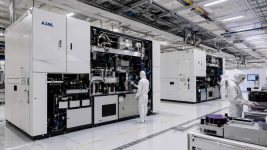
The talks have covered the purchase of a deep ultraviolet (DUV) lithography machine, needed to print circuitry patterns onto silicon wafers, two of the people said.
Reuters was not able to learn why no agreement has been reached or which type of DUV machine was under discussion, which would indicate whether the sale could be subject to Dutch export controls and would help in understanding potential costs.
Authorities have estimated the cost of the plant at about $1.3 billion.
ASML said this month it may
not fully meet demand for its most advanced machines over the next two years because of the AI boom. Supply constraints for older-generation equipment are expected to be less severe.
It holds a monopoly on the most sophisticated extreme ultraviolet (EUV) machines, and is the biggest provider of immersion DUV systems, a market where it competes with Nikon of Japan.
SETTING SIGHTS HIGH
Viettel said in a January presentation that it planned to produce semiconductors using 32-nanometre technology, an ambitious starting point for a newcomer to chip manufacturing.
By comparison,
Tata Electronics has said its $11 billion project in Gujarat, developed with Taiwan's PSMC, will begin with 55- and 90-nanometre processes before adding more advanced 28-nanometre production.
The reference to 32-nanometre was subsequently removed from Viettel's website. Viettel has also not disclosed if it is partnering up with an established chip manufacturer to provide technology and expertise.
Efforts by Vietnam's government to attract foreign investors to build a chip manufacturing facility in Vietnam have been unsuccessful, according to industry sources.
The country is, however, a fast-growing hub for the less capital-intensive sector of semiconductor assembling, testing and packaging (ATP). Intel, Amkor Technology, and Hana Micron operate large ATP factories in Vietnam, while Samsung Electronics is
planning a chip-testing facility.
ASML suppliers also have operations in Vietnam, including Coherent and VDL Enabling Technologies Group, though their local factories primarily serve customers other than ASML.
https://www.reuters.com/world/asia-...rget-sources-say-no-deal-yet-with-2026-10-26/