Wargame - Bad Blood

This might sound as a stupid question but what platform are you playing on?
 
Bought the Game few months ago, the game can easily be confused with been boring unless you are military nerd, playing few tutorial one thing for sure no one would want me at command an operation or a wargame lol
 

Understanding the Declared ORBATs: A Deep Dive into the Naval Forces of India and Pakistan​

In the unfolding scenario of Bad Blood, the strategic deployment and capabilities of naval forces play a pivotal role in shaping the potential outcomes of the India-Pakistan conflict. Here, we provide an analytical overview of the declared Orders of Battle (ORBATs) for both nations, focusing on their naval components. This examination aims to shed light on the maritime strategies and preparedness of the two countries, reflecting their broader military and geopolitical postures.
@Joe Shearer @Afif @Nilgiri you can post your Naval orbat below this.
@Princeps @arjunk @_NOBODY_
Tagging @Quwa @Signalian for ensuring accuracy

Pakistan's Naval ORBAT: Asymmetric Focus and Coastal Defense

Pakistan's naval doctrine traditionally emphasizes coastal defense, deterrence, and engaging in asymmetric warfare to counter India's numerical and technological superiority.

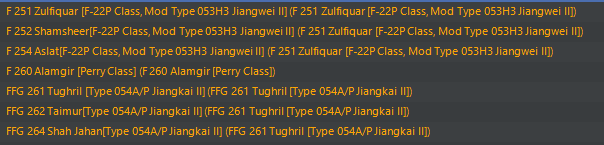
  • Frigates and Corvettes: The Tughril and Zulfiqar-class frigates, equipped with advanced surface-to-surface and surface-to-air missiles, represent Pakistan's mainstay for surface combatants, complemented by the Azmat-class fast attack craft for coastal patrol and defense.
    1706936674147.png1706936689892.png
    F263 Tippu Sultan
    F253 Saif
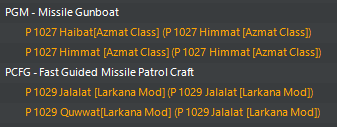
  • Missile Boats:
    • P1013 Azmat P1014 Dehshat
    • 1706936922815.png
    • P1030 Shujaat P1023 Jurrat

  • Submarines: The Agosta 90B class submarines, capable of launching Exocet anti-ship missiles, Babur LACMs and torpedoes, are key assets in Pakistan's strategy for sea denial and asymmetric engagements.
    1706937026752.png
  • Maritime Patrol Aircraft and UAVs: Assets like the P-3C Orion and indigenous UAVs bolster Pakistan's situational awareness and anti-submarine warfare (ASW) capabilities.

Strategic Implications and Potential Engagements

The contrasting naval ORBATs of India and Pakistan reflect their strategic priorities and the anticipated maritime theaters of engagement. India's emphasis on power projection and blue-water capabilities suggests a strategy aimed at dominating the IOR and protecting sea lines of communication (SLOCs). In contrast, Pakistan's focus on coastal defense and asymmetric capabilities highlights a deterrence and sea denial strategy, aiming to counter India's numerical superiority through tactical engagements.
  • Potential Flashpoints: Key areas of potential naval engagement include the Arabian Sea, where both nations might seek to assert dominance, and the approaches to critical ports and straits, where asymmetric tactics could be employed by Pakistan to disrupt India's maritime operations.
  • Amphibious Operations: India's amphibious capabilities pose a strategic challenge for Pakistan, potentially opening additional fronts along the coastline.

Conclusion

As participants and observers of Bad blood, understanding the declared naval ORBATs of India and Pakistan is crucial. It not only informs us about the maritime strategies and capabilities of both nations but also sets the stage for a complex simulation of naval engagements in the context of broader military and geopolitical maneuvers.
 

Overview of the Pakistan Army ORBAT: A Strategic Analysis​

The Pakistan Army's Order of Battle (ORBAT) is a comprehensive framework that outlines the structure, composition, and distribution of its forces across various corps and divisions. This detailed analysis aims to shed light on the strategic positioning and capabilities embedded within the Pakistan Army's current ORBAT, focusing on its conventional force posture and readiness for potential conflict scenarios.

I Corps: A Spearhead of Armor and Infantry

The I Corps, often considered the tip of the spear, boasts a robust composition of armored and infantry divisions, emphasizing Pakistan's focus on armored warfare and rapid response capabilities.

  • 6th Armored Division: Comprising three armored brigades, a reconnaissance regiment, a self-propelled (SP) artillery brigade, and a self-propelled air defense (AD) brigade, this division stands as a testament to Pakistan's armored prowess.
  • 17th & 37th Infantry Divisions: Each division mirrors the other's structure with three infantry brigades, a light anti-tank (LAT) unit, an armored regiment, and an artillery brigade, indicating a balanced approach to combined arms operations.
Reserves: The I Corps reserves include an Independent Armored Brigade Group (IABG), a corps reserve armored brigade, two independent infantry brigades, a corps artillery brigade, and a Heavy Artillery Troop (HAT), ensuring depth and flexibility in defense and offensive operations.

II Corps: Balancing Armor and Infantry

The II Corps, with its armored and infantry divisions, further emphasizes the strategic doctrine of balance between mobility and firepower.

  • 1st Armored Division: Features three armored brigades, a reconnaissance regiment, a SP artillery brigade, and a SP AD brigade, ready for rapid deployment and engagement.
  • 40th Infantry Division: Hosts three infantry brigades, a LAT unit, and an armored brigade, enhancing the corps' operational versatility.
Reserves: Include a HAT, an IABG, two corps reserve armored brigades, two independent infantry brigades, and a corps artillery brigade, prepared to reinforce front-line units as needed.

IV Corps: The Infantry Backbone

The IV Corps underscores the importance of infantry in holding territory and providing depth to defensive operations.

  • 10th & 11th Infantry Divisions: Both divisions are structured with three infantry brigades, a LAT unit, an armored brigade, and an artillery brigade, reflecting a focus on traditional infantry roles supplemented by mechanized elements.
Reserves: Comprising a HAT, an armored brigade, an artillery brigade, an IABG, two independent infantry brigades, and an Independent Mechanized Brigade Group (IMBG), these reserves offer strategic depth and flexibility.

V Corps: Mechanized Might and Defensive Posture

The V Corps showcases Pakistan's investment in mechanized forces and defensive readiness, particularly in strategically sensitive areas.

  • 16th Infantry Division & 25th Mechanized Division: Both divisions highlight the blend of infantry and mechanized forces, with the latter emphasizing armored and mechanized brigades supported by heavy artillery and specialized air defense units.
Reserves: Feature a HAT, six IABGs, three independent infantry brigades, an armored brigade, and an artillery brigade, ready to bolster defenses or initiate counter-offensives.

XI Corps: The Northern Shield

Positioned to protect the northern frontiers, the XI Corps combines infantry divisions with robust reserve forces.

  • 7th & 9th Infantry Divisions: Structured to provide comprehensive infantry capabilities complemented by armored and artillery support, ensuring readiness for varied operational scenarios.
Reserves: Include a HAT, two independent infantry brigades, an armored brigade, and an artillery brigade, enhancing the corps' operational flexibility in rugged terrain.

XII & XXX Corps: Balancing Act in the South and East

These corps maintain a mix of infantry and mechanized divisions, ready to defend Pakistan's southern and eastern borders while providing a quick reaction force against internal and external threats.

  • Notably, the 30th Corps: With its heavy emphasis on infantry and armored brigades, underscores Pakistan's strategy of maintaining a formidable defensive posture along critical axes.

XXXI Corps: The Southern Spear

Focused on the southern command, the XXXI Corps exemplifies a modern approach to warfare with its mechanized divisions and specialized artillery and air defense units, ready to respond to threats from multiple vectors.

Strategic Reserves: The Backbone of Flexibility

Across all corps, the strategic reserves play a pivotal role in Pakistan Army's ORBAT, providing the essential depth, flexibility, and reinforcement capabilities needed to sustain prolonged engagements or to pivot swiftly in response to dynamic battlefield conditions.

Conclusion​

The Pakistan Army's ORBAT, with its balanced emphasis on armored, mechanized, and infantry forces, alongside a comprehensive reserve structure, reflects a doctrine focused on flexibility, defensive depth, and preparedness for a range of operational scenarios. This strategic composition underscores Pakistan's military
 

Overview of the Indian Naval ORBAT​

As we gear up for simulation of maritime conflict in the Indian Ocean Region, a provisional Order of Battle (ORBAT) for the Indian Navy has been outlined. This deployment reflects approximately two-thirds of the Indian Naval force allocated for this theater, with the remaining one-third held in reserve to address any ancillary threats that may arise. The ORBAT is provisional and will be subject to further refinement based on input from the arbiter and participating teams through private messages (PMs).

Submarines:

  • Scorpene Class: 4 units, showcasing advanced stealth and attack capabilities.
  • Kilo Class: 4 units, known for their robustness and versatility.
  • U209 Class: 3 units, adding to the strategic depth with their reliable performance.

Surface Combatants:

  • Aircraft Carrier:
    • 1x INS Vikramaditya (IAC), serving as the centerpiece of naval air power projection.
  • Destroyers:
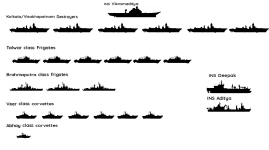
    • 4x DDG New (2x Kolkata Class, 2x Visakhapatnam Class), embodying cutting-edge technology and firepower.
    • 4x DDG Old (2x Delhi Class, 2x Rajput Class), providing seasoned capabilities and support.
  • Frigates:
    • 8x FFG (3x Shivalik Class, 4x Talwar Class, 1x Brahmaputra Class), versatile ships capable of multiple mission profiles.
  • ASW Corvettes:
    • 3x Kamorta Class, specialized in anti-submarine warfare to protect the fleet from underwater threats.
  • Other Corvettes:
    • 8x (3x Kora Class, 5x Veer Class), providing patrol and escort capabilities.

Aircraft:

  • Maritime Patrol Aircraft (MPA):
    • 8x P-8I Neptune, offering long-range maritime reconnaissance and anti-submarine warfare.
    • 16x Do-228, versatile for coastal surveillance and search and rescue operations.
  • Carrier-Based Aircraft:
    • 45x Mig-29K, forming the core of the Naval air combat force.
    • 14x Ka-31, providing airborne early warning capabilities.
    • 8x Ka-27, dedicated to anti-submarine operations.
  • Helicopters and UAVs:
    • 4x MH-60R, multi-mission helicopters with advanced anti-surface and anti-submarine capabilities.
    • 8x HAL Dhruv, indigenously developed utility helicopters.
    • 20x Sea King, venerable in the anti-submarine and search and rescue roles.
    • 34x HAL Chetak, light utility helicopters.
    • 2x MQ-9 Sea Guardian, unmanned aerial vehicles for surveillance and reconnaissance.

Auxiliaries:

  • Replenishment Ships:
    • 3 units (2x Deepak Class, 1x Jyoti Class), ensuring logistical support and sustained operations.
  • Amphibious Landing:
    • 4 units (1x INS Jalashwa, 3x Shardul Class), providing amphibious assault capabilities.
  • Landing Craft:
    • 4x Landing Craft Utility Mk.4, enhancing beach landing operations.
This ORBAT reflects the Indian Navy's commitment to maintaining a formidable and versatile maritime force, capable of addressing a spectrum of threats and missions. As we proceed with the simulation, the insights and strategies derived will undoubtedly contribute to our understanding of naval warfare and preparedness.

Please note: This ORBAT is for simulation purposes and does not disclose any sensitive or classified information. It is designed to foster strategic thinking and operational planning within the simulated environment
 
India's air defense network emerges as a cornerstone of its national security posture. The strategic deployment of advanced air defense systems across the country underscores the readiness and technological edge of India's military capabilities. Here is a detailed look at the key components of India's air defense forces:

1. Prithvi Defence Vehicle (PDV) MK-I & II:

  • Deployment: At least one battery operational around Delhi, providing a shield against ballistic missile threats. The PDV system, an equivalent of the Terminal High Altitude Area Defense (THAAD) with a kinetic kill vehicle, represents the cutting edge of India's missile defense technology.

2. SA-21 Growler (S-400 Triumf):

  • Composition: 3 regiments delivered to the Indian Air Force, translating into 6 batteries. This long-range, surface-to-air missile system enhances India's airspace coverage, capable of engaging aircraft, drones, and ballistic and cruise missiles over extensive distances.

3. Barak-8 MRSAM:

  • Deployment: 3 batteries are confirmed to be commissioned, with one battery in service with the Army and two with the Air Force. The Barak-8 Medium Range Surface-to-Air Missile system provides a multi-layered air defense, capable of neutralizing aerial threats at medium ranges.

4. Akash Air Defense System:

  • Force Structure: Comprising 15 squadrons (30 batteries) in service with the IAF and 2 regiments (12 batteries) with the Indian Army. This indigenous surface-to-air missile system is designed to defend against aerial threats, including aircraft, helicopters, and drones.

5. SPYDER MR:

  • Deployment: 18 batteries in service with the IAF. The SPYDER (Surface-to-air PYthon and DERby) is a short to medium range mobile air defense system, offering quick reaction against a variety of aerial threats.

6. Quick Reaction Surface-to-Air Missile (QRSAM):

  • Composition: At least one battery has entered service with the Indian Army, designed for protection of mobile units and critical assets, offering a quick response to incoming threats.

Strategic Radars:

India's air defense network is complemented by an array of strategic radars, providing early warning and tracking capabilities across different ranges:

  • ELM-2090 Terra & ELM-2090U Ultra: Deployed in Bhopal, these very long-range tracking radars offer early warning against ballistic missile threats.
  • ELM-2090S Spectra: Also deployed in Bhopal, enhancing the layered air defense network with its early warning capabilities.
  • Additional ELM-2090 systems: Deployed in Udaipur, extending India's strategic radar coverage and reinforcing the air defense grid against advanced aerial threats.

Conclusion​

India's air defense ORBAT highlights a robust, multi-layered network designed to safeguard the nation's airspace from a spectrum of threats. The strategic deployment of these advanced systems, from missile interceptors like the PDV MK-I & II to comprehensive air defense platforms like the SA-21 Growler and Akash AD system, alongside the support of strategic radars, ensures a formidable defense posture. As the simulation progresses, the effectiveness and strategic deployment of these assets will be pivotal in maintaining air superiority and defending critical infrastructure within the simulated conflict scenario.
 

Overview of the Indian Naval ORBAT​

As we gear up for simulation of maritime conflict in the Indian Ocean Region, a provisional Order of Battle (ORBAT) for the Indian Navy has been outlined. This deployment reflects approximately two-thirds of the Indian Naval force allocated for this theater, with the remaining one-third held in reserve to address any ancillary threats that may arise. The ORBAT is provisional and will be subject to further refinement based on input from the arbiter and participating teams through private messages (PMs).

Submarines:

  • Scorpene Class: 4 units, showcasing advanced stealth and attack capabilities.
  • Kilo Class: 4 units, known for their robustness and versatility.
  • U209 Class: 3 units, adding to the strategic depth with their reliable performance.

Surface Combatants:

  • Aircraft Carrier:
    • 1x INS Vikramaditya (IAC), serving as the centerpiece of naval air power projection.
  • Destroyers:
    • 4x DDG New (2x Kolkata Class, 2x Visakhapatnam Class), embodying cutting-edge technology and firepower.
    • 4x DDG Old (2x Delhi Class, 2x Rajput Class), providing seasoned capabilities and support.
  • Frigates:
    • 8x FFG (3x Shivalik Class, 4x Talwar Class, 1x Brahmaputra Class), versatile ships capable of multiple mission profiles.
  • ASW Corvettes:
    • 3x Kamorta Class, specialized in anti-submarine warfare to protect the fleet from underwater threats.
  • Other Corvettes:
    • 8x (3x Kora Class, 5x Veer Class), providing patrol and escort capabilities.

Aircraft:

  • Maritime Patrol Aircraft (MPA):
    • 8x P-8I Neptune, offering long-range maritime reconnaissance and anti-submarine warfare.
    • 16x Do-228, versatile for coastal surveillance and search and rescue operations.
  • Carrier-Based Aircraft:
    • 45x Mig-29K, forming the core of the Naval air combat force.
    • 14x Ka-31, providing airborne early warning capabilities.
    • 8x Ka-27, dedicated to anti-submarine operations.
  • Helicopters and UAVs:
    • 4x MH-60R, multi-mission helicopters with advanced anti-surface and anti-submarine capabilities.
    • 8x HAL Dhruv, indigenously developed utility helicopters.
    • 20x Sea King, venerable in the anti-submarine and search and rescue roles.
    • 34x HAL Chetak, light utility helicopters.
    • 2x MQ-9 Sea Guardian, unmanned aerial vehicles for surveillance and reconnaissance.

Auxiliaries:

  • Replenishment Ships:
    • 3 units (2x Deepak Class, 1x Jyoti Class), ensuring logistical support and sustained operations.
  • Amphibious Landing:
    • 4 units (1x INS Jalashwa, 3x Shardul Class), providing amphibious assault capabilities.
  • Landing Craft:
    • 4x Landing Craft Utility Mk.4, enhancing beach landing operations.
This ORBAT reflects the Indian Navy's commitment to maintaining a formidable and versatile maritime force, capable of addressing a spectrum of threats and missions. As we proceed with the simulation, the insights and strategies derived will undoubtedly contribute to our understanding of naval warfare and preparedness.

Please note: This ORBAT is for simulation purposes and does not disclose any sensitive or classified information. It is designed to foster strategic thinking and operational planning within the simulated environment
You should base your ORBAT around the Western Fleet1707031159632.png

For submarines, from what I can find, all Shishumar class and 3 Sindhughosh are with the Western Fleet. Kalvari class are a bit more tricky but half or 2/3 would be a good start.

As for Naval aviation, you might want to subtract a few MiG-29Ks for Vikrant's airwing.
 
For submarines, from what I can find, all Shishumar class and 3 Sindhughosh are with the Western Fleet. Kalvari class are a bit more tricky but half or 2/3 would be a good start.

We're going with a hard 2/3rds limit on the total (western + eastern)....i.e 1/3rd of total reserved for concurrent needs in the east from China etc (that will not be modelled in the sim).

Some wiggle room allowed but this is the overall theatre constraint set by arbiter @Panzerkiel

@Panzerkiel or is this approach (western fleet "as is") a better one to do?

As for Naval aviation, you might want to subtract a few MiG-29Ks for Vikrant's airwing.
Its just the grand total ORBAT.

Not everything will be deployed on the carrier (that will be constrained by the carrier), some will be in reserve at land or be tasked with shore based options potentially etc.
 
Indian Army Orbat:
The Indian Army's ORBAT is a formidable representation of its diversified and stratified military capabilities. The Western Command showcases several Infantry, Mountain, and Armoured divisions, each with its artillery, armoured, and air cavalry assets.

I Corps, stationed in regions like Leh and Batalk, features Infantry and Mountain divisions with towed artillery set to be augmented significantly. Integral Air Defense (AD) brigades and Surface-to-Air Missile (SAM) brigades, alongside dedicated Air Cavalry Squadrons, ensure a multidimensional defense posture.

II Corps, with its divisions located in Srinagar, Dras, and Gurez, also emphasizes mountain warfare, supported by infantry and significant artillery enhancements. A strategic reserve of armored and infantry brigades in conjunction with robust AD and SAM capabilities provides depth to the ORBAT.

The III, IV, and V Corps extend the Army's reach across Jammu, Punjab, and Rajasthan. Armoured divisions with advanced mechanized brigades stationed in Amritsar, Patiala, and Fazilka reflect a readiness to engage in rapid armored thrusts if necessary, complemented by an array of MBRL, AD, and SAM assets for a comprehensive battlefield approach.

The VI and VII Corps, with Rapid Divisions positioned in strategic locations like Sri Muktsar Sahib and Bikaner, indicate a focus on mobility and rapid response, crucial for operations in diverse terrain, from plains to deserts.

The ORBAT includes extensive air defense assets, with regiments equipped with advanced radar systems for early warning and protection against aerial threats. The Indian Army's air component boasts a mix of SPAAG( Self Propelled Anti Air Guided) systems and SAM batteries, ensuring robust air coverage.

Auxiliary forces like engineering regiments and amphibious capabilities further contribute to the operational diversity, allowing for flexibility across various combat scenarios.

In summary, the Indian Army's ORBAT reflects a well-rounded and highly capable force structure, strategically positioned and equipped to address a multitude of threats and operational requirements. This detailed ORBAT, while provisional and subject to further refinement, underscores the Army's readiness for the complex dynamics of Bad Blood.
 
Pakistan Air Defense

Pakistan's air defense network, is a sophisticated mesh of radars and surface-to-air missile systems designed for comprehensive aerial threat coverage. The radar systems include the AN/TPS-43, AN/TPS-77, and MPDR-45, YLC-6M for low to medium altitude surveillance and the YLC-2V High Guard radars for high-altitude detection capabilities.

The missile systems encompass a broad spectrum of defenses, from short-range assets like the FM-90 (a variant of the HQ-7) to medium-range LY-80 (a variant of the HQ-16) systems, all the way to the long-range HQ-9 which is analogous to the S-300 and Patriot systems in capability.

Additionally, the Spada 2000 Aspide provides a layer of defense against aircraft and precision-guided weapons for base defense. The inclusion of vehicle-mounted electronic warfare systems offers an additional layer of defense through signal jamming and electronic countermeasures.

This formidable array of air defense equipment ensures that Pakistan's airspace is closely monitored and defended against various aerial threats, from stealth aircraft and drones to ballistic and cruise missiles.
 

Introduction to the ORBAT​

The ORBAT of the Indian Air Force and Indian Naval Air Arm is a detailed representation of the strength, organization, and distribution of India's aerial military assets. It encompasses a wide range of aircraft, including fighters, transporters, helicopters, and maritime patrol aircraft, strategically stationed across numerous airbases and aircraft carriers to ensure national security and operational readiness.

Overview of Aircraft Types​

The Indian Air Force and Indian Naval Air Arm boast a diverse fleet designed to fulfill a spectrum of roles, from air superiority and ground attack to anti-submarine warfare (ASW), transport, surveillance, and early warning. Key aircraft types include:

  1. Fighter Aircraft: These are essential for maintaining air superiority and include multirole fighters like the Su-30MKI, MiG-29UPG, Rafale, and the indigenous LCA Tejas. The Naval Air Arm operates the MiG-29K for carrier-based operations.
  2. Transport Aircraft: Vital for logistics, mobility, and humanitarian missions, this category includes the C-130J, C-17 Globemaster, An-32, and the Dhruv helicopter.
  3. Helicopters: Used for transport, rescue, and ASW roles, including the CH-47 Chinook, Mi-17, and the ASW-configured Sea King.
  4. Maritime Patrol and ASW Aircraft: Includes the P-8I Neptune for maritime surveillance and submarine detection.
  5. Early Warning and Control Systems (AWACS): Aircraft like the EMB-145I and the A-50E/I provide battlefield surveillance and are crucial for air defense operations.
  6. Unmanned Aerial Vehicles (UAVs): For surveillance and reconnaissance, including the Heron and Searcher II.

Analysis of Airbases and Naval Air Stations​

The ORBAT data reveals the spread and allocation of aircraft across various IAF airbases and Indian Naval Air Stations. Each base supports a specific set of operations, housing aircraft tailored to their strategic location and operational requirements. For instance:

  • Adampur AFS: Primarily hosts fighter aircraft like the Rafale and MiG-29UPG, focusing on air defense and quick response.
  • Agra AFS: A key transport hub with the C-130J, C-17 Globemaster, and the IL-76, supporting strategic airlift capabilities.
  • Ambala AFS: Another critical fighter base with Rafale aircraft, enhancing India's strike capabilities.
  • INS Hansa/Dabolim Airport: A mixed-use base supporting both Naval and Air Force operations, including Maritime Patrol Aircraft like the P-8I Neptune and fighter aircraft such as the MiG-29K for carrier operations.
  • Sulur AFS: Highlights the integration of modern and indigenous capabilities with the LCA Tejas, showcasing India's self-reliance in defense technology.

  • Fighter Aircraft: The total count stands at 462 units, encompassing a range of aircraft designed for air superiority, ground attack, and carrier-based operations. This category includes the Su-30MKI, MiG-29UPG, Rafale, LCA Tejas, and MiG-29K, highlighting India's emphasis on maintaining a robust and versatile combat capability.
  • Transport Aircraft: There are 145 transport aircraft, including the C-130J, C-17 Globemaster, An-32, and Il-76. These aircraft are crucial for strategic airlift, logistical support, and rapid deployment of troops and equipment.
  • Helicopters: The IAF and Naval Air Arm operate a combined total of 438 helicopters. This fleet, comprising the CH-47 Chinook, Mi-17, and the indigenous Dhruv, fulfills various roles from transport and logistics to search and rescue, and anti-submarine warfare.
  • Maritime Patrol and Anti-Submarine Warfare (ASW) Aircraft: The fleet includes 12 P-8I Neptune aircraft, specialized for maritime surveillance, reconnaissance, and submarine warfare, underscoring the strategic importance of maritime domain awareness and control.
  • Early Warning and Control Systems (AWACS): A total of 6 AWACS aircraft (EMB-145I and A-50E/I) are in service, providing critical capabilities for air defense, surveillance, and command and control, enhancing situational awareness and operational effectiveness.
  • Unmanned Aerial Vehicles (UAVs): The count for UAVs, including the Heron and Searcher II, stands at 176(will recheck on count). These systems play a key role in surveillance, reconnaissance, and intelligence gathering, offering a strategic advantage in both peacetime and conflict scenarios.
 

Users who are viewing this thread

Back
Top