Water Management and Weather - Updates

Three independent AWBs — Ghotki (Guddu barrage), Nara (Sukkur barrage) and the Left Bank Canals (Kotri barrage) — out of 14 canals that emanate from these barrages, were also created within SIDA, having elected representation in addition to officers.

SIDA remained an autonomous body, having been led by managing directors (MDs) — mostly from SID. A full-fledged SIDA headquarters/secretariat was also built in Hyderabad, reflecting a corporate sector style environment quite unlike the provincial irrigation department.

SIDA executed WB-funded programmes like the Water Sector Improvement Project or WSIP, which has been completed and was projected as a success story by SIDA. The SID was also executing multiple foreign-funded programmes in irrigation networks, besides handling flood management and drainage networks.

Both SID and SIDA had, historically, not been on the same wavelength over the last two decades, with the latter blaming the former for undermining its authority.

SID has its own axe to grind and doesn’t believe SIDA has failed to improve its recovery abiyana (water charges) through AWBs.

The Sindh Water Policy 2023 made a point that the “dual management of canals would not lead the province anywhere” — a clear reference to parallel irrigation management by SIDA and the irrigation department.
 
The new irrigation legislation would eventually decide the fate of SIDA, whether it would continue to enjoy its autonomy or would survive with a redefined role of ‘reforms directorate’. Similarly, the nomenclature of the Sindh Irrigation Department (SID), however, would be changed to “Sindh Water Resource Management Department” (SWRMD) with bigger responsibilities. These legal points, however, require the passage of a new law by the Sindh Assembly.

Key features of the proposed Sindh Water Resources Management Law seek to establish a comprehensive legal framework to cover water-related resources.

It aims to strengthen participatory irrigation management while extending governance beyond irrigation to encompass environmental protection, water quality standards, and climate adaptation.

The law would introduce mechanisms for sustainable financing through the establishment of a Sindh Water Fund, and emphasize institutional and human resource development through the creation of a Sindh Water and Research Academy.

Furthermore, it proposes the establishment of a Reform Management Unit, mandated to coordinate all mega and foreign-funded water sector projects for the effective implementation of reforms.

This unit is envisaged to perform regulatory, data management, water charges technical, and custodial functions, supporting evidence-based decision-making and sector-wide coherence.

The WB-funded SWAT had required, as mentioned in its concept paper, the formulation of a new water law to advance and adjust irrigation institutional reforms and principles initiated under SWMO 2022 based on experience gained under the WSIP.

The new water law was to be drafted in line with the Sindh Water Policy that was adopted in July 2023 after having been approved by the provincial cabinet.
 
As per the SWAT, the goal of the new law was to advance and adjust the irrigation institutional reforms and principles initiated under SWMO 2002 based upon experience gained under WSIP.

The new law would adjust the roles and responsibilities of the Irrigation Department, SIDA, AWB, FOs, and Water Course Associations (WCAs).

It said, “In addition, a new legal framework will establish an integrated water resources management for Sindh that will promote coordinated development and management of water, land, and related resources, to maximise economic and social welfare in an equitable manner without compromising the sustainability of vital ecosystems”.

The draft law was being prepared by a team involving representation from the United Nations Food and Agriculture Organisation, including a foreign expert, officers of SID and SIDA.

The first draft of the proposed law was submitted to SID in June 2025, leading to the appointment of a Law Review Committee.

By 2025’s end, Sindh Irrigation Minister Jam Khan Shoro chaired meetings and called for finalising and aligning the draft law with the objectives of the Sindh Water Policy.

Those dealing with the draft law anticipate that the first draft of “Sindh Water Resource Management Law” would be shared with stakeholders for review and validation. The draft is likely to be readied by February 2026.

The proposed new law is going to cover all important aspects of irrigation and drainage with reference to water pricing and usage.

They all are relating to water directly or indirectly to achieve an integrated management of the overall water sector, thus ensuring effective governance”, said Sindh Irrigation Secretary Zarif Iqbal Khero.

“We will hopefully have a broader and more integrated law to ensure better institutional reforms in the irrigation sector across Sindh”, he said.
 

Running out of water – and time​


Drought grips Balochistan, climate shortages push communities to brink

By Abdul Rahim
PUBLISHED January 18, 2026

BALOCHISTAN: At sunrise, 38-year-old Fatima from the Kulanch area of District Gwadar begins her daily one-kilometre walk to a communal water tank, carrying three empty jerry cans. “Some days I return with water,” she says quietly, “Some days I return with tears.” Her struggle reflects the reality of thousands across Balochistan, where the 2024–2025 drought has intensified, turning daily life into a relentless battle for survival. With rainfall at historic lows and groundwater levels declining at alarming rates, the province is experiencing one of its most severe water crises in decades.

According to geologist and water expert Fazeer Ahmed of the Irrigation Department, drought is not new to Balochistan; it has shaped the region’s landscapes, livelihoods, and migration patterns for generations. Severe multi-year drought cycles between 1997 and 2012 left lasting scars, with intense dry periods recorded in 2000, 2004, 2006, 2007, 2009, 2010, 2011, 2014–2017, 2018, 2020, and now again in 2024–2025.

These years triggered widespread crop failures, mass livestock deaths, and large-scale displacement, specifically in Kharan, Chagai, Washuk, Panjgur, Kech, and Gwadar– repeatedly ranked among Pakistan’s most drought-affected districts. Today’s climate-driven shortages are compounding long-standing vulnerabilities, pushing entire communities to the brink.

Across the province, drought has evolved from a weather event into a profound humanitarian crisis. Assessments by the Pakistan Meteorological Department show that more than two-thirds of Balochistan’s districts are currently experiencing moderate to severe drought.
 
The impacts are visible everywhere: failed crops in rain-fed areas, depleted grazing lands, drying springs, empty dams, and sand dunes slowly encroaching onto coastal settlements. Dependence on expensive water tankers has surged. In Gwadar, tanker queues stretch for hours, with a single 30,000-litre tanker now costing between 20,000 and 30,000 rupees —far beyond what most households can afford.

“We spend more on water than on school fees,” says Asghar Babu, a schoolteacher. “Without the tanker, our taps stay dry.” The provincial government allocates more than 70 million rupees each month for drinking water supply, yet demand continues to rise as population, urbanisation, and development expand.

Despite sitting along the Arabian Sea, the coastal belt, including Makran, Gwadar, Pasni, Jiwani, and Ormara, remains one of Pakistan’s most water-stressed regions. Traditional freshwater systems are drying up or failing:

Ankara Dam is silted and almost empty, Saiji Dam in Jiwani is clogged with sediment, and Shadi and Sawad Kaur dams in Pasni remain incomplete. Desalination plants meant to solve shortages are either non-operational or running well below capacity.

Many households now depend on locally processed 10-litre water gallons often mineral-treated or purified, yet concerns persist about inconsistent quality. On average, a household spends around 200 rupees per day on drinking water alone, an unsustainable burden for low- and middle-income families.
 
The Government of Balochistan has intensified crisis management in coastal areas through emergency tanker supplies from Meerani Dam, linking major reservoirs such as Shadi Kaur, Sawad Kaur, and Ankara Dam, and improving household-level distribution. Efforts are underway to replace aging pipelines, restore stalled RO units, revive GPA’s desalination systems, and recycle treated wastewater for urban landscaping to reduce pressure on freshwater sources.

Several dams, including Shadi Kaur, Sawad Kaur, and Dosi, are being upgraded or fast-tracked. Yet low rainfall, rapid population growth, and siltation continue to undermine long-term water security across Makran and beyond.

In the highlands, drought has devastated orchards, cash crops, and grazing lands. Apple orchards in Ziarat and Kalat have shrunk dramatically. Tubewells in Pishin and Panjgur increasingly pump brackish, saline water. Date groves in Panjgur and Kech are drying up, while dust storms and shifting dunes threaten farms along the coast.

The prolonged drought affecting the Meerani Dam catchment and the Dasht River Basin is inflicting heavy losses on farming communities, especially those dependent on seasonal flows for watermelon, cotton, and other cash crops.

Biodiversity is also under severe strain. Moazzam Khan, technical advisor at WWF-Pakistan, explains that wetlands and farmlands are drying rapidly, leaving livestock with little water or fodder. Wild species such as the marsh crocodile, which depends on freshwater pools, are losing habitat and struggling to survive.
 
Reduced freshwater flows into seasonal rivers are disrupting the Makran coastal wetlands' complex biodiversity, and declining discharge into the Arabian Sea is increasing seawater salinity. This shift threatens coastal ecosystems, fisheries, and the delicate balance of marine life that depends on the mixing of fresh and saltwater. These interconnected impacts show how drought is reshaping both inland and coastal environments in ways that may take decades to recover.

“Livestock is our bank,” says Asif Lehri, a herder in Khuzdar. “When the animals die, our future dies.” For many families, losing even a few animals means the collapse of their main asset, income source, and safety net.

The burden of drought falls heaviest on women and children, who are responsible for collecting water. Girls often walk several kilometres each day, missing school, domestic duties, and rest. “When water runs out, everything stops,” says 22-year-old Sadganj from Dasht. “Cooking stops, school stops, life stops.” In many villages, girls’ education has become an invisible yet profound casualty of the water crisis.

Families across Balochistan are now making heartbreaking decisions as drought tightens its grip. In Dasht and Kulanch, villagers who once relied on modest herds now watch their last goats die of thirst, forcing them to leave. In Awaran, 50-year-old Noor Jan locked the door of his mud house for the first time in his life before moving his family to Turbat because the village well had turned to dust. These personal stories—echoed in hundreds of villages—show how drought is not only displacing people but erasing entire ways of life.
 
Scientists warn that climate change is intensifying drought cycles across Balochistan. Higher temperatures, declining winter rainfall, more frequent heatwaves, seawater intrusion into coastal aquifers, and rising evaporation rates are accelerating water losses.

With evaporation ranging between 3,000 and 5,000mm per year, far exceeding annual rainfall, the province is losing water faster than it can recharge or store it. The result is a deepening crisis affecting agriculture, food security, and household supply.
 
Yet amid the challenges, several community-led resilience models offer hope. Many villages are constructing small reservoirs to harvest rainwater for livestock and small farms. Hybrid solar-wind pumps are replacing costly diesel systems in remote areas.

Farmers in coastal towns are adopting drip irrigation to grow dates, citrus, and vegetables with minimal water. Mangrove patches in Jiwani and Pasni help stabilise coasts, support fisheries, and buffer against storms. These initiatives highlight the potential of low-cost, community-driven solutions when supported by technical guidance.

While tanker supplies and dam construction continue, long-term resilience will require modern, scalable solutions. Emerging technologies used globally to combat chronic drought are now being explored for Balochistan. Cloud-seeding, commonly known as artificial rain, is under consideration for hyper-arid regions and is widely practiced in neighboring Middle Eastern countries, though its success depends on atmospheric conditions.

Solar-powered desalination units and off-grid household RO systems offer sustainable potential for coastal towns, while solar pumps can reduce diesel dependence and stabilise groundwater extraction in remote communities. Fog-harvesting nets, dew collectors along the Makran coast, small modular desalination units, and large-scale managed aquifer recharge systems are other promising innovations.

If effectively integrated, these technologies could significantly strengthen water security and help Balochistan adapt to an increasingly water-scarce future.
 

K-P adopts smart sensors to save water, boost crop yields​


Real-time data from soil sensors helps K-P farmers end irrigation guesswork, saving water by 30%, cutting fuel costs

Wisal Yousafzai
January 23, 2026


tribune


PESHAWAR: Farmers in Khyber-Pakhtunkhwa (K-P) are beginning to save significant amounts of water and improve agricultural productivity with the help of modern soil moisture sensor technology.

Experts believe that scaling up such technology across K-P could help make agriculture more resilient to climate change while easing pressure on Pakistan’s dwindling water resources. Early findings, based on experiences from Punjab, indicate substantial benefits.

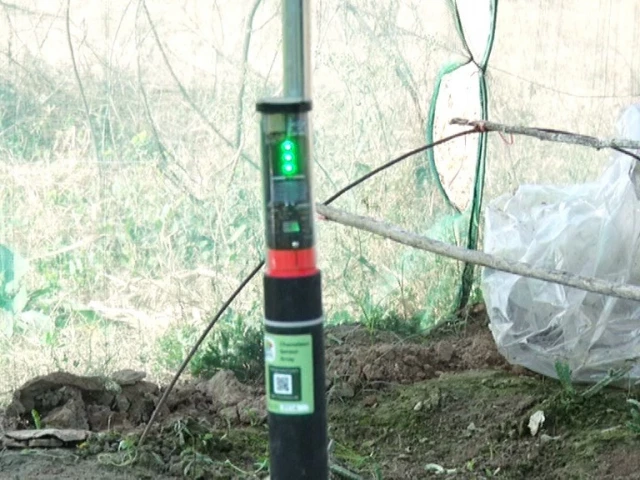
The technology, known as a soil water moisture sensor array, has been installed at the Tarnab Research Farm and in selected farming areas of the province. 50 sensors have been installed in Charsadda district and 60 in Mansehra. The sensors provide real-time data to farmers, enabling them to irrigate crops only when necessary rather than relying on guesswork or traditional schedules.

Speaking to The Express Tribune, Dr Gulzar Ahmed, Research Officer at the Pakistan Scientific Research Centre, said the initiative is a joint effort with the International Water Management Institute (IWMI). He explained that the sensor system works on three signals, similar to traffic lights, making it easy for farmers to understand irrigation needs.
 

Daducha Dam project: Rs51b scheme to end Rawalpindi's water woes​


Project to be completed within three years; expected to supply an additional 35 million gallons of water per day

Jamil Mirza
January 21, 2026


workers are busy working at the daducha dam photo twitter


Workers are busy working at the Daducha Dam. PHOTO: TWITTER

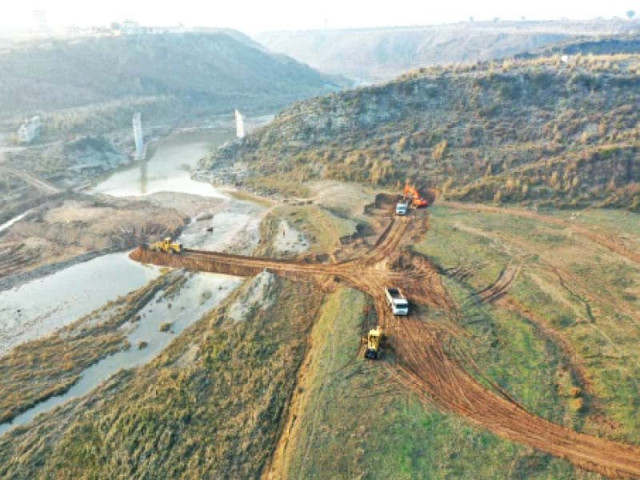
RAWALPINDI: A feasibility study has been prepared for the Daducha Dam project, which is expected to cost Rs51 billion and will supply an additional 35 million gallons of water per day to Rawalpindi city and cantonment areas.

The Water and Sanitation Agency (WASA) has received the feasibility report from the consultant and will now forward it, along with a working paper, to the Planning and Development (P&D) Wing Punjab.

Funds for the mega water supply project will be approved by the Punjab Chief Minister. Once construction work begins, the project will be completed within three years.

According to the feasibility study, a pipeline will be laid from Daducha Dam to Kak Pul, where a water treatment plant will be installed. From Kak Pul, a 36-inch pipeline will be laid and connected to an underground water tank near Hashmat Ali College on Farooq Azam Road.

An underground water tank with a capacity of 400,000 gallons will also be constructed on Old Airport Expressway.

Another 36-inch pipeline will be laid from Kak Pul to GT Road Topy Rakh, which will be connected to the MIS underground water tank. Under the Daducha Dam water supply project, which will be completed in three years, Rawalpindi city will receive 15 million gallons per day, while Rawalpindi cantonment will also get 15 million gallons per day. An additional five million gallons per day will be saved and utilized as per requirement.
 
The Indian sub-continent’s two great northern river systems — the Indus and the Ganga — are moving in opposite hydrological directions, with important implications for water security across South Asia, according to a study published in the peer-reviewed Earth’s Future, a publication of the American Geophysical Union.

Researchers from the Indian Institute of Technology, Gandhinagar analysed changes in streamflow — or how the quantity of water in rivers, lakes, and groundwater varied — between 1980 and 2021 using a high-resolution, physics-based hydrological model that links rainfall, groundwater, river flow, and irrigation pumping. Their findings show that while overall flows in the Indus Basin have increased modestly, the Ganga Basin has experienced a sharp and sustained decline.

Stark differences​

In the Indus system, rising precipitation — particularly linked to western disturbances and variable monsoon contributions — appears to be the main driver of increased river flow. The study finds that the strongest increases are seen in the main Indus River and its western tributaries, the Jhelum and the Chenab. However, the increase is not uniform: two eastern tributaries, the Ravi and Sutlej, have experienced significant declines despite the basin-wide upward trend.

In the Ganga Basin, the picture is starkly different. Rainfall has declined by roughly 10%, while temperatures and atmospheric water demand have increased. But the dominant factor behind falling river flows, the researchers concluded, is intensive groundwater pumping for irrigation.

Indus Waters Treaty implications​

The research findings intersect with the 1960 Indus Waters Treaty (IWT), which allocates the eastern rivers — Ravi, Beas and Sutlej — to India, and the western rivers — Indus, Jhelum and Chenab — primarily to Pakistan. India suspended the treaty in April 2025, following the Pahalgam terror attack. It has since fast-tracked procedural clearances for hydropower projects to accelerate usage of its share of the western rivers.

Vimal Mishra, an IIT-G professor and one of the co-authors of the study, told The Hindu that these trends showed that climate change and human use of water “necessitated” a relook at water-sharing arrangements under the IWT. “Agriculture in Pakistan is largely dependent on water from the main stem of the Indus and the increased precipitation means that it is not as affected as in eastern Punjab in India where groundwater is declining,” he told The Hindu

Depleted groundwater impact​

Groundwater normally feeds rivers gradually through underground discharge, especially during dry months. The study estimates that in parts of the Ganga Basin, groundwater contributes 50% to 70% of annual river flow. When farmers pump heavily — particularly during weak monsoon years — less groundwater reaches rivers. In some stretches of the Yamuna and upper Ganga, the natural direction of flow between aquifers and rivers has even reversed, with rivers losing water to depleted groundwater systems.

Using a two-step statistical attribution framework, the authors estimate that 60% to 80% of the streamflow decline in major Ganga sub-basins such as the Yamuna, Upper Ganga, and Ramganga can be traced to groundwater extraction, including pumping triggered by rainfall deficits during drought years.

The study’s methodology relies on a surface-groundwater model known as ParFlow-CLM, run at roughly 5-kilometre resolution for 42 years. The model was then given input data such as observed rainfall, temperature, soil, land use, and irrigation. Its results were validated against available streamflow measurements, the Gravity Recovery and Climate Experiment (GRACE) satellite groundwater storage observations, and data from more than 1,500 monitoring wells, showing strong agreement in groundwater trends.

Integrated management needed​

The authors call for integrated management of surface water and groundwater. Treating rivers and aquifers as separate systems, they argue, is no longer viable in an agriculture-dominated region where pumping decisions directly affect river flows. “We cannot continue to indiscriminately draw on water as if it is a free resource. Water use efficiency, changes in the types of crops grown has to be seriously considered,” added Professor Mishra.

In their study, the authors recommend more adaptive irrigation practices, crop diversification away from water-intensive crops in drought-prone years, and water planning aligned with long-term climate variability. Without coordinated groundwater regulation and climate-aware management, the study warns, river drying in the Ganga Basin is likely to intensify.
 

Stark differences​

In the Indus system, rising precipitation — particularly linked to western disturbances and variable monsoon contributions — appears to be the main driver of increased river flow. The study finds that the strongest increases are seen in the main Indus River and its western tributaries, the Jhelum and the Chenab. However, the increase is not uniform: two eastern tributaries, the Ravi and Sutlej, have experienced significant declines despite the basin-wide upward trend.

In the Ganga Basin, the picture is starkly different. Rainfall has declined by roughly 10%, while temperatures and atmospheric water demand have increased. But the dominant factor behind falling river flows, the researchers concluded, is intensive groundwater pumping for irrigation.

FeatureIndus BasinGanga Basin
Streamflow Trend+8% Increase 📈-17% Decrease 📉
Primary DriverClimate Change (Increased precipitation)Human Activity (Groundwater extraction)
Key Sub-basin ImpactRise in Jhelum, Chenab, & Main Indus; Decline in Ravi & Sutlej.Widespread decline in Yamuna, Ramganga, and Upper Ganga.
 

Users who are viewing this thread

Latest Posts

Back
Top