Navigation
Install the app
How to install the app on iOS
Follow along with the video below to see how to install our site as a web app on your home screen.
Note: This feature may not be available in some browsers.
More options
Style variation
You are using an out of date browser. It may not display this or other websites correctly.
You should upgrade or use an alternative browser.
You should upgrade or use an alternative browser.
WDS World Defense Exhibition Saudi Arabia 2026
- Thread starter The SC
- Start date
More options
Who Replied?


The SC
INT'L MOD
- Thread starter
- #199
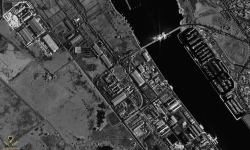
Italy and Saudi Arabia are progressing in a low-orbit satellite project
During the World Defense Show 2026 in Riyadh, defense cooperation between Italy and Saudi Arabia revealed a qualitative step in the field of military space, going beyond traditional arms deals.
The project includes the supply of eight low-orbit (LEO) satellites to the Kingdom, distributed to:
❖ 4 high-precision optical satellites for intelligence surveillance and visual reconnaissance
❖ 4 radar satellites equipped with SAR technology to monitor movement on land and sea with high accuracy
These satellites are designed to enhance intelligence, surveillance, collect strategic data, and support military operations on land and at sea.
It is worth noting that the Italian company TELEDIFE, the government agency affiliated with the Italian Ministry of Defence, supervises the management of defense space programs and the conclusion of international contracts related to satellites, and is responsible for signing the agreement from the Italian side.
Last November, the Implementing Arrangement - IA agreement was signed, which established the framework for government-to-government (G2G) cooperation between the two countries. Now, work is underway on the next stage, which is the Procurement Agreement (PA), which will be signed by TELEDIFE as the contract executor.
This project represents a major step towards enhancing the Kingdom's space and strategic capabilities, and indicates the expansion of technical defense cooperation between Riyadh and Rome beyond the scope of traditional deals.
During the World Defense Show 2026 in Riyadh, defense cooperation between Italy and Saudi Arabia revealed a qualitative step in the field of military space, going beyond traditional arms deals.
The project includes the supply of eight low-orbit (LEO) satellites to the Kingdom, distributed to:
❖ 4 high-precision optical satellites for intelligence surveillance and visual reconnaissance
❖ 4 radar satellites equipped with SAR technology to monitor movement on land and sea with high accuracy
These satellites are designed to enhance intelligence, surveillance, collect strategic data, and support military operations on land and at sea.
It is worth noting that the Italian company TELEDIFE, the government agency affiliated with the Italian Ministry of Defence, supervises the management of defense space programs and the conclusion of international contracts related to satellites, and is responsible for signing the agreement from the Italian side.
Last November, the Implementing Arrangement - IA agreement was signed, which established the framework for government-to-government (G2G) cooperation between the two countries. Now, work is underway on the next stage, which is the Procurement Agreement (PA), which will be signed by TELEDIFE as the contract executor.
This project represents a major step towards enhancing the Kingdom's space and strategic capabilities, and indicates the expansion of technical defense cooperation between Riyadh and Rome beyond the scope of traditional deals.
The SC
INT'L MOD
- Thread starter
- #200
The Kingdom of Saudi Arabia officially announced the contract for four C-27J MPA aircraft, becoming the first global launch customer for the armed maritime patrol version of the C-27J Spartan tactical transport aircraft developed by the Italian company Leonardo.
These aircraft will be equipped with the advanced ATOS combat mission system, in addition to qualitative armament that includes MARTE-ER anti-ship missiles and advanced MU90 light anti-submarine torpedoes, giving them integrated capabilities in coastal surveillance, anti-submarine warfare, surface warfare, and armed naval reconnaissance.
This contract represents a qualitative leap in the capabilities of the Saudi Air and Navy forces in the field of long-range maritime patrols, and reflects the Kingdom’s trend towards possessing highly armed multi-mission platforms to enhance its maritime security and protect its strategic corridors.

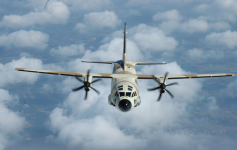
The aircraft also comes with the option of an air-to-surface armament package
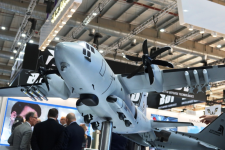
These aircraft will be equipped with the advanced ATOS combat mission system, in addition to qualitative armament that includes MARTE-ER anti-ship missiles and advanced MU90 light anti-submarine torpedoes, giving them integrated capabilities in coastal surveillance, anti-submarine warfare, surface warfare, and armed naval reconnaissance.
This contract represents a qualitative leap in the capabilities of the Saudi Air and Navy forces in the field of long-range maritime patrols, and reflects the Kingdom’s trend towards possessing highly armed multi-mission platforms to enhance its maritime security and protect its strategic corridors.
The aircraft also comes with the option of an air-to-surface armament package
The SC
INT'L MOD
- Thread starter
- #201
President of the American company General Atomics, Mr. David Alexander, said: The Kingdom of Saudi Arabia is interested in purchasing up to 200 stealth aircraft from Collaborative Combat.
The YFQ-42A is the latest unmanned combat aircraft developed by General Atomics Aeronautical Systems (GA-ASI) For the benefit of the US Air Force within the Collaborative Combat Aircraft - CCA program, which aims to produce a new generation Intelligent combat aircraft operating alongside manned aircraft.
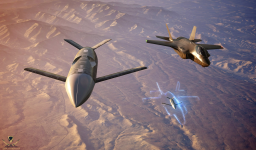
It is the first drone combat aircraft that got the letter "F" for "fighter" in the USAF naming system, reflecting its direct combat role.
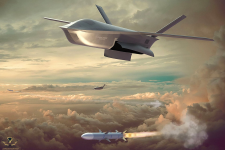
Design and technical characteristics
1. Stealth design (Low Observability)
The YFQ-42A was developed with a low radar signature structure that includes:
Streamlined body inspired by stealth fighter designs
V-shaped tail
An upper air intake hides the engine fan from radars
Internal weapons bay for increased stealth
2. Combat capabilities and missions
The aircraft is designed to perform multiple roles, including:
Live air-to-air combat
Attack and support missions
Electronic warfare
ISR (Intelligence, Surveillance and Reconnaissance)
Acting as a combat escort for manned aircraft (Loyal Wingman)

3. Artificial intelligence and autonomy
The YFQ-42A relies on a highly advanced autonomy core that has been tested for years through the MQ-20 Avenger program, giving it the ability to:
Make autonomous decisions in real time
Coordination with manned and unmanned aircraft
Carrying out joint tasks within a combat aviation team
However, on-the-loop control remains in sensitive situations to ensure sound decisions
The strategic importance of the aircraft
The YFQ-42A represents a revolutionary step in the future of air power for several reasons:
The first truly unmanned fighter
It carries air-to-air combat missions and is not just a surveillance aircraft.
It acts as a force multiplier for manned aircraft such as the F-22 and F-35 and upcoming aircraft under the NGAD program.
It costs less than traditional fighters, which allows it to have a large number and accept higher casualty rates in combat.
The YFQ-42A is not just a new drone but an autonomous stealth fighter platform with artificial intelligence..It is capable of changing the shape of air wars in the future, and official information about its precise capabilities is still secret..But what has been revealed shows that the United States is moving towards an era of “hybrid air power” between man and machine.
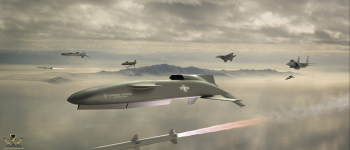
Mr. David Alexander mentioned during his speech that the Kingdom of Saudi Arabia will obtain the local production rights for the YFQ-42a (CCA) stealth weapon.
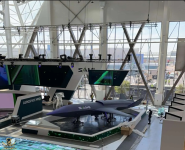
WDS2026
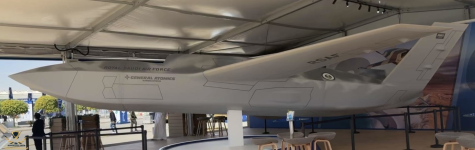
The YFQ-42A is the latest unmanned combat aircraft developed by General Atomics Aeronautical Systems (GA-ASI) For the benefit of the US Air Force within the Collaborative Combat Aircraft - CCA program, which aims to produce a new generation Intelligent combat aircraft operating alongside manned aircraft.
It is the first drone combat aircraft that got the letter "F" for "fighter" in the USAF naming system, reflecting its direct combat role.
Design and technical characteristics
1. Stealth design (Low Observability)
The YFQ-42A was developed with a low radar signature structure that includes:
Streamlined body inspired by stealth fighter designs
V-shaped tail
An upper air intake hides the engine fan from radars
Internal weapons bay for increased stealth
2. Combat capabilities and missions
The aircraft is designed to perform multiple roles, including:
Live air-to-air combat
Attack and support missions
Electronic warfare
ISR (Intelligence, Surveillance and Reconnaissance)
Acting as a combat escort for manned aircraft (Loyal Wingman)
3. Artificial intelligence and autonomy
The YFQ-42A relies on a highly advanced autonomy core that has been tested for years through the MQ-20 Avenger program, giving it the ability to:
Make autonomous decisions in real time
Coordination with manned and unmanned aircraft
Carrying out joint tasks within a combat aviation team
However, on-the-loop control remains in sensitive situations to ensure sound decisions
The strategic importance of the aircraft
The YFQ-42A represents a revolutionary step in the future of air power for several reasons:
The first truly unmanned fighter
It carries air-to-air combat missions and is not just a surveillance aircraft.
It acts as a force multiplier for manned aircraft such as the F-22 and F-35 and upcoming aircraft under the NGAD program.
It costs less than traditional fighters, which allows it to have a large number and accept higher casualty rates in combat.
The YFQ-42A is not just a new drone but an autonomous stealth fighter platform with artificial intelligence..It is capable of changing the shape of air wars in the future, and official information about its precise capabilities is still secret..But what has been revealed shows that the United States is moving towards an era of “hybrid air power” between man and machine.
Mr. David Alexander mentioned during his speech that the Kingdom of Saudi Arabia will obtain the local production rights for the YFQ-42a (CCA) stealth weapon.
WDS2026
The SC
INT'L MOD
- Thread starter
- #202

The Ministry of Defence - Saudi Arabia (MoD) has signed 28 contracts with local and international military industry companies during the
World Defense Show, currently taking place in Riyadh.
The agreements were signed under the patronage of His Excellency the Assistant Minister of Defense for Executive Affairs, Dr. Khaled bin Hussein Al Biyari, who personally concluded four contracts with senior executives from MBDA, Raytheon Saudi Arabia, Hanwha Aerospace, and Leonardo.
Al Biyari also witnessed the signing of eight additional contracts by the Deputy Minister of Defense for Procurement and Armament, Ibrahim bin Ahmed Alsuwaiyed, alongside 16 further agreements concluded by executive general directors within the ministry.
The SC
INT'L MOD
- Thread starter
- #203
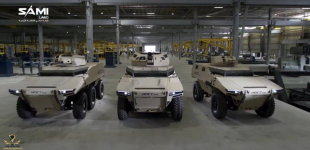
HEET 8x8 Saudi stealthy armored vehicle
A multi-tasking 8x8 monster with a devastating 105mm cannon, advanced impenetrable protection, a stealthy design that combines super speed with tremendous power and ultimate flexibility for all battlefields!
100% pure Saudi industry, embodying #Saudi_Vision_2030 with all its power..
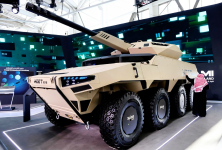
A multi-tasking 8x8 monster with a devastating 105mm cannon, advanced impenetrable protection, a stealthy design that combines super speed with tremendous power and ultimate flexibility for all battlefields!
100% pure Saudi industry, embodying #Saudi_Vision_2030 with all its power..
The SC
INT'L MOD
- Thread starter
- #205
“Lockheed Martin” and “Al-Rowad Systems” launch a partnership to establish the first ground warehouse for the PAC‑3 system inside Saudi Arabia
The establishment of the new warehouse will contribute to significantly reducing the repair and maintenance cycle, and raising the level of operational availability of Integrated Air and Missile Defense (IAMD) systems. The partnership supports the goals of Saudi Vision 2030 related to local industrial growth and technology transfer.

The establishment of the new warehouse will contribute to significantly reducing the repair and maintenance cycle, and raising the level of operational availability of Integrated Air and Missile Defense (IAMD) systems. The partnership supports the goals of Saudi Vision 2030 related to local industrial growth and technology transfer.
The SC
INT'L MOD
- Thread starter
- #206
The HEET project embodies a path that extends from national design to advanced operational readiness, as an advanced national model designed according to the highest standards to meet the requirements of modern operations, and to respond to field changes efficiently and flexibly.

The SC
INT'L MOD
- Thread starter
- #207
The Tolga system is the most prominent system whose contract was officially announced between Egypt and Türkiye
TOLGA system:
Type of system: Close-in air defense system (CIWS) designed for combat at short distances.
Primary mission: confronting drones, low-air targets, and mobile missiles.
Technical features: * Equipped with an advanced radar and electro-optical monitoring system.
It contains an electronic jamming system to neutralize marches.
It operates with multi-caliber artillery (such as 35 mm) that uses smart munitions that explode in the air to destroy drone swarms.
The deal value of the system: estimated at approximately $130 to $150 million.
TOLGA system:
Type of system: Close-in air defense system (CIWS) designed for combat at short distances.
Primary mission: confronting drones, low-air targets, and mobile missiles.
Technical features: * Equipped with an advanced radar and electro-optical monitoring system.
It contains an electronic jamming system to neutralize marches.
It operates with multi-caliber artillery (such as 35 mm) that uses smart munitions that explode in the air to destroy drone swarms.
The deal value of the system: estimated at approximately $130 to $150 million.

Zarvan
Elite Member

WDS 2026: Pakistan Introduces YALGHAR-200 Loitering Munition for 200 km Deep-Strike Missions
- 9 Feb, 2026 - 14:18
- World Defense Show 2026 (WDS 2026) Official Online Show Daily News | Army Recognition
https://go.ezodn.com/ads/charity/pr...funnel=tofu&utm_type=traffic&ffid=1&co=PK
Pakistan’s state-owned defense group Global Industrial & Defence Solutions has revealed the YALGHAR-200 loitering munition at the World Defense Show 2026 in Riyadh. The system signals Islamabad’s push to field and export longer-range unmanned strike capabilities that blend surveillance and precision attack in a single platform.
At the World Defense Show 2026 in Riyadh, Pakistan’s state defense conglomerate Global Industrial & Defence Solutions presented a new loitering munition identified as the YALGHAR 200, expanding the company’s portfolio in the rapidly evolving field of long-range precision strike systems. The unveiling took place as regional and international manufacturers continue to emphasize unmanned capabilities able to combine reconnaissance, endurance and terminal attack functions within a single platform.
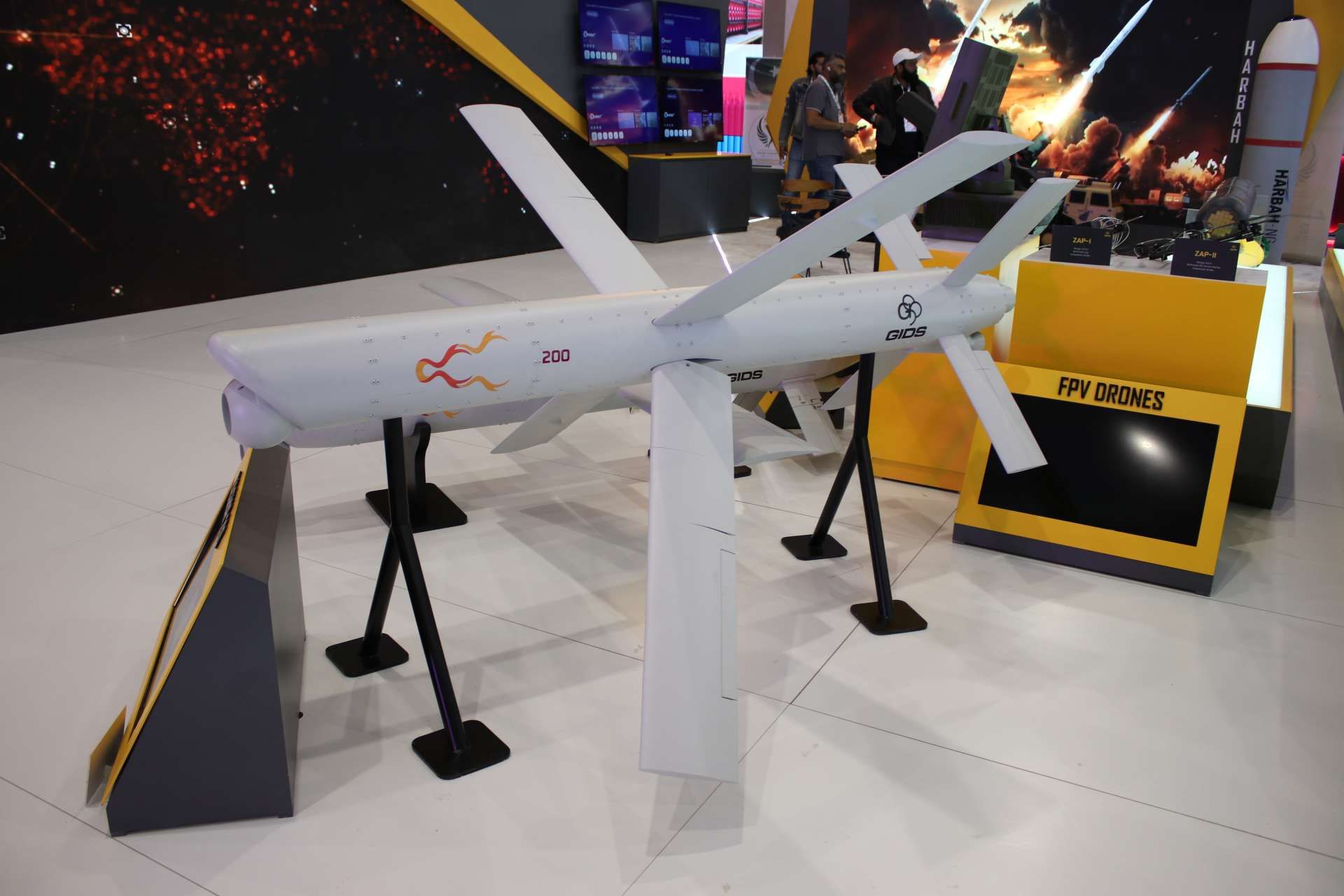
Pakistan’s Global Industrial and Defence Solutions unveiled the YALGHAR-200 loitering munition at the World Defense Show 2026 in Riyadh, showcasing a new unmanned strike system with a reported 200-kilometer range (Picture Source: Army Recognition Group)
https://go.ezodn.com/ads/charity/pr...funnel=tofu&utm_type=traffic&ffid=1&co=PK
Displayed with a maximum takeoff weight of 50 kilograms, the YALGHAR 200 is designed as a fire-and-forget system with a stated operational radius of up to 200 kilometers. According to technical data released during the exhibition, the munition can remain airborne between 90 and 120 minutes, a performance envelope intended to give operators time to search, identify and validate targets before committing to an attack. The concept reflects lessons drawn from recent conflicts where persistence over the battlefield has become as critical as raw range.
The payload architecture indicates a warhead class between 10 and 20 kilograms. Such a bracket places the system in a category capable of engaging a variety of objectives, from fortified positions and lightly protected infrastructure to armored vehicles, depending on the type of charge selected. Company representatives described the intended mission spectrum as including anti-tank and anti-personnel roles, suggesting the possibility of multiple effectors or mission kits tailored to operational requirements.
In terms of deployment, the YALGHAR 200 is advertised as compatible with booster-assisted launch as well as air-drop procedures. This dual approach could allow ground forces to employ the munition from forward positions while also opening integration options with aircraft or larger unmanned platforms. The flexibility mirrors a broader industry trend aimed at multiplying launch vectors in order to complicate defensive countermeasures and improve responsiveness across dispersed theaters.
Propulsion is based on a gasoline engine, a choice that typically favors extended range and sustained loiter time over the acoustic discretion offered by electric solutions. Within the weight and endurance parameters announced, this configuration may enable cruise profiles suited for deep strikes while keeping acquisition and operating costs at levels attractive to export customers. Affordability has become a central argument in the international market, where armed forces seek mass as much as sophistication.
The appearance of the YALGHAR 200 in World Defense Show underscores Islamabad’s ambition to position its defense industry as a competitive supplier of unmanned strike capabilities beyond its traditional customer base. Riyadh has become a major meeting point for procurement authorities from the Middle East, Africa and Asia, offering manufacturers an opportunity to demonstrate maturity, scalability and readiness for partnership or local production arrangements.
Over the last decade, loitering munitions have shifted from niche assets to central components of combined arms operations. Their ability to merge surveillance and attack, reduce sensor-to-shooter timelines and deliver precision effects with limited logistical footprint has drawn sustained attention from militaries modernizing under budgetary pressure. Systems in the class presented by GIDS aim to answer the demand for longer reach while retaining tactical mobility.
By presenting the YALGHAR 200 in Riyadh, GIDS signaled its intent to participate in a market where operational feedback cycles are short and technological evolution is rapid. The system’s published characteristics outline a platform optimized for extended reach, modular employment and multi-role lethality, aligned with current procurement priorities seen across several regions.
https://go.ezodn.com/ads/charity/pr...funnel=tofu&utm_type=traffic&ffid=1&co=PK
The introduction of the YALGHAR 200 adds another entrant to the expanding catalogue of loitering munitions available internationally. With a 50-kilogram class air vehicle, a range of 200 kilometers, up to two hours of endurance, selectable warheads and multiple launch options, the product illustrates how manufacturers are seeking to balance depth of strike, flexibility and cost. Future developments will likely determine how the platform integrates sensors, communications and survivability features as it moves from exhibition floor to potential operational adoption.
Users who are viewing this thread
Total: 2 (members: 0, guests: 2)
Pakistan Defence Latest


Country Watch Latest
Latest Posts
-
-
 Makkah Defence Alliance: Turkey, Saudi Arabia, and Pakistan, news & updates (38 Viewers)
- Latest: shapurzolaktaf
-
 ‘I want to cry’: Afghan medical students in Pakistan face expulsion fear (9 Viewers)
- Latest: K2RULEZ
-
-
