K2RULEZ
Elite Member


Muscat’s reported interest in the JF-17 tests whether diversifying defense suppliers can deliver additional capability without disproportionate costs or ally opposition.
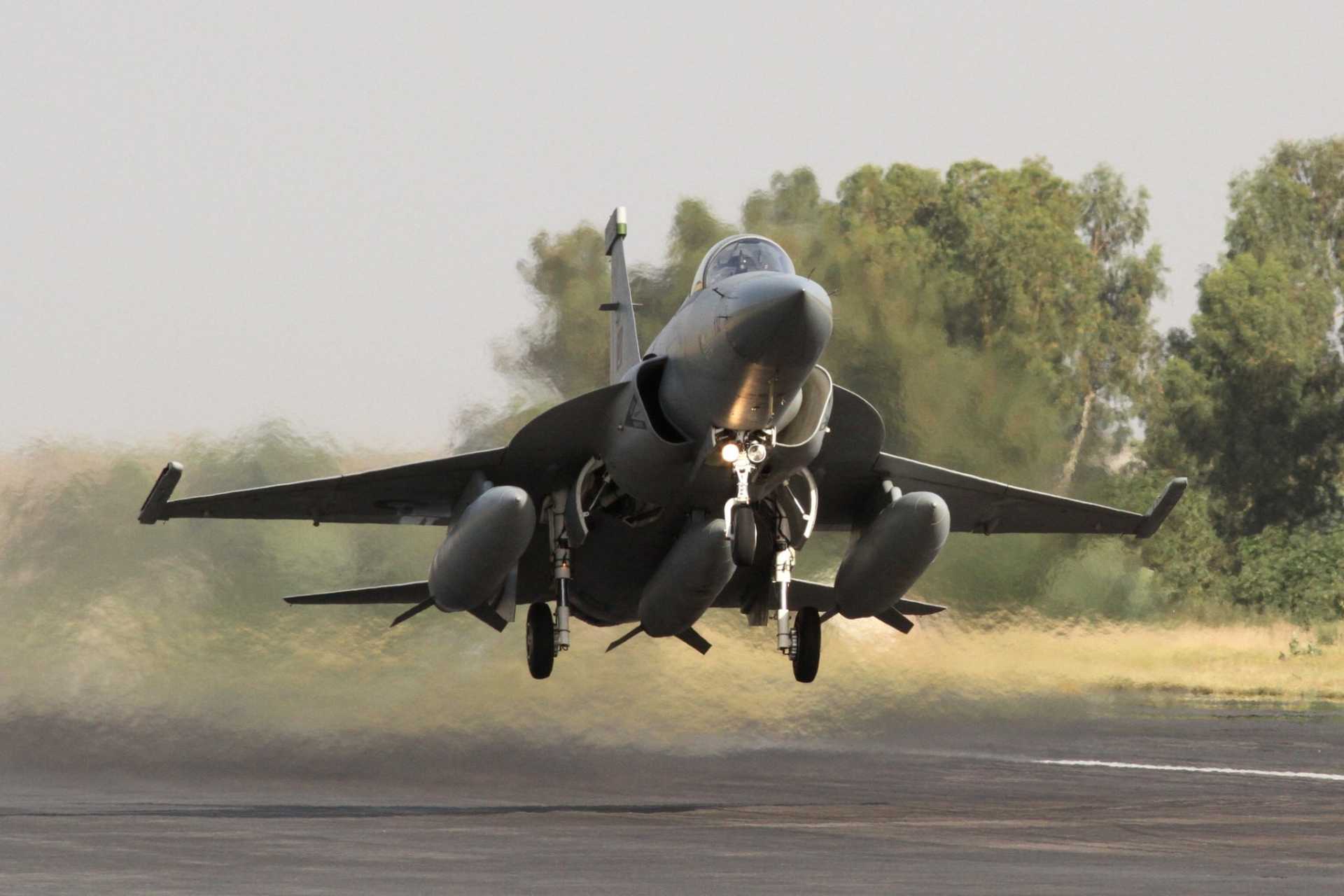
On Oct. 21, Army Recognition reported that the Royal Air Force of Oman was in talks with Beijing and Islamabad over a possible purchase of their jointly produced JF-17 fighter jets. Although no purchase has been announced and financial terms remain undisclosed, the potential sale raises questions about what such aircraft would offer an air force already equipped with US F-16s and European Typhoons.
For Pakistan, a purchase agreement for the JF-17s would secure a customer in a Gulf market long dominated by Western combat aircraft. For China, the jointly produced platform could provide another route for its aerospace industry into the region, although the scale of that opening would depend on the equipment and support arrangements sought by Muscat.
Meanwhile, Oman’s reported interest in the Chinese-Pakistani planes presents it with a familiar procurement dilemma: Do the benefits of diversifying suppliers outweigh the costs of operating different military systems?
Potential benefits to Oman
The reported discussions follow Muscat's broader diplomatic engagement with Islamabad. Omani Foreign Minister Badr Albusaidi visited Pakistan on Oct. 13–14 to attend the eighth bilateral Joint Ministerial Commission for talks on security and defense, as well as trade, energy and maritime cooperation, according to the published agenda. However, the agreements publicly listed by Oman make no reference to a fighter jet purchase.
According to the Army Recognition report, Oman operates 17 F-16C/D Block 50 fighters, 12 Typhoon Tranche 3A jets and 10 Hawk 200 light attack aircraft. For a force that size, the number of jets matters as much as the choice of supplier. A small batch of JF-17s would add a third fighter type — with its own pilots, technicians, weapons and spare parts — but offer limited additional operational capacity. A larger order could pave the way for eventually retiring older aircraft, but Muscat has signaled no such plans.
Oman has long operated within the defense orbits of Washington and London, Giorgio Cafiero, CEO of Gulf State Analytics, told Al-Monitor, but today, with US policy, particularly the war on Iran, fueling instability that threatens Oman and its Gulf neighbors, Muscat “seeks to diversify its external partnerships more actively than ever before.” To this end, Cafiero expects Oman to look increasingly to Pakistan and China as part of an effort to “enhance Muscat’s autonomy and reduce its dependence on Washington.”
Oman has closer ties with Islamabad than most Gulf states do. Gwadar, Pakistan, now the flagship port of the China-Pakistan Economic Corridor, was an Omani possession until 1958, and Baluch recruits have long served in the sultanate’s armed forces.
Geography adds another layer. Oman’s air force must cover a territory stretching more than 1,000 kilometers, from the Musandam Peninsula, on the Strait of Hormuz, to Dhofar, on the Yemeni border, making range, aerial refueling and aircraft availability as important as radars or missiles.
The Pakistan Aeronautical Complex (PAC) and China’s Chengdu Aircraft Corporation (CAC) jointly developed the JF-17, which entered operational service in 2010. PAC builds 58% of the airframe; the radar, avionics and weapons are Chinese; and the engine is Russian. Final assembly takes place in Kamra, Pakistan. The latest Block III variant adds an active electronically scanned array radar, a helmet-mounted sight and the PL-15E long-range air-to-air missile. Details of the version, number of aircraft, weapons and support package Oman is considering have not been disclosed.
Pakistani label, Chinese content
Ahmed Aboudouh, associate fellow with the Chatham House Middle East and North Africa Programme, told Al-Monitor that Washington would not allow its Gulf partners to buy Chinese fighters outright, such as the J-10. The JF-17, however, would carry a lower risk of a US backlash by providing access to Chinese technology through Pakistan.
That said, contracting with Islamabad would not fully remove Beijing from the equation. Buying the JF-17, according to Aboudouh, is “like [Pakistan] writing the headline of a long piece,” while the paragraphs and subheads come from China. CAC, which also builds the J-10, would benefit directly, as would the Chinese makers of the radar, missiles and electronic warfare systems.
Countries are not buying the JF-17 solely for the aircraft itself, Aboudouh noted, but are also interested in the systems that come with it — above all the PL-15E missile. In May 2025, during a clash with India, Pakistan fired the missile from its J-10s, and Indian planners misjudged its range. As Reuters reported on Aug. 2, 2025, Indian pilots thought that they were outside the roughly 150-kilometer (93-mile) range of the export version, but Pakistani officials said the missile had been launched from about 200 kilometers (124 miles).
The missile's performance also depends on the network around it, with a long-range surveillance aircraft feeding targeting data to the Pakistani pilots. Long-range missiles, including the PL-15E, Aboudouh said, “have to come with complementary technology that allows you to maximize their use.”
For Muscat, that would mean linking new JF-17s with its F-16s, Typhoons and ground-based command systems, each from a different supplier. “The main problem,” said Aboudouh, “is not cost but availability — whether suppliers are actually willing to provide this technology.”
When Western suppliers are unwilling to provide certain long-range weapons or the technology needed to operate them, Chinese systems can become an alternative. Operating them would still, however, be expensive. Alongside the jets, Oman would need weapons stocks, simulators, spare parts and trained technicians, with fixed costs spread across a small fleet. Past export deals indicate that package prices vary widely, from about $61 million per aircraft for Nigeria to $115 million for Azerbaijan.
China's foothold
An Omani acquisition would further China's already established, though selective, defense presence in the Gulf. Chinese armed drones, including the Wing Loong family and CH-4, have featured in UAE and Saudi military activity in Yemen; the UAE has also used them in Libya. In addition, an Oct. 23 analysis by the Foreign Policy Research Institute linked expanding production at Saudi Arabia’s al-Duwadimi missile site to past Chinese assistance and to the DF-15A, a Chinese ballistic missile that debris in Yemen suggests Riyadh has used.
Military cooperation has also expanded through recurring exercises. As Al-Monitor reported in August, the UAE and China were preparing for their fourth Falcon Shield air exercise in four years that month, deepening a training relationship that extends beyond equipment sales. The Saudi-Chinese Blue Sword naval exercises are another example of sustained military exchanges that take place despite the kingdom's established partnerships with Western countries.
These examples of Chinese military cooperation with Gulf states and other Arab countries, including Egypt, show that Beijing's involvement need not suggest or require a shift in alignment. A fighter purchase, however, would represent a deeper commitment than exercises or a drone fleet, tying Muscat to Chinese-origin support for decades.
Such a long-term tie is what would most concern Oman’s Western partners. Aboudouh pointed to the competition it would present for US and European manufacturers, the risk of sensitive information about Western platforms falling into China's hands and the prospect of maintenance, spare parts and technical support “institutionalizing” a longer-term relationship.
No Western response to the JF-17 talks has been reported. Oman's Foreign Ministry and the Omani and Chinese embassies in Washington had not responded to Al-Monitor's requests for comment at the time of publication.
Cafiero does not expect Pakistan or China to replace the United States or Britain as Oman’s principal security partners. Rather, he said, Islamabad and Beijing could help Muscat “diversify and rebalance its international partnerships” while retaining flexibility to engage with longstanding partners.
The Omani leadership, Cafiero reiterated, “does not seek to choose one partner at the expense of another.”