When Kabul became independent, America got angry with Khan: Shabar Zaidi

  • Thread starter Thread starter Cash gk
  • Start date Start date
... the tribal areas were already a part of Pakistan. ...
The tribal areas were within Pakistan but not controlled or governed by Pakistan.

There were other territories as such that were both within India and Pakistan that both countries' militaries invaded and annexed decades after independence.

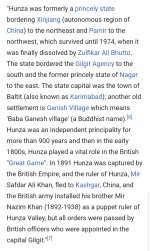
Hunza is another example where it's Royal family was removed from power in 1974 and annexed after suspicions that this princely state within the Pakistani state was looking to declare independence.

Screenshot_20240428-130519_Chrome.jpg
Wikipedia: Hunza Valley - History

Wrong, Most of the people killed in drone strikes were civilians.
Yeah, it's sad that terrorists go home to their families after they've been involved in terrorism elsewhere in the country that has killed around 65,000 people.

Do you have any terrorists in your family? If you do, let the military know so they can drone your family too.

How would you
like it if your house got bombed by a American drone? would you still say the same
thing?
In the past they were being droned by American drones because Pakistan did not have any UCAVs of its own but now the terrorists are being droned with Pakistani UCAVs, bombed by Pakistani fighter jets, helicopters and ISI special ops. Are the terrorists and their families happy now?
 
Ah, it seems like we have a history lesson to attend to! Allow me to illuminate the situation with some hard facts and historical context.

Firstly, calling Afghanistan the graveyard of empires isn't just a throwaway line – it's a historical reality. From Alexander the Great to the Soviet Union, and now to the United States and NATO, Afghanistan has indeed been a tough nut to crack for any invading force.

Let's not forget the recent spectacle of the US-led coalition, along with their Indian allies, trying to flex their military muscle against the Afghan resistance. Despite their fancy weaponry and trillion-dollar budgets, they found themselves humbled by fighters armed with nothing more than AK-47s and sheer determination. Talk about David versus Goliath!

And about those Taliban, let's not sugarcoat it – their track record isn't exactly stellar. Supporting their TTP brethren in killing innocent Pakistanis while claiming victory in some divine crusade? That's like shooting yourself in the foot while boasting about your marksmanship.

As for Imran Khan, well, he may have had his flaws, but pinning the downfall of an entire class on one man seems a tad simplistic, don't you think? Perhaps it's time to look beyond personalities and focus on systemic issues if we want to salvage any hope for Pakistan's middle class. After all, blaming it all on one person is like trying to navigate a ship through stormy seas with a leaky bucket – it's not going to get us very far.
they will make example of imran khan and general faiz hameed
That was a very small and misleading dim and flickering tinted 60w bulb.
Afghanistan is the graveyard of empires - its a moniker created through historical myths and fluff.
Alexander was not defeated in Afghanistan - otherwise he would not have made it to Porus - Alexander was defeated by overextended logistics and disease. The Afghans as always did the EXACT same thing they do when they see outsiders invading - go to guerrilla warfare and wait it out. While it taxed Alexander’s forces quote a bit - it wasn’t any “nail in the coffin” nor the facade of “Graveyard of Empires”.

The Soviets were defeated by overspending in defense during the Reagan Era and constrained by political and diplomatic considerations of going beyond Afghanistan. The Afghans had a massive Haven in Pakistan which if taken away from them would have meant(as it was getting to until the Stingers came in) getting chopped up by hinds regularly. Combined with the mostly conscript Soviet Army that was poorly motivated for the invasion (Ukraine is a near repeat in some ways).

The US after pounding mincemeat of the Taliban day in and day out realized that unless it put even close to the equivalent Soviet boots on the ground or used the scorched earth tactics which its political and world opinions would never allow - its alliance with a corrupt Afghan leadership meant there was no will from the locals to accept any of the usual democracy tripe that was the ideal of the US leadership.

Militarily, the U.S. forces and their allies maintained overwhelming tactical superiority throughout their engagement in Afghanistan. They successfully conducted numerous operations against the Taliban and other insurgent groups, demonstrating significant capabilities in terms of intelligence, technology, and logistics. These military efforts often resulted in the decimation of insurgent leadership and significant disruptions to their operations.

However, the challenges in Afghanistan were not purely military but also political and social. The U.S. was faced with the task of not only defeating a resilient insurgency but also supporting the establishment of a stable government and the reconstruction of a nation ravaged by decades of conflict. The complexity of tribal politics, the pervasive influence of corruption within the Afghan government, and the difficulty of building national institutions were factors that no amount of military might could easily overcome.

The decision to withdraw U.S. troops was driven by a recognition of these complexities and the realization that a sustainable peace would require political solutions that military strategies alone could not achieve. This shift in strategy reflects a broader understanding that success in such conflicts is not measured by military victories alone but by the achievement of long-term political stability and development.

So, framing the U.S. involvement in Afghanistan as a military defeat ignores the broader strategic context and the nuanced realities of modern conflicts where military action is just one component of a much larger and more complex approach to trying to Fix Afghanistan… that was the folly .. fixing a mess.

Otherwise the US military-industrial complex is happy to provide all the JDAMs and MOABs to kill as many Taliban as needed.

Imran Khan being the king of faux pax Pakistani Trump he is - would constantly go around rehashing his Taliban-khan statements without realizing the impact they have once you are leading a country versus being an agitator politician. Combine that with what is generally spineless Pakistani establishment - a simple memo and some backhand messaging and poor IK was out…
 
That was a very small and misleading dim and flickering tinted 60w bulb.
Afghanistan is the graveyard of empires - its a moniker created through historical myths and fluff.
Alexander was not defeated in Afghanistan - otherwise he would not have made it to Porus - Alexander was defeated by overextended logistics and disease. The Afghans as always did the EXACT same thing they do when they see outsiders invading - go to guerrilla warfare and wait it out. While it taxed Alexander’s forces quote a bit - it wasn’t any “nail in the coffin” nor the facade of “Graveyard of Empires”.

The Soviets were defeated by overspending in defense during the Reagan Era and constrained by political and diplomatic considerations of going beyond Afghanistan. The Afghans had a massive Haven in Pakistan which if taken away from them would have meant(as it was getting to until the Stingers came in) getting chopped up by hinds regularly. Combined with the mostly conscript Soviet Army that was poorly motivated for the invasion (Ukraine is a near repeat in some ways).

The US after pounding mincemeat of the Taliban day in and day out realized that unless it put even close to the equivalent Soviet boots on the ground or used the scorched earth tactics which its political and world opinions would never allow - its alliance with a corrupt Afghan leadership meant there was no will from the locals to accept any of the usual democracy tripe that was the ideal of the US leadership.

Militarily, the U.S. forces and their allies maintained overwhelming tactical superiority throughout their engagement in Afghanistan. They successfully conducted numerous operations against the Taliban and other insurgent groups, demonstrating significant capabilities in terms of intelligence, technology, and logistics. These military efforts often resulted in the decimation of insurgent leadership and significant disruptions to their operations.

However, the challenges in Afghanistan were not purely military but also political and social. The U.S. was faced with the task of not only defeating a resilient insurgency but also supporting the establishment of a stable government and the reconstruction of a nation ravaged by decades of conflict. The complexity of tribal politics, the pervasive influence of corruption within the Afghan government, and the difficulty of building national institutions were factors that no amount of military might could easily overcome.

The decision to withdraw U.S. troops was driven by a recognition of these complexities and the realization that a sustainable peace would require political solutions that military strategies alone could not achieve. This shift in strategy reflects a broader understanding that success in such conflicts is not measured by military victories alone but by the achievement of long-term political stability and development.

So, framing the U.S. involvement in Afghanistan as a military defeat ignores the broader strategic context and the nuanced realities of modern conflicts where military action is just one component of a much larger and more complex approach to trying to Fix Afghanistan… that was the folly .. fixing a mess.

Otherwise the US military-industrial complex is happy to provide all the JDAMs and MOABs to kill as many Taliban as needed.

Imran Khan being the king of faux pax Pakistani Trump he is - would constantly go around rehashing his Taliban-khan statements without realizing the impact they have once you are leading a country versus being an agitator politician. Combine that with what is generally spineless Pakistani establishment - a simple memo and some backhand messaging and poor IK was out…
You are clueless
 
That was a very small and misleading dim and flickering tinted 60w bulb.
Afghanistan is the graveyard of empires - its a moniker created through historical myths and fluff.
Alexander was not defeated in Afghanistan - otherwise he would not have made it to Porus - Alexander was defeated by overextended logistics and disease. The Afghans as always did the EXACT same thing they do when they see outsiders invading - go to guerrilla warfare and wait it out. While it taxed Alexander’s forces quote a bit - it wasn’t any “nail in the coffin” nor the facade of “Graveyard of Empires”.

The Soviets were defeated by overspending in defense during the Reagan Era and constrained by political and diplomatic considerations of going beyond Afghanistan. The Afghans had a massive Haven in Pakistan which if taken away from them would have meant(as it was getting to until the Stingers came in) getting chopped up by hinds regularly. Combined with the mostly conscript Soviet Army that was poorly motivated for the invasion (Ukraine is a near repeat in some ways).

The US after pounding mincemeat of the Taliban day in and day out realized that unless it put even close to the equivalent Soviet boots on the ground or used the scorched earth tactics which its political and world opinions would never allow - its alliance with a corrupt Afghan leadership meant there was no will from the locals to accept any of the usual democracy tripe that was the ideal of the US leadership.

Militarily, the U.S. forces and their allies maintained overwhelming tactical superiority throughout their engagement in Afghanistan. They successfully conducted numerous operations against the Taliban and other insurgent groups, demonstrating significant capabilities in terms of intelligence, technology, and logistics. These military efforts often resulted in the decimation of insurgent leadership and significant disruptions to their operations.

However, the challenges in Afghanistan were not purely military but also political and social. The U.S. was faced with the task of not only defeating a resilient insurgency but also supporting the establishment of a stable government and the reconstruction of a nation ravaged by decades of conflict. The complexity of tribal politics, the pervasive influence of corruption within the Afghan government, and the difficulty of building national institutions were factors that no amount of military might could easily overcome.

The decision to withdraw U.S. troops was driven by a recognition of these complexities and the realization that a sustainable peace would require political solutions that military strategies alone could not achieve. This shift in strategy reflects a broader understanding that success in such conflicts is not measured by military victories alone but by the achievement of long-term political stability and development.

So, framing the U.S. involvement in Afghanistan as a military defeat ignores the broader strategic context and the nuanced realities of modern conflicts where military action is just one component of a much larger and more complex approach to trying to Fix Afghanistan… that was the folly .. fixing a mess.

Otherwise the US military-industrial complex is happy to provide all the JDAMs and MOABs to kill as many Taliban as needed.

Imran Khan being the king of faux pax Pakistani Trump he is - would constantly go around rehashing his Taliban-khan statements without realizing the impact they have once you are leading a country versus being an agitator politician. Combine that with what is generally spineless Pakistani establishment - a simple memo and some backhand messaging and poor IK was out…

I see the points you are making, however you can’t ignore certain truths.

1. The Taliban persisted for 20 long years, some of the leadership themselves participated in the war and if they directly didn’t then at the very least their sons did.

2. The Taliban were very serious about their cause, to the point that they were willing to blow themselves up.

3. The political fallout in Afghan society was inevitable… it is as the saying goes, “easy come, easy go”, the Afghans never built themselves up, everything was given to them, their infrastructure, their weapons, even the territory which was retaken for them, how would they be expected to hold it?

Consider Ukraine, after the Soviet collapse they had to do everything for themselves, there was no support group that they were totally dependent upon (key word here, totally), which is no surprise they are holding against Russia, their only drawback is fundings and arms. The Afghans on the other hand, completely different scenario, they were totally dependent upon America, which is why once they left everything just fell apart.

4. Alexander was not defeated in Afghanistan, but he did spend a considerable time there (4 years) and in the end had to marry a tribal elders daughter (Oxyartes) to secure his supply line, something his father Philip of Macedon also did.

5. The US was concerned more about breaking the resistance, not about whether or not Afghanistan had a functioning government, US has bases in nations that don’t have a functioning government.

With all these points, I truly believe the US lost that war, not because they couldn’t go on fighting or because they weren’t winning battles, but more because it was becoming costly, even if they did decide to win that war it would have been a pyrrhic victory, their image would have been completely tarnished if they went to those lengths and and it would have cost them monetarily and internationally. In truth their decision to pull out, although a defeat, was the best decision because any other decision would have been a bigger defeat.


Sometimes it’s not about winning battles, but more about persevering until the end, something the Palestinians are doing as we speak, and waiting it out to win the war.
 
I see the points you are making, however you can’t ignore certain truths.

1. The Taliban persisted for 20 long years, some of the leadership themselves participated in the war and if they directly didn’t then at the very least their sons did.

2. The Taliban were very serious about their cause, to the point that they were willing to blow themselves up.

3. The political fallout in Afghan society was inevitable… it is as the saying goes, “easy come, easy go”, the Afghans never built themselves up, everything was given to them, their infrastructure, their weapons, even the territory which was retaken for them, how would they be expected to hold it?

Consider Ukraine, after the Soviet collapse they had to do everything for themselves, there was no support group that they were totally dependent upon (key word here, totally), which is no surprise they are holding against Russia, their only drawback is fundings and arms. The Afghans on the other hand, completely different scenario, they were totally dependent upon America, which is why once they left everything just fell apart.

4. Alexander was not defeated in Afghanistan, but he did spend a considerable time there (4 years) and in the end had to marry a tribal elders daughter (Oxyartes) to secure his supply line, something his father Philip of Macedon also did.

5. The US was concerned more about breaking the resistance, not about whether or not Afghanistan had a functioning government, US has bases in nations that don’t have a functioning government.

With all these points, I truly believe the US lost that war, not because they couldn’t go on fighting or because they weren’t winning battles, but more because it was becoming costly, even if they did decide to win that war it would have been a pyrrhic victory, their image would have been completely tarnished if they went to those lengths and and it would have cost them monetarily and internationally. In truth their decision to pull out, although a defeat, was the best decision because any other decision would have been a bigger defeat.


Sometimes it’s not about winning battles, but more about persevering until the end, something the Palestinians are doing as we speak, and waiting it out to win the war.


Your response adds depth to the discussion by emphasizing the historical and cultural context surrounding Afghanistan's resistance against foreign forces. However, there are a few points I will add.
  1. "Afghan mothers believe in one philosophy: many sons, many guns." This succinctly captures the essence of generational commitment to defense.
  2. "God knows their territory; they know it well." This emphasizes the intimate knowledge that Afghan people have of their own terrain, which becomes a strategic advantage in conflicts.
  3. "When enemies enter our territory, they have to play by our rules." This underscores the difficulty faced by invaders once they enter Afghanistan, where local dynamics and terrain pose significant challenges.
  4. "Remember the British Forces who invaded Afghanistan in the 18th century..
  5. "Only one doctor survived, who was left to tell the stories." This anecdote highlights the formidable nature of Afghanistan's resistance and serves as a cautionary tale for would-be invaders.
  6. "Pakistan was not just created randomly." This clarifies the strategic considerations behind the creation of Pakistan as a buffer state. There was another reason explained to Indians by British policymakers that india will not be safe from Afghanistan side.as subcontinent was always attacked and occupied by the Afghans side.
 
Is this a joke Indos? Tell me this comment is a joke? Right?
Nope, we know currently Saudi has large influence, but it is temporary. Even Saudi strategiest understand that and it is written in its mainstream media, Arabnews.

Saudi control Arab league and provide financial assistant to importan Muslim countries like Egypt, Pakistan etc with third largesr GDP among Muslim nation. Understandable they have larger power in OIC
 
Nope, we know currently Saudi has large influence, but it is temporary. Even Saudi strategiest understand that and it is written in its mainstream media, Arabnews.

Saudi control Arab league and provide financial assistant to importan Muslim countries like Egypt, Pakistan etc with third largesr GDP among Muslim nation. Understandable they have larger power in OIC
Almost true. That's why Muslims are screwed by majority. The wrong guy has taken the seat.

The fact that Brits chose Al-Saud to rule the most important Islamic land is a very telling story. Sauds with British support helped destroy Ottoman empire first and then presented Quds to remnants of Knights Templar on a golden plate so they can do what they are currently doing to Palestinians. After that they attacked and invaded Hijaz, if not for resistance of local Muslim masses in Arabian peninsula, they would have destroyed most of Islamic sites decades ago. The documents of their raid on Hijaz is still there to see and learn.

I know what kind of a person you are, I told this story to stop you from misguiding people in this platform.

The much you write, the more I hate Indonesia. I hope someone appears from your country to at least show us some difference.
 
Imran Khan is a stubborn person not a politician who can be flexible and take step back. While MBS is another American boot licker and has his own dangerous agenda about the future of Middle East.

Being stubborn is not a bad leadership quality per se. It's because of Pakistan's compromised political situation and the death grip of the military on Pakistan that a good leader has been removed. Not necessarily because of his stubbornness.
 
Im not sure how any country is supposed to react when you make statements that the Taliban have essentially won the ultimate religious crusade and are next to prophet’s companions.

The same Taliban who are now openly supporting their TTP brethern in killing more Pakistanis which Immi would constantly bemoan about.

IK was his own downfall and took the last hope for Pakistan’s middle class down with him.
When IK was in power, TTP wasn't killing more Pakistanis rather we were en-route to achieve sustainable peace, then the Traitors made an alliance against him and put a show baaz on the PM seat, everything achieved through diplomacy was thrown out of window and now here we are, Army is launching new operation soon.
 
When IK was in power, TTP wasn't killing more Pakistanis rather we were en-route to achieve sustainable peace, then the Traitors made an alliance against him and put a show baaz on the PM seat, everything achieved through diplomacy was thrown out of window and now here we are, Army is launching new operation soon.
TTP has no interest in peace - they were biding time and seeing the KP government cede space to them.

However, they can be suppressed to a large degree if valid steps are taken.
 
To view this content we will need your consent to set third party cookies.
For more detailed information, see our cookies page.
 
He has a big mouth that he can't control. But his actions have always spoken louder than his words.

After the spat, he praised him and begged trump for more trade.

"We don't want aid, we want trade."
Then spent nearly 4 years begging for trade. Did not get even one extra penny. Then blamed the Americans for uniting Pakistanis to hold a No Confidence Vote against him.
How is asking for trade begging? Next you will say Shebaz ka kashkol is an awesome strategy 🤡

Also lol at uniting Pakistanis in no confidence 😄. Only people he united were future beneficiaries of Napak mafia.
 

Users who are viewing this thread

Back
Top