
Navigation
Install the app
How to install the app on iOS
Follow along with the video below to see how to install our site as a web app on your home screen.
Note: This feature may not be available in some browsers.
More options
Style variation
You are using an out of date browser. It may not display this or other websites correctly.
You should upgrade or use an alternative browser.
You should upgrade or use an alternative browser.
Why AI and energy are key to global power
- Thread starter Beijingwalker
- Start date
More options
Who Replied?
冖_冖
Registered Member

Envision Group completes massive, green-energy-powered AI data center in Inner Mongolia
 www.chinadaily.com.cn
Envision Group completes massive, green-energy-powered AI data center in Inner Mongolia
Updated: 2026-08-06 21:32
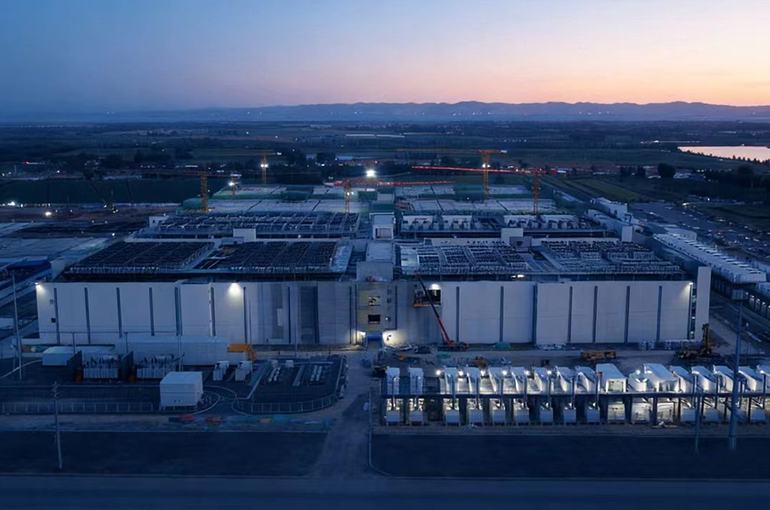
Green tech company Envision Group announced the completion of its largest AI data center on Thursday in Ulaanqab, Inner Mongolia autonomous region, setting what they claim to be global benchmarks for computing density and green-power integration in AI infrastructure.
According to a Shanghai Securities News report, the data center draws on green energy to power its building area of 120,000 square meters, approximately the size of 14 standard soccer fields. One million microchips work together to create a one-million-petaflop computing capacity, which is equivalent to roughly 2 million laptops.
At present, domestic AI computing is accelerating toward 100,000-chip and even million-chip interconnectivity. Envision claims its new cluster has a total planned capacity of 2 gigawatts, which, when completed, will give it the world's highest token output capacity.
To power the cluster, the data center leverages the region's abundant wind resources. Through self-built wind farms and dedicated transmission lines, it achieves direct green power supply.
Zheng Zihao, general manager of the group's Artificial Intelligence Data Center, which oversees the new node, said it is primarily designed to address the urgent demand from leading technology and AI companies for large-scale adoption of domestically produced computing power and is committed to delivering a green energy AI computing infrastructure solution for China's computing needs.
"Looking ahead, we will bring replicable Chinese AI data center solutions to regions around the world facing urgent computing demand, weak energy infrastructure, and power shortages," Zheng added.

ety
Trusted Member

There are 4 large strategic resources in the world: coal, iron ore, oil and rubber. Aside from coal that China has abundant quality supplies, China has abundant iron ore but poor quality, and China is short on oil reserve and rubber supplies.There are 4 types of coal. China is very fortunate to have great amounts of high quality coal while other countries often have coal but is mostly useless outside of cooking and warmth.

retaxis
Trusted Member
Yeah what we dont have we have to buy. Luckily we got plenty of rare earth which is a bonus and building more oil pipelines to Russia and central Asia. Central Asia is very happy because prior to Chinese oil pipelines, they had no choice but to transport it thru russian pipelines at lower profits.There are 4 large strategic resources in the world: coal, iron ore, oil and rubber. Aside from coal that China has abundant quality supplies, China has abundant iron ore but poor quality, and China is short on oil reserve and rubber supplies.
Its okay to rely on others for trade because no country has everything themselves in the modern world. Saying that, we should build larger stockpiles of any strategic resources.
冖_冖
Registered Member
Chinese government boosts investment in electricity grid to support AI development
The Chinese government has pledged to increase investment and coordination in the nation’s power gri
 www.bastillepost.com
Chinese government boosts investment in electricity grid to support AI development
2026-08-12 23:03 Last Updated At:08-13 11:29The Chinese government has pledged to increase investment and coordination in the nation’s power grid to help alleviate the pressure on the power supply from China’s fast-growing tech and artificial intelligence (AI) sector.
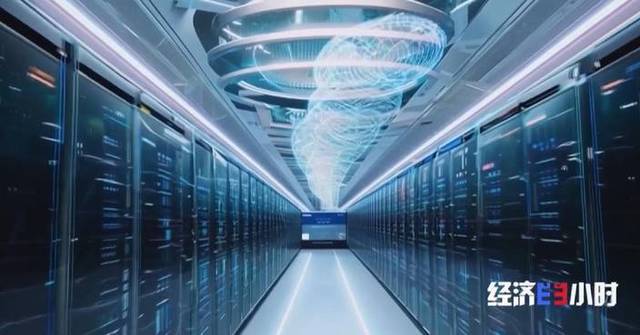
In the Guangdong Shaoguan cluster, one of China's top ten national data center clusters, intelligent computing cabinets are the core hardware supporting the operation of large AI models. A single cabinet can consume up to 240 kWh of electricity per day when operating at full load, roughly equivalent to the total electricity consumption of an average household for a month. In addition to the computing equipment itself, the supporting cooling and humidity control systems also generate considerable power consumption.
"The computing power we built has increased from 5,000 PetaFLOPS last year to 30,000 PetaFLOPS now, and electricity consumption has increased five to six hundred times compared to last year," said Xie Jinbao, deputy director of the development and reform bureau of Shaoguan City.
Data shows that in 2025, computing centers nationwide consumed 18.1 percent more electricity than in 2024, far exceeding the 5.2-percent growth rate for electricity consumption for the rest of the nation’s households and businesses.
To meet the rapidly growing demand for computing power, AI companies will be encouraged to "transfer" computing tasks from areas with tight power supplies to areas with surplus, to ease the burden on the power grid.
Guangzhou City faced a power shortage earlier this year but, after receiving instructions from the Southern Power Grid, organizations moved non-urgent calculation tasks from Guangzhou to the Gui'an Data Center in southwest China’s Guizhou Province.
"At that time, we detected that the load in Guangzhou was too high, so we issued real-time dispatch instructions to the China Mobile Southern Base Data Center to adjust the load," said Zhang Zihao, head of the research and development center of the Computer Engineering Company under China Southern Power Grid Digital Group.
The National Development and Reform Commission announced on July 31 that during the 15th Five-Year Plan period (2026-2030), four trillion yuan (about 593 billion US dollars) will be invested to promote the construction of a national integrated computing power network.
The integrated computing power network can schedule distributed computing power and regional resources across different regions, aggregate the advantages of single-point technologies into the advantages of national industrial clusters, and ultimately expand the growth space for domestic large-scale AI models.
"The 4-trillion-yuan investment in computing power networks is a crucial foundation for the future overseas expansion of our large models. First of all, it will further reduce the computing power costs of providing such services overseas and enhance the reliability of these services. This is fundamental and a basic guarantee for the future in-depth, practical, and sustainable overseas expansion of our large models," said Du Guochen, director of the Institute of E-commerce at the Chinese Academy of International Trade and Economic Cooperation.
冖_冖
Registered Member

China connects the world’s largest LFP battery energy storage system: 4 GWh and grid-forming technology in Inner Mongolia
A gigantic energy storage facility with a power output of 1 GW and a capacity of 4 GWh has begun operating in Inner Mongolia. The DongSu project stands
 e-greenify.com
China connects the world’s largest LFP battery energy storage system: 4 GWh and grid-forming technology in Inner Mongolia
August 14, 2026 Estimated reading time: 2 minutesA gigantic energy storage facility with a power output of 1 GW and a capacity of 4 GWh has begun operating in Inner Mongolia. The DongSu project stands out not only for its record-breaking scale but, above all, as a major milestone in the deployment of grid-forming technology, which can stabilize the grid without relying on conventional power plants.
On August 3, 2026, the DongSu Substation New Energy Storage Special Action project was successfully connected to China’s power grid on its first attempt. Located near the town of Mandulatu in Sonid Left Banner, the facility cost its investor, Wanbang Digital Energy, approximately 3 billion yuan (around USD 445 million) and covers an area of 28 hectares. Local authorities emphasize that it is currently the world’s largest grid-forming LFP battery energy storage system. With a four-hour discharge cycle, the system is expected to deliver approximately 1 TWh of electricity to the grid annually.
Why is grid-forming technology so important in this case?
Most conventional solar PV and energy storage inverters operate in grid-following mode, meaning they require an existing voltage and frequency reference generated by traditional coal- or gas-fired power plants.The newly commissioned facility uses advanced grid-forming technology:
- Independent stabilization — the inverters establish and maintain local voltage and frequency parameters on their own.
- Strong support for renewables — this enables the safe integration of vast amounts of wind and solar power in the region without increasing the risk of grid failure.
- Black-start capability — the system can independently restore voltage and bring part of the grid back online following a complete blackout.
Inner Mongolia pioneers a new era of renewable energy
Inner Mongolia is one of China’s most important regions for wind and solar power generation. It is also home to the Ulanqab Energy Storage project, which has been included in a list of the world’s largest energy storage facilities.However, the rapid development of renewable energy in the region is placing enormous pressure on transmission lines. Rather than serving solely to shift energy between periods of low and peak demand, the DongSu project combines four-hour energy storage with immediate support for grid dynamics.
The investment is aligned with China’s latest renewable energy development plan for 2026–2030, published in July 2026. The plan places particular emphasis on deploying grid-forming solutions, improving power-generation forecasting accuracy, and building renewable power plants designed to support the wider electricity system.
冖_冖
Registered Member

Ulanqab Turns Into China's Top AI Data Center Hub Thanks to Low Energy Prices, Cool Climate
DATE: 6 hours ago
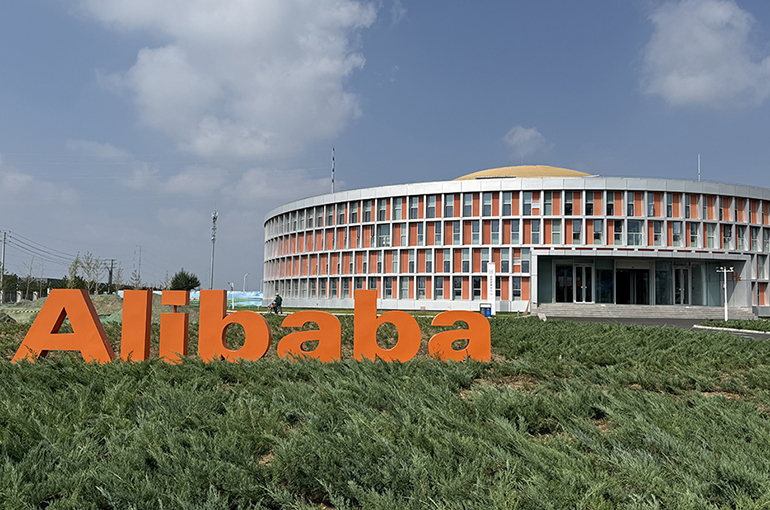
(Yicai) Aug. 17 -- Ulanqab in Inner Mongolia Autonomous Region has become one of the most robust artificial intelligence data center clusters in China, with the city's low electricity costs amid abundant renewable energy resources and cooler climate attracting industry giants like Alibaba Group Holding.
"For data centers of the same scale, the annual electricity costs in Ulanqab can save CNY5 billion (USD741.5 million) compared to operating in other cities," Wang Zhaoyang, general manager of Alibaba Cloud's local AI data center, told Yicai. Zhangjiakou in northwestern Hebei province was home to the firm's largest base in the cloud computing era, but Ulanqab has far outperformed others in the AI computing era, Wang added.
Visitors at Ulanqab's Chahar High-Tech Zone can spot more than 30 data centers in just a 10-minute drive, Yicai noticed. In addition, construction workers can be seen across many data center parks, as new facilities keep rapidly appearing.
Market proximity, cost advantages, and technological demands were the three interrelated factors that made Alibaba Cloud pick Ulanqab as its primary base of operation, Wang noted. Data centers need to be close to end markets, especially for latency-sensitive applications such as quantitative trading and online games, Wang pointed out, but stressed that the low electricity prices are the most decisive factor.
Electricity prices in Ulanqab range from 32 Chinese cents to 35 Chinese cents (around 5 US cents) per kilowatt-hour, while the city's average annual temperature of 4.3 degrees Celsius is conducive to heat dissipation. It also sits only about 350 kilometers away from Beijing, where many Chinese users are based, so the round-trip network latency is merely 4 milliseconds.
Yicai also visited Alibaba Cloud's innovative data center designed exclusively for the AI era. The facility was built based on the company's fully modular CUBE 5.0 architecture, which reduces construction time for AI data centers to just 100 days from the standard six to 12 months.
"Faster delivery equals faster productivity," Wang noted. "No computing card sits idle, as each is either training AI models or generating tokens, with early delivery providing extra value to clients."
冖_冖
Registered Member
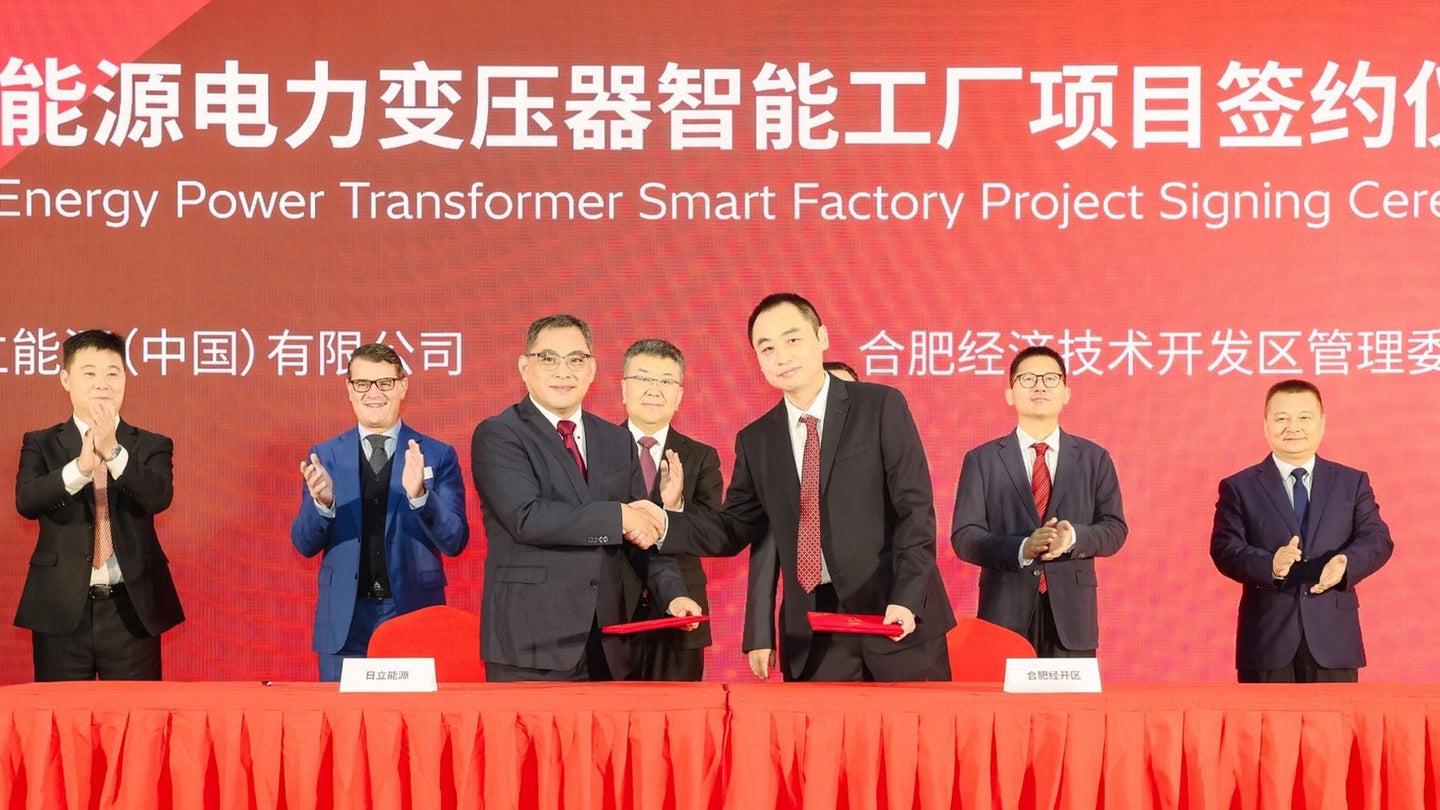
Hitachi Energy invests $300 million in China to bolster global manufacturing capacity for critical grid infrastructure
Hitachi Energy, a global leader in electrification, today announced a $300 million USD investment in China to strengthen its global manufacturing footprint and address rapidly growing demand for transformers.
 www.hitachienergy.com
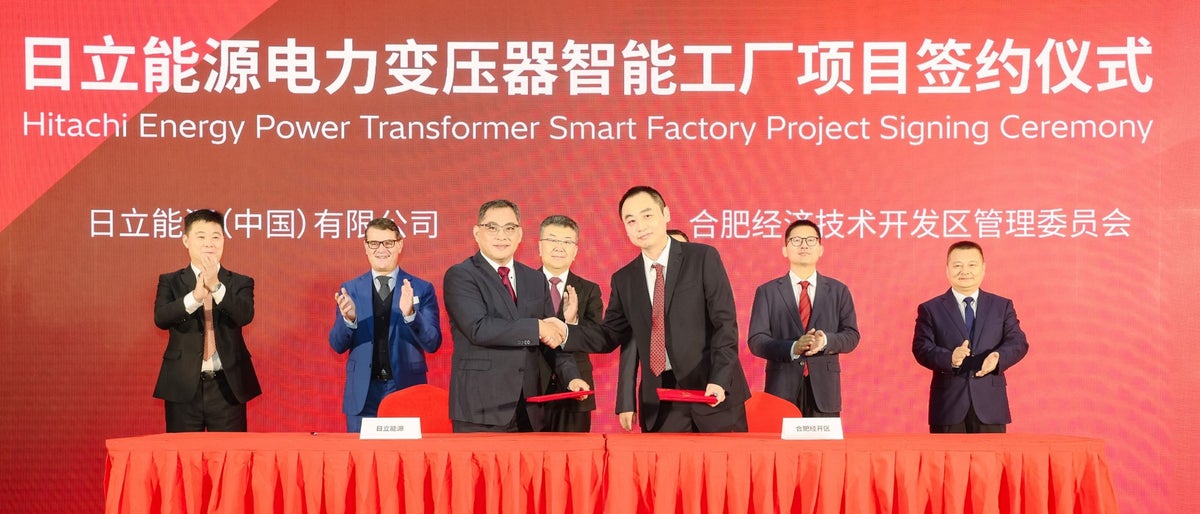
Hitachi Energy invests $300 million in China to bolster global manufacturing capacity for critical grid infrastructure
Press Release | Beijing, China, Zurich, Switzerland | 17.08.2026- Investment expands Hitachi Energy’s power transformer and component manufacturing capacity and expertise in China
- New capacity reinforces global transformers’ value chain and eases supply bottlenecks
- Leverages China’s manufacturing, innovation, and talent strengths to support the demand for mission-critical grid equipment
This investment underscores China’s strategic importance to the company’s global growth ambitions and supply chain resilience. It forms part of the company’s $9 billion global investment plan, the largest in the industry, to expand manufacturing capacity, engineering, R&D, and partnerships, as global demand for energy solutions continues to accelerate.
With more than four decades of operations in China, Hitachi Energy has a strong presence with 11 manufacturing sites and capabilities spanning the full value chain, from R&D, consulting, sales, engineering, manufacturing, and services.
Bruno Melles“As demand for electricity surges, driven by rapid growth in AI, data centers, mobility and industrialization, the need for critical grid equipment has never been greater. Building on our continued commitment in China, this expansion is an example of how we are strengthening our manufacturing capabilities and reinforcing the resilience of local and global transformer value chains to better support our customers in building more secure, affordable, and sustainable energy systems for the electricity era.””
CEO of Business Unit Transformers
Hitachi Energy
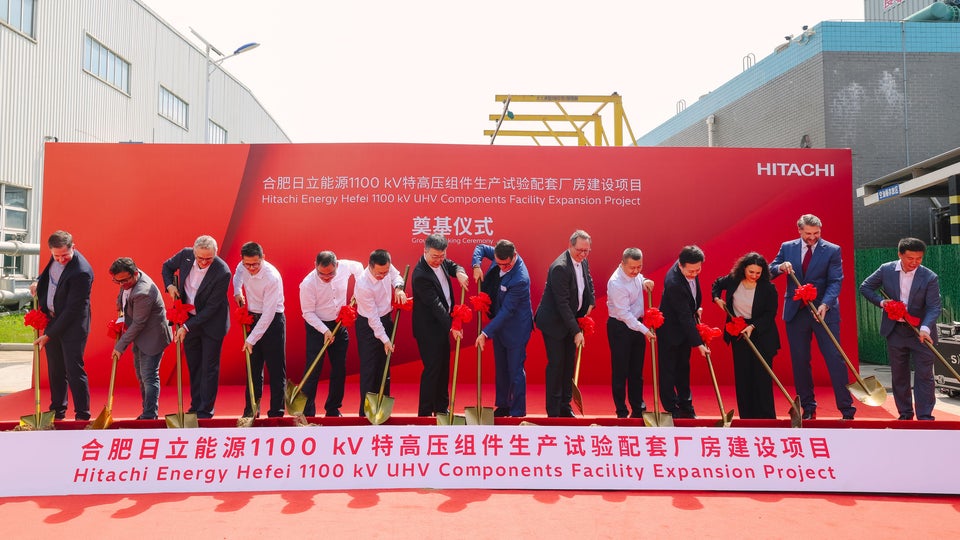
James Zhao“This significant investment reflects our long-term commitment to our customers, partners, and market and demonstrates our confidence in China’s manufacturing ecosystem. The establishment of a state-of-the-art power transformer factory and the new ultra-high voltage bushing facility, as well as the launch of the digital production line of tap changers, are key milestones in the company’s presence in the country. Together, this investment will support China’s development of a new energy system while meeting growing demand from customers around the world.””
Executive Vice President and Region Head North Asia
Hitachi Energy

Watandar
Elite Member


An important PSA.

 www.dexerto.com
China bans AI “boyfriends” and “girlfriends” over addiction and birth rate concerns - Dexerto
China has introduced new regulations effectively banning customizable AI companion apps, forcing users into abrupt digital breakups.
www.dexerto.com
冖_冖
Registered Member

The Nuclear Race Between the United States and China Is Already Underway
China builds nuclear reactors at unmatched scale while America relearns how. The real competition is who can manufacture and deploy nuclear power fastest.
 nationalinterest.org
The Nuclear Race Between the United States and China Is Already Underway
August 27, 2026By: Randall Schmollinger
About the Author: Randall Schmollinger
Randall Schmollinger is the CEO of Aule Materials, a company designing software in tandem with partners at the Idaho National Lab for nuclear engineering applications. He holds a BA in computer science from the University at Albany and a master’s in international affairs from Columbia’s School of International and Public Affairs.
China builds nuclear reactors at unmatched scale while America relearns how. The real competition is who can manufacture and deploy nuclear power fastest.
Over the past two decades, the United States has treated nuclear energy as an aging technology in need of preservation. That assumption is now under pressure from an increasingly productive Chinese nuclear energy sector. Washington and Beijing are now moving away from the stagnation that characterized much of the post-Cold War nuclear industry. China is building reactors at a pace unmatched anywhere in the world, while the United States is attempting to reconstruct an industrial ecosystem that can once again design, finance, regulate, manufacture, and deploy nuclear technology at scale.This is not a simple energy competition. Nuclear energy is becoming a test of whether two very different economic systems can translate technological ambition into physical industrial capacity. China’s pace of construction is staggering. China currently has 60 operable reactors and 37 reactors under construction, according to data from the International Energy Agency (IAEA). The IAEA reports that roughly half of all nuclear capacity under construction worldwide is in China. In 2025, nine of the world’s 10 nuclear construction starts were in China. China’s nuclear generating capacity increased by 76 percent between 2016 and 2024, and the country added another 3.3 gigawatts of capacity in 2025 and the first five months of 2026. The United States, by contrast, has only brought three new reactors online since 1996.
China’s advantage is not simply that Beijing has decided to build more reactors. It has spent years building an industrial system capable of repeatedly building the same kinds of reactors. State-owned enterprises dominate the sector, financing is closely connected to state policy, and reactor design, engineering, construction, manufacturing, and operation are increasingly integrated.
China’s Hualong One reactor illustrates the strategy. The design has moved from development to serial deployment, with dozens of units in operation or construction. Chinese officials describe Hualong One as a technology with complete domestic intellectual-property rights, while Chinese nuclear companies increasingly market it overseas.
The result is an advantage that is difficult to replicate through research spending alone: learning by doing.
Every reactor China builds generates experience in procurement, construction, component manufacturing, project management, regulation, financing, and workforce development. The next reactor can therefore be built using a supply chain and workforce that were trained by the previous one. This capability matters. Nuclear energy technology is not just another form of electricity generation. A country capable of building nuclear plants at scale possesses expertise across a remarkably broad portion of the industrial economy: heavy manufacturing, metallurgy, electrical systems, advanced materials, construction, nuclear fuel, robotics, engineering software, and complex project management. China appears to understand this and is building its economy with it in mind.
The United States is beginning to respond. The most visible change has been regulatory. In May 2025, President Donald Trump ordered a wholesale revision of Nuclear Regulatory Commission (NRC) regulations and set an objective to complete new-reactor licensing within 18 months. The NRC has subsequently incorporated 12- and 18-month milestones into its licensing schedules and established accelerated reviews for several projects.
The Trump administration has also explicitly connected nuclear deployment to national security. A May 2025 executive order directed the federal government to accelerate the development, demonstration, deployment, and export of advanced nuclear technologies and called for greater private-sector investment in the domestic nuclear industrial base. Another executive order directed the government to expand domestic uranium conversion and enrichment capabilities.
But regulatory reform is only one part of the American response. Private capital is flowing back into nuclear technology. Advanced reactor companies that once operated primarily on government research funding are increasingly attracting venture capital, infrastructure investors, strategic corporate partners, and public-market financing.
TerraPower raised $650 million in 2025 from investors including NVIDIA’s venture arm and HD Hyundai. X-energy raised $700 million in a 2025 Series D round after an earlier $700 million financing that included Amazon, Ares Management, Jane Street, and other investors. X-energy subsequently raised more than $1 billion in its 2026 initial public offering.
Technology companies are also becoming important participants in the nuclear renaissance. Amazon says it invested more than $1 billion across nuclear projects and technologies during 2024 and 2025. Google has entered a power-purchase agreement supporting deployment of Kairos Power’s advanced reactors in Tennessee, while Microsoft has signed a long-term agreement supporting the restart of the former Three Mile Island Unit 1.
This private demand is strategically significant. For decades, nuclear development in the United States suffered from a disconnect between technological development and a customer willing to pay for the resulting electricity. The growth of data centers and artificial intelligence (AI) has created a new class of extremely large electricity customers that value reliable, carbon-free generation and are willing to enter long-term commercial arrangements.
The United States is also rebuilding something less visible but potentially just as important: its nuclear workforce.
The Department of Energy (DOE) estimates that the existing nuclear fleet employs approximately 100,000 people and that the industry could require roughly 375,000 workers by 2050 if advanced reactors commercialize at scale. In 2026, DOE awarded more than $49.7 million to ten university-led nuclear safety and workforce-development projects. Separate DOE funding has supported university nuclear infrastructure, research, fellowships, training, and industry partnerships.
The significance of these programs goes beyond filling vacancies. Nuclear expertise is accumulated through institutions. Universities train engineers. National laboratories develop technology and testing capabilities. Utilities train operators. Manufacturers develop specialized processes. Regulators acquire technical expertise. And companies learn how to turn reactor designs into manufacturable products.
That institutional ecosystem is precisely what the United States lost during decades of limited nuclear construction.
America does not need to adopt China’s economic model to compete with China, but it does need to reproduce the industrial effects that China’s model has generated.
The United States has several advantages. It has deep private capital markets, world-class universities, globally competitive technology companies, a large installed nuclear fleet, sophisticated engineering firms, and decades of nuclear research infrastructure. It also has a large ecosystem of entrepreneurial companies pursuing radically different reactor designs.
China has advantages of its own: centralized decision-making, enormous infrastructure-construction capacity, state-owned enterprises capable of absorbing large amounts of capital, and an established supply chain that is already producing reactors repeatedly.
Which system can most effectively enable repeat deployment at scale is still an open question. The objective should not simply be to produce one successful American advanced reactor. It should be to produce the second, third, tenth, and hundredth reactor more quickly and cheaply than the first.
This is where American policy should become more ambitious. The United States should measure nuclear competitiveness not primarily by the number of reactor concepts receiving federal grants, but by whether it is rebuilding the capacity to manufacture and deploy reactors. Regulatory reform should therefore be paired with investment in domestic nuclear fuel, component manufacturing, construction capacity, engineering education, testing infrastructure, and standardized reactor designs.
The government should also think carefully about nuclear exports. China has already demonstrated that a domestic nuclear construction program can become an export industry. Beijing’s nuclear companies increasingly promote Chinese reactor technology abroad, while China’s state-backed industrial ecosystem gives foreign customers a relatively integrated package of financing, construction, equipment, and technology.
The United States should be competing for those markets—not simply because reactor exports generate revenue, but because nuclear infrastructure creates long-term technological and diplomatic relationships.
Countries that buy reactors do not merely buy electricity generators. They build relationships with reactor vendors, fuel suppliers, engineering companies, regulators, training institutions, and maintenance providers. Nuclear exports can therefore create decades-long strategic partnerships.
The United States should not assume that private markets alone will produce this outcome. Nor should it assume that the government can simply dictate an industrial winner. The more promising American model is a partnership between private capital and technological competition operating within a government-created industrial strategy.
The emerging nuclear renaissance suggests that this model may be possible. Capital is returning. New reactor designs are advancing. Universities are rebuilding nuclear programs. Regulators are being pushed to move faster. Utilities and technology companies are signing long-term commitments. Federal agencies are once again treating nuclear technology as an element of national security.
Momentum is not the same thing as victory. China has spent years building a nuclear manufacturing machine while the United States is still rebuilding one. The strategic competition will ultimately be decided less by which country announces the most ambitious reactor design than by which country can turn engineering knowledge into physical infrastructure at scale.
For the United States, nuclear energy therefore represents something larger than a source of electricity. It is a test of whether the country can once again translate technological leadership into industrial power. The race has already begun.
It’s critical for US to keep up with China’s nuclear program: Energy Department undersecretary
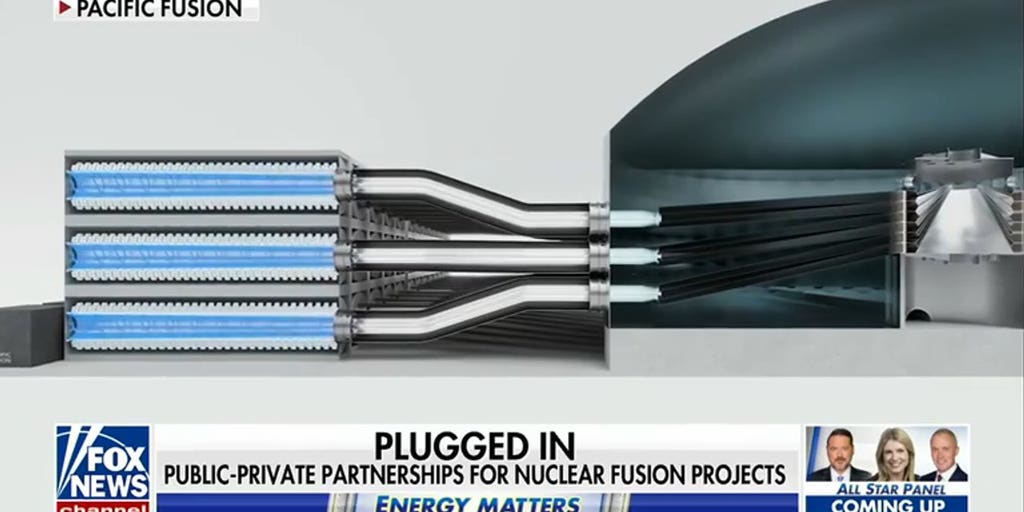
It’s critical for US to keep up with China’s nuclear program: Energy Department undersecretary | Fox News Video
Fox News correspondent Christina Coleman takes a closer look at the United States’ push for nuclear fusion, an extremely powerful energy source with the potential to be limitless, on 'Special Report.'
 www.foxnews.com
冖_冖
Registered Member

Data center electricity consumption to nearly quadruple by 2030
global.chinadaily.com.cn
Data center electricity consumption to nearly quadruple by 2030
global.chinadaily.com.cn
Data center electricity consumption to nearly quadruple by 2030
By ZHENG XIN | China Daily | Updated: 2026-09-03 09:05
Workers from State Grid Zhangye Power Supply Co carry out maintenance work on power grid equipment in Zhangye, Gansu province, on July 27. YANG XIAO/FOR CHINA DAILY
Driven by an explosive surge in artificial intelligence computing demand, electricity consumption by China's data centers is projected to nearly quadruple by 2030, reaching 774 terawatt-hours, according to a newly released industry report.
By the end of the decade, data centers will account for 6 percent of China's total electricity consumption, triple the current proportion. This share is forecast to climb further to 17 percent by 2060, global research firm Wood Mackenzie said in its latest report "Rewiring China's Grid for the AI Era".
The market is witnessing an exponential boom fueled by AI. Intensive AI training is driving up power density, necessitating massive capacity expansions and upgrades to underlying power infrastructure.
Simultaneously, the rapid adoption of AI inference applications is generating a continuous, 24/7 baseload on the grid. Consequently, while overall national electricity demand growth is moderating, data center power consumption continues to buck the trend with robust expansion, it said.
This momentum is already evident. According to the National Energy Administration, electricity used by internet data services surged 44 percent year-on-year to 49.4 billion kilowatt-hours in the first half.
Wu Liqiang, an official with the China Electricity Council, said electricity demand from emerging industries continued to grow rapidly during the first half of this year and the momentum is expected to continue.
Power consumption by internet data services in the first six months is nearing the level recorded for the whole of 2024, he said.
Electricity consumption by China's high-tech and equipment manufacturing sector climbed 9.8 percent year-on-year to 600.8 billion kWh in the first half of 2026, accounting for 24.3 percent of manufacturing power use, Wu added.
Securing reliable, cost-competitive and low-carbon electricity has become the decisive factor for the site selection of new data centers. The report estimates that China's eight national computing hubs will continue to dominate the sector's spatial layout, hosting over 70 percent of total computing capacity through 2060.
However, due to localized grid capacity constraints, some new installations will inevitably spill over into renewable-rich areas outside these central hubs. China's western regions, boasting abundant land and rapidly expanding renewable energy bases, are emerging as the core hinterland for this transferred computing power, it said.
Meanwhile, core economic circles in the east will continue to handle latency-sensitive tasks, such as real-time AI inference and high-frequency financial services.
Policy is also pivoting to support this shift. China's 15th Five-Year Plan (2026-30) emphasizes the synergistic development of computing infrastructure and green power. A raft of energy policies — ranging from encouraging the direct supply of green power to cross-regional resource scheduling — is providing strong regulatory backing for this integration.
Crucially, this integration is transforming data centers from traditional "rigid, passive loads" into "flexible, adjustable resources" within the modern power system. Through the deep integration of new power supply architectures, battery energy storage and smart workload scheduling, data centers are acquiring unprecedented elasticity.
As the penetration rate of renewable energy steadily rises and green power mandates become stricter, Wood Mackenzie projects that carbon emissions from China's data center industry will peak by 2035, even as its overall green electricity demand continues to soar through 2060.
Users who are viewing this thread
Total: 1 (members: 0, guests: 1)
Pakistan Defence Latest
-
-

-
 KP govt backs out of counterterrorism commitments during talks: Naqvi (3 Viewers)
- Latest: hydrabadi_arab
Country Watch Latest


Latest Posts
-
-

-

-
 FlyDubai Incident: Pilot was stabbed on flight to Israel - diverted to Saudi Arabia (23 Viewers)
- Latest: BHAN85
-