
Beijingwalker
VIP Member

Why China's New Super Microscope Milestone Changes Everything For Physics
Monday, September 28, 2026By David Powell
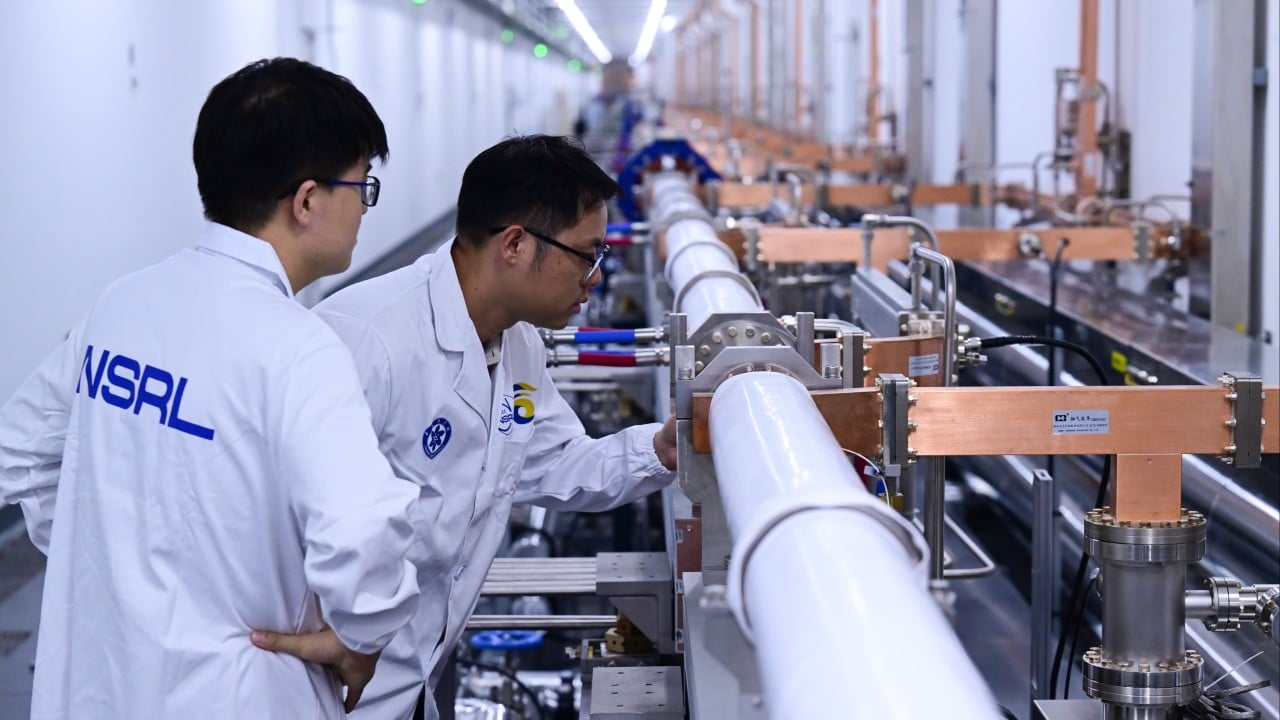
Table of Contents
Science just took a massive leap forward. China's Hefei Advanced Light Facility, known as HALF, recently fired its very first electron beam using a specialized electron gun. This isn't just another incremental engineering test. It represents a giant step toward building a fourth-generation synchrotron radiation source that functions essentially as a super microscope, boasting a brightness over 100 times greater than third-generation facilities.
If you are wondering why anyone outside of a particle physics lab should care, the answer is simple. This infrastructure is built to solve mysteries that current laboratory instruments cannot touch. From high-temperature superconductors to advanced battery chemistry and aerospace materials, the ability to examine matter at sub-microscopic scales with incredible clarity dictates which nations will dominate future technology.
How the Super Microscope Works
Let's break down the mechanics. Synchrotron facilities do not operate like the optical microscope sitting in a high school biology classroom. Instead, they accelerate electrons to near-light-speed velocities, guiding them through a complex storage ring to produce extraordinarily intense and coherent light—specifically, soft X-rays.The recent milestone involved the linear accelerator successfully generating and delivering its first electron beam in Anhui Province. He Zhigang, the chief engineer overseeing the injector system, noted that beam quality, stability, and reliability directly dictate the success of the storage ring and downstream experiments.
Engineers must now coordinate the injector, the storage ring, and the beamlines with extreme precision. If the electron beam fluctuates even slightly, the resulting data loses the fine resolution needed to map quantum states or atomic behavior.
Why 100 Times Brighter Matters
Brighter light changes the game. When you increase brightness and coherence by orders of magnitude, you get stronger signals and sharper spatial, temporal, and energy measurements.Older facilities struggle to capture fleeting chemical states or delicate spin transitions in real time. HALF is designed to overcome these limitations. Researchers will use the intense radiation to observe microscopic particle behavior and light-element structures that usually remain hidden.
Think about the industries waiting for this data. Battery researchers want to see lithium ions moving inside solid electrolytes without destroying the sample. Biomedical scientists want to track molecular changes in live tissues with nanometer precision. Quantum computing engineers need to inspect material defects that cause qubit decoherence. This super microscope gives them the lens to do it.
What Comes Next for the HALF Facility
The project has officially moved out of the pure construction phase and into a grueling testing cycle. Engineers are currently working to inject the electron beam into the storage ring, ensuring stable circulation before opening the beamlines to researchers.Unlike secretive military installations, HALF is planned as an international research hub. Scientists from around the globe are expected to tap into its capabilities once full commissioning wraps up.
We are watching a fundamental shift in how advanced materials are engineered. As testing continues, keep an eye on Hefei. The breakthroughs coming out of this facility will quietly power the next wave of global technology.


