Nan Yang
Registered Member

Why did an Okinawan delegation visit a Beijing cemetery amid China-Japan tensions?
The trip highlights historical ties between China and the Ryukyu Islands that Beijing is leveraging as a counterweight in its row with Tokyo
Fan Chen
Published: 11:00am, 30 Jul 2026
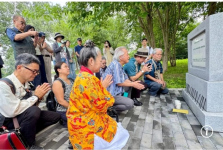
Members of a delegation from the Japanese prefecture of Okinawa paid tribute to their ancestors at the historic Ryukyu Kingdom cemetery in Beijing, highlighting a legacy of ties that China is increasingly leveraging as a counterweight in its frictions with Tokyo.
During the visit in June - first made public by the Global Times on Sunday - about a dozen delegates travelled to the site southeast of Beijing, which honours six centuries of ties between China and the former island nation later annexed by Japan.
Located between the islands of Kyushu and Taiwan, the Ryukyu archipelago includes Okinawa - home to tens of thousands of American troops.
During the memorial ceremony, the delegation members paid tribute with traditional rituals, incense and liquor. Some members also wore traditional attire, according to the Global Times.
Among the visitors was Tetsumi Takara, a former Japanese lawmaker who told the newspaper that historical ties between China and Ryukyu "should not be forgotten, distorted, or hijacked by politics".
A former maritime trading hub, the Ryukyu Kingdom paid tribute to China during the Ming (1368-1644) and Qing dynasties before it was annexed by Japan.
In July 2023, Okinawa governor Denny Tamaki, who has long objected to US military bases in the prefecture, visited the cemetery during a trip with a Japanese trade delegation. He also met Chinese Premier Li Qiang during that visit.
Relations between Beijing and Tokyo have soured since November when Japanese Prime Minister Sanae Takaichi suggested that Japan could deploy its military forces in the event of a conflict in the Taiwan Strait.
There have been growing concerns in Japan that Beijing may play the "Ryukyu card" as a countermeasure against Tokyo's position on self-ruled Taiwan. In recent months, some Chinese academics and state media have suggested that Beijing could try to challenge Tokyo's control of Okinawa.
The prefecture's history and proximity to Taiwan have made it a focal point in disputes between Beijing and Tokyo, including the one over the Diaoyu Islands, which Japan calls the Senkakus.
Beijing sees Taiwan as part of China to be reunified by force if necessary. Most countries, including Japan and the US, do not recognise Taiwan as an independent state, but Washington is opposed to any attempt to take the self-governed island by force and is committed to supplying it with weapons.
Strategically located within the "first island chain", Okinawa serves to limit the People's Liberation Army's access to the Pacific Ocean should a conflict erupt across the Taiwan Strait.
Soon after Tokyo nationalised the disputed Diaoyu Islands in 2013, Chinese scholars began to raise the issue of Ryukyu. That same year, Zhang Haipeng, a member of the Chinese Academy of Social Sciences, suggested in People's Daily that an independent state of Ryukyu would be "extremely important to China's maritime strategy", prompting protests from the Japanese government.
The narrative gained fresh momentum after Chinese President Xi Jinping referred to Okinawa as Ryukyu during a visit to a national museum in June 2023. It has gained additional traction since late last year amid the diplomatic row over Takaichi's Taiwan comments.
While Beijing has never openly challenged Tokyo's control of Okinawa, state media have increasingly called for expanded research into "historical justice" and legal claims over the islands.
In November, Xiang Haoyu, a special research fellow of the China Institute of International Studies, told China News the sovereignty of the Ryukyu Islands "remains unresolved".
Last month, People's Daily ran a full-page feature urging Tokyo to reflect on its "historical colonialism and ethnic discrimination" in Okinawa.
"As a crucial issue concerning East Asian peace and security, the future direction of the Ryukyu question deserves significant world attention," wrote Tang Yongliang, a researcher with the Chinese Academy of Social Sciences and author of the People's Daily article.
"The Ryukyuan people await an overdue yet just answer, and their steadfast pursuit of freedom, equality, and the right to self-determination will ultimately leave an indelible mark in the long river of human history."
The Beijing site holds the graves of more than 10 Ryukyu Kingdom officials and envoys from the Qing dynasty (1644-1911), including an envoy who objected to Japan's 1879 annexation of the kingdom, and a student who took his own life to protest against the islands' loss of independence, according to state news agency Xinhua.
The trip highlights historical ties between China and the Ryukyu Islands that Beijing is leveraging as a counterweight in its row with Tokyo
Fan Chen
Published: 11:00am, 30 Jul 2026
Members of a delegation from the Japanese prefecture of Okinawa paid tribute to their ancestors at the historic Ryukyu Kingdom cemetery in Beijing, highlighting a legacy of ties that China is increasingly leveraging as a counterweight in its frictions with Tokyo.
During the visit in June - first made public by the Global Times on Sunday - about a dozen delegates travelled to the site southeast of Beijing, which honours six centuries of ties between China and the former island nation later annexed by Japan.
Located between the islands of Kyushu and Taiwan, the Ryukyu archipelago includes Okinawa - home to tens of thousands of American troops.
During the memorial ceremony, the delegation members paid tribute with traditional rituals, incense and liquor. Some members also wore traditional attire, according to the Global Times.
Among the visitors was Tetsumi Takara, a former Japanese lawmaker who told the newspaper that historical ties between China and Ryukyu "should not be forgotten, distorted, or hijacked by politics".
A former maritime trading hub, the Ryukyu Kingdom paid tribute to China during the Ming (1368-1644) and Qing dynasties before it was annexed by Japan.
In July 2023, Okinawa governor Denny Tamaki, who has long objected to US military bases in the prefecture, visited the cemetery during a trip with a Japanese trade delegation. He also met Chinese Premier Li Qiang during that visit.
Relations between Beijing and Tokyo have soured since November when Japanese Prime Minister Sanae Takaichi suggested that Japan could deploy its military forces in the event of a conflict in the Taiwan Strait.
There have been growing concerns in Japan that Beijing may play the "Ryukyu card" as a countermeasure against Tokyo's position on self-ruled Taiwan. In recent months, some Chinese academics and state media have suggested that Beijing could try to challenge Tokyo's control of Okinawa.
The prefecture's history and proximity to Taiwan have made it a focal point in disputes between Beijing and Tokyo, including the one over the Diaoyu Islands, which Japan calls the Senkakus.
Beijing sees Taiwan as part of China to be reunified by force if necessary. Most countries, including Japan and the US, do not recognise Taiwan as an independent state, but Washington is opposed to any attempt to take the self-governed island by force and is committed to supplying it with weapons.
Strategically located within the "first island chain", Okinawa serves to limit the People's Liberation Army's access to the Pacific Ocean should a conflict erupt across the Taiwan Strait.
Soon after Tokyo nationalised the disputed Diaoyu Islands in 2013, Chinese scholars began to raise the issue of Ryukyu. That same year, Zhang Haipeng, a member of the Chinese Academy of Social Sciences, suggested in People's Daily that an independent state of Ryukyu would be "extremely important to China's maritime strategy", prompting protests from the Japanese government.
The narrative gained fresh momentum after Chinese President Xi Jinping referred to Okinawa as Ryukyu during a visit to a national museum in June 2023. It has gained additional traction since late last year amid the diplomatic row over Takaichi's Taiwan comments.
While Beijing has never openly challenged Tokyo's control of Okinawa, state media have increasingly called for expanded research into "historical justice" and legal claims over the islands.
In November, Xiang Haoyu, a special research fellow of the China Institute of International Studies, told China News the sovereignty of the Ryukyu Islands "remains unresolved".
Last month, People's Daily ran a full-page feature urging Tokyo to reflect on its "historical colonialism and ethnic discrimination" in Okinawa.
"As a crucial issue concerning East Asian peace and security, the future direction of the Ryukyu question deserves significant world attention," wrote Tang Yongliang, a researcher with the Chinese Academy of Social Sciences and author of the People's Daily article.
"The Ryukyuan people await an overdue yet just answer, and their steadfast pursuit of freedom, equality, and the right to self-determination will ultimately leave an indelible mark in the long river of human history."
The Beijing site holds the graves of more than 10 Ryukyu Kingdom officials and envoys from the Qing dynasty (1644-1911), including an envoy who objected to Japan's 1879 annexation of the kingdom, and a student who took his own life to protest against the islands' loss of independence, according to state news agency Xinhua.


