Why India Cannot Escape Blame for Dhaka’s Handing Over of Key Projects to China

MNZGamerX

Registered Member
Joined
Dec 12, 2023
Messages
1,841
Reaction score
2,013
Reputation
1,105.7
Country of Origin
Country of Residence
In 2015, Bangladesh allotted land to India for the development of an SEZ at Mongla port. India failed to start work on that project. Dhaka handed it to China.

By Sudha Ramachandran
July 06, 2026
thediplomat_2026-06-29-182935.jpg

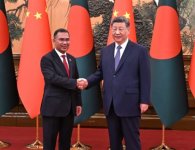
Bangladeshi Prime Minister Tarique Rahman’s visit to China on June 22-26 saw the two sides sign 17 bilateral instruments. The two governments elevated “their comprehensive strategic cooperative partnership to jointly build a China-Bangladesh community with a shared future,” agreed to explore a 2+2 dialogue mechanism involving diplomacy and defense, and announced plans to implement a Bangladesh-China-Myanmar Economic Corridor.

Two projects, in particular — the Mongla Port Facilities Modernization and Expansion Project and the Teesta River Comprehensive Management and Restoration Project (TRCMRP) — announced during Rahman’s visit have India worried as China’s involvement in these projects has implications for India’s national security.

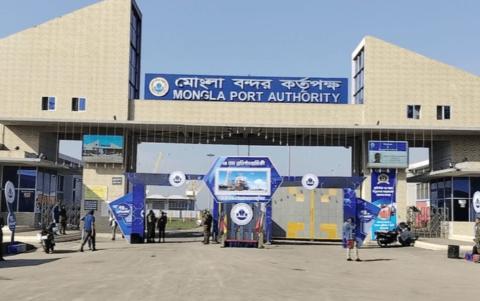
Mongla Port, Bangladesh’s second-largest and second-busiest seaport after Chattogram, is located on the east bank of the Pasur River, 71 nautical miles upstream from the Bay of Bengal. The project here involves developing a special economic zone (SEZ) on a 110-acre plot of land adjacent to the port. China’s state-owned Civil Engineering Construction Corporation will develop the SEZ and has proposed an investment of $650 million in manufacturing industries, warehouses and storage facilities at the SEZ.

India’s concern over China’s involvement in the Mongla port SEZ is its location. It is just 80 km from the Indian border and 188 km from Kolkata. According to a CNN-News18 report, which cited Indian intelligence sources, there is a “high risk of Beijing installing advanced maritime surveillance systems and electronic intelligence infrastructure at the site.” It will enable China to monitor from close quarters “Indian naval deployments, coastal radar networks, and strategic movements around the Kolkata and Haldia ports.”

Additionally, it would provide Beijing with access to yet another Bay of Bengal port, which could, in turn, increase China’s presence in the Indian Ocean.

As for the TRCMRP, this is a river engineering initiative that involves dredging the Teesta and developing reclaimed land. With Chinese expertise, Bangladesh will be able to manage the Teesta’s waters better and deal with water shortages, floods, and riverbank erosion. India’s problem with the TRCMRP is its location. Although it is on the Bangladeshi side of the border, the proposed river management project is near India’s strategic Siliguri Corridor, a narrow sliver of land that links the Indian mainland with the restive Northeast.

India’s concern over China’s involvement in the Mongla port SEZ and the TRCMRP is understandable to some extent given their proximity to the Indian border.

However, these are far from the first projects China has executed in Bangladesh. China’s role and presence in Bangladesh have grown by leaps and bounds in recent decades. It has been involved in scores of infrastructure projects in Bangladesh, including the building of roads, bridges, and railway lines. Indeed, the Chinese are already engaged in building roads, bridges, and power plants in Rangpur division, Bangladesh’s northernmost district that borders the Siliguri corridor, and where much of the TRCMRP’s work will be focused.

Dhaka’s decision to hand over the TRCMRP and the Mongla SEZ project to China may be part of “a broader policy shift to reroute regional transit dependency away from Indian networks.”

However, India has only itself to blame for these projects being handed to the Chinese.

Consider this: Bangladesh first offered India the project to develop an SEZ at Mongla port. Under a 2015 agreement with India, it allotted 110 acres of land for the SEZ. Subsequently, the Indian government appointed Indian developer Hiranandani Group’s subsidiary, Evita Constructions, to develop the SEZ. However, the project never took off. Finally, in October 2025, amid deteriorating Bangladesh-India relations, the interim administration under Muhammad Yunus delisted the project because the developer had failed to commence work.

India’s implementation of projects abroad has a long history of not meeting deadlines. This habit cost it the Mongla SEZ.

As for the TRCMRP, Bangladesh may not have turned to the Chinese to help manage the Teesta’s waters had India not dragged its feet on an agreement on sharing the waters of this river. Although the deal was ready by 2011, objections from the West Bengal government prevented New Delhi from signing the agreement with Dhaka.

Frustrated with Delhi’s failure to deliver an agreement, in 2016, Dhaka began exploring the China option for better management of the Teesta river within Bangladesh’s borders. Pressure from Delhi kept Bangladesh under Sheikh Hasina from sealing a deal with the Chinese on the Teesta project. While India did, in May 2024, offer to finance the $1 billion project to dredge and manage the Teesta inside Bangladesh, it came too late. In August, Hasina was ousted from power, clearing the way for the interim government to ask China for help in managing the Teesta.

If China has made deep inroads in India’s neighboring countries, this must be attributed not just to its financial clout but also its efficient and swift execution of infrastructure projects. Importantly, it has not hesitated to snap up projects with strategic value, even if these are not economically profitable. India has often dithered on such projects.

Take the Hambantota port, for example. The Sri Lankan government first offered India the opportunity to develop the Hambantota port. India turned down the offer because it felt the port would not attract enough traffic. While Delhi may have been right in its assessment of the port’s capacity to draw business, its prioritization of the port’s short-term economic potential over the long-term strategic value proved costly.

After stepping in to develop Hambantota port, China took over port operations in 2017 under a 99-year lease, when Sri Lanka failed to pay back loans. India’s loss was China’s gain.

Geography, history, and a shared culture gave India a head start in building strong bonds with Bangladesh. However, India has frittered away these advantages, especially since the Hindu nationalist Bharatiya Janata Party (BJP) came to power nationally in 2014. The BJP government routinely demeans Bangladeshis not just in its rhetoric — Home Minister Amit Shah likened Bangladeshi immigrants to termites — but in its policies and actions as well. The ongoing “push back” of what Delhi terms as “illegal” or “undocumented Bangladeshi immigrants” has fueled anti-India sentiments in Bangladesh to unprecedented levels.

At stake are not just a few projects or even India’s relations with Bangladesh. For decades, India has pursued a Look East and then an Act East policy. The success of this policy depends on India’s relations with neighboring countries like Bangladesh and Myanmar, which lie to its immediate east and are its land bridges to Southeast Asia.

India’s maritime ambitions will remain just dreams so long as important Bay of Bengal ports fall under Chinese control.

 
Growing Chinese Influence in Bangladesh Making India Uneasy: Dhaka's Autonomy is New Delhi's Challenge

Mongla matters because it represents more than a port. It reflects the erosion of inherited strategic privilege in South Asia. India can no longer assume automatic influence in Bangladesh, while Bangladesh cannot expect infrastructure agreements with China to be interpreted as purely economic.

By Mohd Amdadul Haque Jul 16, 2026

image-290912-1752142183.jpg

When Bangladesh and China announced cooperation on Mongla Port during Prime Minister Tarique Rahman’s June 2026 visit to Beijing, the arrangement initially appeared to be another infrastructure deal. For India, however, Mongla has become part of a broader strategic picture in the Bay of Bengal, where Chinese-supported ports, economic zones, river projects, connectivity plans, and defense exchanges are increasingly converging.

New Delhi’s concern is not that China will turn Mongla into a naval base tomorrow. The anxiety is cumulative. The June 26 China-Bangladesh joint communiqué covered not only the modernization of Mongla Port, but also the Chinese Economic and Industrial Zone in Chattogram, direct connectivity, cooperation on the Teesta River, maritime affairs, defense exchanges, and a possible “2+2” dialogue involving foreign and defense officials. It also elevated the relationship toward a “China-Bangladesh community with a shared future.” Viewed together, these initiatives suggest to Indian strategists the gradual expansion of Chinese influence on India’s eastern flank.

Geography explains much of this concern. Bangladesh is bordered by India on three sides and opens southward into the Bay of Bengal. Its ports lie close to India’s northeast, eastern coastline, and maritime routes linking South Asia with Southeast Asia. Mongla is therefore important not only because of its present commercial capacity, but because of what it could become when connected to industrial zones, inland waterways, railways, and regional transport corridors.

India's Reservations About Mongla, Teesta

This is why the announcement attracted scrutiny in India. Former Indian High Commissioner to Bangladesh Veena Sikri described Chinese involvement in Mongla as “one big change” from earlier India-Bangladesh understandings. She also argued that China’s role in the Teesta project would be viewed by India as a security risk. Her comments reflect a wider Indian concern: China does not need formal military basing rights to acquire strategic advantages. Civilian projects can remain commercial while also producing knowledge of cargo flows, shipping patterns, logistics networks, and sensitive geography.

The Teesta River project demonstrates this tension most clearly. Bangladesh regards Chinese assistance for the Teesta River Comprehensive Management and Restoration Project as a development opportunity involving flood control, dredging, riverbank protection, and dry-season water management. India views the same project through the lens of its proximity to the Siliguri Corridor, the narrow land link between mainland India and its northeastern states. A sustained external technical presence near this area will inevitably attract Indian attention.

India’s Ministry of External Affairs has made that position explicit. Responding to questions about Bangladesh-China defense discussions, the proposed China-Myanmar-Bangladesh Economic Corridor, and the Teesta project, spokesperson Randhir Jaiswal said India would closely monitor developments in its neighborhood and take appropriate measures when required.

India's Failure, Bangladesh's Opportunity

Yet India’s security narrative is incomplete without acknowledging its own policy failures. Bangladesh turned to China after the proposed India-Bangladesh agreement on sharing Teesta waters failed to materialize in 2011, largely because of opposition from West Bengal. Beijing’s involvement is therefore not simply a strategic entry into India’s neighborhood; it is also Dhaka’s attempt to address a long-unresolved bilateral problem. India may see Chinese technical access as a risk, while Bangladesh sees an opportunity to advance a delayed national project.

Reuters reported that Rahman asked President Xi Jinping to help reduce Bangladesh’s trade imbalance with China, increase imports of Bangladeshi products, and support major infrastructure and industrial modernization projects. China also expressed support for port and water projects and the proposed economic corridor through Myanmar.

This does not mean Bangladesh is aligning exclusively with China. Its strategy remains transactional and focused on preserving autonomy. Rahman has emphasized friendship with all countries while protecting national interests and has promoted a “Bangladesh Before All” policy. As Dhaka University scholar Lailufar Yasmin observed, Bangladesh needs both China and India and must approach the relationship pragmatically. Bangladesh is not seeking to replace India with China; it is trying to expand its diplomatic and economic options.

Risks and Incentives for Dhaka

Nevertheless, closer ties with China carry risks. Bangladesh owes China $6.2 billion, while Chinese firms have invested approximately $7.7 billion, about half in the energy sector. These figures do not prove a “debt-trap” strategy, but they justify careful scrutiny of repayment obligations, contract transparency, environmental standards, and political influence. Strategic autonomy is meaningful only when partnerships remain diversified and institutions retain oversight.

For India, the deeper challenge is that its Bangladesh policy has often been reactive. New Delhi invested heavily in relations with Sheikh Hasina’s government and benefited from security cooperation, connectivity, and political predictability. After Bangladesh’s post-2024 political transformation, that approach became harder to sustain. China has since widened its engagement with the government
and multiple political actors. Geographic Reference

Constantino Xavier of the Centre for Social and Economic Progress has described China as steadily building influence, while Thomas Kean of the International Crisis Group has warned that prolonged tensions between Dhaka and New Delhi would give Bangladesh greater incentive to move closer to Beijing.

Influence Must be Earned

India’s concerns are therefore understandable, but warnings alone will not preserve its influence. New Delhi needs a policy based on delivery: faster implementation of promised projects, diplomatic sensitivity, reduced border friction, and a serious effort to resolve or depoliticize the Teesta dispute. It must also engage Bangladesh across the political spectrum instead of appearing dependent on one party or political era.

Dhaka must exercise equal caution. Port modernization and river-management projects should serve Bangladesh’s economy rather than become instruments in a great-power contest. The government should welcome investment while insisting on fiscal transparency, parliamentary and institutional oversight, environmental safeguards, and clear restrictions on any future military use of civilian infrastructure.

Mongla matters because it represents more than a port. It reflects the erosion of inherited strategic privilege in South Asia. India can no longer assume automatic influence in Bangladesh, while Bangladesh cannot expect infrastructure agreements with China to be interpreted as purely economic.

Dhaka’s challenge is to preserve autonomy without creating dependency. New Delhi’s challenge is to recognize that influence must now be earned through performance, not assumed through history.

 
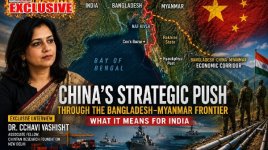
China’s strategic push through the Bangladesh-Myanmar frontier: Dr. Cchavi Vashisht explains why India must pay attention

Arun Anand
Update Time : Friday, July 17, 2026

Chinas-strategic-push-through-the-Bangladesh-Myanmar-frontier-Dr.-Cchavi-Vashisht-explains-why...jpg

As China’s strategic footprint deepens across South Asia and Myanmar’s civil war redraws the region’s security landscape, the Bangladesh-Myanmar frontier has emerged as one of the most consequential geopolitical flashpoints in the Indo-Pacific. What was once viewed primarily as a humanitarian crisis involving the Rohingya has evolved into a complex contest involving Beijing’s expanding influence, competing infrastructure corridors, armed ethnic groups, maritime strategy, and India’s long-term security interests.

In this exclusive interview to Arun Anand, Indian Affairs Editor of Blitz, noted geopolitical analyst Dr. Cchavi Vashisht—Associate Fellow at the Chintan Research Foundation and one of India’s emerging strategic voices on the Indo-Pacific—explains how China’s corridor diplomacy, instability in Myanmar, and changing regional alignments are reshaping the strategic balance in the Bay of Bengal. Speaking with Blitz Indian Affairs Editor Arun Anand, she outlines why developments along the Bangladesh-Myanmar frontier will have profound implications not only for India but for the future security architecture of South Asia.

Question: For our readers who are unfamiliar with the issue, what exactly is the Bangladesh-Myanmar border crisis and why should India be bothered about it?

Answer: Let me start with the geography of the area. Bangladesh and Myanmar share a border, but it is relatively a small border—271 km—but it is one of the most strategically important regions in the current geopolitics of Asia. It is separated by a very small, narrow river, the Naf River, which has often become both a humanitarian corridor as well as a security flashpoint. On the Myanmar side, we have Rakhine State. Rakhine State has been under conflict since the formation of the Arakan Army, but much more recently after the military coup when they had direct confrontation with the Myanmar military. The worst humanitarian crisis started in the Rakhine State with the exodus of Rohingyas to Bangladesh. Therefore, on the Bangladesh side, we have Cox’s Bazar, which now hosts over a million Rohingyas. Along this, there is another frontier that is in the Chin State, the Paletwa region. The Paletwa region borders both Myanmar and Bangladesh, very near to the Chittagong Hill Tract. Now, this has direct implications for India. This is the same region through which our Kaladan project passes through. If we see the politics of this region as of July, the Arakan Army has taken control of 14 out of 17 townships in Rakhine, leaving away Sittwe, Kyaukphyu, and Madaung Island.

Madaung is an isolated island, but the other two, Sittwe and Kyaukphyu, are the most strategically important regions of Rakhine. On the other hand, they have also captured Paletwa, which is in the Chin State, and which is important in the current dynamics. Why? Because the very recently formed Kumi People’s Front (KPF) has emerged as the most organized challenge to the Arakan Army. Very recently, 47 Kumi civilians were detained on the Bangladesh side, and they are also known to hire more Kumi youths within their KPF front. So, this is rapidly becoming a militarized zone, so to say, with so much contested space and conflict.

Now, to your question of why should India care, or what is in there for India? India shares, first and foremost, a 1,643 km land border. This is a very volatile, conflict-ridden border within itself. There are problems of insurgency, there are problems of drugs, and there are other political issues within the northeastern states. But whatever happens in Myanmar eventually spills over to our doorstep. That creates a lot of challenges for India—maybe in terms of arms, maybe in terms of drugs, or in terms of the harboring of insurgent groups in the bordering territories. That creates a lot of tension. On the other hand, Myanmar is the only land bridge to Southeast Asia. Though India can certainly explore maritime neighbors and reach out to other Southeast Asian countries, when we talk of a land border or a land bridge, only Myanmar provides us that. It certainly becomes necessary, and both our connectivity projects—the Kaladan Multimodal Project and the IMT (India-Myanmar-Thailand Trilateral Highway)—pass through this region. So it becomes very important. If we see what is unfinished in the Kaladan project, it’s only a small road boundary that is now pending. The Sittwe port is operational and the inland waterway section is operational, but it is only the Paletwa-Zorinpui link which is not operational. This is to a large extent because there is an ongoing conflict. If the Arakan Army and the KPF conflict continues, it will pose new challenges for India.

Finally, the third important point or concern for India is China’s aggressive posture in the Indian Ocean region. We all know that China has already reached the Arabian Sea through CPEC (China-Pakistan Economic Corridor) and has gained control over that side on the western front. But on the eastern front, it is through Myanmar and Bangladesh that China is making inroads into the Bay of Bengal. Their larger agenda is to control or encircle the Indian Ocean region. So for India, there are a lot of strategic and military concerns coming from our eastern frontier.

Question: So, how do you see this? Has Bangladesh-Myanmar border issue evolved from a humanitarian crisis into a geopolitical contest, especially with the involvement of China? Or does it still remain kind of more of a humanitarian crisis? Or is it more of a geopolitical contest?

Answer: I think it is humanitarian certainly to a large extent. If we see the effect of this conflict on the people, it is immense. We see a number of people who want to migrate out of that region because it is so contested. We see everyday some conflict which is heightened—either an airstrike attack or a confrontation between the military and the Arakan Army, or the KPF and the Arakan Army. So, of course, nobody can thrive in such a scenario. It is a humanitarian concern, definitely; that is one side of the story. But if we see it from a geopolitical lens, it is a contestation. Especially, let’s highlight what China’s aims and ambitions are. As I just said, they have reached out in the Arabian Sea already, and they are now reaching out in the Bay of Bengal. For us in India, we see this geopolitical competition in terms of how China is making inroads into the Bay of Bengal region. The latest push that we see even from the Myanmar military side is telling.

Earlier, they were more concerned with taking control of the central Myanmar region, and there were continuous fights with the bordering ethnic armed organizations. In the last 10–15 days, what we are witnessing is a huge, heightened conflict between the Arakan Army and the military because of the airstrikes that the military conducted in the last week of June. So, that has become a main contested area for the Arakan Army in the western region of Myanmar. For China, this then becomes a fertile ground because China feels it can manipulate any contested space. It is already negotiating with both the ethnic armed organizations (like the Arakan Army) and the military junta, because of course it supports the BRI projects, provides arms, and gives other supplies. So for China, this is a contestation where there is no clear resolution in this battle space, and China gets a say.

In the backdrop of all this contested space, China has introduced its corridor diplomacy. Already the CMEC—the China-Myanmar Economic Corridor—was in place through the region connecting Kyaukphyu. Now, with the Bangladesh-Myanmar-China economic corridor, it is trying to get control of two ports in Bangladesh. But I’ll come to that later on.

Let us go back to what China is doing. It is not a recent phenomenon for China to be engaging with ethnic armed organizations and the military. It is a phenomenon that goes back decades, especially since the 1980s when China started meddling in the internal affairs of Myanmar. In the present time, this has become all the more intrusive. We even saw that the MNDAA (Myanmar National Democratic Alliance Army) ceasefire was mediated by China in a way.

So, we see that in China’s recent engagements—the April visit to Naypyidaw, and then the Bangladesh PM’s visit to Beijing where this corridor was formally proposed. Now, this corridor is also not something new. It is just a revival of the BCIM (Bangladesh-China-India-Myanmar) corridor, which India had withdrawn from because of its own strategic concerns over the BRI projects.

So, China is just trying to reinvigorate that corridor where India had already withdrawn. What it is doing is trying to establish a corridor which alienates India and does not involve India, even though I must mention that China has said it welcomes other countries to be part of this project. India would certainly not be part of it. So, this entire landscape of Bangladesh, Myanmar, and the Naf River having all this contested ground is a fertile opportunity for China to be part of this contestation, and that’s why it is making inroads into that area.

Question: What is China’s larger strategic game in promoting the Bangladesh-China-Myanmar Economic Corridor? Is this initiative driven purely by economic considerations, or does it serve broader strategic objectives? What kind of leverage does Beijing hope to gain through this corridor? Also, how do you assess India’s response? In your interactions with policymakers and strategic experts, do you believe India is moving quickly enough to counter these developments, or has its approach remained largely reactive?

Answer: To understand China’s larger game or objective, we have to understand what is the “Malacca Dilemma”. Almost 80 percent of China’s energy imports transit through the Strait of Malacca. Its entire aim to establish the Kyaukphyu Port and the oil and gas pipelines through the Myanmar region is so they can bypass the Malacca Strait or the Malacca problem. The Bangladesh corridor is nothing but an extension of that. As I said, the two ports it will get access to—the Chittagong Port and the Mongla Port—will give China a direct presence in the Bay of Bengal region. It already has a presence through the Kyaukphyu Port, but this will give China a much closer presence in the Bay of Bengal. It is also important to put it in perspective that China is known to use these civilian or infrastructure corridors for dual military purposes as well.

We have already seen that in Myanmar in the Kyaukphyu region; especially in the area below it, there are submarines already located. Whenever there is activity near Coco Island, there is a radar system, and the presence of the Chinese in the Coco Islands is something that was reported long back. So we know already that the larger aim of China is to completely gain access to the Bay of Bengal, the Arabian Sea, and the larger Indian Ocean region, ensuring it has a primary presence in terms of military aspects as well. That, I would say, is the larger game of China. But also, what makes it interesting is how China is managing this fragmentation. As I told you, this is not a new game for China. For years, it has been playing both the ethnic armed organizations and the military in Myanmar. It has been supporting the ethnic armed organizations via training, arms, and other support, and it has also been supporting the military via the BRI projects and other things. What it wants in this Bangladesh-Myanmar region is a reliable partner, and that’s why we see it interacting and coordinating with the Arakan Army as well.

On the Bangladesh side, obviously, they now have a very strong relationship in terms of getting access to Bangladesh. We have seen multiple projects and MOUs signed during the PM of Bangladesh’s visit to China. For India, there is a strategic consequence. This is our eastern frontier. Very directly, our Northeast is implicated by it, and for us, there are maritime concerns as well. So, it is all terrestrial, maritime, and connectivity concerns coming together.

But let us look at the corridor in the first place. Even though this is at a conceptual stage and Bangladesh is still examining it, even if all players agree to do so, this is not going to be implemented in a year or two years’ time. Why do I say so? Because Bangladesh has put a condition on it. The condition is that unless there is stability and peace on the Myanmar side, there is no chance that we can build such a corridor. And we all know that in Myanmar, such stability and peace is not going to happen very soon. It is already a very conflicted space. The resistance forces are stronger, and they themselves have agreed that they’re looking for a longer battle. They are not ready to surrender or come to the point where they will give away arms.

If the military leaders in Myanmar and the ethnic armed organizations come together, then we can hope for peace and stability in the region, but that’s a far reality right now. It’s not near. For us, what is concerning is how China has made these inroads—the Kyaukphyu Port and now the Bangladesh ports. This is what is important for us because, again, it is well known that China could potentially use this commercial infrastructure for dual military use and for its maritime presence in the Bay of Bengal region. To the larger question of what India is doing, or whether India has been reactive or proactive: I would say, especially for maritime concerns in the past few years, India has been a proactive player. Whether it is its relations with ASEAN—and here I would like to point out how India has been strategically engaging in defense ties—we’ve seen the recent visit of Prime Minister Modi to Indonesia, the signing of deals with the Philippines, and in the past, with Vietnam as well. What we see is that India is strengthening its ties with other ASEAN countries. Even with Myanmar, we were the first ones who hosted President Min Aung Hlaing to India last month. The relations very clearly put a path ahead that we will negotiate with the military and maintain our ties with the military. We are not saying that we are not going to have any relations with the ethnic armed organizations; that is a separate landscape. Since the 2021 coup, we have made sure that we maintain at least some legitimate, functional ties with both sides. So for India, the larger agenda is to ensure stability and peace in the region, and to ensure that its northeastern states are secured.

Thus, border management, security, and connectivity, I would say India has been addressing this challenge through these three pillars: ensuring border security, ensuring peace and stability in the region, and ensuring that there is connectivity. Connectivity in the larger landscape is going to help individual state countries and also strengthen people-to-people ties. This all comes together as one strategy that India has adopted, and we see the implementation of the strategy through multiple platforms. It’s a very broad question, but I’ve just tried to summarize it into a larger framework.

Question: Bangladesh increasingly appears to be emerging as another arena for great-power competition. From Dhaka’s perspective, do you see Bangladesh as a willing participant in this geopolitical contest, or is it being drawn into it by circumstances? Is the country trying to maintain a strategic balance, or is becoming a theatre of the new great game inevitable given the competing interests of major powers such as China and India?

Answer: I think the great power competition in Bangladesh is already a reality. A very pertinent point that you just made here is how Bangladesh is going to navigate this challenge—this great competition—and whether it will serve its own interest or just be absorbed into one of the powers’ strategic orbits. I think Bangladesh is now very proactive in the region, especially given its Prime Minister’s recent visit to Malaysia and then to China. It is not just sitting there, but it is actually proactively making its decisions. Now, whether those decisions will be helpful or whether they will affect its own security concerns remains to be seen.

In that context, let me bring back the proposal that was made for the corridor. This corridor, which Dhaka is currently examining, puts Bangladesh in a very structurally difficult position right now. Why do I say so? As the experience has been in other South Asian countries—whether it is Sri Lanka or any other country—Chinese-built infrastructure always brings a strategic dependence and an economic debt trap. The classic case is Sri Lanka. On one hand, accepting it without putting any conditions and without understanding its implications would not be good for Bangladesh. But on the other hand, rejecting it altogether is also not in favor of Bangladesh. So, it has to balance it. Even currently, it has given a conditional response, as I said: “let there be peace and stability in Myanmar.” But even if that happens, it is going to be a challenge.

Now, when we talk of Bangladesh’s relations with India, historically, we have had very close relations. I would still say that in geopolitics, sometimes there can be a strain in relationships, and sometimes relationships are at their peak. At the present stage, if we see, leaders on both sides have assured and accepted that they are close partners. They are in a framework of collaboration rather than a very transactional cooperation. It is anchored in security, in our economic cooperation, our natural resources, water, and especially people-to-people ties—these are all linked. So, it’s in the long-term structural interest that we see Bangladesh and India as inevitably close partners.

The reality is that it would be better if they root this partnership in a much stronger way, rather than looking at external powers who will come into the region and create a contestation. These shared river systems, shared borders, and shared cultures are definitely a stronger base for a relationship, but you have to ensure that economic ties, connectivity, and trade are also strengthened. Now is the time that India and Bangladesh should actually look at this renewed partnership in a way that is beneficial for both sides, not just one side. That would be the larger agenda that Bangladesh also should look for. In any partnership that it goes for—whether it is with China or India—is it benefiting, or is it just becoming a node in somebody else’s great power strategy? That is for Bangladesh to decide, and I’m sure given the current geopolitics, it is very proactively being present in the region to serve its own interests.

Question: If you were advising the Indian government, what would be your top policy recommendations for addressing the evolving strategic challenges along the Bangladesh-Myanmar frontier? What are the two or three immediate priorities that New Delhi should focus on to safeguard its security and long-term interests in the region?

Answer: I’ve always been writing about it, and I ensure that every time I write something, I put a conclusion with at least one suggestion in mind that can really be useful. For India, the message is very clear—slightly uncomfortable also, but very clear—that our neighborhood policy is facing a very serious implementation challenge. Let us start looking at the connectivity concerns. The Kaladan Multimodal Project, though it was supposed to be implemented long back (it was conceptualized in 2008–09), we are now sitting in 2026, and again they are saying it will take one more year and be operational by 2027.

The first and foremost thing that should be seen as a priority is to complete that road project, the Paletwa-Zorinpui link, which is missing. If they are able to connect that, then the entire project is implementable. I mean, it is done then. Why not keep that as a priority? Even the 23rd national-level meeting that was held on July 7th–8th re-emphasized the importance of Kaladan. We all know the importance of Kaladan. So, what is it that is stopping it from being implemented? Have a very dedicated project completion authority and a dedicated timeline for it. We have been missing our deadlines for long, and the cost of every delay is not just financial now.

Given the geopolitical contestation of this region, there are far more pressing concerns for us to complete it rather than leave it to any other major power. The second step in this direction—both for connectivity as well as border security—is to engage with the Arakan Army. The Arakan Army in the Myanmar region has come out as a governance authority. It has taken control of 14 townships and has said that by the year-end, it will take control of the other three townships as well. Though there is a present contestation between the military and the Arakan Army, I feel that this is one ethnic armed organization where we should proactively engage and look out for our interests, especially regarding border security and the connectivity project. There are other ethnic armed organizations along this Myanmar-India corridor—especially when we talk of the Kachins, the Sagaing region, and the Chins. These are all bordering our regions.

We need to ensure, first, that there is safety and security across these border regions, and second, that there is a healthy maintenance of ties so there’s no conflict in the region. This is not to negate the fact that India maintains very strong ties with the military and will continue to do so. We have to understand that we have always engaged with the military regime. There was a very short period from the 1960s to the 1990s when India did not engage proactively with the military junta in power. But post-1990s, we realized that for our Northeast security and for our broader security concerns, we need to maintain ties. So, since then, we have been maintaining ties. In the present architecture, we just have to realize that now there are multiple stakeholders, and when you talk of multiple stakeholders, you need to engage with them all. So, the second strategy would be this.

And when you talk of Bangladesh, as I just stated previously, we should not look at Bangladesh just as a bilateral country relationship that we need to maintain. Yes, there is a security perspective to it, but that should be embedded in broader, strengthened India-Bangladesh ties which are grounded in strong connectivity, trade, water—all these things that bind the people together. Ensuring that our ties are reinvigorated and re-established with the new government in Bangladesh is key to making sure that a third power does not contest this region.

India and Bangladesh have maintained their ties for a very long time; rather, I would say one needs to go into history to see how strong these ties truly were. So, why this gap now? Even if this is just a matter of perception, I think it is important to address this perception, address this narrative, and ensure that there is greater connectivity between both sides across economic and people-to-people ties. So, yes, if I have to give advice, it would be these two or three steps. This entire region—maritime and terrestrial connectivity—presents our biggest challenge. You have the civil war in Myanmar, realignments in Bangladesh, China’s geopolitical ambitions, and within all that, India’s Northeast, which is the biggest security and connectivity concern for India. Therefore, the required response is unified action across diplomacy, connectivity, and security. Only then will we be able to secure our long-term economic and security underpinnings. That, I think, should be the larger agenda for us.

 
I don't blame Bangladesh, India is not great at executing projects on time
 

Users who are viewing this thread

Back
Top