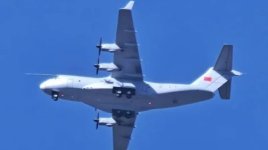
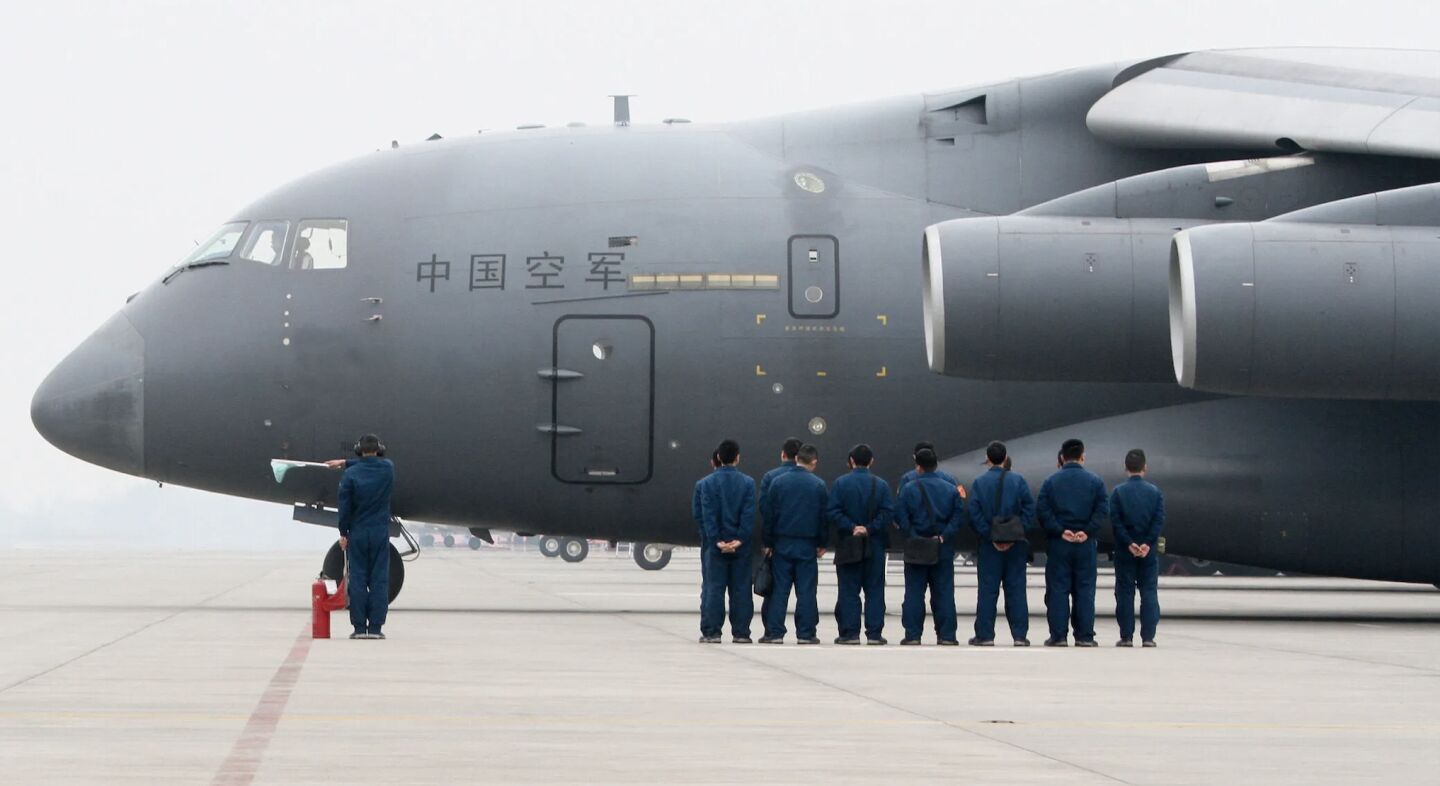
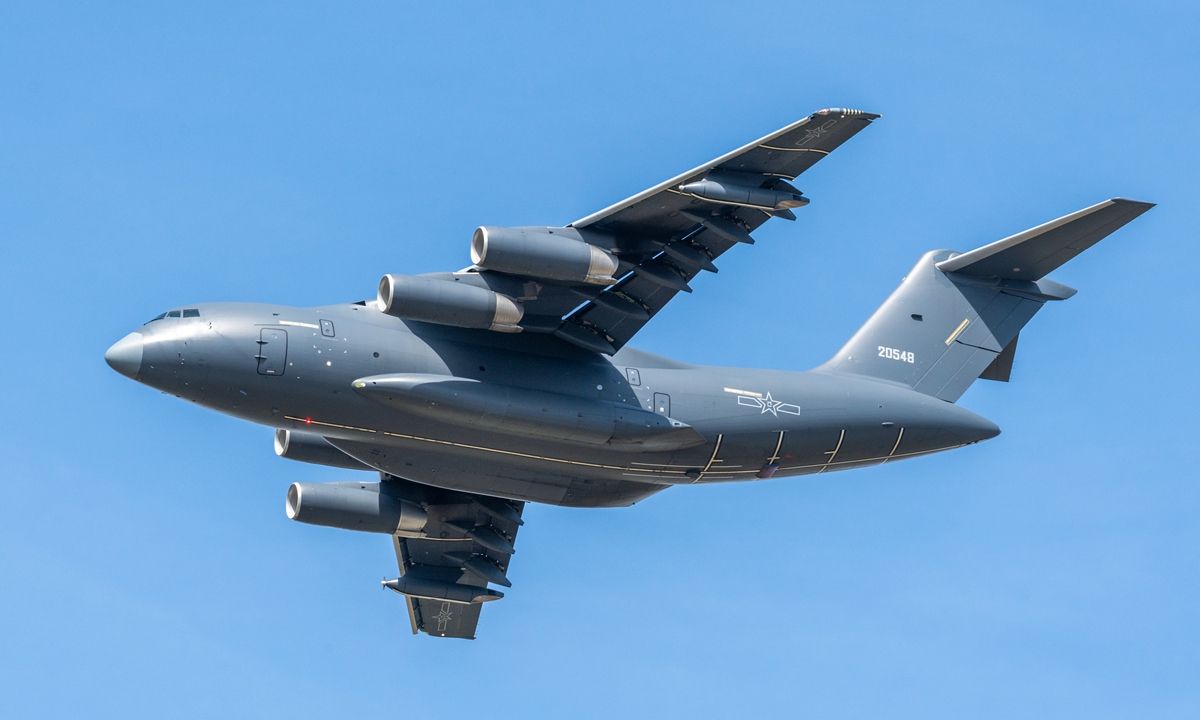
XAC Y-20 - China's giant bird … Plus the smaller brother Y-15

The size and capability vise, I believe Y-15 will be a success when it is cleared for exports.

It will come down to the total cost of ownwership of

a) procurement price
b) service life of the airframe
c) airframe maintenance requirements
d) engine lifespan
e) engine fuel efficiency
f) engine maintenance requirements.

Add all those together, for a comparison of how successful it will be. When it comes to transport aircraft, given how many flying hours they do, the cost of ownership and operations tends to be the most significant factor. That is why the C130 was so successful, it was cheap to operate.

Early days for the Y-15, and of course, China never seems to publish the data for items a) to f) so we never know the true data.
 
It will come down to the total cost of ownwership of

a) procurement price
b) service life of the airframe
c) airframe maintenance requirements
d) engine lifespan
e) engine fuel efficiency
f) engine maintenance requirements.

Add all those together, for a comparison of how successful it will be. When it comes to transport aircraft, given how many flying hours they do, the cost of ownership and operations tends to be the most significant factor. That is why the C130 was so successful, it was cheap to operate.

Early days for the Y-15, and of course, China never seems to publish the data for items a) to f) so we never know the true data.

To be fair, i believe Chinese learned alot with Y-8 and Y-9 platforms. Y-9 saw major improvements over the Y-8. The result of that is visible in Y-20 as well. So in terms of capability and performance, i dont think there will be any complaints.

As far as price is concerned, I am sure it will not be too expensive maybe around $90-110 million. As is common for such class planes.
 

Clear Imagery Emerges of China’s New Y-15 Turboprop Tactical Transport Aircraft​

Posted By: Marcel van Leeuwen August 21, 2026

images (1).jpg

AviationNews – The first high-quality images of China’s new four-engine turboprop military transport aircraft, designated the Shaanxi Y-15, have surfaced online during its ongoing flight test campaign. This secretive tactical airlifter is designed to significantly enhance the People’s Liberation Army Air Force (PLAAF) logistics capabilities, precisely bridging the payload gap between medium and heavy strategic transports.​


Developed by the Shaanxi Aircraft Corporation (SAC), the Y-15—previously referred to by analysts as the Y-30—first took to the skies in December 2025 near Xi’an. The newly emerged photographs provide a detailed look at the prototype, which bears the serial number 15001. The aircraft is being actively developed to progressively replace the PLAAF’s aging fleet of Y-8 and Y-9 transports, which trace their roots back to Cold War-era Soviet designs.

Technically, the Y-15 introduces a modern high-wing, T-tail configuration powered by four advanced WJ-10 turboprop engines featuring six-blade, high-efficiency propellers. Boasting an estimated payload capacity of around 30 metric tons, the aircraft features a significantly wider fuselage and a rear loading ramp designed to accommodate bulky vehicles and standardized pallets. Its ruggedized landing gear and advanced wing design allow it to operate effectively from short, austere, or semi-prepared runways closer to the battlefield. Operationally, this places the Y-15 in a category positioned between the Lockheed Martin C-130J and the Airbus A400M.

“China’s current medium transport aircraft, the Y-9 series, has a large capacity gap with China’s large transport aircraft, the Y-20. That is likely why a new medium transport aircraft, with larger cargo capacity, flight speed, and cabin size, is needed to pair up with the Y-20,” stated Wang Ya’nan, chief editor of the Beijing-based Aerospace Knowledge magazine, regarding the strategic need for the new platform.

As the Y-15 continues its rigorous flight test program, its successful development will offer the Chinese military a highly capable and versatile tactical airlift platform. The aircraft could also ultimately serve as a foundational airframe for future specialized variants, including airborne early warning, medical evacuation, and anti-submarine warfare models.

The emergence of the clear Y-15 imagery highlights China’s ongoing drive to completely modernize its indigenous military aviation industry, shedding reliance on legacy foreign designs. Once fully operational, this new turboprop transport will become a cornerstone of the nation’s rapid deployment and tactical logistics operations.


China’s Y-15 Turboprop Tactical Cargo Aircraft Emerges in Clearest Images Yet

Published on: August 22, 2026 at 1:22 PM CEST

China Y-15

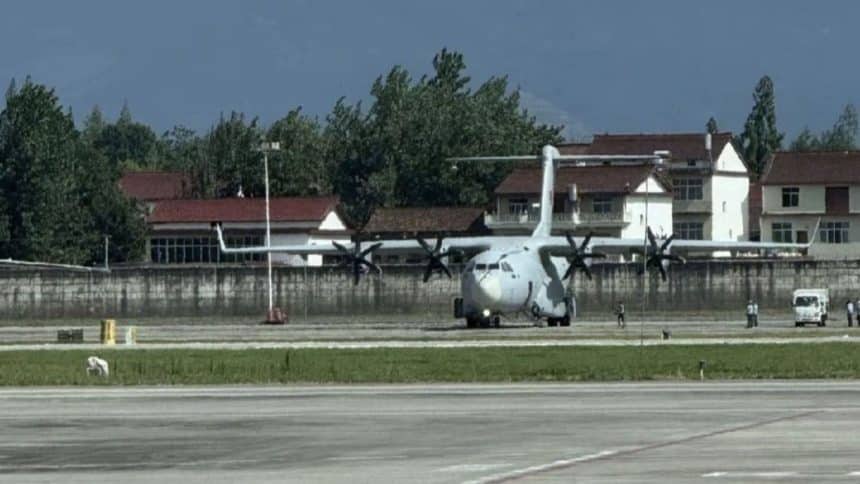
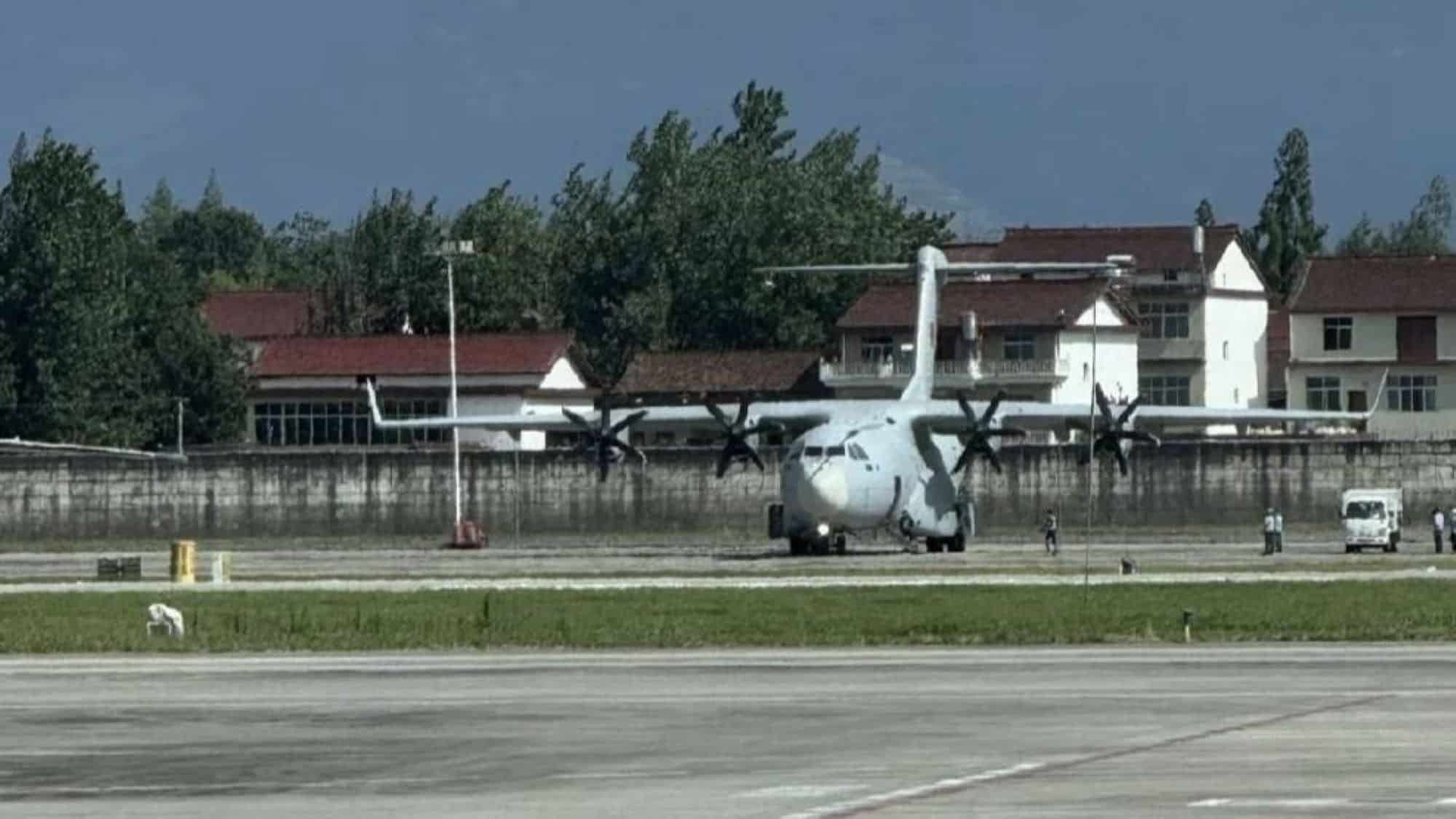
The Shaanxi Y-15 captured while taxiing in the image that emerged on Aug. 20, 2026. (Image credit: 'YuyaoLiumq’ via Andreas Rupprecht)

New details emerged in the recent photos of the Shaanxi Y-15, initially known as Y-30, which is believed to be China’s future tactical transport aircraft.

China’s new Y-15 four-engine turboprop transport aircraft, developed by the Shaanxi Aircraft Corporation (SAC), has appeared in its clearest images yet. The aircraft is the latest development in Shaanxi’s long-running Y-8/Y-9 family of four-engine turboprop transports.

The aircraft, initially designated as Y-30 in scale models, was later revealed as Y-15 by China-based military observers. Images of the aircraft have been increasingly appearing unofficially on social media, especially since 2025, and the latest set of pictures give us our best look at what is believed to be China’s future tactical transport aircraft.

Design and configuration

One image of the aircraft on the taxiway shows a probe extending forward from above the cockpit and enclosed in a tubular fairing. This could look like a refueling probe for the hose-and-drogue system used by Chinese aircraft, with a position comparable to Western aircraft.

However, as it can be noted in other pictures taken from the ground, the thin size of the probe would rather point to a long air-data boom. Such probes are commonly fitted to developmental aircraft to collect precise measurements of air pressure, temperature, airflow and other parameters during testing.

Considering its role, the aircraft is likely to receive an In-Flight Refueling (IFR) probe in future. The probe could replace the air-data boom and use the same fairing.

Regarding the configuration, the aircraft has a high-t tail and a straight, slightly tapered wing with winglets. These features are associated with a high lift configuration, useful for quick intra-theater transport with Short Take-Off and Landing (STOL) capabilities to be able to operate from austere runways.

The four turboprop engines drive six-bladed propellers, a configuration which is now a standard feature across turboprops for improved performance, speed and handling.

The Y-15 is understood to be powered by WJ-10 turboprops, which can produce around 6,800 hp each, according to unofficial figures. Sources report that the Y-15 might have a cargo capacity around 30 tons, compared to the earlier Y-9 which is in the range of 20-25 tons.

The Y-15 is often compared to the A400M for its visual similarities, although it cannot be considered as a Chinese equivalent. In fact, the A400M is a larger aircraft which can carry a 37-ton payload, and has substantially more power thanks to its four TP400D-6 turboprop engines, each of which produces 11,000 hp.

By comparison, the Y-15 appears closer to the C-130J in terms of size and intended mission than to the A400M. Its eventual payload, range and performance remain unconfirmed, however, so a direct comparison with either aircraft might not be accurate without additional data.

Future

The Y-8 and Y-9 families provided the basis for various specialized aircraft, such as Airborne Early Warning and Control (AEW&C), anti-submarine warfare and maritime patrol or electronic warfare roles. At this stage, however, there is no indication of special-mission variants being in the works.

It is possible the Y-15 will eventually complement or even replace the Y-9 in future, leading to the creation of new specialized variants. These might incorporate newer sensors and electronics compared to the ones the PLA is currently introducing in service.

At this time it is unknown if China is planning to export the Y-15, although more info might become available should the aircraft take part in defense exhibitions such as the Zhuhai airshow. It should be noted that both the Y-8 and the Y-9 had success on the export market, and is thus likely that the Y-15 will follow suit.


Chinese YY-20 Heavy Tankers Revealed to Have Airborne Command Capability to Support Fighter Operations​

August-26th-2026

Chinese YY-20 Heavy Tankers Revealed to Have Airborne Command Capability to Support Fighter Operations

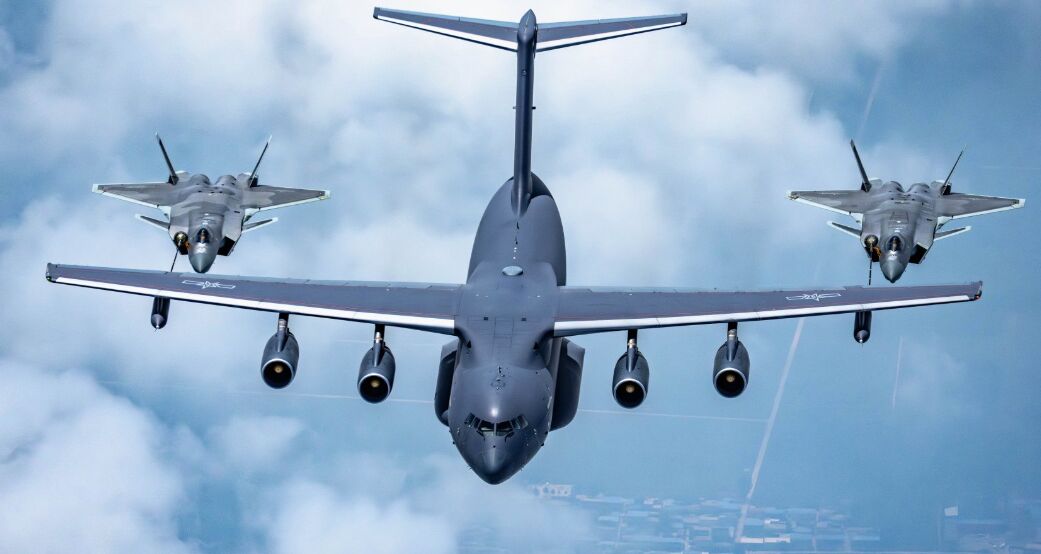
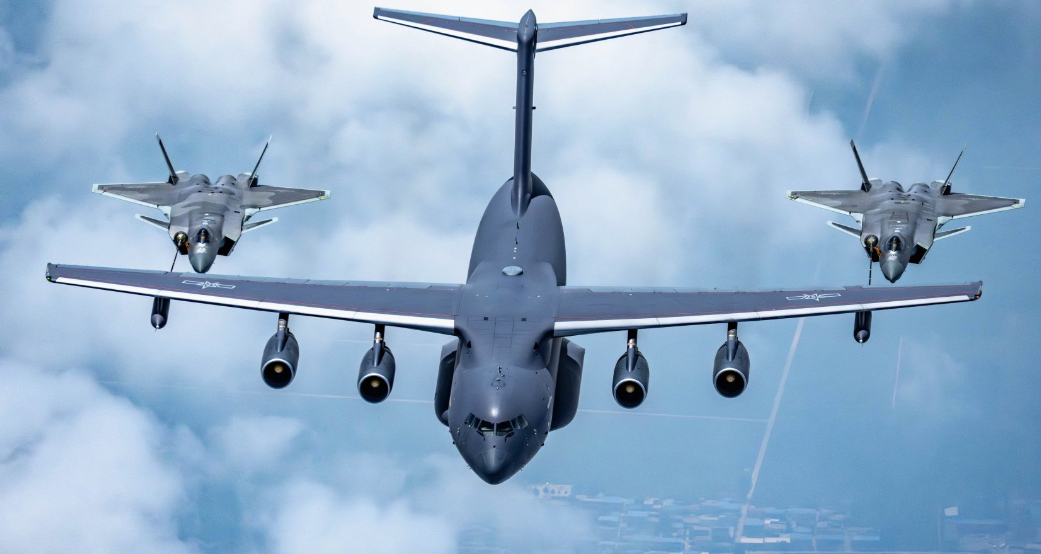
YY-20 Refuels Two J-20 Stealth Fighters

Chinese state media has revealed that its YY-20A aerial tanker performed an airborne command role during the People’s Liberation Army Air Force’s deployment of J-16 fighters to Egypt for the Eagles of Civilisation 2026 exercise. Described as operating as an “airborne command node,” its ability to contribute to command and coordination in addition to providing aerial refuelling could make it significantly more valuable for operations than previously thought. The Y-20 is currently the world’s largest tanker and heavy lift aircraft design in production worldwide, and is rapidly entering service to form the backbone of the Chinese fleet.

The Chinese force traveled more than 6,000 kilometres to reach Egypt, during which YY-20A tankers refuelled J-16 fighters, allowing them to participate in an overseas exercise without requiring multiple intermediate stops. Commenting on the YY-20A’s capabilities, CCTV reported: “The tanker performed aerial-refuelling duties and also served as an airborne command node,” indicating that it was integrated into its airborne command-and-control architecture during the long-distance transit. The extent to which the aircraft are relied on for such roles remains uncertain.

Y-20 Transport Aircraft

Airborne command and control is normally associated with dedicated special-mission aircraft, such as China’s KJ-500, which was specifically designed to provide airborne early warning, battle-management and command functions. Other special-mission aircraft provide electronic warfare, intelligence and communications capabilities. The YY-20A’s newly disclosed role therefore appears to represent a complementary capability rather than a replacement for these dedicated platforms. It complements the world’s largest buildup of airborne warning and control aircraft, which is currently being staged by China.

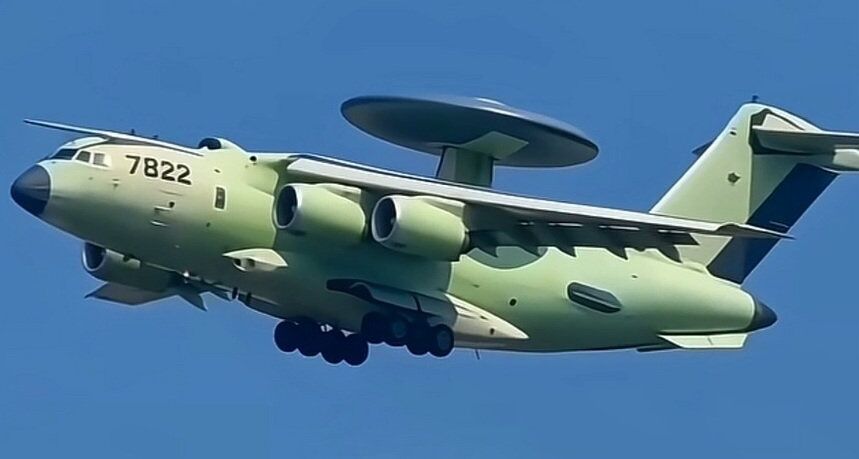
KJ-3000 AEW&C Prototype Based on the Y-20 Airframe

Chinese sources have not publicly disclosed whether the YY-20A carries dedicated removable communications equipment, additional operators, specialised data links or other mission systems for the deployment. Nor has Beijing indicated that the tanker possesses anything approaching the full sensor and battle-management capabilities of the KJ-500. Earlier in August Chinese state media highlighted the Y-20B’s ability to switch between transport and aerial-refuelling configurations, and discussed the possibility of using the platform for additional missions, including electronic warfare and airborne early warning. A dedicated AEW&C system based on the Y-20, the KJ-3000, is also currently in advanced flight testing.


China’s YY-20A Revealed as an Airborne Command Node​

Aug 30, 2026


“China’s YY-20A Revealed as an Airborne Command Node!”“China’s YY-20A Just Revealed a Surprising New Capability!”China’s YY-20A aerial tanker has revealed a surprising secondary capability during the Eagles of Civilization 2026 aviation training in Egypt.

The aircraft supported Chinese J-16 aircraft throughout a journey of more than 6,000 kilometres while also serving as an airborne command node.

This suggests that the YY-20A can contribute to communications, route management, refuelling schedules, and formation coordination during complex long-distance deployments. However, China has not disclosed whether the aircraft carries specialized data links, additional operators, removable command consoles, or other dedicated equipment.

The YY-20A should therefore not be considered a replacement for the KJ-500 early-warning and command aircraft. Instead, it may provide a complementary coordination capability while completing its primary aerial-refuelling duties.

Discover what makes this capability important, how it was demonstrated, and what it could mean for the future of China’s Y-20 aircraft family and long-range aviation operations.
 
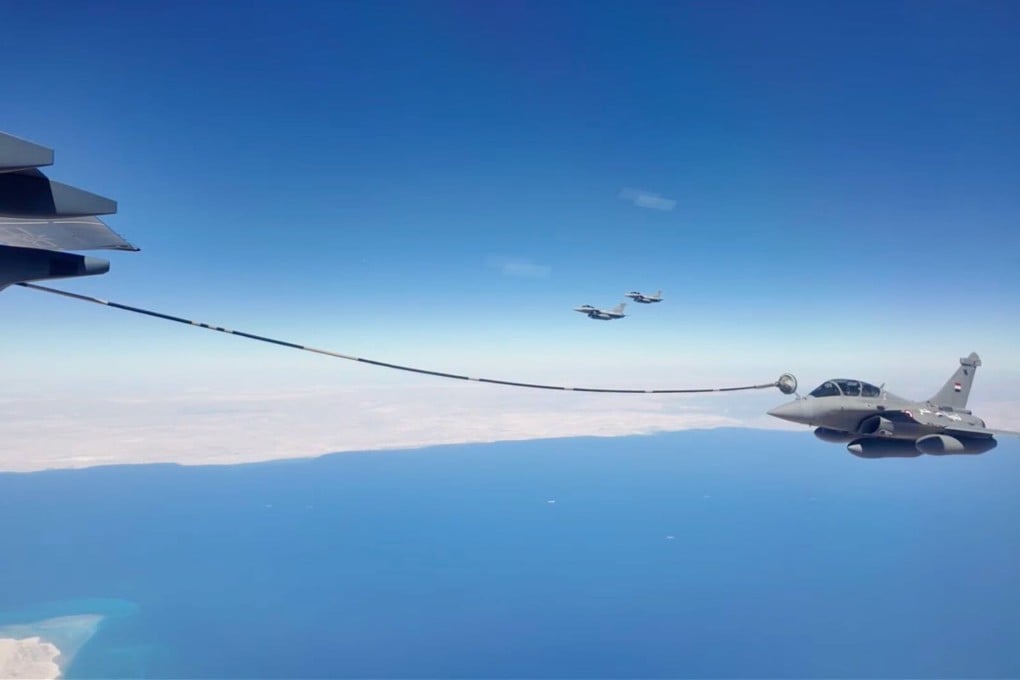
Rare images of Chinese YU-20 refueling Egyptian Rafale captured during China-Egypt drill

Rare scene shows in-depth China-Egypt air force interoperability: expert
By Liang RuiPublished: Aug 31, 2026 10:06 PM

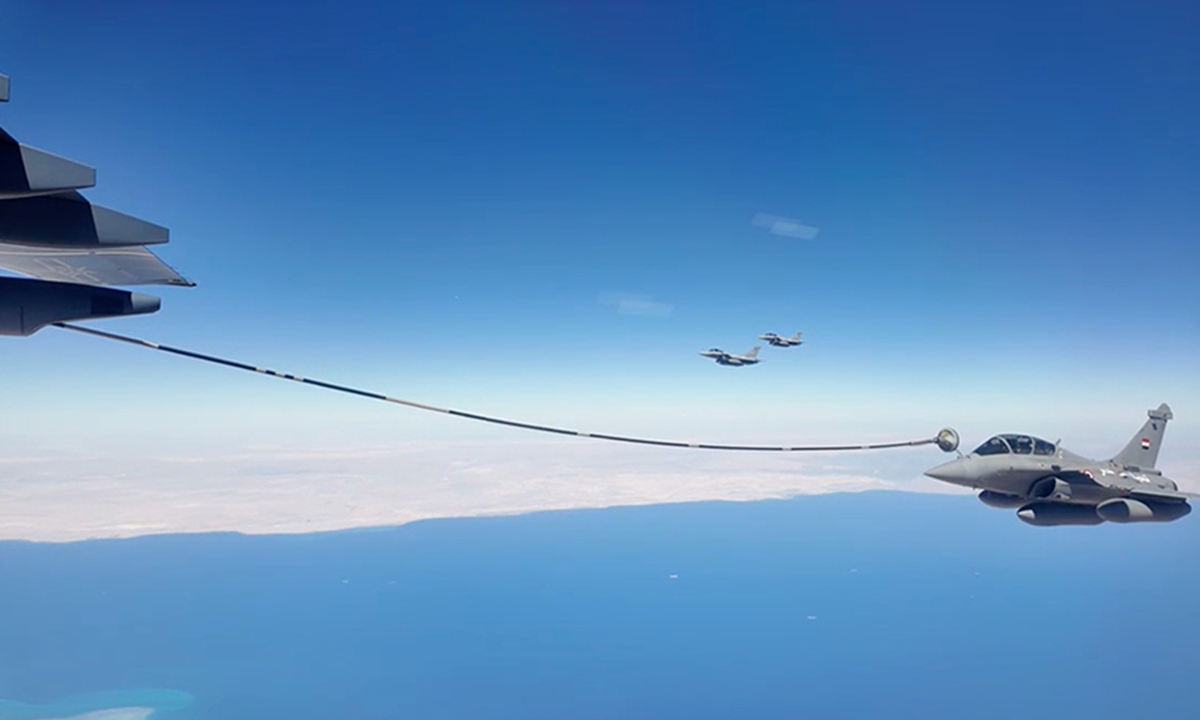
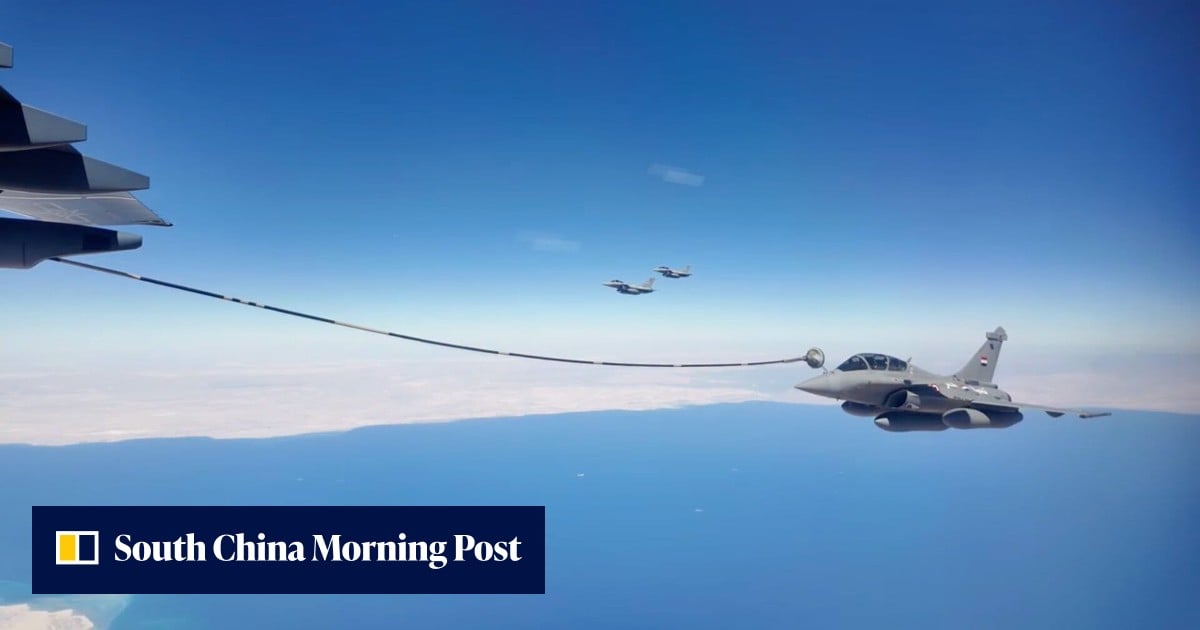
A PLA YU-20 tanker refuels an Egyptian Rafale fighter. Photo:  Screenshot from X account of an official military spokesperson for the Egyptian Armed Forces

A PLA YU-20 tanker refuels an Egyptian Rafale fighter. Photo: Screenshot from X account of an official military spokesperson for the Egyptian Armed Forces

A Chinese People's Liberation Army (PLA) Air Force YU-20 tanker conducting aerial refueling of an Egyptian Rafale fighter during the on-going China-Egypt Eagles of Civilization 2026 joint training can be seen in a new photo posted by an official military spokesperson for the Egyptian Armed Forces on social media platform X on Monday afternoon.

Wang Yanan, editor-in-chief of the Beijing-based Aerospace Knowledge magazine, told the Global Times on Monday that a YU-20 refueling a Rafale is a rare sight to behold.

The Eagles of Civilization 2026 joint training continues with the participation of a number of multi-role fighter aircraft of various types from both sides. The training is being conducted at several air bases in Egypt, said the post.

A number of joint sorties were carried out to train for air combat operations for attacking hostile targets and protecting vital targets in accordance with the latest air tactics. This contributes to the exchange of expertise and the development of the skills and capabilities of the pilots to work jointly in full harmony and coordination among them, in addition to training in aerial refueling operations, said the post.

The training aims to achieve the maximum possible benefit for the participating elements in the planning and execution of modern air operations management, as well as maximizing mutual experiences, which is reflected in the capability and readiness of the air forces of both countries to carry out all the tasks assigned to them with efficiency and competence, according to the post.

The YU-20 employs a probe-and-drogue refueling system, and the Rafale is also equipped with a probe-and-drogue refueling system, making the two platforms highly compatible by nature, Wang said.

Even if minor technical adjustments were required, the difficulty was likely minimal, as the transfer rates and pressure of probe-and-drogue refueling are similar across systems, Wang said.

A YU-20 tanker aircraft takes part in a flying display during the 2025 aviation open-day activities of the Chinese People's Liberation Army Air Force and Changchun Air Show in Changchun, Northeast China's Jilin Province, on September 20, 2025. Photo: VCG

A YU-20 tanker aircraft takes part in a flying display during the 2025 aviation open-day activities of the Chinese People's Liberation Army Air Force and Changchun Air Show in Changchun, Northeast China's Jilin Province, on September 20, 2025. Photo: VCG

In Wang's view, the key challenge in refueling unfamiliar foreign aircraft of different types lies not in the hardware, but in the operational procedures.

Different fighter jets have different approaches when closing in on the tanker, including altitude separation, closing speed and docking maneuvers with the drogue, all of which vary due to differences in aircraft configuration and flight performance. Before the exercise, both sides likely coordinated details such as rendezvous methods, docking angles, common speed and altitude separation. Otherwise, direct refueling under completely unfamiliar conditions would be quite challenging. This demonstrates the high level of coordination achieved in the joint training, Wang explained.

A promotional video for the Y-20 family released by the China Military Bugle on June 28 demonstrated the powerful aerial refueling capacity of the YU-20, which is based on the Y-20 platform. The footage shows the YU-20 refueling not only fighter jets such as the J-35, J-20, J-16 and J-15, but also, as a military affairs expert said, in rare clear detail, the H-6N bomber.

The CCTV News military channel on August 24 released footage from the first day of flight training held Saturday during Eagles of Civilization, showing PLA J-16s engaging in air combat drills against Egyptian MiG-29 and Rafale fighters. A Chinese expert said this is the first joint exercise featuring both the J-16 and the Rafale, reflecting strong mutual trust and a high level of coordination between the two air forces.

Wang previously said that this joint exercise marked the first time China has deployed the J-16 and the first time Egypt's Rafale fighters have participated, a development worth noting. It reflects a relatively high level of mutual trust between the two militaries and a substantial standard of joint training.

The latest public display of aerial refueling demonstrates the depth of interoperability between the Chinese and Egyptian air forces, Wang added. The joint exercise has not only featured confrontational drills between the J-16 and the Rafale, but has also showcased the capability to operate side by side.

One important objective of joint exercises like these is to prepare for scenarios in which the two militaries may need to cooperate under special circumstances, cooperation that involves the coordination and mutual support of different equipment. If the YU-20 can refuel the Rafale, it means that at critical moments, Egyptian fighter units could receive support from Chinese tankers, unlocking greater potential for bilateral cooperation, the expert said.


Users who are viewing this thread

Back
Top