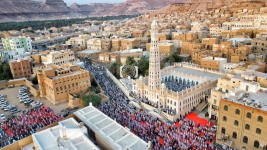
Long but interesting post from one of the most followed Yemeni political observers (1.2 million followers) on Arabic X and for the most part correct from what every knowledgeable person can observe on their own.
There is a limited and cautious thaw—and low blows as well—in relations between the Kingdom and the Emirates, and the statements issued by the four members of the Yemeni Presidential Leadership Council aligned with Abu Dhabi are part of the Emirates' repositioning to avoid losing everything it invested in Yemen over the past decade, emerging entirely empty-handed as Iran did from Syria.
Saudi policy is characterized by a great deal of wisdom and rationality; it does not engage in zero-sum battles, especially with its allies even if they have wronged it, leaving them room to return and preserving their interests within boundaries that do not conflict with its vision.
But there are some files that I expect are causing concern for the decision-maker in Riyadh, for in exchange for this tolerance toward Abu Dhabi and the currents aligned with it in Yemen after all that has happened from them, they see no quid pro quo for that—and here I am not talking about the public statements, but about what transpires behind closed doors or what I call low blows. Based on my monitoring of many incidents, sites, press, foreign research centers and what they issue, especially regarding Yemen, I have noticed dangerous Emirati tendencies embodied in the following:
1/ Pushing books and foreign researchers aligned with Abu Dhabi to write against the Kingdom and portray its recent operations in Yemen as if they undermine international efforts to combat terrorism.
2/ Linking the Kingdom to the Muslim Brotherhood—and even to Al-Qaeda and other groups—in hopes of provoking the anger of the United States, which recently classified some branches of the international Brotherhood organization as terrorist entities.
3/ There is a possibility that Emirati intelligence agencies will direct some extremists—managed without their knowledge—to carry out bombings and suicide operations in Hadramout, Al-Mahra, and other areas, and evidence for this includes numerous tweets from Emirati writers paving the way for those events.
4/ Working to tarnish the Kingdom's image among a broad segment of southerners who support the Southern Transitional Council, presenting the Kingdom as if it opposes the southern cause and sides with northern forces in imposing unity by force—and I have video clips of numerous demonstrations in Socotra, Al-Dhali', and many other areas chanting offensive slogans against the Kingdom that contradict the statements issued by Al-Zubaidi and the Transitional Council.
5/ There are signs of outreach to the Houthi group and inciting it against Riyadh—and to be fair, I have no information on this—but tweets from some Emirati writers and activists, headed by Dhahi Khalfan and Abdul Khaleq Abdullah and others, praising the movement and its strength, and mocking the Kingdom-led coalition for its failure to liberate Sana'a, indicate a dangerous trend that must be nipped in the bud. They forget that the failure to liberate Sana'a stems fundamentally from differences in vision between the Kingdom and the Emirates in Yemen, and Abu Dhabi's waging of internal battles against the legitimate government and its coup against it more than three times in the Presidential Palace in Aden. Friendly fire emanating from Abu Dhabi has become greater than that directed at the Houthi group since 2018—and here I do not diminish the role of the Emirates, the Transitional Council, and the Giants in confronting the Houthis before the coalition fractured from within since 2018.
6/ No one is unaware of the incitement that the Emirates carries out against Saudi Arabia with the Israeli side and the Zionist lobby in the United States, accusing the Kingdom of opposing the Abraham Accords and portraying it as closer in its positions to Hamas and Iran, in addition to depicting the separation of southern Yemen from its north, the Republic of Somaliland from Somalia, and Kordofan from Sudan as being in Israel's interest—especially after Aidarous Al-Zubaidi and the Transitional Council announced their future state's readiness to normalize with Tel Aviv—and presenting the Kingdom as an obstacle to these peace-seeking efforts between the peoples of the region from Abu Dhabi's perspective.
7/ And in Britain specifically, to make my words precise, I learned by chance that Abu Dhabi is communicating with research centers, institutes, and active entities in Britain—particularly those close to Israel, with which I also have contact as an expert on the Houthi movement and the Yemeni file—and has asked them to support the Southern Transitional Council in its steps and present that as being in Israel's interest and for peace in the region, while portraying Saudi steps accordingly as the opposite.
I do not wish to prolong listing more of what any researcher can observe regarding what some Emirati agencies are doing against Saudi Arabia—and here I do not accuse Sheikh Mohammed bin Zayed, President of the State, of being behind those policies, but rather influential agencies playing this dangerous game that could deepen wounds between brothers. And frankly, I fear the escalation of disagreement between them because it will severely harm the Yemeni file, strengthen Houthi authority even more, and distance us further from liberating Sana'a. Therefore, I hope that Sheikh Mohammed bin Zayed will intervene and direct all state institutions to commit to de-escalation with the Kingdom outwardly and inwardly, secretly and openly. And I hope to see Sheikh Mohammed in Riyadh soon, or Prince Mohammed bin Salman in Abu Dhabi, for such disputes are only resolved by meetings of the elders.
@The SC
UAE (Abu Dhabi) foreign policy in the Arab world is deeply disliked and resented by the Arab street as a simple visit to X or Arab social media can instantly confirm. Almost across the entire board from Morocco to Oman.
We even saw that on a few actions (don't agree with the actions though personally) during the FIFA Arab Cup when fans from various Arab teams heckled Emirati fans for this very reason.
No amount of bot farms and paid bots/hired Western X users (who don't care but only take the money) will change this.
Even the Omanis have had enough.
"Who would have expected that there is an Arab country that puts its hand in the hand of the thieving Zionist entity and helps it in its goals of division and normalization and the like!!!".
Even Western media is calling them out for their opportunism.
"Reuters Agency:The UAE supports groups opposing the internationally recognized legitimate governments in Sudan, Libya, and Yemen, and believes that its relations with Israel will grant it greater influence in the region."




 www.youtube.com