Yemen Civil War News and Discussion.. an evolving situation

I think maybe the real reason of USS Gerald Ford coming back to Greece was fear to Houthis.

They never left North Red Sea, like fearing Houthis actions.

And the leaked reasons of sailors sabotaging, accidents or damage due to war is all hard to believe.

In fact, all nonsense was said as explanation of USS Gerald Ford back down, except the Houthi fear, and maybe is exactly the true reason.
Houthis have not touched KSA even once for the past 5 years. Everything that I wrote long before this conflict was/is accurate. KSA and Houthis have reached an understanding. Non-Arabs do not understand that blood is thicker than water. Whatever differences we have we are still the same people largely. People of South KSA and North Yemen are basically identical in many ways. We are all proud and stubborn Arabians and fierce historical warriors (greatest warriors in the Muslim world historically - proof - our unprecedented and numerous empires, caliphates - far bigger in size than anything else in the Muslim world), religious, cultural, linguistic etc. influence. All unprecedented. It was the work of Hijazi's, Yemenis and Najdis mostly.

Speaking about Spain, which we Arabs ruled for almost 800 years, the Arabs in question were Hejazi's, Yemenis and Najdis mostly. Look at the unfluinece in Spain alone. Most of Spain's World UNESCO Heritage Sites (over 20) were built by us Arabians. 1/5 of all Spanish words are Arabic. Most main Spanish cities are Arabic in origin - Madrid the capital included. Spanish culture, cuisine etc. heavily influenced by Arab one. Architecture enormously influenced. Music.

Even agriculture.

DNA/Arab ancestry too.


You are our long lost cousins as are all Latinos.

To view this content we will need your consent to set third party cookies.
For more detailed information, see our cookies page.


To view this content we will need your consent to set third party cookies.
For more detailed information, see our cookies page.


To view this content we will need your consent to set third party cookies.
For more detailed information, see our cookies page.


To view this content we will need your consent to set third party cookies.
For more detailed information, see our cookies page.
 
@BHAN85

^

Evidence of this during the Yemeni civil war, Saudi Arabian soldiers captured 1000's of Houthis. Not a single one of them was executed once captured. Some 20-30 Saudi Arabian soldiers were captured by Houthis and same thing occurred.

I can post videos of both ordinary Saudi Arabian soldiers and Houthis - once capturing the opponent - saying to them that we are brothers and that we will not kill/harm you if not necessary.

Houthis are 1 tribe who with propaganda and severe nepotism and altering of traditional Zaydi Islam (they have no real historical claim to North Yemen):

Those people have: (old KSA allies interestingly - Zaydis):


And they are brainwashing local North Yemenis writing nonsense about KSA being in bed with Israel (despite KSA never once in history recognized Israel, zero trade with Israel, KSA went to 2 wars against Israel directly, KSA was behind the oil embargo in the 1970's that hurt the West the most economically since 1948) etc.

KSA simply does not want to see a brotherly Yemen next door divided or ruled by backward militias with support from FOREIGN hostile regimes (Iranian regime).

KSA to this day hosts the largest North Yemeni and Zaydi diaspora in the world and we live peacefully with them. They are our brethren.

My advice, don't listen to stupid propaganda from clueless non-Arabs or even clueless Arabs who have no idea about either KSA or Yemen.
 
Horrible.

To view this content we will need your consent to set third party cookies.
For more detailed information, see our cookies page.


You have to be a special kind of animal to use children for your dirty backward terrorist militia cult "politics".

This 32 year old cancer will have to and will be removed from North Yemen eventually.

To view this content we will need your consent to set third party cookies.
For more detailed information, see our cookies page.


To view this content we will need your consent to set third party cookies.
For more detailed information, see our cookies page.


To view this content we will need your consent to set third party cookies.
For more detailed information, see our cookies page.
 
Last edited:
To view this content we will need your consent to set third party cookies.
For more detailed information, see our cookies page.


To view this content we will need your consent to set third party cookies.
For more detailed information, see our cookies page.


To view this content we will need your consent to set third party cookies.
For more detailed information, see our cookies page.


Laying the foundation stone for an emergency electricity generation project with a capacity of 100 megawatts for the Hadhramaut Coast, under the auspices of the Saudi Program for Yemen's Development and Reconstruction
@SaudiDRPY
and the supervision of the Ministry of Electricity.The project includes two diesel power stations: Jul Musah (40 megawatts) and Ambeikha (60 megawatts), in addition to similar stations in the Wadi and Desert of Hadhramaut.
 
To view this content we will need your consent to set third party cookies.
For more detailed information, see our cookies page.


To view this content we will need your consent to set third party cookies.
For more detailed information, see our cookies page.


Among the crimes of the agent #TheTraitorAidrous:

- High treason.
- Forming militias and armed gangs.
- Committing murder crimes against officers and soldiers of the Yemeni army.
- Exploiting the just Southern cause to serve the interests of his external handlers.

To view this content we will need your consent to set third party cookies.
For more detailed information, see our cookies page.


The Yemeni Attorney General has issued a decision to seize all funds and bank accounts belonging to the mercenaries of the "dissolved Transitional Council" led by #TheTraitorAidrous: at banks, financial institutions, and exchange companies, as part of measures that authorities say are aimed at protecting public funds, combating corruption, and money laundering.

To view this content we will need your consent to set third party cookies.
For more detailed information, see our cookies page.


Yemeni Presidential Leadership Council member Sultan Al-Arada: . «Yemen's relations with Saudi Arabia are existential, and have not been severed in this phase. What binds us—through neighborhood and shared interests, as well as doctrine, history, and a common destiny—makes Yemen and Saudi Arabia part of each other
 
Hardly any talk (globally) about the disaster that is the khat epidemic in Yemen from an environmental (agricultural), economic, cultural and political perspective.

To view this content we will need your consent to set third party cookies.
For more detailed information, see our cookies page.


Yes, it is a relatively mild stimulant but you cannot have most of your men and even a large segment of your women addicted to this plant. It is a disaster overall.

It should be completely eradicated and unfortunately nobody is really interested in this, it seems since it has become such a big part of local culture.

I am happy that KSA managed to eradicate the consumption of khat in South KSA almost completely.

To view this content we will need your consent to set third party cookies.
For more detailed information, see our cookies page.


To view this content we will need your consent to set third party cookies.
For more detailed information, see our cookies page.


To view this content we will need your consent to set third party cookies.
For more detailed information, see our cookies page.
 
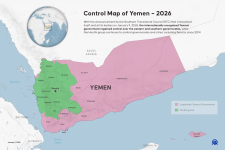
KSA consolidating power within Yemen:

To view this content we will need your consent to set third party cookies.
For more detailed information, see our cookies page.


Further gains have occurred since January 2026.

1783083435798.png
 
Houthi militia’s attempts to target Kingdom will be met by unprecedented force: Coalition

A soldier loyal to Saudi-led coalition forces stands guard near ships docked in the southern Yemeni port of Aden. (AFP/File)

ARAB NEWS
July 04, 2026 02:01

  • Militia had threatened to target ‘Saudi airports and vital ‌interests on ‌land and sea’
RIYADH: Any attempts by Yemen’s Iran-backed Houthi militia to target the Kingdom will be met by “unprecedented determination and force,” the Saudi-led coalition said early on Saturday in a statement posted to social media and carried by the Saudi Press Agency.

“Houthi statements against the Kingdom yesterday are merely an attempt to divert attention away from their grave violations against the brotherly people of Yemen,” said Maj. Gen. Turki Al-Maliki, the coalition’s spokesperson.

He categorized the militia’s latest threats as an attempt to undermine regional and international security.

“The coalition will respond with unprecedented determination and force to any and all attempts to target the Kingdom, its citizens and residents and national assets, or any attempt to violate the sovereignty of the brotherly Republic of Yemen,” he said.

The militia on Friday threatened to target “Saudi airports and vital ‌interests on ‌land and sea,” according to the group’s military spokesperson.

Al-Maliki accused the Houthis of causing suffering to Yemenis through its actions.

He said: “They try to export the economic disasters and Yemeni suffering they have caused — in addition to covering the rejections they face from tribal and social components of Yemen — to their regional periphery and neighboring countries.”

Known formally as the Coalition to Restore Legitimacy in Yemen, the Saudi-led coalition has been fighting to restore legitimacy to Yemen’s internationally recognized government following the seizure of the capital Sanaa by Houthis in 2014.

The militia, which has received weapons from Tehran, has been in control of the capital since then, as well as many parts of the country.

Al-Maliki said: “The Kingdom, along with the coalition and international partners, have endeavored to undertake initiatives and efforts to alleviate the suffering of the Yemeni people caused by the coup carried out by the Houthi militia, in addition to resolving the Yemeni crisis through a road map, which the legitimate Yemeni government approved, while the Houthis rejected (it), as they went beyond by rejecting efforts for lasting peace and attacked Sea Lines of Communication and international trade in the Southern Red Sea and Bab Al-Mandab Strait.”


To view this content we will need your consent to set third party cookies.
For more detailed information, see our cookies page.


To view this content we will need your consent to set third party cookies.
For more detailed information, see our cookies page.


"Why am I counting down from 88 days? Because in 88 days, the Houthis will mark the 12th anniversary of September 21, 2014, the day they call their “revolution.” In reality, it was the coup and armed rebellion that allowed them to take Sana’a and most of northern Yemen.

@BashaReport assessment is that the Houthis want some kind of win by that date. That win could be an Iran-U.S.-style memorandum of understanding with Saudi Arabia or the Internationally Recognized Government of Yemen, built around two key steps.

First, the reopening of Sana’a airport and support for direct flights from Houthi-controlled Sana’a to Amman, Cairo, or possibly even Jeddah. Second, some form of financial commitment or reparations, not just a one-time payment, but something more structured and lasting.

This is why the Houthis are now applying maximum pressure on Saudi Arabia. They appear to believe that escalation threats may push Riyadh toward giving them part of what they want.

But this is not a simple calculation for the Houthis. They know their support base has shrunk. Economic collapse, unpaid salaries, worsening living conditions, and growing public frustration in areas under their control have weakened their position.

They also know that the anti-Houthi coalition has built a large force, often described as around 400,000 men. Whether that force is effective or not is a separate question, but it exists on the ground. So if the Houthis decide to resume strikes against Saudi Arabia, including possible attacks on @Aramco or other strategic targets, to pressure Riyadh over the next three months, the move could backfire.

Many analysts, observers, and Yemen watchers see this as another empty Houthi threat. The Houthis have issued similar warnings several times over the past few years, and some now see them as the boy who cried wolf. In that view, they may eventually settle for much less and avoid a major military escalation. But the timing matters. Yesterday was day 88. Today is day 87. Follow @BashaReport on @Substack for updates as this countdown moves forward.https://bashareport.substack.com"

Saudi-backed Masam project destroys 724 landmines, explosive remnants in Yemen​


Last edited:
The Houthi terrorist cult is on its last legs and losing more and more support from the little territory that remain under their temporary occupation.

To view this content we will need your consent to set third party cookies.
For more detailed information, see our cookies page.


There is a huge tribal and clan mobilization across Yemen to confront the Houthi cult occupation.

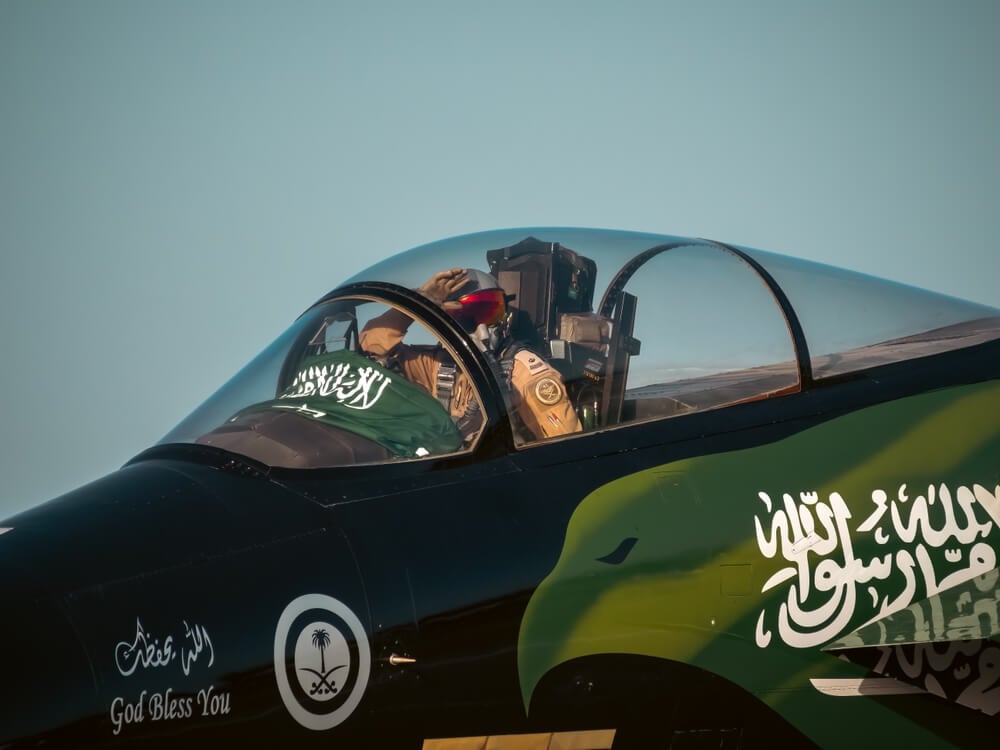
Saudi Air Force

MIDDLE EAST

Why Saudi Arabia is building an Aerospace Force


When Royal Saudi Air Force Commander Lt. Gen. Prince Turki bin Bandar announced that the establishment of the Royal Saudi Air and Space Force (RSASF) had entered its final phase, the significance was not institutional. It was operational.

The Kingdom is now formalising a military transformation that has been developing since the beginning of the Yemen war in 2015.

The merger of the Royal Saudi Air Force (RSAF) and the Royal Saudi Air Defense Forces (RSADF), along with the incorporation of expanding military space capabilities, reflects a reality already evident on the battlefield.

Air operations, missile defence, intelligence, strategic warning, and space capabilities increasingly function as parts of the same combat system. The new force simply formalises this reality.

Saudi Arabia entered Yemen in 2015 with a large, technologically advanced, and well-equipped air force.

What it lacked was not aircraft, precision weapons, or resources. It continued to conduct warfare in a conventional manner, relying on traditional concepts of air power that were better suited to limited campaigns than to managing a prolonged and highly complex theatre.

A costly learning curve

The early years revealed significant weaknesses in targeting, intelligence fusion, command and control, and shortcomings in integrating military and political objectives.

Yemen became a steep and costly learning curve. Over the following decade, the RSAF progressed from conducting basic air operations to managing the entire battlespace.

By January 2026, that evolution was evident. RSAF operations in South Yemen demonstrated a mature, integrated C6ISR architecture operating at a level very different from the early years of the war.

By 2026, the RSAF was no longer using fighter jets solely to strike targets
The removal of the Abu Dhabi-backed Southern Transitional Council (STC) military position in South Yemen demonstrated the extent of the RSAF’s progress in surveillance, targeting, operational sequencing, and theatre command.

By 2026, the RSAF was no longer using fighter jets solely to strike targets. It was employing an integrated architecture of aircraft, intelligence, surveillance, missile defence, and C2 real-time command systems to control the battle itself.

Opposing forces were responding to Saudi decisions rather than shaping events themselves.

The scale of the Saudi challenge

The scale of the Saudi challenge is often underestimated. Saudi Arabia is the largest country in the Middle East.

It contains the world’s largest continuous concentration of energy infrastructure, sits atop the world’s largest proven conventional oil reserves, and lies astride some of the most important energy and commercial maritime corridors in the global economy.

Defending the Kingdom increasingly required maintaining awareness across all of Yemen
As the conflict evolved, defending the Kingdom increasingly required maintaining awareness across all of Yemen, including Bab al-Mandab, Socotra Island, and the air and maritime routes connecting them.

The mission was no longer limited to defending Saudi national airspace. It became the management of a theatre stretching from the Gulf to the Red Sea, through the Arabian Sea, and the Gulf of Aden.

Retaliatory strikes against Iranian military

The same capability became evident during the Iran war that began in February 2026. By then, the RSAF had developed a standalone fused C6ISR capability able to operate independently across multiple theatres simultaneously.

Separate from American CENTCOM unified military operations, the RSAF demonstrated the ability to identify threats, execute strikes, and assess results within a single command process.

RSAF's retaliatory strikes against Iranian military and security targets were deliberately calibrated to deter attacks on Saudi critical energy infrastructure while maintaining escalation control.

RSAF was no longer operating on a single front. It was managing Yemen, Iraq, and Iran simultaneously
At the same time, RSAF carried out simultaneous operations against Iranian-backed militia networks in southern Iraq responsible for missile and drone attacks on the Kingdom.

RSAF was no longer operating on a single front. It was managing Yemen, Iraq, and Iran simultaneously through an integrated C6ISR command system developed over a decade of war.

What began in 2015 as a large but operationally standard air force had, by 2026, evolved into a force capable of managing interconnected theatres across the region.

That evolution, more than any individual platform, explains the significance of the force now being established.

Strategic effect

The RSAF already has the scale needed to translate operational evolution into strategic effect.

It operates approximately 365 combat aircraft, including about 226 4.5 generation fighters composed of 154 F-15SA (Saudi Advanced) and 72 Eurofighter Tranche 2/3 Typhoons.

They are supported by approximately 59 F-15C/D 4.0+ fighters and around 80 Tornado IDS legacy 4.0 strike aircraft. Saudi Arabia is already the second-largest operator of the F-15 after the United States.

The air-defence architecture supporting this force is equally significant. THAAD (Terminal High Altitude Area Defense) provides the upper tier against higher-altitude ballistic missile threats, while Patriot batteries (PAC-2/PAC-3) form the middle layer, protecting critical infrastructure and population centres.

Beneath them lies a dense SHORAD network, including Shahine and Crotale-derived systems, which repeatedly proved effective against drones and low-flying threats during the Yemen and Iran conflicts.

Only the United States will have a larger layered air- and missile-defence architecture than Saudi Arabia once the Kingdom’s Patriot and THAAD deployments are complete.

Saudi Arabia has invested heavily in indigenous missile and unmanned systems production
One of the most important lessons from the wars in Yemen and Iran was that not every threat requires a strategic interceptor.

Ballistic missiles, cruise missiles, and drones require different defensive layers. Success resulted from integrating these layers rather than relying on a single defensive system.

The transformation extends well beyond combat aviation and missile defence.

Saudi Arabia has invested heavily in indigenous missile and unmanned systems production, with growing emphasis on domestic manufacturing of ballistic missiles, long-range strike systems, reconnaissance platforms, and one-way attack drones.

The objective is a more resilient defence-industrial base capable of sustaining prolonged operations and reducing dependence on external suppliers.

The Royal Saudi Strategic Missile Force (RSSMF) remains outside this restructuring and continues its own modernisation trajectory as Saudi Arabia's distinct strategic forces command.

Space – the next phase

Space is the next phase of the transformation. Saudi Arabia is investing heavily in geospatial intelligence, satellite constellations, secure communications, and strategic warning systems.

Modern military power increasingly depends on seeing further, identifying threats earlier, and responding more quickly.

This is where the transition from C6ISR to C7ISR becomes crucial. Cognition is not simply another sensor; it is the ability to convert information into action more rapidly than an adversary.

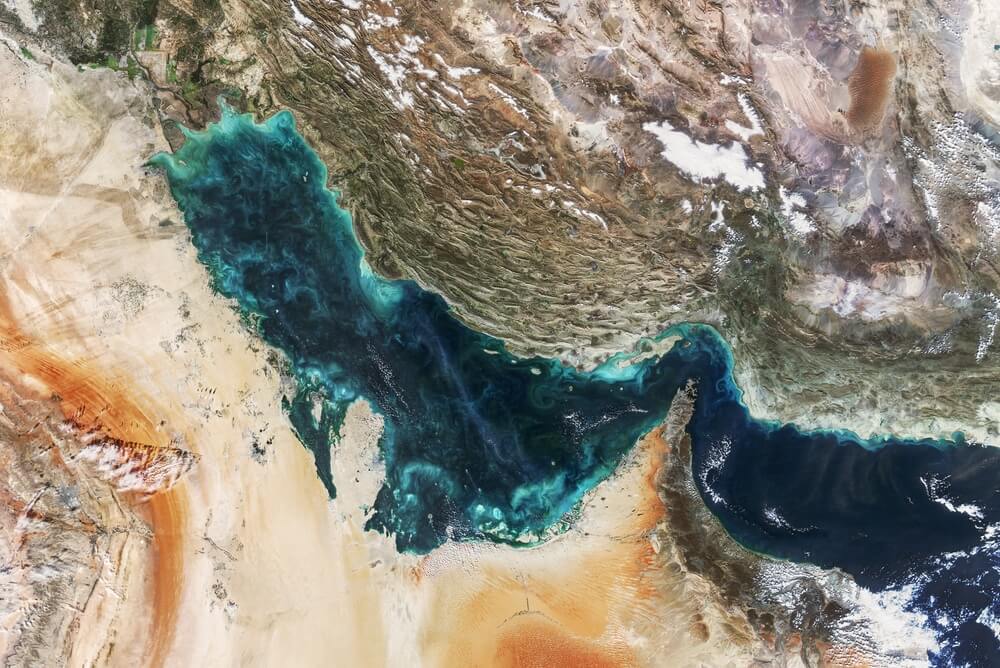
Persian Gulf Satellite
Saudi Arabia is investing heavily in geospatial intelligence, satellite constellations, secure communications, and strategic warning systems
The RSASF is integrating aircraft, missile defences, drones, intelligence systems, and space-based assets under a single command capable of managing the battlespace rather than merely participating in it.

Many programmes for modernising military systems, improving readiness, and strengthening institutional performance are underway. These reforms matter because sophisticated equipment alone does not create military power. Institutions do.

Saudi Arabia entered Yemen in 2015 with a large but operationally standard air force. A decade later, it fields a very different force.

It is supported by a layered missile defence network, increasing indigenous missile and drone production, expanding space capabilities, and an integrated command and control system tested in Yemen, Iraq, and Iran.

What RSASF is now building is the structure designed to preserve, expand, and exploit this over the next generation.

Dr Nawaf Obaid is a Senior Research Fellow at the Department of War Studies, King’s College London.

(The views expressed in this article are those of the author and do not necessarily reflect the editorial position of Tomorrow's Affairs.)
 

Users who are viewing this thread

Pakistan Defence Latest

Latest Posts

Back
Top