Skip to contentSkip to footer

How the Z-10ME Redefines the Role of Pakistan’s Army Aviation Corps
Defence Uncut by Bilal Khan
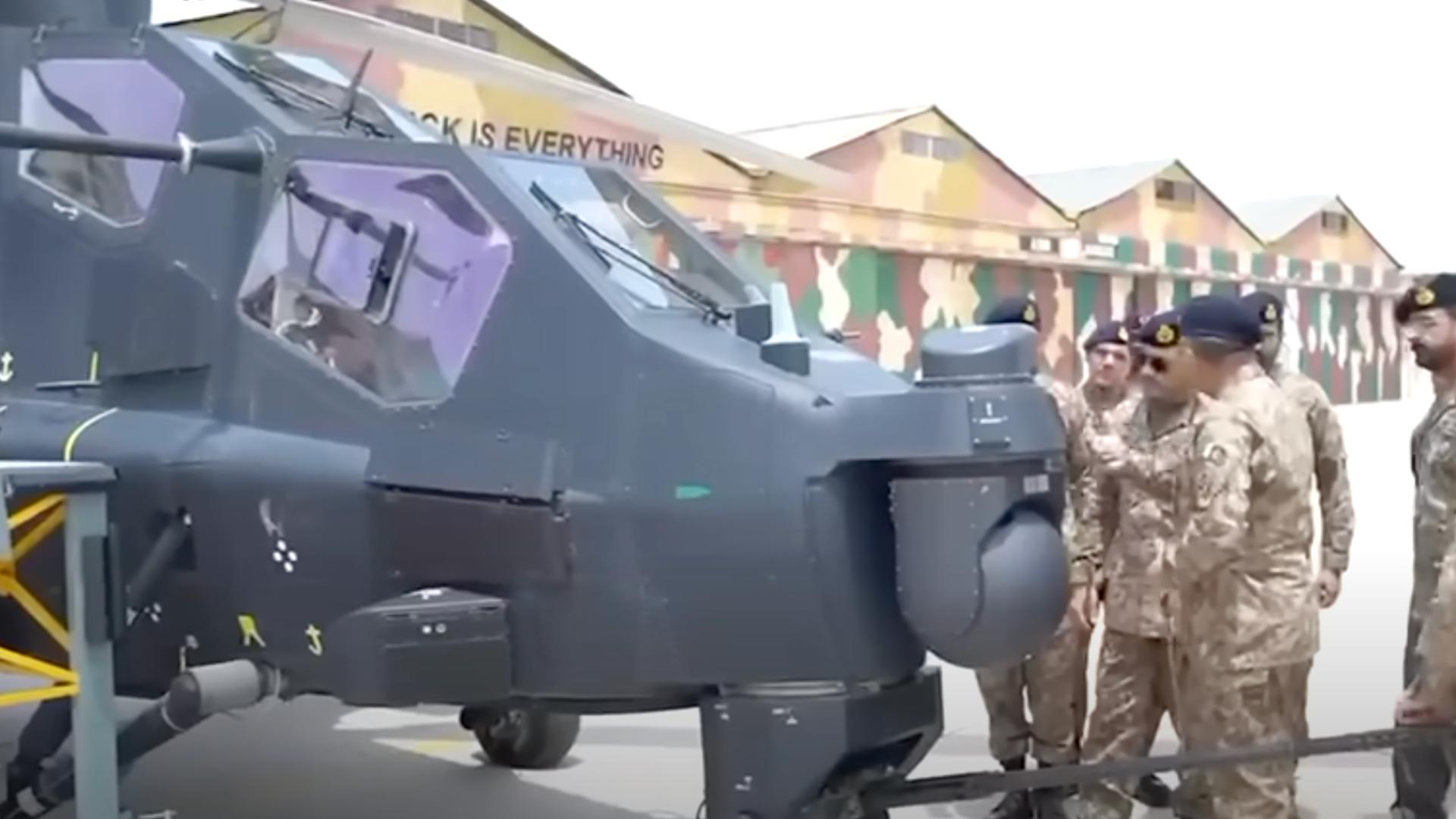
The Pakistan Army has
officially inducted its first units of Z-10ME attack helicopters, closing a complex and
often-frustrated search for a new gunship that spanned nearly 15 years.
The arrival of this modern Chinese platform is more than a simple hardware replacement for the army’s aging AH-1F Cobras; it represents a fundamental and necessary shock to the system, forcing a complete re-evaluation of Army Aviation’s doctrine, tactics, and its role in the future multi-domain battlefield.
The era of the low-flying, direct-fire-support gunship, a concept that defined the Cobra’s mission, is over. Lessons from high-intensity conflicts, most notably Russia’s staggering helicopter losses in Ukraine , have shown that even advanced attack helicopters are exceptionally vulnerable in airspace saturated with modern man-portable air-defence systems (MANPADS) and mobile short-range air-defences (SHORAD).
The Z-10ME is Pakistan’s answer to this new reality. It is not a Cold War-style tank buster but a sophisticated, networked weapons platform designed for survivability and standoff engagement. Understanding its impact requires looking beyond the airframe to the new operational concepts it enables and the systemic changes it will demand from Pakistan’s land forces.
In the latest episode of the Defence Uncut podcast, the Quwa team delves into the strategic implications of the Z-10ME’s induction. We analyze the doctrinal shift from direct fire support to standoff strikes, the critical need for joint PAF-Army operations to control the low-altitude battlespace, and how this platform fits into a broader ‘system of systems’ that includes drones, electronic warfare, and networked sensors.
Pakistan Army Aviation’s “BVR Moment”
The core of our conversation explores the necessary evolution of Army Aviation, driven by the capabilities of the Z-10ME and the realities of the modern battlefield.
From Tank-Buster to Standoff Striker: The End of the Cold War Gunship
The primary role of a Cold War gunship was to fly low and provide direct fire against enemy armor. This doctrine is now obsolete. The proliferation of effective and easily concealable air defences means that a helicopter operating within a few kilometers of enemy ground forces has a very low life expectancy.
The Z-10ME was designed with this threat in mind.
Its induction, complete with standoff munitions like the CM-502KG non-line-of-sight missile, which has a range exceeding 25 km, fundamentally changes the mission. The Army’s gunships will no longer be chasing individual tanks; instead, they will operate from safer distances as “hit-and-run” strikers against high-value targets like command posts, enemy air defences, and counter-artillery radars.
A ‘System of Systems’: The Z-10ME in a Networked Battlefield
The Z-10ME is best understood not as an individual platform, but as a flying sensor and command node within a wider network.
Equipped with a sophisticated defensive aids suite, electronic warfare jammers, and advanced sensors, its two-person crew can manage a complex battlespace. In the future, this will likely include controlling swarms of loitering munitions or FPV drones, directing them onto targets identified by the helicopter’s sensors.
This represents a monumental shift for Army Aviation, moving it from an operator of individual assets to the manager of a networked system of systems, where the helicopter itself may not be the primary weapon.
Joint Operations: The Inevitable Integration with the PAF
To be truly effective, the Army’s new aviation doctrine cannot exist in a vacuum. Controlling the low-altitude domain will require unprecedented synergy between the Army and the Pakistan Air Force.
The Z-10ME, even with its standoff capabilities, will still operate under the threat of mobile Indian air-defence systems. Creating temporary, safe corridors for the helicopters to conduct their strikes will depend on the PAF. This means missions where PAF assets – such as JF-17s equipped with anti-radiation missiles – conduct Suppression/Destruction of Enemy Air Defense (SEAD/DEAD) operations to neutralize threats, allowing the Z-10MEs to attack their ground targets.
This combined-arms approach, where air and land assets are seamlessly integrated to achieve a specific effect, is the future of warfare in the region.
Listen to the Full Discussion
For a comprehensive analysis of the Z-10ME’s capabilities, its doctrinal impact, and the future of Pakistan’s low-altitude combat strategy, the latest episode of Defence Uncut offers an essential, in-depth discussion. The conversation connects the dots between new hardware, evolving tactics, and the overarching strategic imperatives facing the Pakistan Army.


 Turks express pride in Pakistan’s new Chinese Z-10ME helis but regret failing to deliver T129s due to U.S. export bans. They blame Washington and vow never to rely on American parts again. Call for stronger future defense ties with Pakistan.