i suspect the production line is running dry, same thing happened with the j10's and the type 54a's. anyone see a pattern
According to current information, the PLAAF has indeed long since ceased procurement of the J-10C fighter jet. At present, the Chengdu Aircraft Corporation (CAC) produces only the J-10CE variant, which is intended for the export market.
China continues to manufacture Type 054A frigates, even while simultaneously producing the newer Type 054B frigates. The two classes share a common fundamental architecture, allowing for the interchangeability of many components.
Meanwhile, Chinese shipyards are also constructing a large number of maritime law enforcement vessels for the China Coast Guard, which are developed based on the hull design of the Type 054A frigate.
I would think the long range FPV and Loitering drones will probably also start changing the way employment of PAA assets is considered.
If news reports are correct, there is a 100,000 FPV attack drone order for joint production with the Turks in addition to more loitering munitions.
Depending on the timing of induction, this could lift a significant load off combat helicopters in conventional anti-armor role. Not suggesting that helis will be replaced entirely but this space is evolving very fast. I think in the Ukraine-Russian theater, Heli vs. FPV strikes are easily at a 1:n ratio if not more [with n representing tens (and possibly hundreds) of strikes by FPVs].
I personally feel PAA has gone slow on purpose with the inductions given the major rethink going on globally (and certainly in GHQ) on employment of manned rotary aircraft in interdiction roles and combat drones.
Small multi-rotor UAVs and FPV drones are indeed playing a pivotal role in reshaping the nature of modern warfare. However, they cannot entirely replace the function of helicopters—just as they cannot fully supplant the role of tanks.
Faced with this new paradigm of combat, traditional helicopters and tanks are, in fact, undergoing an evolution.
It is important to note that these conventional platforms are evolving, not disappearing.
The design philosophy for fourth-generation tanks has already begun to incorporate adaptive changes to counter the threat posed by small multi-rotor UAVs and FPV drones. As for helicopters, while there is little publicly available information, it is safe to assume that engineers are actively working on solutions.
BTW.
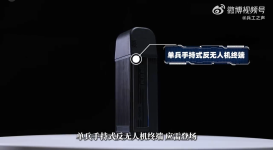
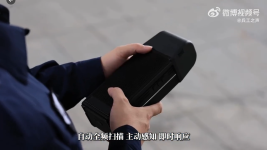
NORINCO Group (China North Industries Group Corporation) recently unveiled a "handheld anti-drone terminal for individual soldiers." Slightly larger than a typical smartphone, it ranks among the most compact anti-drone products currently available. It is capable of effectively countering FPV (first-person view) drones and small multi-rotor UAVs—systems often derived from or based on civilian drone technology.