Russian Air Force (VVS)

To view this content we will need your consent to set third party cookies.
For more detailed information, see our cookies page.
 
To view this content we will need your consent to set third party cookies.
For more detailed information, see our cookies page.
 
To view this content we will need your consent to set third party cookies.
For more detailed information, see our cookies page.
 
To view this content we will need your consent to set third party cookies.
For more detailed information, see our cookies page.
 
Su-57 production

RU POV: #WeekendPhoto - UAC​


To view this content we will need your consent to set third party cookies.
For more detailed information, see our cookies page.
 

RU POV: information about Kinzhal (Dagger) and the MIG-31M​


To view this content we will need your consent to set third party cookies.
For more detailed information, see our cookies page.
 

Russia adds newly built Su-35S jets to its air fleet​


NewsAviation
ByDylan Malyasov

Nov 1, 2025
Modified date: Nov 1, 2025


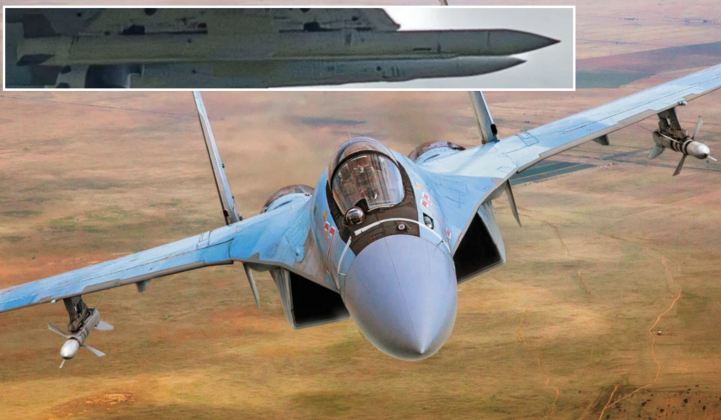
A Russian Su-35 fighter jet. (Rostec pic)

Key Points
  • Rostec’s United Aircraft Corporation has delivered another batch of Su-35S fighters to the Russian armed forces.
  • This is at least the sixth known Su-35S transfer in 2025, according to available data.
Russia’s state-owned defense conglomerate Rostec said it has delivered another batch of Su-35S multirole fighters to the country’s armed forces, continuing a steady flow of aircraft to operational units despite reported wartime losses.

According to a statement from the United Aircraft Corporation (UAC), part of Rostec, the Su-35S fighters are designed to secure air superiority at long range and in all weather conditions. The company emphasized the aircraft’s role in Russia’s ongoing air operations and its expanding production output.

“We have increased the pace of deliveries of modern combat aircraft for the needs of the Ministry of Defense,” Rostec said. “This also applies to the Su-35S — currently the most capable modern fighter in the world. These aircraft have destroyed numerous enemy aerial targets and are equipped with advanced systems and long-range weapons.”

The company did not specify how many aircraft were included in the latest transfer or which unit received them. However, this appears to be at least the sixth known delivery of Su-35S fighters this year, following earlier shipments in March, May, June, August, and September, according to available data.

Russian military officials have described the Su-35S as a “reliable and versatile system” capable of fulfilling nearly any mission assigned to Russia’s tactical aviation. The aircraft, built at the Komsomolsk-on-Amur Aviation Plant, features thrust-vectoring engines, upgraded avionics, and a radar capable of tracking multiple targets simultaneously.

Developed from the Su-27 platform, the Su-35S serves as one of Russia’s most advanced fourth-generation-plus fighters. It has been heavily employed in combat operations since February 2022, often in roles involving air patrols, standoff missile launches, and escort missions.

Despite continued deliveries, open-source intelligence and Ukrainian defense reports indicate that Russia’s combat aviation fleet has suffered extensive attrition since the start of the full-scale invasion. Verified losses include at least eight Su-35S aircraft, while total confirmed losses across all fixed-wing types exceed 165 destroyed or damaged jets.

The sustained production of Su-35S fighters underscores Moscow’s efforts to replace losses and maintain combat readiness under sanctions that have complicated the import of Western components. Russian manufacturers have repeatedly stated they are substituting foreign parts with domestically produced systems, though analysts remain skeptical about the long-term impact on production quality and output rates.

For Russia’s defense industry, the continued supply of new aircraft carries political weight as well as operational relevance. The Kremlin has positioned Rostec’s manufacturing resilience as evidence that sanctions have failed to impede defense modernization. Deliveries are routinely publicized to project an image of industrial continuity and technological self-sufficiency.

Each new delivery indicates that Russian industry continues to meet at least partial production targets despite sanctions, supply constraints, and combat attrition.
 
“We have increased the pace of deliveries of modern combat aircraft for the needs of the Ministry of Defense,” Rostec said. “This also applies to the Su-35S — currently the most capable modern fighter in the world. These aircraft have destroyed numerous enemy aerial targets and are equipped with advanced systems and long-range weapons.”

Most capable in the world? Says who?

What did they destroy?
 
Most capable in the world? Says who?

What did they destroy?
Russia itself. They are the makers they have to promote. For me what really confusing thing is why Russia hasn't gotten AESA technology and not fitting in their SU-30, SU-35, and SU-34 planes
 
Russia itself. They are the makers they have to promote. For me what really confusing thing is why Russia hasn't gotten AESA technology and not fitting in their SU-30, SU-35, and SU-34 planes
Many. First of all, if power was the concern then it wouldn't make sense because the Russian PESA radar on the Su-35 is the strongest fighter radar until the F-15EX came along. Ofc for 4th gen and again, the F-22 radar output is still very much in the air. So yeah, for Russia who has mastered PESA tech and make the most powerful ones, it is quite idiotic to change to something new and expensive. Second is doctrine, Russian doctrine does not have data-link or teamed kills which NATO and frankly every major airforce uses. It is confusing for us because Pakistan and India and China all use NATO style doctrine, but Russia is still stuck in the Soviet era. Hence the advantage of having an ASEA(allowing for multiple locks and better situational awareness if with teams) is not useful as Russia priorize individual fighters in battles. Thirdly, it is fucking expensive. An average ASEA cost nearly double or triple that of a PESA. People do not understand how cheap Russian fighters really are. Like the Su-35 is reported to be under 50 million, which is nearly the price of a block III for Pakistan. An export order of a Su-35 is quite literally the same as for a Block III, Iranian are reportedly paying 125+ million while Azeri are paying 115ish million. Finally is budget, building a new radar platform and stuff is expensive. Russia does not have funds to do such adventure hence it sticks with already developed tech. Maybe the next Evo of Su-35 might have ASEA as the Su-57 tech build up might be used on it.
 
To view this content we will need your consent to set third party cookies.
For more detailed information, see our cookies page.
 
Russia itself. They are the makers they have to promote. For me what really confusing thing is why Russia hasn't gotten AESA technology and not fitting in their SU-30, SU-35, and SU-34 planes

AFAIK only Su-57 got AESA.
 
Russia itself. They are the makers they have to promote. For me what really confusing thing is why Russia hasn't gotten AESA technology and not fitting in their SU-30, SU-35, and SU-34 planes

The latest R-77M long range air to air missile has AESA. It's not necessary to retrofit Su-35 with AESA.


Russian KA-52 firing a LMUR​


To view this content we will need your consent to set third party cookies.
For more detailed information, see our cookies page.
 

Users who are viewing this thread

Pakistan Defence Latest

Country Watch Latest

Back
Top