Meengla
Elite Member


He should have though, SMQ, Fawad Ch, Ali Muhammad, Qaiser, President Alvi are some good leaders. This is something that's annoying, IK is in jail and he should really be giving authority to the core committe of PTI, to negotiate with all parties, reach a settlement regarding the current situation, then wait a few years and come back to power. That's how politics is played but instead decisions are still made by IK who in reality shouldn't have a clue on what is EXACTLY happening on the outside. We all talk about jamuriyat but noone follows it.
Imran Khan and PTI Errors, Inconsistencies, and Reversals:
Imran Khan and the PTI leadership, during the long marches, gatherings, and sit-ins, consistently criticized and even engaged in character assassination of the opposition political leadership. Over time, this practice became a recurring pattern. Initially, they praised the judiciary and military establishment, but this stance shifted, and they began to target these institutions with similar criticism, revealing inconsistencies and reversals in their rhetoric, during the long march and sit-ins PTI praised the ISI and generals, mentioned “the boots are coming”, a claim that army will topple Nawaz Sharif, but after his own removal he turned anti army and ISI, his senior party leader Javid Hashmi advised Imran Khan to not use establishment help but Imran Khan ignored the advice which lead him to a trap, he blamed Usa for conspiracy to remove him, which later on he backed off, he blamed General Bajwa for his removal, and called establishment Mir Jaffer and Mir Sadiq (traitors) but the same people were hero's when they backed him and his party, after general Bajwa retired PTI went after the new general Asim Munir.
When a TLP leader issued a fatwa against General Bajwa, labeling him a traitor, PTI supporters rallied behind Bajwa and strongly condemned the TLP leader, with some even calling for extreme measures against him. At that time, PTI backed the harsh treatment of TLP protesters. However, when PTI itself faced similar situations with protests and government crackdowns, they complained about the same treatment. Imran Khan previously labeled figures like Nawaz Sharif and Altaf Hussain as traitors for speaking out against the military leadership. However, in a turn of events, he later adopted a similar approach, criticizing the generals through his speeches and with the help of his online followers.
PTI announced a jail-filling movement, but when its leaders and followers were imprisoned, Imran Khan labeled it state oppression and called for their release. Many party members advised him against allowing electables into PTI, but he ignored their warnings. Initially, when these electables joined PTI, it was seen as a victory; however, when they later left the party, they were labeled as turncoats. In Azad Jammu and Kashmir (AJK), numerous politicians and supporters from PPP and PML-N joined PTI, including senior leaders from other parties. Despite bringing in these familiar faces with the same old mentality, they ultimately betrayed Imran Khan, reflecting the challenges of relying on established political figures.
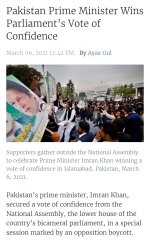
During the first vote of confidence, Imran Khan and PTI confidently claimed they held the majority in parliament, and Imran Khan successfully secured the vote. However, during the second motion, which was a no-confidence motion (NCM), PTI again insisted they had the majority, though they did not. Sheikh Rasheed, an ally of Imran Khan, advised dissolving the assemblies and calling for new elections, as he knew PTI had lost its majority. However, PTI refused this advice. The establishment also got involved, informing Imran Khan that he could either proceed with the NCM or dissolve the assemblies and opt for elections, as they too were aware he would be removed if the motion proceeded in the National Assembly. Despite this, Imran Khan chose not to listen to Sheikh Rasheed or the establishment. When the NCM was tabled, and the Speaker of the Assembly attempted to block the process, Imran Khan then tried to dissolve the assemblies and call for elections, which was against the law. The judiciary intervened, insisting that the NCM must proceed. Imran Khan made a critical mistake by not dissolving the assemblies before the NCM was tabled. Later, Imran Khan also made the decision to resign from the provincial assemblies, despite PTI leader Pervez Elahi advising against it. This decision led to PTI losing all political power and facing severe consequences, including heavy actions from the police, agencies, and the Shehbaz Sharif government.
At the time, General Bajwa attempted to contact Imran Khan, but Khan refused to engage with the military leadership. However, in 2024, PTI is now expressing a willingness to speak with the military, while simultaneously complaining that the military is not responsive. This reflects a pattern where PTI criticized the military's involvement in politics when it suited them, yet complained when the military did not intervene. Imran Khan was also repeatedly advised to negotiate with the opposition during his tenure, which he refused. Ironically, he is now engaging with figures like JUI-F chief Fazlur Rehman and Pakhtunkhwa Milli Awami Party leader Mahmood Khan Achakzai, whom he previously labeled as traitors but now views as allies. Furthermore, before coming to power, Imran Khan advocated for military intervention to remove corrupt leadership, yet now blames the military for political interference, showcasing an inconsistency in his stance.
After Imran Khan's removal, PTI's social media leadership launched an aggressive campaign against the army and ISI, labeling them as traitors and American agents. They called for junior generals to overthrow the senior leadership and orchestrated a well-planned propaganda effort, predicting the collapse of the Pakistan Army's chain of command. In response, DG ISI Nadeem Anjum remarked that while the people of Pakistan have every right to criticize the military, spreading false propaganda, calling them traitors and Mir Jafers, and attempting to turn the public against the institution is unacceptable.
Imran Khan made several promises regarding electoral reforms, improving the education system, updating state institutions, establishing a model police force, and implementing health reforms. However, during PTI's time in power, these promises were not fully realized for various reasons, including administrative challenges, political opposition, and shifting priorities. As a result, many of these reforms remained unfulfilled.
Throughout Pakistan's history, its agencies and establishment have closely monitored foreign relations. However, during Imran Khan's tenure, several key allies, such as the USA, Saudi Arabia, and the UAE, were reportedly displeased with his approach. His efforts to form an alliance of non-Arab nations strained relations with Saudi Arabia, which allegedly responded by threatening to demand early loan repayments and repatriate millions of Pakistani workers. Additionally, the USA was reportedly unhappy with Pakistan's neutral stance on the Ukraine-Russia conflict, especially as the US adopted an aggressive policy in support of Ukraine, General Bajwa had to intervene and publicly announce Pakistan's opposition to Russia's invasion of Ukraine, which was in direct contrast to the government's policy of neutrality. This move highlighted a clear divergence between the military's stance and the PTI government's foreign policy, reflecting the growing tensions between the two on handling international relations.
Imran Khan's efforts to strengthen ties with the Taliban, Iran, and Russia heightened tensions with the USA, which viewed these moves unfavorably. This, along with his neutral stance on the Ukraine-Russia conflict, contributed to a breakdown in relations with key allies like the USA, Saudi Arabia, and the UAE, who have historically played influential roles in Pakistan’s affairs. These actions also caused friction with the Pakistan Army, which traditionally maintains a cautious and balanced approach to foreign policy, further straining civil-military relations during Khan's tenure.
Your posts are well worth reading and pondering. Thank you very much for taking the time to inform the forum, especially the expats in the West, who secretly or openly still put ANY faith in a person like Imran Khan.