AMCA vs KAAN vs KF-21 India Turkey & Korea’s Fighter Jets Battle For Air Supremacy—Who Leads The Pack? OP-ED

Status
Not open for further replies.
China began producing the WS-5 in 1963


In 1971, the H-5 Aircraft with the WS5 engine had several taxings and the engine worked smoothly.

The development of WS5 ceased in may 1973. It was a successful try for the development of the turbofan engine
 
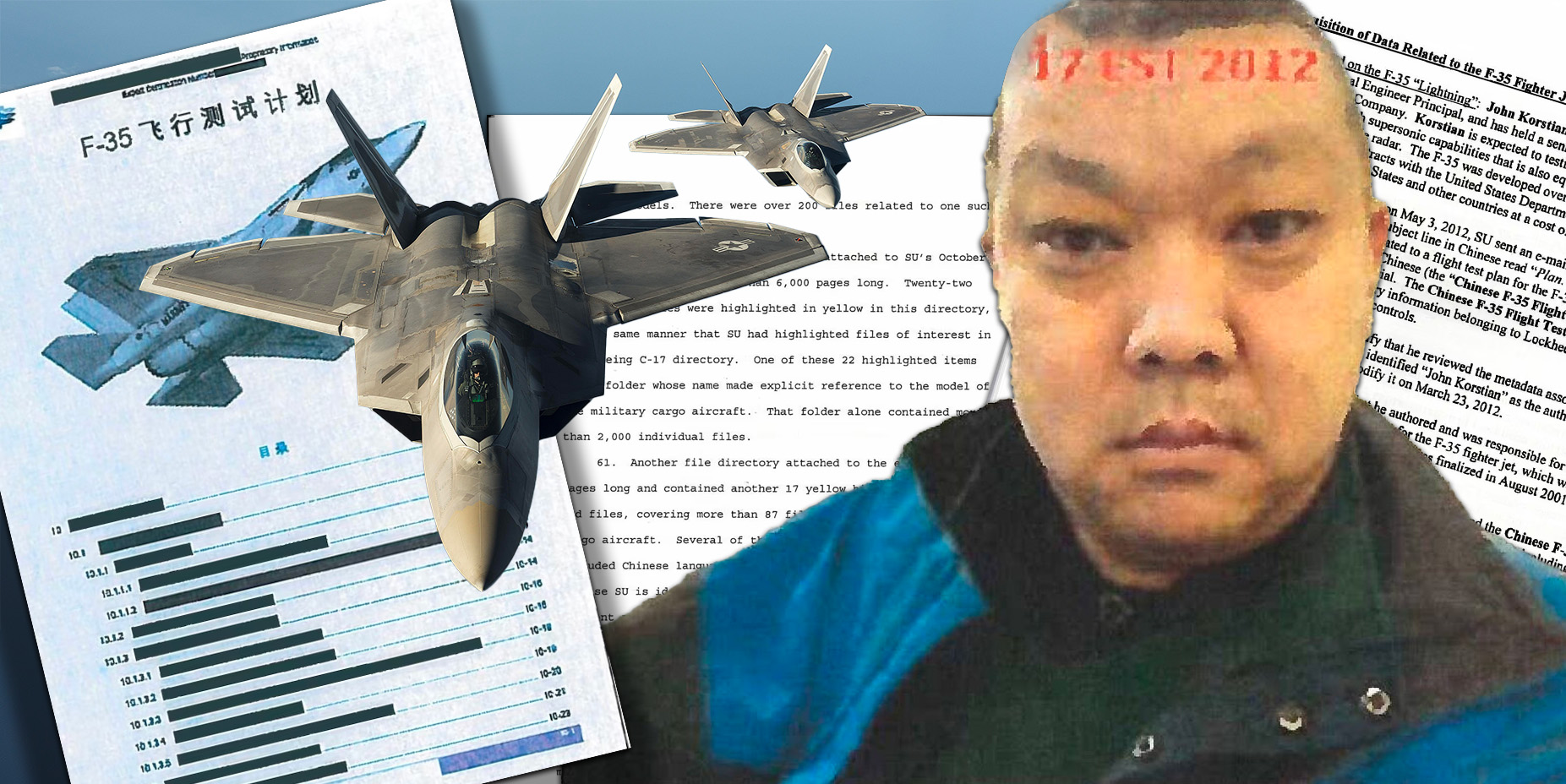
In the first half of this year, China sentenced an spy to death. This spy was convicted of stealing the technical data of J-35 from China and selling it to the KF-21 team of South Korea.


The man who stole America's stealth Fighter secrets for China

 
In 1971, the H-5 Aircraft with the WS5 engine had several taxings and the engine worked smoothly.

The development of WS5 ceased in may 1973. It was a successful try for the development of the turbofan engine

Yes. Perhaps completely opposite to what you imagine, China has been a top-tier air power since the Korean War.

In the Korean War, China a large number of excellent pilots who had fought against US ace pilots in the MiG Alley, and shot down thousands of American Air Force fighters, and also gained a complete aviation industry transferred from the Soviet Union.

By the 1960s, China was already at the forefront of world aviation technology and had a large air force with more than 2,000 jet fighters.

If you think China can, Turkey can too, and even Turkey's aviation industry base is better than China's. I suggest you learn more about the history of China's aviation industry development.
 
Yes. Perhaps completely opposite to what you imagine, China has been a top-tier air power since the Korean War.

In the Korean War, China a large number of excellent pilots who had fought against US ace pilots in the MiG Alley, and shot down thousands of American Air Force fighters, and also gained a complete aviation industry transferred from the Soviet Union.

By the 1960s, China was already at the forefront of world aviation technology and had a large air force with more than 2,000 jet fighters.

If you think China can, Turkey can too, and even Turkey's aviation industry base is better than China's. I suggest you learn more about the history of China's aviation industry development.
No point in debating with ultra-nationalistic fanboys from any country. If Turkey can reverse engineer the F110s (or even better make a F119 peer engine) in a few then bravo to them.

The more likely scenario is that Turkey gives up on the TF3500 and buys an American or European design (they might even set up a JV to manufacture some low-pressure components and rebrand said design as indigenous).

The main problem most industrialized medium sized countries (SK, Japan, Turkey etc.) face when they jump into the aviation industry (especially high-performance high thrust turbofans which are easily the most complex technology in this industry), is the continuous amount of capex and set-up cost required to keep up. You need incredible economy of scale to be able to sustain an advanced turbofan manufacturer and stay profitable. Even countries can only invest in loss-making business for so long before taxpayer money dries up.

The Americans are only able to keep 2 (PW & GE). GE cornered half of the civilian market while PW got almost all the recent US military contracts (F119 and F135). Europe is barely able to sustain 1.5 (RR & Safran) with Safran noticeably behind the big 3 western turbofan providers even after being popped up by the CFM JV with GE. Safran in fact went into the Superjet Turbofan JV with Russia because it wanted to maintain the scale of its hot section productions because they only got to work on the cold sections of CFM models (otherwise M88 was and still is the only currently in production Safran engine for which it handled the hot sections end-to-end). Engine manufacturers in medium sized economies like SK, Japan, Turkey will never be able to keep up in funding & turn a profit without access to the Boeing and Airbus dominated global civilian market. Even in the highly optimistic case that Turkey manufactures 500 KAANs over 20 years, that will mean 1,000 TF3500s in total production. I will be generous and add another 1,000 for other large UAV applications and spares which mean a maximum annual production rate of 100 TF3500 per year. This contrasts with China producing >500 WS10 / WS15s (and likely around the same number of WS19/21 models once J35 / large UAV productions ramp up) a year and GE, PW, RR easily producing >1,000 - 10,000 high thrust military and civilian turbofans. Yes, Turkey can be a subcontractor to GE / RR / PW and become extremely proficient in certain parts of a large turbofan similar to MTU / IHI / Avio, but it doesn't have the economy to sustain a viable high thrust turbofan manufacturer on its own (neither does the entire Middle East whose GDP, including Turkey's, is only around Japan's and Japan tried and failed to crack this market multiple times despite a much higher industrial & tech base).

India is the only country currently trying to crack this sector with any chance of success. Not because it is currently ahead technologically, but the Indian economy / air force in the future has the potential to provide enough orders on a continuous basis to its domestic turbofan manufacturer to reach the critical economy of scale where capex into the industry actually turns a profit.
 
It has, just not functional as Today. Block 3 is Stealth variant with upgrade work. KF21 is made with modular system.

Those who design are Phd, they are not stupid who want to redesign the plane again to reach 5th gen capability. You see KF21 looks fatty already, so some space in the belly is already there

The same of why it is produced with A2A combat for Block 1, with block 2 for Multi Role capability ( just system integration thing)

Step by step

To view this content we will need your consent to set third party cookies.
For more detailed information, see our cookies page.


Frankly, they should've waited until they have what the 'Block Ill' is supposed to be with its internal weapons capabilities instead of trying to sell or market an unknown and therefore unreliable aircraft. Yes, on it are the reliable GE engines are well known and trusted but essentially; in the world of fighter aircraft nothing else is.
This is being marketed as a 4.5 aircraft but nobody is going to want to purchase it when there are many other 4.5 proven airframes that they can know will operate as stated.
However, again, if they had waited until the Internal Weapons Bay variant was ready, that would give it a big push.
I don't see Korea selling many of these junk at all.
 
It is already look like 2012 December C103 design ( made by ADD Korea and Indonesian Aerospace). TD Phase.

View attachment 158002
View attachment 158003

F22 is of course the design inspiration, similar like US predator MALE UCAV that become inspiration of China, Turkish, Indonesia MALE UCAV design. The one that more resemble Predator MALE UCAV is Indonesian Aerospace Elang Hitam MALE UCAV among the three I mentioned


It’s all South Korean!
 
Everybody will see the first ignition by 2026 or 2027

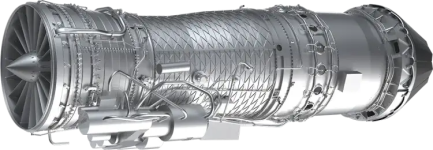
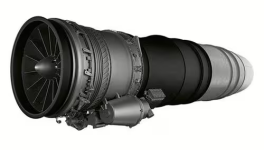
The TF35000 utilize high-temperature resistant super alloys, advanced coating, and cooling technologies with its unique design
1762445242207.png


We really want to see China's technological level of quality
I hope Pakistan buys China's J-35 and then compares it with KAAN / TF-35.000 Engine technologically in 2032-2035 period
 
Everybody will see the first ignition by 2026 or 2027

The TF35000 utilize high-temperature resistant super alloys, advanced coating, and cooling technologies with its unique design
View attachment 158034


We really want to see China's technological level of quality
I hope Pakistan buys China's J-35 and then compares it with KAAN / TF-35.000 Engine technologically in 2032-2035 period
TF35000 is not comparable to China's J-35 engines (WS-19, WS-21) since it is larger size than the engines on a J-35. Instead, it can compare with the WS-10C or WS-15.
 
No point in debating with ultra-nationalistic fanboys from any country. If Turkey can reverse engineer the F110s (or even better make a F119 peer engine) in a few then bravo to them.

The more likely scenario is that Turkey gives up on the TF3500 and buys an American or European design (they might even set up a JV to manufacture some low-pressure components and rebrand said design as indigenous).

The main problem most industrialized medium sized countries (SK, Japan, Turkey etc.) face when they jump into the aviation industry (especially high-performance high thrust turbofans which are easily the most complex technology in this industry), is the continuous amount of capex and set-up cost required to keep up. You need incredible economy of scale to be able to sustain an advanced turbofan manufacturer and stay profitable. Even countries can only invest in loss-making business for so long before taxpayer money dries up.

The Americans are only able to keep 2 (PW & GE). GE cornered half of the civilian market while PW got almost all the recent US military contracts (F119 and F135). Europe is barely able to sustain 1.5 (RR & Safran) with Safran noticeably behind the big 3 western turbofan providers even after being popped up by the CFM JV with GE. Safran in fact went into the Superjet Turbofan JV with Russia because it wanted to maintain the scale of its hot section productions because they only got to work on the cold sections of CFM models (otherwise M88 was and still is the only currently in production Safran engine for which it handled the hot sections end-to-end). Engine manufacturers in medium sized economies like SK, Japan, Turkey will never be able to keep up in funding & turn a profit without access to the Boeing and Airbus dominated global civilian market. Even in the highly optimistic case that Turkey manufactures 500 KAANs over 20 years, that will mean 1,000 TF3500s in total production. I will be generous and add another 1,000 for other large UAV applications and spares which mean a maximum annual production rate of 100 TF3500 per year. This contrasts with China producing >500 WS10 / WS15s (and likely around the same number of WS19/21 models once J35 / large UAV productions ramp up) a year and GE, PW, RR easily producing >1,000 - 10,000 high thrust military and civilian turbofans. Yes, Turkey can be a subcontractor to GE / RR / PW and become extremely proficient in certain parts of a large turbofan similar to MTU / IHI / Avio, but it doesn't have the economy to sustain a viable high thrust turbofan manufacturer on its own (neither does the entire Middle East whose GDP, including Turkey's, is only around Japan's and Japan tried and failed to crack this market multiple times despite a much higher industrial & tech base).

India is the only country currently trying to crack this sector with any chance of success. Not because it is currently ahead technologically, but the Indian economy / air force in the future has the potential to provide enough orders on a continuous basis to its domestic turbofan manufacturer to reach the critical economy of scale where capex into the industry actually turns a profit.

The EU does not have high thrust engines. Only the United States (F135, F119, F110), China (WS-15, WS-10), and Russia (AL41F1) have military high thrust engines in the world.

Many countries, such as France, the United Kingdom, Germany, Spain, Japan, South Korea, and others, have attempted to develop high thrust engines, but ultimately failed. Türkiye and India are still trying to enter the track.

We can summarize the reasons for the failure of high thrust engine projects in various countries.

Firstly, it requires top-level technological capabilities and a complete industrial ecosystem. It requires top-notch materials science, such as the manufacturing of single crystal blades, ceramic matrix composites, and other top-level materials. It also requires the ability for precision manufacturing and assembly. It also requires the system integration capability of hundreds of technical units including aerodynamics, thermodynamics, structural strength, etc. It also requires expensive and scarce facilities such as high-altitude platforms to conduct tens of thousands of hours of complete machine experiments.

Secondly, developing a high thrust engine requires a significant long-term investment of funds. Usually, an annual investment of over 2 billion US dollars is required, and a project typically lasts for more than 20 years. For example, the United States has invested over $100 billion in high thrust engine projects over the past 50 years.

Thirdly, due to the enormous investment of funds and time, the development process is very painful and unproductive, so the developing country needs a stable environment and national strategy that transcends economic and political cycles. Cannot be interrupted due to economic crisis or government changes.

If Turkey could successfully develop high-thrust engines in the short term, it would be a proud miracle indeed. But our current skepticism is logical. Because if Turkey really had such strength, it should be the British who bought fighter jets from Turkey, not the other way around. The British have already failed in the high-thrust engine, and Britain has failed three times (BS100, RB106, TSR-2).
 
Last edited:
The EU does not have high thrust engines. Only the United States (F135, F119, F110), China (WS-15, WS-10), and Russia (AL41F1) have military high thrust engines in the world.

Many countries, such as France, the United Kingdom, Germany, Spain, Japan, South Korea, and others, have attempted to develop high thrust engines, but ultimately failed. Türkiye and India are still trying to enter the track.

We can summarize the reasons for the failure of high thrust engine projects in various countries.

Firstly, it requires top-level technological capabilities and a complete industrial ecosystem. It requires top-notch materials science, such as the manufacturing of single crystal blades, ceramic matrix composites, and other top-level materials. It also requires the ability for precision manufacturing and assembly. It also requires the system integration capability of hundreds of technical units including aerodynamics, thermodynamics, structural strength, etc. It also requires expensive and scarce facilities such as high-altitude platforms to conduct tens of thousands of hours of complete machine experiments.

Secondly, developing a high thrust engine requires a significant long-term investment of funds. Usually, an annual investment of over 2 billion US dollars is required, and a project typically lasts for more than 20 years. For example, the United States has invested over $100 billion in high thrust engine projects over the past 50 years.

Thirdly, due to the enormous investment of funds and time, the development process is very painful and unproductive, so the developing country needs a stable environment and national strategy that transcends economic and political cycles. Cannot be interrupted due to economic crisis or government changes.

If Turkey could successfully develop high-thrust engines in the short term, it would be a proud miracle indeed. But our current skepticism is logical. Because if Turkey really had such strength, it should be the British who bought fighter jets from Turkey, not the other way around. The British have already failed in the high-thrust engine, and Britain has failed three times (BS100, RB106, TSR-2).

First I think the industry should be there first and can sustain their business in engine sector. This is the hardest part in my opinion. If the industry keep producing even some parts of engine for plane like Hanwa Korea for civilian market, then possibility is still there

 
Last edited:
First I think the industry should be there first and can sustain their business in engine sector. This is the hardest part in my opinion. If the industry keep producing even some parts of engine for plane like Hanwa Korea for civilian market, then possibility is still there

I think the most difficult part should be the political and economic stability. Actually, the technical aspect can be solved by international cooperation, and the investment and time can be solved by extending the development time.

However, the long-term large investment and zero output may lead to the termination of the project due to the replacement of the government or the economic downturn cycle, and all the efforts will be wasted. This is also the main reason for the failure of European, Japanese, and South Korean countries.

To be honest, I think Turkey should adopt medium-thrust engines like EU countries to promote the KAAN project. It is somewhat radical and risky to directly adopt the design of large thrust engines.
 
To be honest, I think Turkey should adopt medium-thrust engines like EU countries to promote the KAAN project. It is somewhat radical and risky to directly adopt the design of large thrust engines.

Turkiye has enough technology to develop turbofan Engine similar to GE F-110

since the KAAN is a 5th gen Fighter Jet, We are developing a more advanced engine than the F-110 and this is not a problem for the Turkish Defense Industry, but it just takes time for 2032-2035 period
 
If Turkey could successfully develop high-thrust engines in the short term, it would be a proud miracle indeed. But our current skepticism is logical. Because if Turkey really had such strength, it should be the British who bought fighter jets from Turkey, not the other way around. The British have already failed in the high-thrust engine, and Britain has failed three times (BS100, RB106, TSR-2).
The UK has far better technology than China

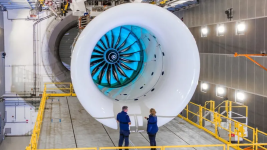
Dou you know what about ROLLS ROYCE with ultrafan Engine ( 85.000 - 110.000 lbs of thrust ) the largest in the world ?

1762491305010.png


China's ACAE CJ-1000A ( 44,000 lbf ) high-bypass turbofan Engine still under development

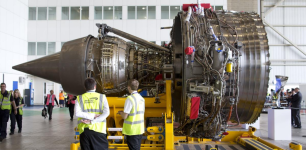
ROLLS ROYCE Trent XWB high-bypass turbofan Engine ( 83,000 lbf ) in service
1762492046795.png

Rolls-Royce is teaming up with IHI Corporation and Avio Aero to power the future of air combat through the Global Combat Air Programme (GCAP)

The UK-Italy-Japan develops new gen turbofan Engine
1762492512043.png


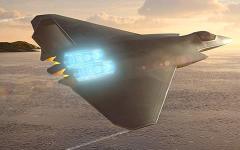
Also France , Germany , Spain develops the New Generation Fighter Engine (NGFE)
1762493938985.png


Europe and Turkiye could join the big club in coming years with USA , Russia and China

The UK-Italy : GCAP
France , Germany : FCAS
Turkiye : KAAN with TF-35.000 Engine
 
Last edited:
The UK has far better technology than China

Dou you know what about ROLLS ROYCE with ultrafan Engine ( 85.000 - 110.000 lbs of thrust ) the largest in the world ?

View attachment 158100


China's ACAE CJ-1000A ( 44,000 lbf ) high-bypass turbofan Engine still under development

ROLLS ROYCE Trent XWB high-bypass turbofan Engine ( 83,000 lbf ) in service
View attachment 158102

Rolls-Royce is teaming up with IHI Corporation and Avio Aero to power the future of air combat through the Global Combat Air Programme (GCAP)

The UK-Italy-Japan develops new gen turbofan Engine
View attachment 158103


Also France , Germany , Spain develops the New Generation Fighter Engine (NGFE)
View attachment 158108


Europe and Turkiye could join the big club in coming years with USA , Russia and China

The UK-Italy : GCAP
France , Germany : FCAS
Turkiye : KAAN with TF-35.000 Engine

Firstly, RR's UltraFan is only an engine expected to enter the civilian aircraft market in the 2030s, rather than a military engine already in service. And this project has entered a dormant state and is likely to be cancelled.

Secondly, UltraFan is an engine designed for wide body aircraft. This type of engine is suitable for civilian aircraft of Airbus and Boeing.

Thirdly, UltraFan's technological superiority lies in fuel efficiency, low noise, reliability, and long lifespan. It cannot be used for military engines!

For example, this type of engine has a very low thrust to weight ratio and does not consider stealth at all. Also, the military engine channel ratio is usually lower than 0.4, while the civilian engine channel ratio is usually higher than 15.

It is absurd for you to use UltraFan to prove the technology of British military engines. Similar to using RR's car to prove the British tank manufacturing process.
 
It is absurd for you to use UltraFan to prove the technology of British military engines. Similar to using RR's car to prove the British tank manufacturing process.

I showed you British engine technologies
and dont worry , The UK led consortium has started developing next gen turbofan Engine to power the GCAP Fighter Jet

The UK has enough technology and experience to do it
 
Last edited:
Status
Not open for further replies.

Users who are viewing this thread

Back
Top