No point in debating with ultra-nationalistic fanboys from any country. If Turkey can reverse engineer the F110s (or even better make a F119 peer engine) in a few then bravo to them.
The more likely scenario is that Turkey gives up on the TF3500 and buys an American or European design (they might even set up a JV to manufacture some low-pressure components and rebrand said design as indigenous).
The main problem most industrialized medium sized countries (SK, Japan, Turkey etc.) face when they jump into the aviation industry (especially high-performance high thrust turbofans which are easily the most complex technology in this industry), is the continuous amount of capex and set-up cost required to keep up. You need incredible economy of scale to be able to sustain an advanced turbofan manufacturer and stay profitable. Even countries can only invest in loss-making business for so long before taxpayer money dries up.
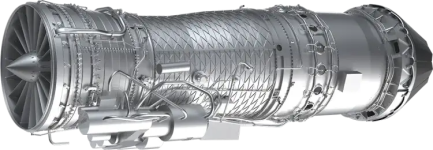
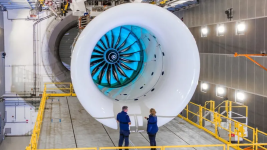
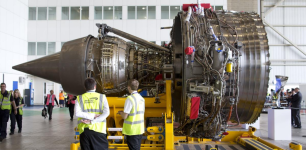
The Americans are only able to keep 2 (PW & GE). GE cornered half of the civilian market while PW got almost all the recent US military contracts (F119 and F135). Europe is barely able to sustain 1.5 (RR & Safran) with Safran noticeably behind the big 3 western turbofan providers even after being popped up by the CFM JV with GE. Safran in fact went into the Superjet Turbofan JV with Russia because it wanted to maintain the scale of its hot section productions because they only got to work on the cold sections of CFM models (otherwise M88 was and still is the only currently in production Safran engine for which it handled the hot sections end-to-end). Engine manufacturers in medium sized economies like SK, Japan, Turkey will never be able to keep up in funding & turn a profit without access to the Boeing and Airbus dominated global civilian market. Even in the highly optimistic case that Turkey manufactures 500 KAANs over 20 years, that will mean 1,000 TF3500s in total production. I will be generous and add another 1,000 for other large UAV applications and spares which mean a maximum annual production rate of 100 TF3500 per year. This contrasts with China producing >500 WS10 / WS15s (and likely around the same number of WS19/21 models once J35 / large UAV productions ramp up) a year and GE, PW, RR easily producing >1,000 - 10,000 high thrust military and civilian turbofans. Yes, Turkey can be a subcontractor to GE / RR / PW and become extremely proficient in certain parts of a large turbofan similar to MTU / IHI / Avio, but it doesn't have the economy to sustain a viable high thrust turbofan manufacturer on its own (neither does the entire Middle East whose GDP, including Turkey's, is only around Japan's and Japan tried and failed to crack this market multiple times despite a much higher industrial & tech base).
India is the only country currently trying to crack this sector with any chance of success. Not because it is currently ahead technologically, but the Indian economy / air force in the future has the potential to provide enough orders on a continuous basis to its domestic turbofan manufacturer to reach the critical economy of scale where capex into the industry actually turns a profit.
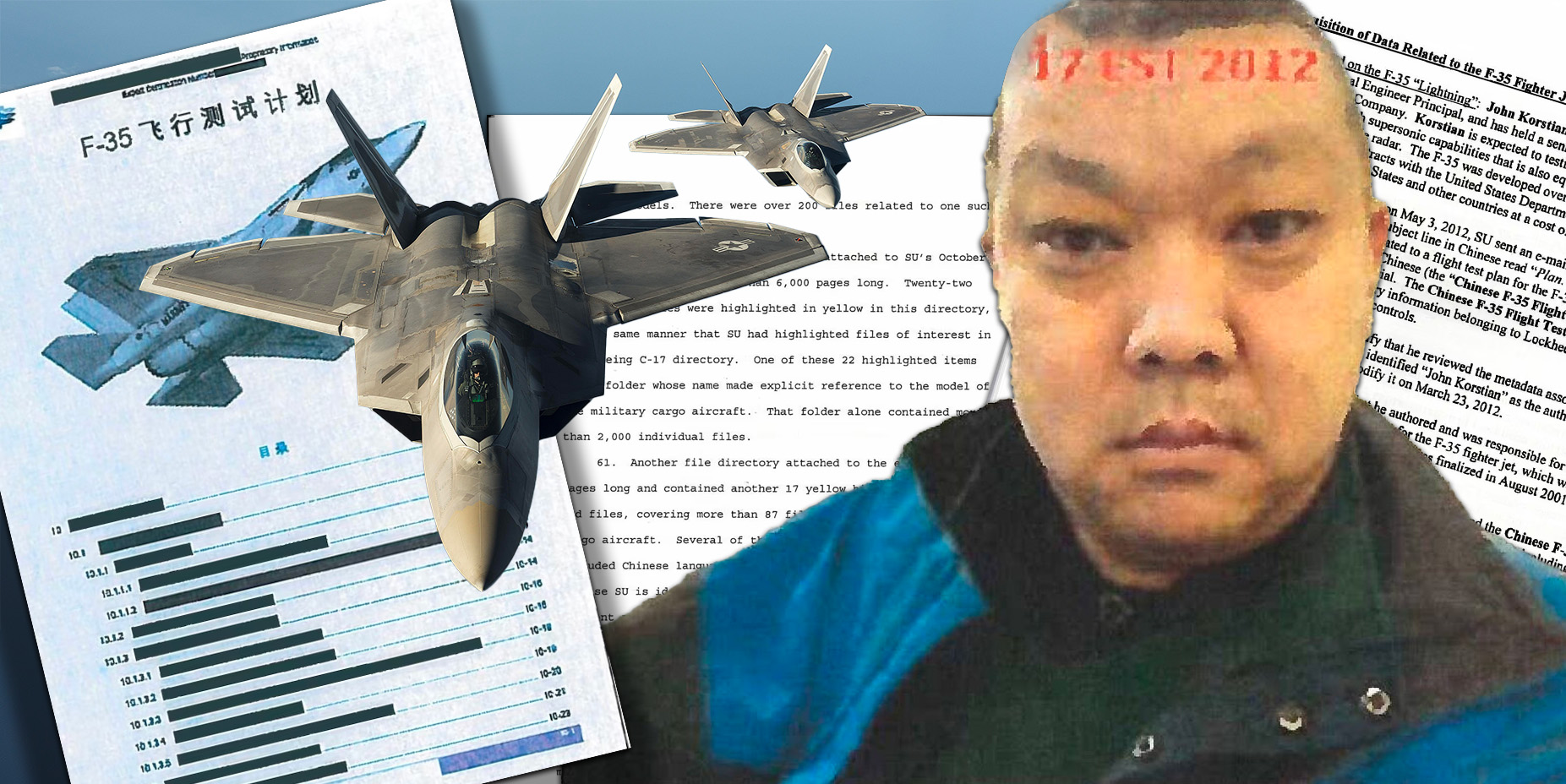
The EU does not have high thrust engines. Only the United States (F135, F119, F110), China (WS-15, WS-10), and Russia (AL41F1) have military high thrust engines in the world.
Many countries, such as France, the United Kingdom, Germany, Spain, Japan, South Korea, and others, have attempted to develop high thrust engines, but ultimately failed. Türkiye and India are still trying to enter the track.
We can summarize the reasons for the failure of high thrust engine projects in various countries.
Firstly, it requires top-level technological capabilities and a complete industrial ecosystem. It requires top-notch materials science, such as the manufacturing of single crystal blades, ceramic matrix composites, and other top-level materials. It also requires the ability for precision manufacturing and assembly. It also requires the system integration capability of hundreds of technical units including aerodynamics, thermodynamics, structural strength, etc. It also requires expensive and scarce facilities such as high-altitude platforms to conduct tens of thousands of hours of complete machine experiments.
Secondly, developing a high thrust engine requires a significant long-term investment of funds. Usually, an annual investment of over 2 billion US dollars is required, and a project typically lasts for more than 20 years. For example, the United States has invested over $100 billion in high thrust engine projects over the past 50 years.
Thirdly, due to the enormous investment of funds and time, the development process is very painful and unproductive, so the developing country needs a stable environment and national strategy that transcends economic and political cycles. Cannot be interrupted due to economic crisis or government changes.
If Turkey could successfully develop high-thrust engines in the short term, it would be a proud miracle indeed. But our current skepticism is logical. Because if Turkey really had such strength, it should be the British who bought fighter jets from Turkey, not the other way around. The British have already failed in the high-thrust engine, and Britain has failed three times (BS100, RB106, TSR-2).