I felt this article was apt for sharing here.
Rafales, Tejas and us
Fahd Husain November 23, 2025
The writer is a journalist, columnist & TV anchor
Crash is a crash. But not always.
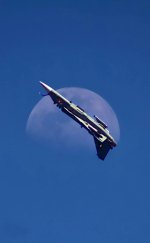
This week an Indian air force Tejas jet crashed during the Dubai air show. Tragically, the pilot lost his life. Six months ago, Pakistan Air Force pilots shot down at least three IAF Rafale jets and four more aircraft, and they crashed somewhere in Occupied Kashmir or nearby areas. The reactions to these different crashes from Pakistanis and Indians tell a story that encapsulates the complicated, convoluted and yet deceptively predictable relationship between the two neighbours.
The predictability part is fuelled by BJP government's ideologically drenched hate for Pakistan. Its leaders' rhetorical aggression, while dangerously inflammable, has become yawn-inducingly boring. To add some levity to the equation, now Indian generals have also jumped into the Maula Jutt chest-thumping routine. We stand amused.
Such amusement comes easy after witnessing Indian politicians, soldiers, journalists and frothing-at-the-mouth tele-warriors spin circles around themselves over Pakistan's downing of their jets in May. We derive vicarious pleasure in watching wannabe bullies get their comeuppance.
There is a certain linearity in the logic of war. It transcends natural human compassion. Indians created a war hysteria in April by other-ising Pakistan in a manner that spilled over from simple nationalism to outright bigotry. Inebriated by their own delusions of misplaced grandeur, and befooled by their own caricature of Pakistan, they initiated a conflict whose outcome has boomeranged on them with consequences that have diminished India in ways few could have imagined. The linearity of war's logic left little space for nuance.
No one sheds tears when a bully is punched in the nose. When we shot down seven Indian jets, most Pakistanis wanted ten more downed. Twenty more. Indians had invaded across the border, on our land, in our home, and we needed to punish them. So, we did. As the Rafales and SU's and other jets plummeted to the ground, our hearts swelled with pride. After being threatened by India for years, and being demonised, and mocked, this was Pakistan paying back.
But this payback was not fuelled by organic hate.
Here's where our relationship becomes so frustratingly complicated. This week, such complexity reared its head again. And as in most things Pakistani and Indian, it did so in tragedy.
The Indian jet Tejas' crash in Dubai elicited a very different reaction in Pakistan. There were some among us who preferred to duplicate the Rafales crash responses, but the majority expressed sorrow. The young Indian pilot who lost his life in the crash, and who was obviously training to fight against Pakistan one day — his death brought no joy. Death never should. We may find it difficult to relate to the Rafales' pilots who attacked our home, but this young Indian pilot was not aggressing against us. We can relate to him, and to his family. We should mourn with them. For him. A family devastated by the loss of a loved one, a father and mother having to bury their son, a wife widowed, a son or daughter orphaned, this pain recognises no borders. It cuts deep. We know. We are losing brave soldiers every day.
The linearity of war's logic burns like sulfur when guns are blazing, but dissolves into harmless vapour once the last bullet is fired.
Which is also why we all smiled when we saw Indian air force officers visiting the PAF stall at the Dubai air show. There was something surreal, something coldly warm about two enemies, air warriors, interacting like normal human beings, far, far away from the noise of ideologically drenched rhetoric and chest thumping bellicosity. These maddening, frustrating, infuriating and heartwarming contradictions that define Pakistan and India remind us — or those of us who are open to such reminding — that there is an alternative to this, us, now.
But such alternative is an idea whose time has not come. To get to how we were with the Tejas, we first need to finish what we did with the Rafales. It is a harsh reality, but there is no way around it. Before India gets to solve its Pakistan problem, we need to solve our India problem. The solution — as sadly framed by New Delhi — will be found not in boardrooms, newsrooms or air shows, but in the arena where weapons speak louder than words.
As the distant rumble of conflict gets louder, the logic of a negotiated settlement retreats into the background. Indian Prime Minister Narendra Modi's decisive victory in the Bihar elections is seen by many as a validation of his belligerence towards Pakistan. This could only portend trouble. But two things could redefine such trouble.
First, Modi has passed the first major political stress test after the setback in last year's general elections. Today the Rahul Gandhi-led Congress poses little challenge to BJP's absolute dominance of the Indian electorate. Important state elections are due in the coming months, but none is expected to change the reality that the Indian opposition is in no place to challenge Modi. There is little pressure on him to prove his muscular credentials by initiating another misadventure against Pakistan.
Second, Pakistan is growing more muscular by the day in terms of its military and diplomatic strength. The May conflict has reshaped geopolitical dynamics of the region in our favour. Indians recognise it even though they may not vocalise it. This puts brakes on the logic of reckless aggression.
We are living in a new normal where nothing appears normal. Two nuclear armed states exchanging missiles tend to - in their own abnormal way — redefine the definition of normalcy. The logic of reckless aggression can run its course. But every fire does, at some point, burn itself out. Pakistan and India know that day is not today, and not tomorrow, and perhaps not for a very long time. But every so often, we do remind ourselves that one day that day will come. This is the logic of inevitability.
Crash is normally a crash. But not always.