Saudi Arabia strategic Projects: news, discussions & updates

Italy: We are ready to deepen defense cooperation with Saudi Arabia

The Italian ambassador in Riyadh confirmed that his country "is ready to deepen its defense cooperation with Saudi Arabia in full line with the goals of (Vision 2030) for localization, industrial capacity development and skills building," indicating that "Italian companies participate with their Saudi partners in a wide range of systems in which Italy has internationally recognized expertise, including naval platforms, helicopters, electronic defense and advanced surveillance technologies."

In this context, the recent "Italian Industry Days" in Riyadh - organized in cooperation between the two countries' defense ministries - provided an important platform for showcasing Italian capabilities and discussing forms of practical cooperation, according to the ambassador.

He continued by saying: "This event allowed Italian companies to communicate directly with institutions and industry in the Kingdom, and explore opportunities in areas such as localization, joint training, industrial development, and solid foundations, and both sides are committed to strengthening this cooperation over time".
 
To view this content we will need your consent to set third party cookies.
For more detailed information, see our cookies page.
 
Am I being hypocritical if I work for a beer distributor and I don’t agree with this at all
well.....if you want Westerners, Russians, East Asians, Indians to visit your country and invest in it, you gotta let the alcohol flow man. I think Saudis intend to restrict this to specific places like company campuses and the Red Sea resorts that are under development.
 
well.....if you want Westerners, Russians, East Asians, Indians to visit your country and invest in it, you gotta let the alcohol flow man. I think Saudis intend to restrict this to specific places like company campuses and the Red Sea resorts that are under development.
Yeah but I feel that’s pretty much the start of something different give it a decade or shorter again I’m more of a liberal secular kind of guy but certain places always seemed off limits the times my man
 
Yeah but I feel that’s pretty much the start of something different give it a decade or shorter again I’m more of a liberal secular kind of guy but certain places always seemed off limits the times my man
Not at all..alcohol was available in the capital but restricted to inside foreigners' compounds..
 
Not at all..alcohol was available in the capital but restricted to inside foreigners' compounds..
No I know just saying again I know I’m being hypocritical but just saying
 
To view this content we will need your consent to set third party cookies.
For more detailed information, see our cookies page.
 

Saudi Arabia’s AMAK claims finding 11 million tonnes of gold, other mineral resources​

AMAK has drilled more than 27,000 meters as part of an intensive programme that began in February 2025.

Sakina Fatima Follow on Twitter| Published: 30th November 2025 9:18 pm IST| Updated: 30th November 2025 10:03 pm IST

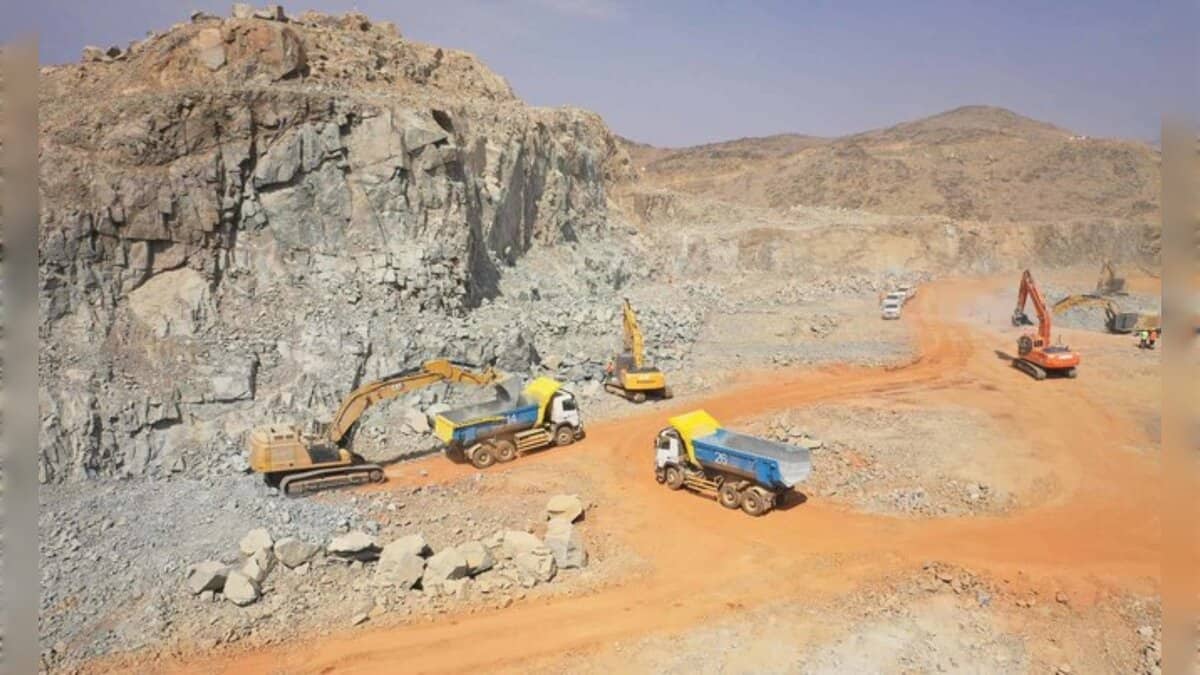
Aerial view of heavy machinery and trucks operating at a mining site in a rocky desert area in Saudi Arabia

Heavy machinery and trucks operate at a mining site in Saudi Arabia’s Najran region. Photo: AMAK/X

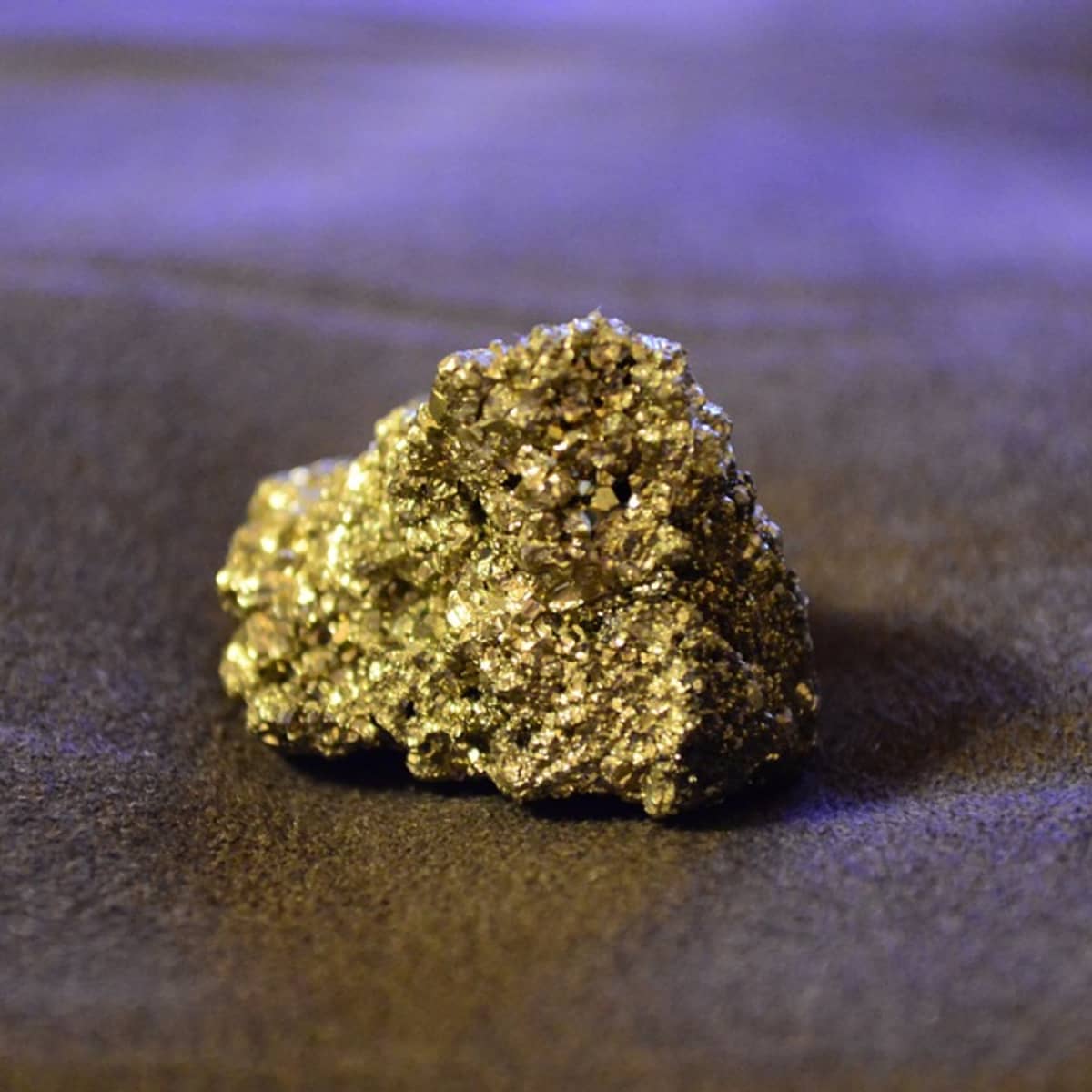
Almasane Alkobra Mining Company (AMAK), one of Saudi Arabia’s leading mining operators, has claimed the identification of around 11 million tonnes of potential economic mineral resources within one of its exploration licences in the Najran region.

The resources include gold, copper, zinc and silver ores, according to a disclosure published on Saudi Stock Exchange (Tadawul) website and an update shared on the official LinkedIn page.

Source: Saudi Stock Exchange

AMAK began exploration immediately after receiving the licence in September 2024. An intensive drilling programme launched in February 2025 has covered less than 10 percent of the licensed area so far, with more than 27,000 metres drilled. The company said early assessments indicate strong potential for additional resources as exploration continues.

In an interview with Al Arabiya Business, Chief Executive Officer (CEO) Jeffrey MacDonald-Day said the discovery aligns with AMAK’s long-term strategy to expand its contribution to the Kingdom’s mining sector.

He continued,“We have started exploring a small part of these resources, and this confirms that the resources will continue to increase to reach about 20 million tonnes. This also confirms our investment plan and gives sustainability to our operations in the near and distant future as well.”

To view this content we will need your consent to set third party cookies.
For more detailed information, see our cookies page.


MacDonald-Day added that the expected growth in resources will lead to increased company investment and expansion of AMAK’s factories to significantly boost production. He noted that only 10 percent of the licensed area has been excavated, highlighting substantial opportunities to advance development work and uncover additional mineral resources.

The exploration site lies roughly 100 kilometres from AMAK’s existing processing complex, a distance the company says will enhance future operational efficiency through shared infrastructure.

These developments come as the global mining industry faces mounting pressure from rising costs, commodity price volatility, and stricter environmental and regulatory demands. According to an S&P report, Saudi Arabia is bucking the international slowdown by positioning mining as a central pillar of Vision 2030, continuing to accelerate sector growth despite challenges affecting other markets.

New gold exploitation licence​

In a statement on Sunday, November 30, AMAK also announced that it has been granted a 10-year mining exploitation licence for the Katina site in Najran by the Ministry of Industry and Mineral Resources.

The licence covers 9.84 square kilometres and focuses on the extraction of gold ore—an expansion AMAK says reinforces its growth strategy and supports the momentum of Saudi Arabia’s rapidly developing mining sector.

Next steps​

Further geophysical surveys and additional drilling are planned throughout 2026, with a JORC-compliant mineral resources report expected in the second half of the year. AMAK has also begun studies to convert the exploration licence into a mining licence, with findings due next year.

Established in 2008 and listed on Tadawul, AMAK is licensed by the Ministry of Industry and Mineral Resources and is regarded as one of Saudi Arabia’s key players in the mining sector.


Absolutely amazing but not that surprising.

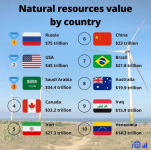
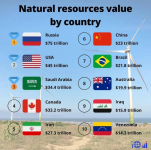
Just a little reminder:
1764848309982.png


And this part of Western KSA/Hijaz/Western Arabian Shield is one of the richest areas in the world in terms of mineral wealth.

To view this content we will need your consent to set third party cookies.
For more detailed information, see our cookies page.


In fact one of the oldest recorded gold mines in the world was/is located in Hijaz. Operating for over 5.000 years.


To view this content we will need your consent to set third party cookies.
For more detailed information, see our cookies page.
 

From Oil to Ores: Saudi Arabia's Mining Pivot Gains Momentum with AMAK's 11 Million‑Tonne Discovery

Saudi Arabia's mineral wealth expands as Vision 2030 strategy accelerates​

By Bernadette B. Tixon
Published 30 November 2025, 10:56 PM GMT

Saudi Arabia

Saudi Arabia’s AMAK identifies vast mineral reserves in Najran, reinforcing the Kingdom’s Vision 2030 mining ambitions. AFP NEWS

Saudi Arabia's Almasane Alkobra Mining Company (AMAK) has claimed the identification of around 11 million tonnes of mineral resources in the Najran region, marking a significant step in the Kingdom's shift from oil dependency to mining diversification. The discovery, which includes gold, copper, zinc, and silver ores, was disclosed on the Saudi Stock Exchange (Tadawul) and shared through AMAK's official LinkedIn page.

The announcement underscores the growing role of mining in Saudi Arabia's Vision 2030 strategy, which aims to broaden the economic base beyond hydrocarbons. With global mining markets facing rising costs, commodity price volatility, and stricter environmental demands, Saudi Arabia is positioning itself as a rare growth story in the sector.

Exploration and Early Findings​

AMAK began exploration immediately after receiving its licence in September 2024. By February 2025, the company had launched an intensive drilling programme, covering less than 10 per cent of the licensed area but already drilling more than 27,000 metres. Early assessments suggest strong potential for additional resources as exploration continues.

Chief Executive Officer Jeffrey MacDonald‑Day told Al Arabiya Business that the discovery aligns with AMAK's long‑term strategy to expand its contribution to the Kingdom's mining sector. He said: 'We have started exploring a small part of these resources, and this confirms that the resources will continue to increase to reach about 20 million tonnes. This also confirms our investment plan and gives sustainability to our operations in the near and distant future as well.'

MacDonald‑Day added that the expected growth in resources would lead to increased company investment and expansion of AMAK's factories, significantly boosting production. He noted that only a fraction of the licensed area has been excavated, highlighting substantial opportunities to advance development work and uncover further mineral reserves.

Strategic Positioning​

The exploration site lies roughly 100 kilometres from AMAK's existing processing complex, a proximity the company says will enhance future operational efficiency through shared infrastructure. This logistical advantage is expected to support the scaling up of operations as new resources are confirmed.

Saudi Arabia's mining ambitions are unfolding against a backdrop of global industry challenges. According to an S&P report, while many markets are slowing, the Kingdom is accelerating sector growth by making mining a central pillar of Vision 2030. The discovery by AMAK reinforces this momentum, signalling that Saudi Arabia intends to compete in the global resource race.

To view this content we will need your consent to set third party cookies.
For more detailed information, see our cookies page.


New Licence and Next Steps​

On 30 November, AMAK also announced that it had been granted a 10‑year mining exploitation licence for the Katina site in Najran by the Ministry of Industry and Mineral Resources. Covering 9.84 square kilometres, the licence focuses on gold extraction and represents a further expansion of AMAK's growth strategy. This focus on gold also positions the Kingdom to strengthen its role within global supply chains for precious metals.

Further geophysical surveys and drilling are planned throughout 2026, with a JORC‑compliant mineral resources report expected in the second half of the year. AMAK has also begun studies to convert its exploration licence into a mining licence, with findings due next year.

Established in 2008 and listed on Tadawul, AMAK is licensed by the Ministry of Industry and Mineral Resources and is regarded as one of Saudi Arabia's key players in the mining sector. Its latest discovery not only strengthens its own portfolio but also adds weight to Saudi Arabia's broader ambition to pivot from oil to ores, sending a clear signal to investors that mining is becoming a cornerstone of its future economy.


Gold always played a very important role in Arabian culture.


Italian "Massimo" website:#Saudi Arabia has discovered gold deposits extending 125 kilometers in the Mecca region, in one of its largest modern discoveries, which enhances the development of the mining sector and economic diversification

To view this content we will need your consent to set third party cookies.
For more detailed information, see our cookies page.

Another discovery? KSA is the gift that keeps giving. No wonder that it is the homeland of numerous Prophets. Allah (swt) has blessed this land without a doubt.

By practically every single climatic forecast, KSA/Arabia will return to being a very lush place once again within the next 10.000 years as well.

Saudi Arabia’s AMAK claims finding 11 million tonnes of gold, other mineral resources

AMAK has drilled more than 27,000 meters as part of an intensive programme that began in February 2025.

Sakina Fatima Follow on Twitter| Published: 30th November 2025 9:18 pm IST| Updated: 30th November 2025 10:03 pm IST

Aerial view of heavy machinery and trucks operating at a mining site in a rocky desert area in Saudi Arabia

Heavy machinery and trucks operate at a mining site in Saudi Arabia’s Najran region. Photo: AMAK/X

Almasane Alkobra Mining Company (AMAK), one of Saudi Arabia’s leading mining operators, has claimed the identification of around 11 million tonnes of potential economic mineral resources within one of its exploration licences in the Najran region.

The resources include gold, copper, zinc and silver ores, according to a disclosure published on Saudi Stock Exchange (Tadawul) website and an update shared on the official LinkedIn page.

Source: Saudi Stock Exchange

AMAK began exploration immediately after receiving the licence in September 2024. An intensive drilling programme launched in February 2025 has covered less than 10 percent of the licensed area so far, with more than 27,000 metres drilled. The company said early assessments indicate strong potential for additional resources as exploration continues.

In an interview with Al Arabiya Business, Chief Executive Officer (CEO) Jeffrey MacDonald-Day said the discovery aligns with AMAK’s long-term strategy to expand its contribution to the Kingdom’s mining sector.

He continued,“We have started exploring a small part of these resources, and this confirms that the resources will continue to increase to reach about 20 million tonnes. This also confirms our investment plan and gives sustainability to our operations in the near and distant future as well.”

To view this content we will need your consent to set third party cookies.
For more detailed information, see our cookies page.


MacDonald-Day added that the expected growth in resources will lead to increased company investment and expansion of AMAK’s factories to significantly boost production. He noted that only 10 percent of the licensed area has been excavated, highlighting substantial opportunities to advance development work and uncover additional mineral resources.

The exploration site lies roughly 100 kilometres from AMAK’s existing processing complex, a distance the company says will enhance future operational efficiency through shared infrastructure.

These developments come as the global mining industry faces mounting pressure from rising costs, commodity price volatility, and stricter environmental and regulatory demands. According to an S&P report, Saudi Arabia is bucking the international slowdown by positioning mining as a central pillar of Vision 2030, continuing to accelerate sector growth despite challenges affecting other markets.

New gold exploitation licence​

In a statement on Sunday, November 30, AMAK also announced that it has been granted a 10-year mining exploitation licence for the Katina site in Najran by the Ministry of Industry and Mineral Resources.

The licence covers 9.84 square kilometres and focuses on the extraction of gold ore—an expansion AMAK says reinforces its growth strategy and supports the momentum of Saudi Arabia’s rapidly developing mining sector.

Next steps​

Further geophysical surveys and additional drilling are planned throughout 2026, with a JORC-compliant mineral resources report expected in the second half of the year. AMAK has also begun studies to convert the exploration licence into a mining licence, with findings due next year.

Established in 2008 and listed on Tadawul, AMAK is licensed by the Ministry of Industry and Mineral Resources and is regarded as one of Saudi Arabia’s key players in the mining sector.


Absolutely amazing but not that surprising.

Just a little reminder:

1764850865865.png


And this part of Western KSA/Hijaz/Western Arabian Shield is one of the richest areas in the world in terms of mineral wealth.

To view this content we will need your consent to set third party cookies.
For more detailed information, see our cookies page.


In fact one of the oldest recorded gold mines in the world was/is located in Hijaz. Operating for over 5.000 years.

From Oil to Ores: Saudi Arabia's Mining Pivot Gains Momentum with AMAK's 11 Million‑Tonne Discovery

Saudi Arabia's mineral wealth expands as Vision 2030 strategy accelerates​

By Bernadette B. Tixon
Published 30 November 2025, 10:56 PM GMT

Saudi Arabia

Saudi Arabia’s AMAK identifies vast mineral reserves in Najran, reinforcing the Kingdom’s Vision 2030 mining ambitions. AFP NEWS

Saudi Arabia's Almasane Alkobra Mining Company (AMAK) has claimed the identification of around 11 million tonnes of mineral resources in the Najran region, marking a significant step in the Kingdom's shift from oil dependency to mining diversification. The discovery, which includes gold, copper, zinc, and silver ores, was disclosed on the Saudi Stock Exchange (Tadawul) and shared through AMAK's official LinkedIn page.

The announcement underscores the growing role of mining in Saudi Arabia's Vision 2030 strategy, which aims to broaden the economic base beyond hydrocarbons. With global mining markets facing rising costs, commodity price volatility, and stricter environmental demands, Saudi Arabia is positioning itself as a rare growth story in the sector.

Exploration and Early Findings​

AMAK began exploration immediately after receiving its licence in September 2024. By February 2025, the company had launched an intensive drilling programme, covering less than 10 per cent of the licensed area but already drilling more than 27,000 metres. Early assessments suggest strong potential for additional resources as exploration continues.

Chief Executive Officer Jeffrey MacDonald‑Day told Al Arabiya Business that the discovery aligns with AMAK's long‑term strategy to expand its contribution to the Kingdom's mining sector. He said: 'We have started exploring a small part of these resources, and this confirms that the resources will continue to increase to reach about 20 million tonnes. This also confirms our investment plan and gives sustainability to our operations in the near and distant future as well.'

MacDonald‑Day added that the expected growth in resources would lead to increased company investment and expansion of AMAK's factories, significantly boosting production. He noted that only a fraction of the licensed area has been excavated, highlighting substantial opportunities to advance development work and uncover further mineral reserves.

Strategic Positioning​

The exploration site lies roughly 100 kilometres from AMAK's existing processing complex, a proximity the company says will enhance future operational efficiency through shared infrastructure. This logistical advantage is expected to support the scaling up of operations as new resources are confirmed.

Saudi Arabia's mining ambitions are unfolding against a backdrop of global industry challenges. According to an S&P report, while many markets are slowing, the Kingdom is accelerating sector growth by making mining a central pillar of Vision 2030. The discovery by AMAK reinforces this momentum, signalling that Saudi Arabia intends to compete in the global resource race.

To view this content we will need your consent to set third party cookies.
For more detailed information, see our cookies page.


New Licence and Next Steps​

On 30 November, AMAK also announced that it had been granted a 10‑year mining exploitation licence for the Katina site in Najran by the Ministry of Industry and Mineral Resources. Covering 9.84 square kilometres, the licence focuses on gold extraction and represents a further expansion of AMAK's growth strategy. This focus on gold also positions the Kingdom to strengthen its role within global supply chains for precious metals.

Further geophysical surveys and drilling are planned throughout 2026, with a JORC‑compliant mineral resources report expected in the second half of the year. AMAK has also begun studies to convert its exploration licence into a mining licence, with findings due next year.

Established in 2008 and listed on Tadawul, AMAK is licensed by the Ministry of Industry and Mineral Resources and is regarded as one of Saudi Arabia's key players in the mining sector. Its latest discovery not only strengthens its own portfolio but also adds weight to Saudi Arabia's broader ambition to pivot from oil to ores, sending a clear signal to investors that mining is becoming a cornerstone of its future economy.


Gold always played a very important role in Arabian culture.


Saudi Arabia approves 2026 budget with $306bn in projected revenues​

Saudi Arabia’s Crown Prince Mohammed bin Salman approved the Kingdom’s 2026 budget during a Cabinet meeting in Dammam on Tuesday. SPA

Saudi Arabia’s Crown Prince Mohammed bin Salman approved the Kingdom’s 2026 budget during a Cabinet meeting in Dammam on Tuesday. SPA

ARAB NEWS
December 02, 2025

RIYADH: Saudi Arabia is projected to generate SR1.15 trillion ($306 billion) in revenue in 2026, a 5.1 percent increase on the 2025 estimate, underscoring the gains from the Kingdom’s ongoing economic diversification agenda.

The 2026 budget, approved on Tuesday by Crown Prince Mohammed bin Salman during a Cabinet meeting in Dammam, sets total expenditure at SR1.31 trillion, slightly below the SR1.34 trillion planned for 2025, according to the Budget Statement released by the Ministry of Finance.

HIGHLIGHTS

Total spending set at SR1.31 trillion, slightly lower than 2025’s SR1.34 trillion.

Budget deficit expected to reach around SR165 billion in 2026, or 3.3 percent of GDP, supported by targeted countercyclical spending policies.

Government to prioritize spending efficiency, infrastructure upgrades and public service improvements.


The ministry said the government remains focused on enhancing spending efficiency, bolstering the quality of essential services, and advancing giga-projects and priority national strategies aligned with the objectives of Saudi Vision 2030.

“These efforts include the continued development of infrastructure, improvements to quality of life, and strengthening public services for citizens, residents, and visitors,” the statement said.

Revised estimates for 2025 point to a budget deficit of SR245 billion, equivalent to 5.3 percent of gross domestic product. The deficit is expected to reach around SR165 billion in 2026, or 3.3 percent of GDP.

“The budget deficit is estimated to continue at lower levels over the medium term, due to the government’s adoption of targeted countercyclical spending policies,” the report noted.

“The government is committed to maintaining a balance between responding to economic cycles and adhering to fiscal sustainability targets.”

The budget also projects real GDP growth of 4.6 percent in 2026, in line with the figure outlined in the pre-budget statement issued in September.

Crown Prince Mohammed bin Salman said the 2026 state budget reaffirms the Kingdom’s commitment to placing citizens’ welfare at the center of government priorities.

He instructed ministers and officials to actively implement the programs and projects outlined in the budget — particularly development and social initiatives that advance Saudi Vision 2030 — emphasizing that citizens and their services remain the top priority.

According to the Saudi Press Agency, the crown prince noted that the structural transformation achieved since the launch of Vision 2030 has boosted non-oil sector growth, kept inflation below global averages, improved the business environment, strengthened the private sector’s role as a key development partner, and positioned the Kingdom as a global economic and investment hub.

He said the government continues to support economic growth while maintaining fiscal sustainability, enhancing the local economy’s resilience to global fluctuations and sustaining development momentum. This is being achieved through disciplined and flexible fiscal, economic, and social policies, long-term planning, and the strategic use of sovereign financing tools under a medium-term debt framework.

The crown prince highlighted positive economic indicators as a continuation of ongoing reforms under Vision 2030. Preliminary estimates show real GDP growth of 4.6 percent, driven by a 4.8 percent expansion in non-oil activities, which continue to anchor economic performance.

He stressed that the 2026 budget underscores the government’s commitment to strengthening the resilience and flexibility of the local economy, supporting sustainable growth, and enabling it to navigate global economic challenges.

He reaffirmed the Kingdom’s focus on diversifying its economic base, stimulating investment, and accelerating economic transformation in line with Vision 2030.

 
To view this content we will need your consent to set third party cookies.
For more detailed information, see our cookies page.


Saudi Foreign Minister Prince "Faisal bin Farhan" and Qatari Prime Minister Sheikh "Mohamed bin Abdulrahman" chair the meeting of the Executive Committee of the Saudi-Qatari Coordination Council, in the Saudi capital Riyadh.

They are absolutely obsessed about us.

To view this content we will need your consent to set third party cookies.
For more detailed information, see our cookies page.


American "Newsweek" magazine:Israeli President "Isaac Herzog" said that he dreams of achieving peace with Saudi Arabia under the leadership of Prince Mohammed bin Salman, but Saudi Arabia has previously emphasized that such a step cannot take place except in exchange for a clear path to establishing a Palestinian state.


To view this content we will need your consent to set third party cookies.
For more detailed information, see our cookies page.


#Saudi Arabia and Bahrain Sign a Set of Agreements and Memoranda of Understanding to Enhance Bilateral Cooperation and Develop Partnerships in Various Fields..-Details:• Memorandum of Understanding for Cooperation in the Field of Nuclear Safety and Radiation Prevention between Saudi Arabia and Bahrain.• Cooperation Program between the Prince Saud Al-Faisal Institute for Diplomatic Studies and the Mohammed bin Mubarak Al Khalifa Academy for Diplomatic Studies.• Agreement to Avoid Double Taxation between the Kingdom of Saudi Arabia and the Kingdom of Bahrain.• Memorandum of Understanding for Cooperation in the Fields of Sustainable Development between the Saudi Ministry of Economy and Planning and the Bahraini Ministry of Sustainable Development.• Memorandum of Understanding between the General Authority for Competition in Saudi Arabia and the Bahrain Authority for Encouraging and Protecting Competition.• Memorandum of Understanding for Cooperation in the Field of Promoting Direct Investment between the Two Countries.• Memorandum of Understanding between the Ministry of Transportation and Telecommunications in Bahrain and the Saudi Technical Institute for Railways.• Memorandum of Understanding between King Saud University and the University of Bahrain.• Memorandum of Understanding between the National Center for the Development of the Non-Profit Sector in Saudi Arabia and the Ministry of Social Development in Bahrain.

To view this content we will need your consent to set third party cookies.
For more detailed information, see our cookies page.


Reuters Agency:
Saudi Aramco begins initial production in the Jafurah Gas Project with a capacity of approximately 450 million cubic feet per day, and Jafurah is Saudi Arabia's largest unconventional gas field with reserves exceeding 200 trillion cubic feet.

To view this content we will need your consent to set third party cookies.
For more detailed information, see our cookies page.


Stanford Institute for Human-Centered Artificial Intelligence:Saudi Arabia has achieved a qualitative milestone by reaching the third place globally after the United States and China in the field of leading language models, where the Kingdom demonstrated its advanced capability to develop models that compete internationally. Among the most prominent of these models is the "Allam" model, which is considered among the best generative Arabic models in the world.
 

Saudi Arabia to build 1,000 rainwater harvesting dams with 4 million m³ annual capacity

July 30, 2025

Minister of Environment, Water and Agriculture Abdulrahman Al-Fadley speaking at the press confrence in Riyadh on Wednesday.


Minister of Environment, Water and Agriculture Abdulrahman Al-Fadley speaking at the press confrence in Riyadh on Wednesday.


Saudi Gazette report


RIYADH — Saudi Arabia has made major strides in environmental conservation, water sustainability, and food security as part of its Vision 2030 goals, according to Minister of Environment, Water and Agriculture Abdulrahman Al-Fadley.

In a press briefing on Wednesday, Al-Fadley highlighted the implementation progress of the National Environment Strategy, including the establishment of five specialized environmental centers and the region’s largest environmental fund to support green initiatives.

The Kingdom has introduced new regulatory frameworks for environmental protection, meteorology, and waste management, two of which are being implemented for the first time in Saudi Arabia.

Under the Saudi Green Initiative, over 500,000 hectares of degraded land have been rehabilitated and 151 million trees planted.

The target is to restore 2.5 million hectares and plant over 215 million trees by 2030. Ultimately, the Kingdom aims to plant 10 billion trees across 40 million hectares.

The number of national parks has surged from 18 to 500, while protected terrestrial areas now cover 18% of the Kingdom’s territory, a fourfold increase.

Marine protected areas have grown by 260% since 2016. Over 8,000 endangered species have been reintroduced into their natural habitats.

In enforcement, more than 40,000 environmental permits have been issued, a 660% increase since the creation of the National Center for Environmental Compliance.

More than 173,000 inspections were carried out, and 456 licenses were granted to environmental service providers.

Air quality monitoring has also expanded, with 240 stations operating across the Kingdom. The ministry launched a national marine monitoring program and bolstered its capacity to respond to oil spills.

Meteorological services now cover 100% of Saudi Arabia, aided by advanced sensing and prediction systems.

The cloud-seeding program, led by skilled Saudi pilots using cutting-edge aircraft, has conducted over 711 sorties, increasing rainfall by 6.4 million cubic meters to support water resources and vegetation.

The Kingdom also launched two pioneering centers, the Regional Center for Climate Change Studies, the first of its kind in the Middle East, and the Regional Center for Sand and Dust Storms, one of only four worldwide.

Saudi Arabia has developed 21 strategic city-level waste management plans and identified more than 330 investment opportunities worth SR450 billion. The goal is to divert 90% of waste from landfills by 2040. A suite of incentives, grants, and a new environmental fund has been launched to support private sector innovation and academic partnerships.

Al-Fadley announced that the UN Water Conference has named Saudi Arabia a global model for sustainable water practices, with significant progress under Sustainable Development Goal 6.

Completed water projects now exceed SR230 billion in value, including SR10 billion in public infrastructure and over SR45 billion through private sector collaboration. The developments cover water production, transport pipelines, storage facilities, and wastewater treatment.

Since 2016, water production has doubled to 16.6 million cubic meters per day — 75% of which is desalinated seawater — making the Kingdom the world’s top producer of desalinated water. Strategic water storage capacity has increased by 600%, with the average supply coverage rising from one to three days in most cities.

Efforts to reduce energy use have halved electricity consumption in the sector compared to 2016. The Kingdom now delivers water to more than 22,000 population centers, reaching elevations up to 3,000 meters through an 18,000-kilometer pipeline network.

Reused water volume has risen from 251 million to 550 million cubic meters, now representing 32% of total usage. Saudi Arabia is building 1,000 rainwater harvesting dams with an annual capacity of 4 million cubic meters.

With over 65% local content in the water sector and 97% of engineering roles held by Saudi nationals, the Kingdom is increasingly self-reliant. The National Center for Water Efficiency and Conservation has saved 120,000 cubic meters daily and aims to reach 300,000 soon.

Agricultural GDP reached SR118 billion, up 8% from last year and 39% from 2020. Food production rose to 12 million tons due to supportive policies and Saudi Agricultural Development Fund initiatives.

The Kingdom has achieved full self-sufficiency in dates, milk, and eggs, and between 70%–100% in various vegetables and over 70% in poultry. Exports of fish and shrimp have expanded, along with global competitiveness in select agricultural sectors.

Saudi Arabia remains the world’s top date exporter. The General Food Security Authority ensures the availability of 11 key staples, with an early warning system for essential goods to be launched soon.

Al-Fadley also praised the role of the Saudi Agricultural and Livestock Investment Company (SALIC), which supplies 30% of the Kingdom’s wheat imports through overseas projects.


Saudi Arabia Awards Five Renewables Projects Worth $2.4 Billion​

By Charles Kennedy - Oct 28, 2025, 11:30 AM CDT

Saudi Arabia has awarded one wind power and four solar power projects in the country worth a total estimated investment of $2.4 billion (9 billion Saudi riyals), the official Saudi Press Agency reports.

Saudi Power Procurement Company, the principal buyer of the projects, awarded the five projects with a total capacity of 4.5 gigawatts (GW), as part of the sixth phase of the Kingdom’s National Renewable Energy Program.

Saudi Arabia, the world’s biggest crude oil exporter, aims to hike the share of renewable electricity generation as part of its Vision 2030 economic development program.

The Kingdom’s National Renewable Energy Program is aimed at diversifying the energy mix used in electricity production by increasing the shares of gas and renewables in it.

“The kingdom aims at have the energy mix that is optimal, most efficient, and least costly, by replacing liquid fuel with natural gas, in addition to renewables, which are going to make up around 50% of the energy mix used to produce electricity by 2030,” the Energy Ministry says.

Of course, replacing liquid fuels and direct crude burn with wind and solar electricity would help Saudi Arabia free up more crude oil for exports, the pillar of its economy and budget revenues.

In the latest $2.4-billion renewable energy tender, Saudi Power Procurement Company awarded a project for the Dawadmi Wind IPP Plant in the province of Riyadh with a capacity of 1.5 GW. The winning bid from a consortium comprising Korea Electric Power Corporation (KEPCO), Nesma Renewable Energy Company Ltd, and Etihad Water and Electricity Company, has a levelized cost of electricity (LCOE) of 1.33803 U.S. cents per kWh. This is a new world record for the lowest LCOE of wind power generation, Saudi Arabia says.

The 1.4-GW Najran Solar Energy Project in the Najran region will be developed in partnership with Abu Dhabi Future Energy Company (Masdar), with an LCOE of 1.09682 U.S cents per kWh. This is the second-lowest in the world for the cost of electricity generation from solar energy, following the Shuaiba 1 Project, which is also located in the Kingdom.

Saudi Arabia expects its total tendered renewable energy generation capacity to reach 64 GW by the end of 2025.

By Charles Kennedy for Oilprice.com


To view this content we will need your consent to set third party cookies.
For more detailed information, see our cookies page.


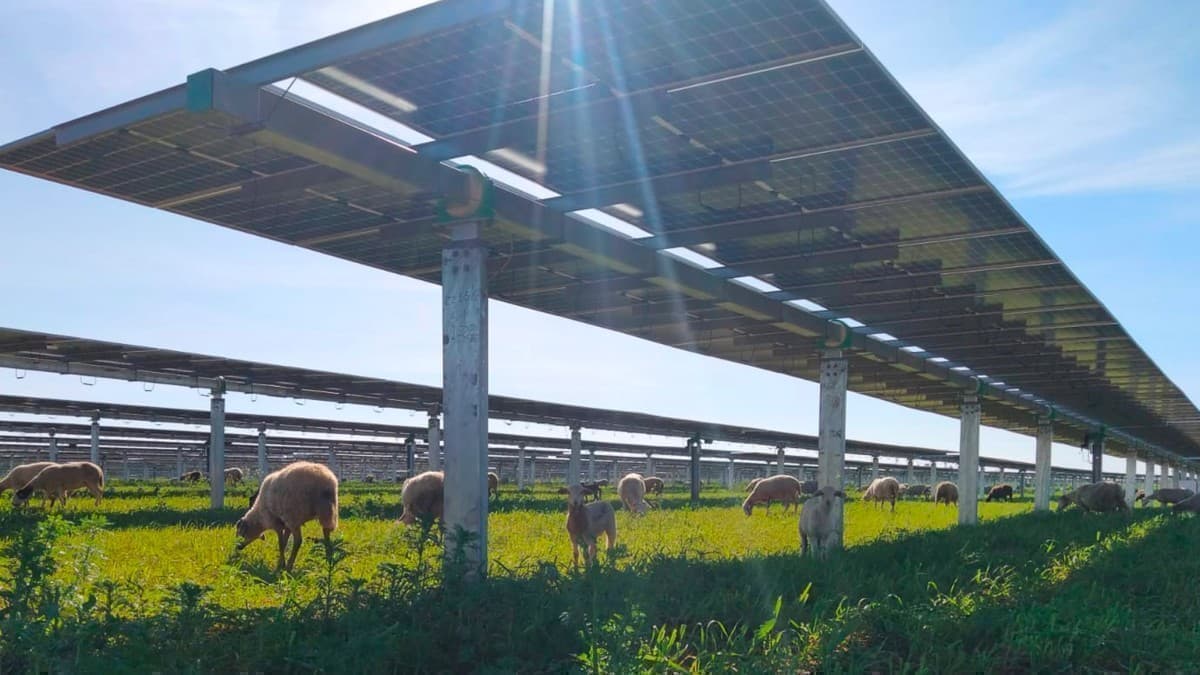
The largest solar energy projects in the world, the Shuaibah Station in Makkah Al-Mukarramah:
* More than 5 million solar panels.
* Production of 2600 megawatts.
* The location with the most radiation throughout the year.
* Project area of 55 square kilometers.

This is one of the fruits of our blessed vision #رؤية_السعودية_2030 (Saudi Vision 2030) led by our inspiring prince #محمد_بن_سلمان (MbS)

A little reminder why KSA could/should be a world leader in renewables.
 

Users who are viewing this thread

Pakistan Defence Latest

Country Watch Latest

Latest Posts

Back
Top