Navigation
Install the app
How to install the app on iOS
Follow along with the video below to see how to install our site as a web app on your home screen.
Note: This feature may not be available in some browsers.
More options
Style variation
You are using an out of date browser. It may not display this or other websites correctly.
You should upgrade or use an alternative browser.
You should upgrade or use an alternative browser.
Pakistani Nuclear Forces
- Thread starter ghazi52
- Start date
More options
Who Replied?


K2RULEZ
Elite Member


Vortex
Trusted Member

Masha’Allah !
Hope and pray they are more secured against deep penetration stuffs than the Iranian ones.

Falcon26
Trusted Member

A Pakistan nuclear story with Dr Munir Ahmed Khan and other PAEC scientists will always be incomplete.

ghazi52
THINK TANK: CONSULTANT
- Thread starter
- #81
Pakistan, India exchange lists of nuclear installations in continuation of annual practice: FO
News DeskJanuary 1, 2026
https://whatsapp.com/channel/0029VaMc238IiRov8okfYy3n
Foreign Office (FO) spokesperson Tahir Hussain Andrabi said on Thursday that Islamabad and New Delhi exchanged the lists of their respective nuclear installations, continuing the annual practice under an agreement signed between the two nations in 1988.
Under the Agreement on the Prohibition of Attacks against Nuclear Installations and Facilities, signed on December 31, 1988, both countries committed to annually share information about their nuclear installations and facilities. The agreement took effect from Jan 27, 1991, and the annual exchange has been taking place on the first day of every year since 1992.
In continuation of the practice, the exchange took place today as well, Andrabi said during the FO’s weekly briefing.
“A list of nuclear installations and facilities in Pakistan was officially handed over to the representative of the Indian High Commission in the Foreign Office today.
“I understand that the Indian government is also sharing the list of Indian nuclear installations with our High Commission in New Delhi today,” he said.
The FO spokesperson further noted that the 1988 “agreement provides that both countries shall inform each other of their nuclear installations and facilities“.
Moreover, the two countries had “exchanged a list of prisoners as well“, he said.
“The Indian government is also sharing the list of Pakistani prisoners in their custody with the Pakistani high commission in New Delhi,” he added.
In pursuance of the Agreement on Consular Access, 2008, both sides are required to share the lists of prisoners in each other’s custody on January 1 and July 1, every year.
Andrabi also addressed India’s recent activity regarding hydroelectric projects, and said that under the Indus Waters Treaty (IWT), India could not misuse its restricted allowance for unilaterally building any hydroelectric projects on the western rivers.
He made these remarks while responding to a question about India’s approval of the 260-megawatt Dulhasti Stage-II hydropower project on the Chenab River in Kishtwar district of India-held Jammu and Kashmir.
ghazi52
THINK TANK: CONSULTANT
- Thread starter
- #82
The IWT is a water-distribution agreement between India and Pakistan, brokered by the World Bank and was signed in Karachi on Sept 19, 1960 by President Ayub Khan and Prime Minister Jawaharlal Nehru. The treaty gives India complete rights to waters of the eastern rivers (Ravi, Sutlej and Beas) and gives Pakistan the rights over the western rivers (Indus, Jhelum and Chenab) with limited allowance for use of water by India from the western rivers for purposes of, among others, power generation.
In his remarks, Andrabi said, “We have seen these media reports regarding Indian plans to construct the Dulhasti Stage-II hydroelectric [project] on the Chenab River. Obviously, these reports raise serious concerns as no prior information or notification was shared with Pakistan with regard to this project.”
He further said that sharing of this information was mandated by the IWT.
“Such acts of commission and omission yet again exemplify a complete disregard of international law and bilateral treaties. The Pakistani commissioner for Indus water has sought clarification from his counterpart in India regarding the nature, scope and technical details of the reported projects, and he also wishes to ascertain whether this constitutes a new run-of-the-river project, an alteration or additional work on an existing plant,“ he said.
He said that under the IWT, India could not misuse its “restricted allowance” for unilaterally building any hydroelectric projects on the western rivers.
“Any such project on the western river is subject to strict design and operational controls as well as information sharing requirements,” he said.
In his remarks, Andrabi said, “We have seen these media reports regarding Indian plans to construct the Dulhasti Stage-II hydroelectric [project] on the Chenab River. Obviously, these reports raise serious concerns as no prior information or notification was shared with Pakistan with regard to this project.”
He further said that sharing of this information was mandated by the IWT.
“Such acts of commission and omission yet again exemplify a complete disregard of international law and bilateral treaties. The Pakistani commissioner for Indus water has sought clarification from his counterpart in India regarding the nature, scope and technical details of the reported projects, and he also wishes to ascertain whether this constitutes a new run-of-the-river project, an alteration or additional work on an existing plant,“ he said.
He said that under the IWT, India could not misuse its “restricted allowance” for unilaterally building any hydroelectric projects on the western rivers.
“Any such project on the western river is subject to strict design and operational controls as well as information sharing requirements,” he said.
ghazi52
THINK TANK: CONSULTANT
- Thread starter
- #83
“In the absence of formal communication from the Indian side, Pakistan is unable to access the project’s conformity with the treaty provisions. We, therefore, call upon India to urgently return to treaty compliance and respond to the queries raised by our Indus water commissioner in his latest as well as his earlier communications.“
He said that Pakistan reiterated that IWT remained a binding international agreement. He said that Pakistan remained committed to the peaceful resolution of disputes with India but would “never compromise on our existential water rights”.
He said that Pakistan reiterated that IWT remained a binding international agreement. He said that Pakistan remained committed to the peaceful resolution of disputes with India but would “never compromise on our existential water rights”.
Baibers_1260
Trusted Member
Now that India has kept the possibility of a preemptive nuclear strike on Pakistan open what is the Indian plan on the number of warheads to be used in multiple strikes on Pakistan?
Will India use all its 180 warheads exclusively for Pakistan or will it keep a few for China. ?
( Picture below courtesy of armscontrolcenter.org )
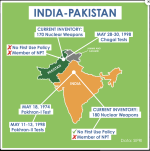

 www.aljazeera.com
Will India use all its 180 warheads exclusively for Pakistan or will it keep a few for China. ?
( Picture below courtesy of armscontrolcenter.org )
Could India, Pakistan use nuclear weapons? Here’s what their doctrines say
A full-blown war between India and Pakistan would be the first ever between two nuclear-armed nations.
Last edited:

kimjongun
Registered Member
IT IS REMINDER TO EVERY INDIAN BULLSHITTER WHO HAVE SAID THAT OUR SITES ARE NOT SECURED TO LONG DEPTHS.
MASHA ALLAH.
UGF ARE THE WAY TO GO IN THE SUBCONTINENT.
Scorched_Earth
Registered Member

Forty three years ago at 1100 hours on March 13, 1983, the Pakistan Atomic Energy Commission carried out the first cold test of a working nuclear device at Kirana Hills near Sargodha. The design tested in March 1983 was prepared by the Theoretical Physics Group in the 1970s.
The chairman PAEC (1972-1991) Munir Ahmad Khan recalled in 1999:
"While we were building capabilities in the nuclear fuel cycle, we started in parallel the design of a nuclear device, with its trigger mechanism, physics calculations, production of metal, making precision mechanical components, high-speed electronics, diagnostics, and testing facilities. For each one of them, we established different laboratories, plants and facilities. In 1980, we completed the tunnels at Chaghi. On March 13, 1983, we successfully conducted our first cold test of a working nuclear device. Dr. Ishfaq, Dr. Samar Mubarakmand, and many others were there. That evening, I went to General Zia with the news that Pakistan was now ready to make a nuclear device. The team that conducted that test was basically the same that carried out the Chaghi test last year."
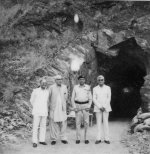
The first cold test was supervised by Munir Ahmad Khan and conducted by a team led by Dr. Ishfaq Ahmad, Member (Technical) and later chairman PAEC 1991-2001.
The March 1983 cold test was followed by a second cold test in May 1983 that was witnessed by Finance Minister Ghulam Ishaq Khan, Lt. General Khalid Mahmud Arif (chief of staff to President Zia and Vice Chief of Army Staff 1984-1987) and Munir Ahmad Khan.
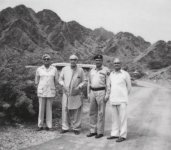
PAEC conducted 24 cold tests of weapon designs between 1983 and 1995 in which more compact and miniaturized designs were developed and finalized that were hot tested at Chaghi and Kharan in May 1998.
The chairman PAEC (1972-1991) Munir Ahmad Khan recalled in 1999:
"While we were building capabilities in the nuclear fuel cycle, we started in parallel the design of a nuclear device, with its trigger mechanism, physics calculations, production of metal, making precision mechanical components, high-speed electronics, diagnostics, and testing facilities. For each one of them, we established different laboratories, plants and facilities. In 1980, we completed the tunnels at Chaghi. On March 13, 1983, we successfully conducted our first cold test of a working nuclear device. Dr. Ishfaq, Dr. Samar Mubarakmand, and many others were there. That evening, I went to General Zia with the news that Pakistan was now ready to make a nuclear device. The team that conducted that test was basically the same that carried out the Chaghi test last year."
The first cold test was supervised by Munir Ahmad Khan and conducted by a team led by Dr. Ishfaq Ahmad, Member (Technical) and later chairman PAEC 1991-2001.
The March 1983 cold test was followed by a second cold test in May 1983 that was witnessed by Finance Minister Ghulam Ishaq Khan, Lt. General Khalid Mahmud Arif (chief of staff to President Zia and Vice Chief of Army Staff 1984-1987) and Munir Ahmad Khan.
PAEC conducted 24 cold tests of weapon designs between 1983 and 1995 in which more compact and miniaturized designs were developed and finalized that were hot tested at Chaghi and Kharan in May 1998.
Sam Ssg
Registered Member

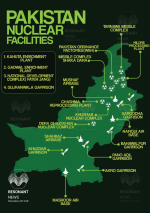
How do you know India wouldn’t be lying about their locations? while we tell them the exact truth.Pakistan, India exchange lists of nuclear installations in continuation of annual practice: FO
News Desk
January 1, 2026
https://whatsapp.com/channel/0029VaMc238IiRov8okfYy3n
Foreign Office (FO) spokesperson Tahir Hussain Andrabi said on Thursday that Islamabad and New Delhi exchanged the lists of their respective nuclear installations, continuing the annual practice under an agreement signed between the two nations in 1988.
Under the Agreement on the Prohibition of Attacks against Nuclear Installations and Facilities, signed on December 31, 1988, both countries committed to annually share information about their nuclear installations and facilities. The agreement took effect from Jan 27, 1991, and the annual exchange has been taking place on the first day of every year since 1992.
In continuation of the practice, the exchange took place today as well, Andrabi said during the FO’s weekly briefing.
“A list of nuclear installations and facilities in Pakistan was officially handed over to the representative of the Indian High Commission in the Foreign Office today.
“I understand that the Indian government is also sharing the list of Indian nuclear installations with our High Commission in New Delhi today,” he said.
The FO spokesperson further noted that the 1988 “agreement provides that both countries shall inform each other of their nuclear installations and facilities“.
Moreover, the two countries had “exchanged a list of prisoners as well“, he said.
“The Indian government is also sharing the list of Pakistani prisoners in their custody with the Pakistani high commission in New Delhi,” he added.
In pursuance of the Agreement on Consular Access, 2008, both sides are required to share the lists of prisoners in each other’s custody on January 1 and July 1, every year.
Andrabi also addressed India’s recent activity regarding hydroelectric projects, and said that under the Indus Waters Treaty (IWT), India could not misuse its restricted allowance for unilaterally building any hydroelectric projects on the western rivers.
He made these remarks while responding to a question about India’s approval of the 260-megawatt Dulhasti Stage-II hydropower project on the Chenab River in Kishtwar district of India-held Jammu and Kashmir.

Hopefully Pessimistic
Registered Member
India expanding its nuclear facility infrastructure to soon be able to build 300 nukes/per year.
It has the most vague and unregulated monitoring clauses in the world under the IEAE, even more than Russia and China.
This signals a possibility that the Indian security establishment, now filled with insecure Hindu extremists, may believe they can win a first strike nuclear war. They may even be planning rogue actions domestically like genocide of non-Hindus which makes a large amount of nukes a strong global deterrent.
Societal extremist opinions eventually seep into state institutions.
It has the most vague and unregulated monitoring clauses in the world under the IEAE, even more than Russia and China.
This signals a possibility that the Indian security establishment, now filled with insecure Hindu extremists, may believe they can win a first strike nuclear war. They may even be planning rogue actions domestically like genocide of non-Hindus which makes a large amount of nukes a strong global deterrent.
Societal extremist opinions eventually seep into state institutions.
Pakistan Defence Latest
-

-
-
Federal cabinet gives nod to imposition of emergency in KP; summary sent to president (13 Viewers)
- Latest: hydrabadi_arab
-

-
Country Watch Latest


Latest Posts
-

-
 Makkah Defence Alliance: Turkey, Saudi Arabia, and Pakistan, news & updates (13 Viewers)
- Latest: muhammed45
-
Australians to march against Immigration, Indian migrants focussed on (16 Viewers)
- Latest: KingQamaR
-

-
