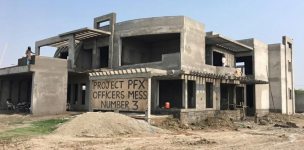
currently being builtwhen is PFX prototype coming out PFX01, PFX2 or anything under testing ?
heres the prototype
Follow along with the video below to see how to install our site as a web app on your home screen.
Note: This feature may not be available in some browsers.
currently being builtwhen is PFX prototype coming out PFX01, PFX2 or anything under testing ?

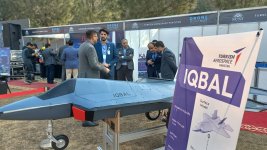
Yes, that was one of the biggest issues. The thing is that most RC aircraft this size MAYBE weigh 30kg but Iqbal HAS to weigh 100kg for scaling-to-Kaan reasons. So we needed to find a landing gear that could support the landing loads for a 100kg jet and they are made for much bigger jets. This was an acceptable design compromise because a) we had no other choice other than build our own landing gears, b) they will retract and in flight don't effect anything.@JamD that is some chonky landing gear
Yes.yes but this is a flying model for flight characteristics
Actually, the one in the picture is the second model that has not flown.I know, that is RC model. They already flied it..

PFX-01 prototype coming out in 2031-2032, said some PAF person.when is PFX prototype coming out PFX01, PFX2 or anything under testing ?
Is this a new drone?

brother any source where we can read itPFX-01 prototype coming out in 2031-2032, said some PAF person.
Question, this IQBAL RC Model was made by our guys in Turkey right?Yes, that was one of the biggest issues. The thing is that most RC aircraft this size MAYBE weigh 30kg but Iqbal HAS to weigh 100kg for scaling-to-Kaan reasons. So we needed to find a landing gear that could support the landing loads for a 100kg jet and they are made for much bigger jets. This was an acceptable design compromise because a) we had no other choice other than build our own landing gears, b) they will retract and in flight don't effect anything.
Allow me a rant - big gears obviously caused massive structural design challenges - also for the intake design. It's a cascade of effects really. Then takeoff became harder than it maybe for Kaan. Takeoff is quite tricky from a GNC perspective. Pilots probably understand this in an experience kind of way but for controls you need to
1) Rotate the aircraft about the main landing gear (not CG) using moment generated by elevator. Therefore you need enough speed and enough moment arm in the elevator that you generate enough moment to rotate the aircraft.
2) Lifting off requires the lift that you generate after rotating and causing alpha to be greater than the weight. As soon as the aircraft leaves the ground, the dynamics suddenly shift from being about main landing gear to be about CG.
3) When you deflect your elevator in a conventional design the total lift of the aircraft goes down! I am talking about the steady state deflection required to maintain alpha about the landing gear after the initial big deflection. So rotation causes a drop in lift - significant for fighters like Kaan.
This might sound easy but weird interactions might happen (and did happen for us and we had to refine our designs because of it). For example, the performance team calculates your takeoff speed at 35 m/s - your structure and landing gears are rated for that. They have based this on the fact that at 35 m/s, 12 deg alpha, the lift is greater than weight. BUT at 35 m/s, your elevators are unable to generate enough moment to rotate the aircraft about the main landing gear. That number is 42 m/s. And when you deflect the elevator, the total lift goes down enough that you need to go 45 m/s to generate enough lift. So your takeoff speed is really 45 m/s even though the performance guys insist its 35 m/s lol. So one of the requirements for elevator design is that it can rotate you slightly below takeoff speed AND the takeoff configuration takes into account the deflection of the elevator- if only they let controls people have inputs all the way through the design process.
Big gears helped with 2 actually - more clearance, you can rotate to really big alphas - IF your elevator can rotate you that is lol. But they were really bad for ground stability.
Yes.
Actually, the one in the picture is the second model that has not flown.

Yes, by Nust engineersQuestion, this IQBAL RC Model was made by our guys in Turkey right?
Question, this IQBAL RC Model was made by our guys in Turkey right?
Made by Turkish Aerospace Pakistan in Turkey and Pakistan. Yes, it is located inside NUST but it has nothing to do with NUST officially. Sure some graduates of NUST work there. But so do graduates of many other places.Yes, by Nust engineers

It was from one of the interviews of a PAF personnel on this thread from lady year.brother any source where we can read it
It was from one of the interviews of a PAF personnel on this thread from lady year.
Here's the video. Ignore the video thumbnail.


One thing to notice with the 5+ (KAAN) and 6-gen designs (J-36, J-XX) is that they're all multi-engine fighters using WS-10/F100/F110-class engines.How much electrical power is projected to be needed for the sensors and to have the sensors power through any jamming? The reason why Pakistan needs to choose between a RD-93 and a WS-10 sized engines.
What is the electrical output of the F-35A, J-35A, and projected KAAN, for comparison.

...barabar may maira plot hai.