
Navigation
Install the app
How to install the app on iOS
Follow along with the video below to see how to install our site as a web app on your home screen.
Note: This feature may not be available in some browsers.
More options
Style variation
You are using an out of date browser. It may not display this or other websites correctly.
You should upgrade or use an alternative browser.
You should upgrade or use an alternative browser.
JF-17 PFX program
- Thread starter Zarvan
- Start date
More options
Who Replied?

JamD
THINK TANK: CONSULTANT

Tehseen Javed was a very famous signer at one point. Maybe you've heard of this songi am too young to understand what this means
View attachment 165042
So whenever I want to appreciate something and give it Kheraj-e-tehseen

Urdu Word خراج تحسین - Khiraj E Tehseen Meaning in English is Accolade
Urdu to English Meaning of خراج تحسین کا مطلب انگریزی میں Shabash Translation from Urdu into English means Accolade. Find English Meaning of خراج تحسین and related words to Accolade
 www.urdupoint.com
Sorry, this was a dad joke that I've made worse by explaining lol.

Ali_Baba
VIP Member

Akshually, I think you have it backwards and we do have options and that might be EXACTLY the reason PFX has little chance of succeeding. I always like to compare to the nuclear program so in that area there literally was no option. But here we can buy F-16s, J-10s, J-35s, Kaan - so several options. I've said this before many many times - PAF is a fighting force first, and a defense contractor a distant second. This is the reason it does not have the appetite to do long development programs like TAI or DRDO - it wants results in 2 years, otherwise it loses interests, decides its money is better spent buying externally and kills the program.
In a normal country, the government would make a strategic decision to build an aerospace industry and the ability to build its own fighter jets. It would invest in the institutions to do that, and hire people, and make along term strategic plans of how to get there. It is requires strategic thought, planning and execution over many years to get there, and its success and failure should not tied to "who the current ACM" and what his fancies are, and the chaotic decision making process associated with that.
Pakistan, as we know, is not a normal functioning country.
As you rightly say, PAF is a fighting arm, not a R&D arm and not an aircraft manufacturer. The latter two require a very different type of person with different skillsets and capabilities.
If the Pakistan Government is serious about wanting to build an aerospace industry, it needs to take the leadership of the PFX away from the PAF, and have the PAF as client that provides its requirements to the programme and the programme needs to be led and managed by people who are more adept at building products and platforms with the tools, technologies and people it has. It needs to hire the right type of people who can effectively engage with partners like ASELEAN/TAI and CATIC to be able to take their products, and integrate and build new products. It needs to hire graduates who want to spend their careers building an aviation ecosystem, this skillset and mindset is not the hallmark of serving officers.
Pakistan needs to create an equivalent of ASELEAN/TAI that is not under PAF ownership/direction or led by PAF officers. Those new institutions need to be led by engineers, programme managers, experts in their fields.
PFX-Alpha may just work if it is localisation, but PFX will be a walking disaster just like the Azm was. The sheer arrogance of the decision making authority that thought they could do Azm when even the most junior person on this forum could tell you that was a crazy idea, shows why they shouldn't be the ones trying to do PFX.
jamal18
Registered Member
Absolutely. I have seen people on this forum pump their chest and say ' ..the PAF is the only air force in the world to design/build aircraft.', not understanding how Inane that statement is.Pakistan needs to create an equivalent of ASELEAN/TAI that is not under PAF ownership/direction or led by PAF officers. Those new institutions need to be led by engineers, programme managers, experts in their fields.

puttputt
Registered Member

The reason why Pakistan can't develop an ASELSAN or TAI under its current framework is that babus insist on running shows they're not competent for, such as R&D orgs, industrial enterprises, etc.In a normal country, the government would make a strategic decision to build an aerospace industry and the ability to build its own fighter jets. It would invest in the institutions to do that, and hire people, and make along term strategic plans of how to get there. It is requires strategic thought, planning and execution over many years to get there, and its success and failure should not tied to "who the current ACM" and what his fancies are, and the chaotic decision making process associated with that.
Pakistan, as we know, is not a normal functioning country.
As you rightly say, PAF is a fighting arm, not a R&D arm and not an aircraft manufacturer. The latter two require a very different type of person with different skillsets and capabilities.
If the Pakistan Government is serious about wanting to build an aerospace industry, it needs to take the leadership of the PFX away from the PAF, and have the PAF as client that provides its requirements to the programme and the programme needs to be led and managed by people who are more adept at building products and platforms with the tools, technologies and people it has. It needs to hire the right type of people who can effectively engage with partners like ASELEAN/TAI and CATIC to be able to take their products, and integrate and build new products. It needs to hire graduates who want to spend their careers building an aviation ecosystem, this skillset and mindset is not the hallmark of serving officers.
Pakistan needs to create an equivalent of ASELEAN/TAI that is not under PAF ownership/direction or led by PAF officers. Those new institutions need to be led by engineers, programme managers, experts in their fields.
PFX-Alpha may just work if it is localisation, but PFX will be a walking disaster just like the Azm was. The sheer arrogance of the decision making authority that thought they could do Azm when even the most junior person on this forum could tell you that was a crazy idea, shows why they shouldn't be the ones trying to do PFX.
The beauty of the Turkish model is that the babus were told to take a back seat, let the industry professionals run the show, and cash in on the profit of those entities with their monthly pension cheques.
In Pakistan, babu sahibs insist they know everything, from whether a baby in the womb could be autistic or not to developing jinn-powered fighters. The men who aren't even qualified to run a corner smoke shop in NY are going to run R&D orgs.
Even on this forum we have babu sahibs advising us on why the stock market is a sign of a strong economy when they can't even define elasticity, much less read the books written on the adage, "the stock market is not the economy."

SiliconBit (silicon0000)
Trusted Member
The reason why Pakistan can't develop an ASELSAN or TAI under its current framework is that babus insist on running shows they're not competent for, such as R&D orgs, industrial enterprises, etc.
The beauty of the Turkish model is that the babus were told to take a back seat, let the industry professionals run the show, and cash in on the profit of those entities with their monthly pension cheques.
In Pakistan, babu sahibs insist they know everything, from whether a baby in the womb could be autistic or not to developing jinn-powered fighters. The men who aren't even qualified to run a corner smoke shop in NY are going to run R&D orgs.
Why don’t non-babus and professionals come forward to create their own private firms like ASELSAN or TAI? I think the bigger issue lies in the answer to this question.
Özgür in the early 2010s was basically just a simpler avionics modernization. But as more projects were launched and more systems became available, the package steadily grew into something much more complete.Ozgur by TAI is a good example - look how long that took and TAI (an organization with the appetite and skills for R&D) had to do it - it wasn't an air force.
The one thing that held it back more than anything else was the MURAD-100A GaN FCR. The delays in the MURAD project automatically added roughly five years to the delivery timeline. The -100A is finally moving forward (very) smoothly and is close to reaching maturity, but those setbacks pushed the delivery timeline to 2027–2030 (Özgür 2) for the entire fleet excluding the 29 B50+...
Last edited:
JamD
THINK TANK: CONSULTANT
Unfortunately, what the Turks call simple isn't simple for the PAF when all of the inputs are basically coming from the outside (mostly China) and PAF has no industrial, manufacturing, or R&D base that TA has. Having intimately seen both TA and PAC, I feel like I'm in a good place to compare the two and there are many perspective things that come from seeing both. You have to work in PAC for only a month to understand what I mean.Özgür in the early 2010s was basically just a simpler avionics modernization. But as more projects were launched and more systems became available, the package steadily grew into something much more complete.
The one thing that held it back more than anything else was the MURAD-100A GaN FCR. The delays in the MURAD project automatically added roughly five years to the delivery timeline. The -100A is finally moving forward (very) smoothly and is close to reaching maturity, but those setbacks pushed the delivery timeline to 2027–2030 (Özgür 2) for the entire fleet excluding the 29 B50+...
JamD
THINK TANK: CONSULTANT
Because the babus have gone out of their way to discourage any such action - both through polices and active actions. For example they resisted tooth and nail the establishment of TA Pakistan even though on the surface they are all Pak-Turk bhai bhai. Imagine what they did to a foreign company from a brotherly country. So just imagine what they do to anyone in Pakistan trying to set up a defense business.Why don’t non-babus and professionals come forward to create their own private firms like ASELSAN or TAI? I think the bigger issue lies in the answer to this question.
A. You don't get NOCs - the process is stupid and basically impossible unless you're a retired fauji with all sorts of links.
B. NESCOM shows up, says this is a nice product, now we will make it with tax payer money and since we're not bound to make profits and we basically have a monopoly and we are the armed forces too so we will never buy from you pvt company.
C. There is no rule of law or contract enforcement in Pakistan - this is the reason for the saith culture who only transfer company to their children like jaidad. How will you ever win a dispute against NESCOM for example who stole your IP? You can only laugh and die.
D. You will never be able to get the free money that SPD orgs get. You will need to take loans at stupid interest rates, make profits, and compete with a state org that doesn't need to make profit and runs on taxpayer money.
E. You will be disappeared if you piss off the wrong babu.
F. You much rather invest anything you have into real estate rather than deal with all of the above. Incentive structure in Pakistan is broken.
SiliconBit (silicon0000)
Trusted Member
Because the babus have gone out of their way to discourage any such action - both through polices and active actions. For example they resisted tooth and nail the establishment of TA Pakistan even though on the surface they are all Pak-Turk bhai bhai. Imagine what they did to a foreign company from a brotherly country. So just imagine what they do to anyone in Pakistan trying to set up a defense business.
A. You don't get NOCs - the process is stupid and basically impossible unless you're a retired fauji with all sorts of links.
B. NESCOM shows up, says this is a nice product, now we will make it with tax payer money and since we're not bound to make profits and we basically have a monopoly and we are the armed forces too so we will never buy from you pvt company.
C. There is no rule of law or contract enforcement in Pakistan - this is the reason for the saith culture who only transfer company to their children like jaidad. How will you ever win a dispute against NESCOM for example who stole your IP? You can only laugh and die.
D. You will never be able to get the free money that SPD orgs get. You will need to take loans at stupid interest rates, make profits, and compete with a state org that doesn't need to make profit and runs on taxpayer money.
E. You will be disappeared if you piss off the wrong babu.
F. You much rather invest anything you have into real estate rather than deal with all of the above. Incentive structure in Pakistan is broken.
Exactly, and this is not limited to just the forces. This is one of the main reasons why we haven’t developed any significant industrial capacity, nor are we expected to have it in the near future.
So
نہ نو من تیل ہو گا نہ رادھا ناچے گی۔

PakAl
Elite Member
Why don’t non-babus and professionals come forward to create their own private firms like ASELSAN or TAI? I think the bigger issue lies in the answer to this question.
Its a mentality problem. Oldies think younger will take the credit whilst they fall behind. But professional people will utilise the talent, develop them even more and build big firms, make billions.

Michael
VIP Member

Pakistan's entire industrial system follows a superficial integration model, and this extends to its military industrial system as well.Exactly, and this is not limited to just the forces. This is one of the main reasons why we haven’t developed any significant industrial capacity, nor are we expected to have it in the near future.
This isn't a matter of good or bad choices. As the Chinese saying goes, "存在即合理," meaning that everything that exists has its own inherent justification. State-owned enterprises have corruption problems, so we should work to solve those problems, rather than rejecting the operational model of state-owned enterprises altogether. Would handing over the defense industry to private companies eliminate corruption problems?
The development models of military industries in countries around the world can be broadly categorized into three types:
1. **Pursuing complete domestic production across the entire industrial chain.** This model is primarily adopted by countries that are frequently subject to sanctions or restrictions at the international level. It's important to note that this refers to the country's stated goal, which may differ from reality. However, this is indeed the objective pursued by these countries' decision-makers. Examples: China, Russia, North Korea, Iran, etc.
2. **Surface integration model.** This model is mainly adopted by countries with extensive and urgent weapons needs but relatively weak military industrial capabilities. They attempt to produce everything, but lack depth in each area. They have domestically produced fighter jets, armored vehicles, surface ships, submarines, and small arms, but the vast majority of components for these products come from suppliers worldwide. Many countries facing urgent wartime needs adopt this model. Examples: India, Pakistan, Turkey, South Korea, Japan, etc.
3. **Single-domain priority model.** These countries do not pursue comprehensive development, but instead concentrate their efforts on one or more specific areas based on their industrial strengths, aiming to achieve world-leading levels in those areas, while completely relying on other international partners for other domains. Many European countries adopt this model. Examples: the United Kingdom, Germany, France, and many other European countries.
In the case of Pakistan, its overall national capabilities and the urgent demands of the current war situation dictate that it can only choose the second model. If Pakistan attempts to change this model, it would first need to change its national policies.
"Model 1": This possibility is almost non-existent. Pakistan's international diplomatic model means it is unlikely to become isolated like North Korea or Iran, which are subject to widespread international sanctions. Pakistan also does not possess the vast territorial size and national potential of countries like China or Russia.
"Model 3": This possibility exists, but not at present, and it would be extremely difficult. If Pakistan's external military pressure were reduced to a minimal level, then Pakistan could fully integrate with the military-industrial complex of another country, and, based on its own circumstances, choose to develop one or more small areas to a world-class level, becoming one of the core suppliers in that system.
"Model 2." This is Pakistan's current choice. It also means you must accept the consequences of this choice, whether good or bad. You must bear the responsibility. This means you will inevitably be unable to achieve 100% domestic production of any modern weapon system. You cannot avoid being influenced by other countries in the military-industrial sector.

Zarvan
Elite Member
- Thread starter
- #2,308
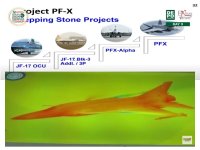
This is the roadmap. BLOCK III is here next will be BLOCK III plus which could something like Grippen E type upgrade or that may come in next PFX Alpha upgrade which either will be GRIPPEN E type thing or a single engine KF 21 type fighter jet which means 5th Generation fighter jet kind of body and everything else except for internal weapons bay and eventually a single engine 5th Generation fighter jet.

Merzifonlu
Registered Member

I need to correct something. We Turks are gradually moving towards "Complete domestic production across the entire industrial chain." This transition will accelerate, especially after overcoming the engine bottleneck, until we encounter the next bottleneck, namely the chip bottleneck.They have domestically produced fighter jets, armored vehicles, surface ships, submarines, and small arms, but the vast majority of components for these products come from suppliers worldwide. Many countries facing urgent wartime needs adopt this model. Examples: India, Pakistan, Turkey, South Korea, Japan, etc.
Michael
VIP Member
I completely understand how you feel. In fact, these countries are all working towards this goal.I need to correct something. We Turks are gradually moving towards "Complete domestic production across the entire industrial chain." This transition will accelerate, especially after overcoming the engine bottleneck, until we encounter the next bottleneck, namely the chip bottleneck.
But nobody has told you where the real difficulties you're about to face lie.
Users who are viewing this thread
Total: 6 (members: 0, guests: 6)
Pakistan Defence Latest
-
 Pak Ship Collides With Indian Navy Unit, Delhi Summons Islamabad's Envoy (30 Viewers)
- Latest: Pak Defender
-

-
-
 Bangladesh’s Youth-led NCP Struggles for an Independent Identity in Jamaat’s Shadow (2 Viewers)
- Latest: MNZGamerX

Country Watch Latest


Latest Posts
-

-
IMF wants Pakistan to make 174 legislative changes under ongoing loan programmes (9 Viewers)
- Latest: hydrabadi_arab
-
-
-
Pak Ship Collides With Indian Navy Unit, Delhi Summons Islamabad's Envoy (30 Viewers)
- Latest: Pak Defender