JF-17 PFX program

But nobody has told you where the real difficulties you're about to face lie.
Absolutely right. We understood this very well from our turbofan engine and tank transmission (not engine, but transmission) development projects.

The chip issue, however, will be much much more difficult for us. The reason is this: In engine development projects, even if we didn't have much R&D experience, we at least had an institution like TEI, which produced high-quality engine parts under a GE partnership. Adding a qualified R&D department to this institution was enough.

But when it comes to chips, we will literally have to start from scratch. Currently, the closest thing we produce to chip production is the T&R modules we use in radars! That's how difficult the situation is.
 
Absolutely right. We understood this very well from our turbofan engine and tank transmission (not engine, but transmission) development projects.

The chip issue, however, will be much much more difficult for us. The reason is this: In engine development projects, even if we didn't have much R&D experience, we at least had an institution like TEI, which produced high-quality engine parts under a GE partnership. Adding a qualified R&D department to this institution was enough.

But when it comes to chips, we will literally have to start from scratch. Currently, the closest thing we produce to chip production is the T&R modules we use in radars! That's how difficult the situation is.
On this forum, there are significant disagreements between Chinese and Turkish people on certain viewpoints. Your post further confirms that we have completely different definitions of "completely domestically manufactured."

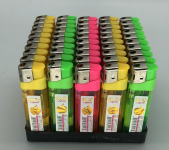
I often use the example of a "disposable lighter."
1765957625493.png
According to your standards, there are many countries globally that can produce it domestically. However, according to our standards, there are no more than five countries in the world that can manufacture it entirely domestically.

This tiny device embodies the accumulated knowledge, capital, and industrial organizational capabilities of humanity since the Industrial Revolution. Any country capable of manufacturing it entirely domestically has already reached the pinnacle of human industrial achievement.

Try using this standard and this approach to examine Türkiye's military industrial capabilities. Perhaps your perspective will change.

Some Pakistani friends often say, "We don't need to reinvent the wheel..."

Our point of view is: We may not need to invent the wheel, but we must be able to manufacture it.

=======================================

Theoretically, given Turkey's standards and national capabilities, manufacturing chips should be a relatively easy task.
You can purchase licenses from ARM and other companies to acquire chip design capabilities.
You can buy advanced lithography machines from ASML.
You can purchase raw materials from around the world and hire or train skilled personnel.
Then, you can start producing chips. The gap between your capabilities and those of the world's top companies depends on how much money you are willing to invest.
This is a global industry. Under normal circumstances, you can easily obtain these resources through global trade.

However, China's thinking is completely different. What we want is a chip manufacturing capability that is absolutely free from interference from any other country in the world. Even if global trade is completely disrupted and China is blockaded by all countries, we still want to maintain this capability. This means we need to manufacture every lithography machine part ourselves, produce every raw material ourselves, and completely control the core code and logic of the chips...
The glass lenses in ASML's lithography machines are exclusively supplied by Zeiss. If Zeiss stops supplying them, ASML will be unable to manufacture any lithography machines. There are many such parts manufactured by exclusive suppliers in ASML's lithography machines.
 
Last edited:
On this forum, there are significant disagreements between Chinese and Turkish people on certain viewpoints. Your post further confirms that we have completely different definitions of "completely domestically manufactured."

I often use the example of a "disposable lighter."
View attachment 165737
According to your standards, there are many countries globally that can produce it domestically. However, according to our standards, there are no more than five countries in the world that can manufacture it entirely domestically.
You're not as unique as you think. When it comes to military products, our standards are the same as yours. You persistently imply that we are simply assemblers, but that's not true. Perhaps it was true in the past, but we are increasingly building a completely closed supply chain for military products, just like China.

The difference between China and us is this: China has a disciplined, skilled workforce and a large population, which gives it sufficient market depth. And this allows it to create the aforementioned closed supply chain not only for military products, but for every product.
 
You're not as unique as you think. When it comes to military products, our standards are the same as yours. You persistently imply that we are simply assemblers, but that's not true. Perhaps it was true in the past, but we are increasingly building a completely closed supply chain for military products, just like China.

The difference between China and us is this: China has a disciplined, skilled workforce and a large population, which gives it sufficient market depth. And this allows it to create the aforementioned closed supply chain not only for military products, but for every product.
LOL.

It seems you truly don't understand this issue, nor the real differences between the Chinese and Turkish military industries.

However, we shouldn't continue discussing this here, as it has deviated significantly from the main topic. If you're interested, we can continue the discussion elsewhere, but not here.
 
Why don’t non-babus and professionals come forward to create their own private firms like ASELSAN or TAI? I think the bigger issue lies in the answer to this question.
In the late 1970s and early 1980s, there was a guy who set up a small software firm in Pakistan. In those days, the PAF had vision, and contracted some Project Crystal work out to him. They carried out the task as required and did such a good job that SAP AG offered to buy them out. Around that time, he had considered setting up his own software company in Pakistan. Still, he then recalled that his family had lost many of their old business properties due to nationalization. So he took the SAP AG deal and never looked back; got a nice chunk of change and was at SAP AG until he retired in 2015.

Basically, the non-babus are scared that their business properties will be attacked, stolen, or appropriated (stolen with more steps) by the babus. Even if the babus won't do such a thing today (and there's reason to believe they won't), they'd need to extend a very nice olive branch to Pakistan's private sector to spur domestic investment. Basically, things to the tune of 49% equity investment, tax-free or tax credits for 10 years, and so on, to even start rekindling interest.

PS: I'm actually working with the SAP AG guy on SDKs for IMINT purposes. As you can guess, it's getting interest from everywhere but Pakistan. We even had Israeli-tied funds come to us with offers ffs.
 
View attachment 165290
This is the roadmap. BLOCK III is here next will be BLOCK III plus which could something like Grippen E type upgrade or that may come in next PFX Alpha upgrade which either will be GRIPPEN E type thing or a single engine KF 21 type fighter jet which means 5th Generation fighter jet kind of body and everything else except for internal weapons bay and eventually a single engine 5th Generation fighter jet.
To view this content we will need your consent to set third party cookies.
For more detailed information, see our cookies page.

What does the OCU refer to? Upgrading Block I and II to III standard?
 
Who says Pakistan can just jump into building a 5th generation fighter jet? Our economy is fragile and still relying on IMF loans, burdened by soaring debt, with a weakening rupee and foreign reserves barely enough to cover imports. JF-17 still depends on imported engines, avionics, and electronics that means dollars we simply don’t have.

Consider the costs, even the wealthiest nations pour hundreds of billions into their 5th gen programs. For Pakistan, investing that much would devastate the economy and divert essential resources away from critical areas like jobs, healthcare, and education, which are already under severe strain.

Of course, a strong air force is vital, but the practical approach is to modernize existing assets, invest in affordable drones, missiles, and leverage partnerships for technology. Fantasizing about a large stealth fleet while the economy struggles is not a plan, it’s wishful thinking.

I didn’t post the actual data about economy because I don’t want to embarrass you.

Regarding Pakistan’s partnership with Saudi Arabia, It’s a double edged sword. On the surface, it looks like Riyadh is worried about defense, but in reality this could drag Pakistan into conflicts we don’t need. Time will tell if it’s a smart strategic move or just a trap.

And for those thinking Saudis will send ships full of gold or dollars, to Pakistan, wake up. That’s daydreaming. Saudis are not stupid; they won’t invest a single dollar in Pakistan unless it guarantees them clear benefits.

It’s not directly related to the current topic, but a few points need to be addressed. Many geopolitical analysts have raised red flags about the emerging partnership between Pakistan and Saudi Arabia. Looking at recent history, Saudi Arabia has struggled to take offensive or defensive action without relying on third party support. Some analysts worry that this could be a strategy possibly influenced by Trump to draw the Pakistani military into Arab & Israeli dynamics and even into the conflict in Yemen on behalf of Saudi Arabia and Israel. If this interpretation is accurate, it could create serious complications for Pakistan.
 
It’s not directly related to the current topic, but a few points need to be addressed. Many geopolitical analysts have raised red flags about the emerging partnership between Pakistan and Saudi Arabia. Looking at recent history, Saudi Arabia has struggled to take offensive or defensive action without relying on third party support. Some analysts worry that this could be a strategy possibly influenced by Trump to draw the Pakistani military into Arab & Israeli dynamics and even into the conflict in Yemen on behalf of Saudi Arabia and Israel. If this interpretation is accurate, it could create serious complications for Pakistan.
You know the first sign of madness is when you start talking to yourself...you're quoting and replying to yourself here.
 
This is exactly the vision behind PFX project. It has pretty decent timeline. Prototype: 2028 - 2029
Testing: 2029 - 2031
Limited production: 2031 - 2033
Serial production: 2033 - 2035

Is it achievable with current state of Pakistan defense industry? It’s pretty much possible since Turkey is willing to transfer technology to Pakistan for Manufacturing of Drone and also KAAN project. It’s possible that Pakistan might be able to accomplish is with the help of Turkey and China’s support. It will most likely designed with Chinese engine specifications. I am being overly optimistic but we don’t have many choices.

PFX Testing: 2029 - 2031
Limited production: 2031 - 2033
Serial production: 2033 - 2035

Going by history, add about 5 years to each of that initial time lines and you end up with a project that will result in another off the shelf stop gap purchase in the next 15 to 20 years.....
 

Users who are viewing this thread

Back
Top