Absolutely right. We understood this very well from our turbofan engine and tank transmission (not engine, but transmission) development projects.
The chip issue, however, will be much much more difficult for us. The reason is this: In engine development projects, even if we didn't have much R&D experience, we at least had an institution like TEI, which produced high-quality engine parts under a GE partnership. Adding a qualified R&D department to this institution was enough.
But when it comes to chips, we will literally have to start from scratch. Currently, the closest thing we produce to chip production is the T&R modules we use in radars! That's how difficult the situation is.
On this forum, there are significant disagreements between Chinese and Turkish people on certain viewpoints. Your post further confirms that we have completely different definitions of "completely domestically manufactured."
I often use the example of a "disposable lighter."
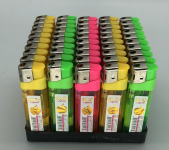
According to your standards, there are many countries globally that can produce it domestically. However, according to our standards, there are no more than five countries in the world that can manufacture it entirely domestically.
This tiny device embodies the accumulated knowledge, capital, and industrial organizational capabilities of humanity since the Industrial Revolution. Any country capable of manufacturing it entirely domestically has already reached the pinnacle of human industrial achievement.
Try using this standard and this approach to examine Türkiye's military industrial capabilities. Perhaps your perspective will change.
Some Pakistani friends often say, "We don't need to reinvent the wheel..."
Our point of view is: We may not need to invent the wheel, but we must be able to manufacture it.
=======================================
Theoretically, given Turkey's standards and national capabilities, manufacturing chips should be a relatively easy task.
You can purchase licenses from ARM and other companies to acquire chip design capabilities.
You can buy advanced lithography machines from ASML.
You can purchase raw materials from around the world and hire or train skilled personnel.
Then, you can start producing chips. The gap between your capabilities and those of the world's top companies depends on how much money you are willing to invest.
This is a global industry. Under normal circumstances, you can easily obtain these resources through global trade.
However, China's thinking is completely different. What we want is a chip manufacturing capability that is absolutely free from interference from any other country in the world. Even if global trade is completely disrupted and China is blockaded by all countries, we still want to maintain this capability. This means we need to manufacture every lithography machine part ourselves, produce every raw material ourselves, and completely control the core code and logic of the chips...
The glass lenses in ASML's lithography machines are exclusively supplied by Zeiss. If Zeiss stops supplying them, ASML will be unable to manufacture any lithography machines. There are many such parts manufactured by exclusive suppliers in ASML's lithography machines.


