Pakistan shifts from stabilisation to export-led growth, says finance minister

Pakistan Space Agency

Elite Member
Joined
Apr 22, 2019
Messages
11,164
Reaction score
13,590
Reputation
4,163.7
Country of Origin
Country of Residence

Pakistan shifts from stabilisation to export-led growth, says finance minister

Aurangzeb says reforms, easing inflation and stronger balances are restoring investor confidence

Web Desk
December 24, 2025

1766601676082.jpeg
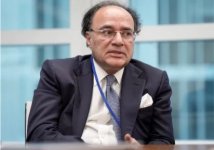
Finance Minister Muhammad Aurangzeb speaks during a Reuters interview at the 2025 annual IMF/World Bank Spring Meetings in Washington, DC, US, April 25, 2025. Photo: Reuters/ File

Federal Minister for Finance and Revenue Senator Muhammad Aurangzeb said Pakistan has reached a critical turning point, with macroeconomic stability, sustained reforms and policy continuity restoring confidence and shifting the economy toward export-led growth.

He said the transition is opening new opportunities for domestic and global investors and positioning the country for sustainable, long-term economic growth.

Aurangzeb expressed these views in a wide-ranging interview conducted a few weeks ago and published this week by USA Today. The interview appeared in a special 16-page publication titled “Pakistan Special Report.”

The report includes commentary, articles and expert views on Pakistan’s economy, investment opportunities and key policy priorities.

In the interview, Aurangzeb said Pakistan has entered fiscal year 2025 from a position of renewed strength. He cited macroeconomic stability, improving external balances and a firm commitment to structural reform.

He said that for the first time in several years, Pakistan has achieved both a primary fiscal surplus and a current account surplus. He described this as a decisive break from a cycle of recurring deficits.

Strong remittance inflows, he said, played a key role in the turnaround. Inflation has fallen sharply from a peak of 38% to single-digit levels.

Foreign exchange reserves have risen to more than $14.5 billion, providing about two and a half months of import cover. The exchange rate has remained stable, helping restore investor confidence.

Aurangzeb said macroeconomic stabilisation is only the foundation and that sustainable growth remains the main challenge. He noted that last year’s economic growth of 2.7%, while positive, is not enough to meet the needs of a rapidly growing population.

He said Pakistan is moving away from a consumption- and debt-driven growth model toward an export-led strategy. The current budget, he said, reflects this shift.

Read: Pakistan eyes January Panda Bond debut

Aurangzeb pointed to structural reforms in taxation, energy pricing and state-owned enterprises. He also highlighted tariff reforms aimed at dismantling decades of protectionism and improving global competitiveness.

He said Pakistan is aligning its strategy with changing global demand. He identified information technology services, textiles and agricultural exports as key growth areas.

Aurangzeb said IT exports have crossed $4 billion and could double within five years with regulatory clarity and better infrastructure. He said steps are being taken to simplify tax regimes for exporters and reduce bureaucratic hurdles.

On broader reforms, he said privatisation of state-owned enterprises, tariff liberalisation and energy sector restructuring aim to fix long-standing inefficiencies that have burdened public finances.

He said the reforms reflect a longer-term vision, echoing the World Bank’s assessment of Pakistan’s potential “East Asia moment.”

Aurangzeb referred to the World Bank’s 10-year Country Partnership Framework, the first of its kind for Pakistan. He said it focuses on economic reform, climate resilience and population management.

On climate risks, he said Pakistan is working with multilateral partners to improve preparedness for more frequent floods and droughts.

Read More: IMF staff deal reached, investment-led growth now priority: FinMin

He acknowledged ongoing risks, including global commodity price shocks, external debt pressures and political uncertainty. Still, he said the government remains committed to reforms despite geopolitical and domestic challenges.

Aurangzeb said discipline, consistency and international cooperation are essential to protecting recent gains.

Highlighting investment opportunities, he pointed to agriculture, minerals and mining, and the digital economy as priority sectors.

He cited Pakistan’s agricultural potential, the strategic importance of the Tethyan Copper Belt in Balochistan, and growing interest in data centres, artificial intelligence and digital services.

Aurangzeb said regulatory frameworks are being updated to support innovation and attract foreign investment, especially from the United States. He described technological change as a major game-changer for Pakistan.

He invited global investors and partners to engage with Pakistan through trade, investment and collaboration.

He said Pakistan is moving from a narrative of crisis management to one of opportunity and transformation, driven by reform momentum, economic potential and its natural strengths.
 
At least PIA seems to be off the government's back. What a clown-show that has been. The government needs to wean off all these loss making entities. Only then will the government have the breathing room to allow for subsidies etc. for investments to drive an export-led/first approach.
 
At least PIA seems to be off the government's back. What a clown-show that has been. The government needs to wean off all these loss making entities. Only then will the government have the breathing room to allow for subsidies etc. for investments to drive an export-led/first approach.
Kis bechare ka naseeb phota jis ne PIA purchase ki ?
 
hopefully he does something good with our dead elephant.
PIA used to be a great service...Emirates and many other airlines considered amazing for their services nowadays...PIA had a big hand in their foundational development.

The tragedy with PIA and all other state institutions like Steel Mills...is that all the chamchay of various parties kept getting cushy positions for absolutely no reason other than being bootlickers. The bigger the bootlicker ..the cushier his/her sifaarish position no matter how unfit or undeserving. U would never see this in a private entity...bcuz such behavior would bankrupt them. State institutions can get away with this for far longer bcuz they have a behemoth work force(the entire population of that country) that can just be taxed away to keep supporting such corrupt policies...even if they continue to make losses for years.

Anyone who purchases PIA...and if they have deep pockets. They can absolutely turn it around into a profitable airline bcuz they would not be overly bloating PIA and handing out paychecks to subpar staff.
 
Kis bechare ka naseeb phota jis ne PIA purchase ki ?
chaloo fauji fertilizer ko 20 percent share tu mil gai ...ab steel mill ki bari ha ...Pakistan biggest issues are pension , underground economy , import bill after local small industries wipe out.
 
Last edited:
Bunch of tosh. It is just crony capitalism by Waderas, Patwaris and Faujeets. How can PIA be considered privatised if Fauji Foundation, which represents the establishment, is going to have a controlling interest ?
 

Pakistan shifts from stabilisation to export-led growth, says finance minister

Aurangzeb says reforms, easing inflation and stronger balances are restoring investor confidence

Web Desk
December 24, 2025

View attachment 166884
Finance Minister Muhammad Aurangzeb speaks during a Reuters interview at the 2025 annual IMF/World Bank Spring Meetings in Washington, DC, US, April 25, 2025. Photo: Reuters/ File

Federal Minister for Finance and Revenue Senator Muhammad Aurangzeb said Pakistan has reached a critical turning point, with macroeconomic stability, sustained reforms and policy continuity restoring confidence and shifting the economy toward export-led growth.

He said the transition is opening new opportunities for domestic and global investors and positioning the country for sustainable, long-term economic growth.

Aurangzeb expressed these views in a wide-ranging interview conducted a few weeks ago and published this week by USA Today. The interview appeared in a special 16-page publication titled “Pakistan Special Report.”

The report includes commentary, articles and expert views on Pakistan’s economy, investment opportunities and key policy priorities.

In the interview, Aurangzeb said Pakistan has entered fiscal year 2025 from a position of renewed strength. He cited macroeconomic stability, improving external balances and a firm commitment to structural reform.

He said that for the first time in several years, Pakistan has achieved both a primary fiscal surplus and a current account surplus. He described this as a decisive break from a cycle of recurring deficits.

Strong remittance inflows, he said, played a key role in the turnaround. Inflation has fallen sharply from a peak of 38% to single-digit levels.


Foreign exchange reserves have risen to more than $14.5 billion, providing about two and a half months of import cover. The exchange rate has remained stable, helping restore investor confidence.

Aurangzeb said macroeconomic stabilisation is only the foundation and that sustainable growth remains the main challenge. He noted that last year’s economic growth of 2.7%, while positive, is not enough to meet the needs of a rapidly growing population.

He said Pakistan is moving away from a consumption- and debt-driven growth model toward an export-led strategy. The current budget, he said, reflects this shift.

Read: Pakistan eyes January Panda Bond debut

Aurangzeb pointed to structural reforms in taxation, energy pricing and state-owned enterprises. He also highlighted tariff reforms aimed at dismantling decades of protectionism and improving global competitiveness.

He said Pakistan is aligning its strategy with changing global demand. He identified information technology services, textiles and agricultural exports as key growth areas.

Aurangzeb said IT exports have crossed $4 billion and could double within five years with regulatory clarity and better infrastructure. He said steps are being taken to simplify tax regimes for exporters and reduce bureaucratic hurdles.

On broader reforms, he said privatisation of state-owned enterprises, tariff liberalisation and energy sector restructuring aim to fix long-standing inefficiencies that have burdened public finances.

He said the reforms reflect a longer-term vision, echoing the World Bank’s assessment of Pakistan’s potential “East Asia moment.”

Aurangzeb referred to the World Bank’s 10-year Country Partnership Framework, the first of its kind for Pakistan. He said it focuses on economic reform, climate resilience and population management.

On climate risks, he said Pakistan is working with multilateral partners to improve preparedness for more frequent floods and droughts.

Read More: IMF staff deal reached, investment-led growth now priority: FinMin

He acknowledged ongoing risks, including global commodity price shocks, external debt pressures and political uncertainty. Still, he said the government remains committed to reforms despite geopolitical and domestic challenges.

Aurangzeb said discipline, consistency and international cooperation are essential to protecting recent gains.

Highlighting investment opportunities, he pointed to agriculture, minerals and mining, and the digital economy as priority sectors.

He cited Pakistan’s agricultural potential, the strategic importance of the Tethyan Copper Belt in Balochistan, and growing interest in data centres, artificial intelligence and digital services.

Aurangzeb said regulatory frameworks are being updated to support innovation and attract foreign investment, especially from the United States. He described technological change as a major game-changer for Pakistan.

He invited global investors and partners to engage with Pakistan through trade, investment and collaboration.

He said Pakistan is moving from a narrative of crisis management to one of opportunity and transformation, driven by reform momentum, economic potential and its natural strengths.
Good to dream. 141 textile mills closed.
 
At least PIA seems to be off the government's back. What a clown-show that has been. The government needs to wean off all these loss making entities. Only then will the government have the breathing room to allow for subsidies etc. for investments to drive an export-led/first approach.
Govt will take back employees' pay and pension after 1 year.
 
Pakistan's major exports are heavily dominated by textiles and apparel, including knitwear, readymade garments, and home textiles (like bed linens), which form the backbone of its exports, alongside significant shipments of rice, leather goods, surgical instruments, and sports goods. Other key exports include carpets, cement, pharmaceuticals, chemicals, and food items like mangoes and fish, with primary markets being the U.S., EU, and China.

Key Export Categories:
  • Textiles & Apparel: The largest sector, encompassing raw cotton, yarn, knitwear, cotton cloth, and finished garments, according to Trading Economics, Wikipedia, and The Observatory of Economic Complexity.
  • Food & Agricultural Products: Rice (especially basmati), fruits (like mangoes), vegetables, sugar, and seafood are major contributors.
  • Leather Goods & Footwear: Leather products, shoes, and belts are important exports.
  • Sports Goods: Pakistan is famous for high-quality sports equipment, particularly footballs and cricket gear, notes Zameen.com and Zaitoon Group.
  • Surgical Instruments: A significant exporter of medical tools and devices, according to Wikipedia and Zaitoon Group.
  • Chemicals & Pharmaceuticals: Exports include various chemical products and medicines.
  • Mineral Products: Salt, cement, and minerals are also exported.
Top Export Partners (2024/2025 Estimates):
  • United States
  • China
  • United Kingdom
  • United Arab Emirates (UAE)
  • Germany
Key Trend: While textiles remain dominant, there's a push towards increasing value-added products, diversification, and boosting exports in other sectors like food and chemicals to achieve more sustainable growth, according to URAAN Pakistan and Slideshare.

Al Overview
 
What he means if $$ isnt coming then dont expect lower interest rates and higher gdp growth aka boom and bust cycles are over till this regime last.
 

Users who are viewing this thread

Country Watch Latest

Back
Top