
Navigation
Install the app
How to install the app on iOS
Follow along with the video below to see how to install our site as a web app on your home screen.
Note: This feature may not be available in some browsers.
More options
Style variation
You are using an out of date browser. It may not display this or other websites correctly.
You should upgrade or use an alternative browser.
You should upgrade or use an alternative browser.
US Defence related thread
- Thread starter Hendarto
- Start date
More options
Who Replied?
F-22Raptor
Elite Member
Beautiful photos of the Symbiote Raptor

SolarWarden
Trusted Member
Beautiful photos of the Symbiote Raptor
Are there any good guesses ("expert" guesses) what's the mirror paint job is for? I can imagine that Raptor flying 30k feet on a clear sunny day lighting up like a torch reflecting the sun's rays.

Zarvan
Elite Member

U.S. Launches Airstrike on Nigeria Likely Using Tomahawk Missile from Arleigh Burke-Class Destroyer
- 25 Dec, 2025 - 22:29
- Naval News Navy 2025
The U.S. Department of War said on December 25, 2025, that American forces carried out a precision strike against Islamic State targets in Nigeria, releasing video of a missile launch from a Navy warship at sea. If confirmed, the operation would represent the first publicly known use of a sea-launched cruise missile against targets on Nigerian territory.
According to information published by the U.S. Department of War, the United States conducted a precision strike on December 25, 2025, targeting Islamic State positions inside Nigeria, as part of ongoing counterterrorism operations in West Africa. The announcement was accompanied by video footage of a missile launch from a U.S. Navy surface combatant operating offshore, prompting defense analysts to assess that the strike likely involved a Tomahawk cruise missile fired from an Arleigh Burke-class guided-missile destroyer, although the U.S. military has not formally confirmed the weapon system or the vessel involved.
Follow Army Recognition on Google News at this link
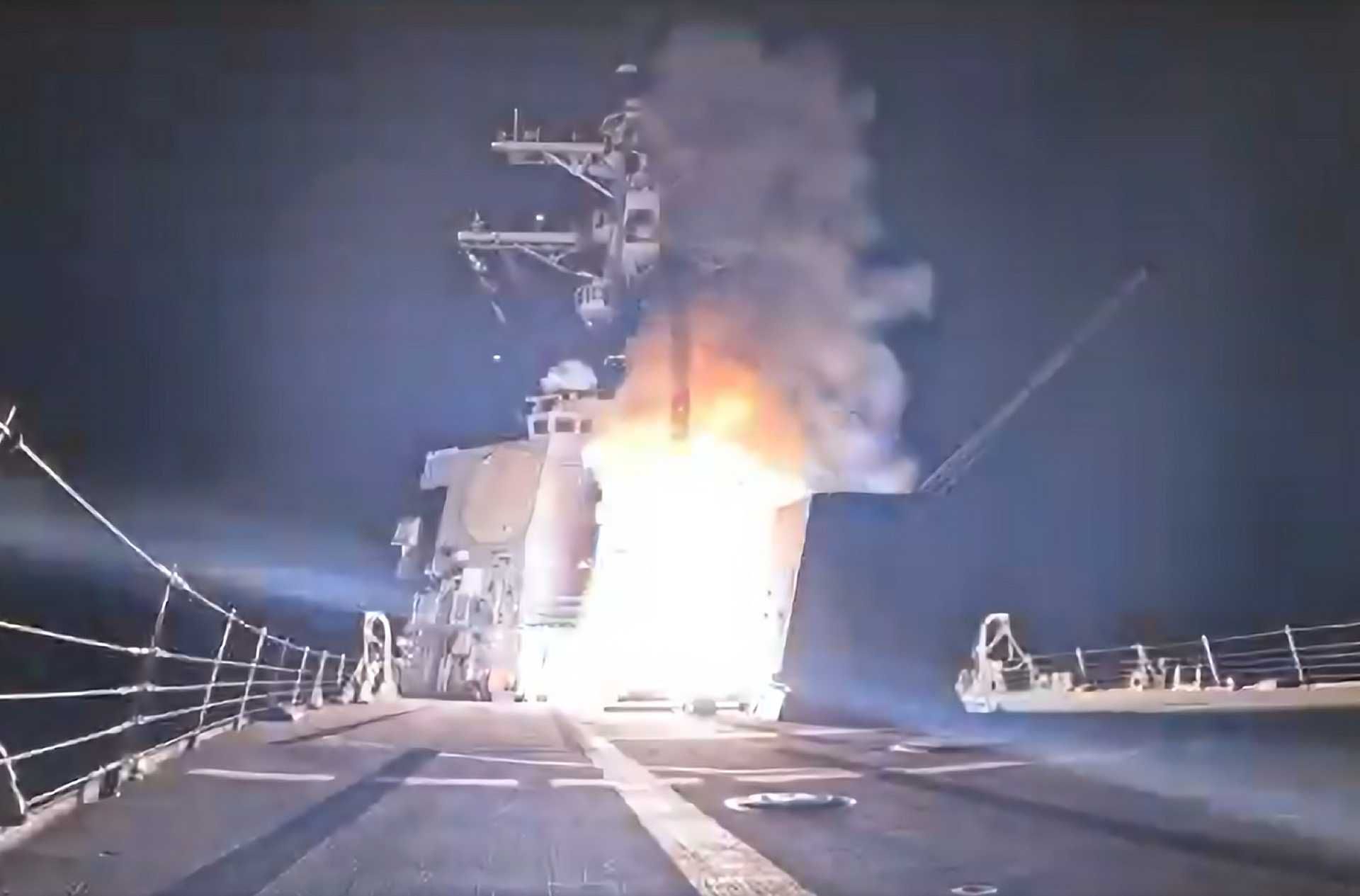
Still image from video footage released by the U.S. Department of War on December 25, 2025, showing the launch of a possible Tomahawk Land Attack Missile from a U.S. Navy Arleigh Burke-class guided-missile destroyer during a strike operation targeting ISIS elements in Sokoto State, Nigeria. (Picture source: U.S. Department of War)
Shortly after the release of the video, U.S. Africa Command (AFRICOM) issued a statement confirming the operation: “At the direction of the President of the United States and the Secretary of War, and in coordination with Nigerian authorities, U.S. Africa Command conducted strikes against ISIS terrorists in Nigeria on December 25, 2025, in Sokoto State.” The statement confirms that the strike was not unilateral but conducted with prior coordination with the Nigerian government, underlining the high-level authorization and regional partnership involved in the mission.
The video released on December 26, 2025, by the U.S. Department of War shows a vertical missile launch from a U.S. Navy surface vessel at night. According to technical analysis, the ignition pattern, launch angle, and exhaust plume suggest a launch from the Mk 41 Vertical Launching System (VLS), a standard feature aboard Arleigh Burke-class destroyers. While the footage does not identify the missile type, its visual profile is consistent with known Tomahawk Land Attack Missile (TLAM) launches observed in previous U.S. operations in Iraq, Syria, and Libya.
Arleigh Burke-class destroyers are multi-mission guided-missile warships and form the core of the U.S. Navy's surface combatant fleet. Equipped with the Aegis Combat System and up to 96 VLS cells, these ships are capable of launching a wide range of weapons, including Standard Missiles, ASROC anti-submarine weapons, and Tomahawk cruise missiles. Designed for air defense, anti-submarine warfare, and land attack missions, they are routinely deployed worldwide, including in the Gulf of Guinea and West African waters.
The BGM-109 Tomahawk is a long-range, subsonic cruise missile capable of engaging high-value targets at distances of more than 1,600 kilometers. It uses a combination of GPS, inertial navigation, and terrain contour matching to achieve precise strikes on fixed targets while flying at low altitudes to evade radar detection. The Tomahawk has been a mainstay of U.S. Navy precision strike capabilities since its first operational use in the 1991 Gulf War.
The confirmed location of the strike, Sokoto State in northwestern Nigeria, is an area with known activity by Islamic State West Africa Province (ISWAP), a U.S.-designated terrorist group. No post-strike damage assessment or casualty figures have been released at this time. The Nigerian government has not issued a formal public response, though the AFRICOM statement makes clear that coordination occurred in advance.
This strike also follows political developments in the United States. On November 1, 2025, former President Donald Trump publicly warned of potential U.S. military intervention in Nigeria, citing attacks on Christian communities by jihadist groups and what he described as Nigeria’s failure to protect religious minorities. He designated Nigeria a “country of particular concern” under U.S. religious freedom legislation and stated publicly that the United States could take direct action if the situation deteriorated further. While it remains unclear whether the December 25 strike was directly linked to those remarks, the timing aligns with the administration's elevated focus on regional counterterrorism operations.
Strategically, the use of a ship-launched missile represents a significant shift in how the U.S. conducts kinetic operations in Africa. Past strikes in Libya, Somalia, and the Sahel have largely depended on drone platforms and manned aircraft operating from land bases in Niger or Djibouti. In contrast, maritime-based precision strikes allow the U.S. military to operate with greater flexibility, lower personnel risk, and reduced reliance on regional infrastructure.
Naval launch platforms, particularly destroyers operating in international waters, also reduce the need for airspace access permissions or ground presence in politically sensitive areas. This gives the U.S. the ability to respond rapidly to emerging threats with minimal diplomatic friction. If the weapon used was indeed a Tomahawk cruise missile, it would demonstrate the increasing relevance of sea-based standoff strike capabilities in U.S. counterterrorism strategy.
As extremist groups continue to expand across West Africa and the Sahel, the December 25 operation may signal a broader adaptation in U.S. military posture, one that prioritizes mobility, precision, and minimal footprint. With the capacity to launch inland strikes from far offshore, U.S. naval forces are now positioned to play a central role in the next phase of operations against ISIS-affiliated networks in Africa.
Written by Alain Servaes – Chief Editor, Army Recognition Group
Alain Servaes is a former infantry non-commissioned officer and the founder of Army Recognition. With over 20 years in defense journalism, he provides expert analysis on military equipment, NATO operations, and the global defense industry.


Raj-Hindustani
Elite Member

USA is the biggest source of the problem today.U.S. Launches Airstrike on Nigeria Likely Using Tomahawk Missile from Arleigh Burke-Class Destroyer
- 25 Dec, 2025 - 22:29
- Naval News Navy 2025
The U.S. Department of War said on December 25, 2025, that American forces carried out a precision strike against Islamic State targets in Nigeria, releasing video of a missile launch from a Navy warship at sea. If confirmed, the operation would represent the first publicly known use of a sea-launched cruise missile against targets on Nigerian territory.
According to information published by the U.S. Department of War, the United States conducted a precision strike on December 25, 2025, targeting Islamic State positions inside Nigeria, as part of ongoing counterterrorism operations in West Africa. The announcement was accompanied by video footage of a missile launch from a U.S. Navy surface combatant operating offshore, prompting defense analysts to assess that the strike likely involved a Tomahawk cruise missile fired from an Arleigh Burke-class guided-missile destroyer, although the U.S. military has not formally confirmed the weapon system or the vessel involved.
Follow Army Recognition on Google News at this link
Still image from video footage released by the U.S. Department of War on December 25, 2025, showing the launch of a possible Tomahawk Land Attack Missile from a U.S. Navy Arleigh Burke-class guided-missile destroyer during a strike operation targeting ISIS elements in Sokoto State, Nigeria. (Picture source: U.S. Department of War)
Shortly after the release of the video, U.S. Africa Command (AFRICOM) issued a statement confirming the operation: “At the direction of the President of the United States and the Secretary of War, and in coordination with Nigerian authorities, U.S. Africa Command conducted strikes against ISIS terrorists in Nigeria on December 25, 2025, in Sokoto State.” The statement confirms that the strike was not unilateral but conducted with prior coordination with the Nigerian government, underlining the high-level authorization and regional partnership involved in the mission.
The video released on December 26, 2025, by the U.S. Department of War shows a vertical missile launch from a U.S. Navy surface vessel at night. According to technical analysis, the ignition pattern, launch angle, and exhaust plume suggest a launch from the Mk 41 Vertical Launching System (VLS), a standard feature aboard Arleigh Burke-class destroyers. While the footage does not identify the missile type, its visual profile is consistent with known Tomahawk Land Attack Missile (TLAM) launches observed in previous U.S. operations in Iraq, Syria, and Libya.
Arleigh Burke-class destroyers are multi-mission guided-missile warships and form the core of the U.S. Navy's surface combatant fleet. Equipped with the Aegis Combat System and up to 96 VLS cells, these ships are capable of launching a wide range of weapons, including Standard Missiles, ASROC anti-submarine weapons, and Tomahawk cruise missiles. Designed for air defense, anti-submarine warfare, and land attack missions, they are routinely deployed worldwide, including in the Gulf of Guinea and West African waters.
The BGM-109 Tomahawk is a long-range, subsonic cruise missile capable of engaging high-value targets at distances of more than 1,600 kilometers. It uses a combination of GPS, inertial navigation, and terrain contour matching to achieve precise strikes on fixed targets while flying at low altitudes to evade radar detection. The Tomahawk has been a mainstay of U.S. Navy precision strike capabilities since its first operational use in the 1991 Gulf War.
The confirmed location of the strike, Sokoto State in northwestern Nigeria, is an area with known activity by Islamic State West Africa Province (ISWAP), a U.S.-designated terrorist group. No post-strike damage assessment or casualty figures have been released at this time. The Nigerian government has not issued a formal public response, though the AFRICOM statement makes clear that coordination occurred in advance.
This strike also follows political developments in the United States. On November 1, 2025, former President Donald Trump publicly warned of potential U.S. military intervention in Nigeria, citing attacks on Christian communities by jihadist groups and what he described as Nigeria’s failure to protect religious minorities. He designated Nigeria a “country of particular concern” under U.S. religious freedom legislation and stated publicly that the United States could take direct action if the situation deteriorated further. While it remains unclear whether the December 25 strike was directly linked to those remarks, the timing aligns with the administration's elevated focus on regional counterterrorism operations.
Strategically, the use of a ship-launched missile represents a significant shift in how the U.S. conducts kinetic operations in Africa. Past strikes in Libya, Somalia, and the Sahel have largely depended on drone platforms and manned aircraft operating from land bases in Niger or Djibouti. In contrast, maritime-based precision strikes allow the U.S. military to operate with greater flexibility, lower personnel risk, and reduced reliance on regional infrastructure.
Naval launch platforms, particularly destroyers operating in international waters, also reduce the need for airspace access permissions or ground presence in politically sensitive areas. This gives the U.S. the ability to respond rapidly to emerging threats with minimal diplomatic friction. If the weapon used was indeed a Tomahawk cruise missile, it would demonstrate the increasing relevance of sea-based standoff strike capabilities in U.S. counterterrorism strategy.
As extremist groups continue to expand across West Africa and the Sahel, the December 25 operation may signal a broader adaptation in U.S. military posture, one that prioritizes mobility, precision, and minimal footprint. With the capacity to launch inland strikes from far offshore, U.S. naval forces are now positioned to play a central role in the next phase of operations against ISIS-affiliated networks in Africa.
Written by Alain Servaes – Chief Editor, Army Recognition Group
Alain Servaes is a former infantry non-commissioned officer and the founder of Army Recognition. With over 20 years in defense journalism, he provides expert analysis on military equipment, NATO operations, and the global defense industry.
They do not want and never allow people to live peacefully
Last edited:


StrategicBear
Registered Member

Why is it always the US "responsibility" to attack "Islamic State" targets? Plenty of other capable militaries in the West and East, yet it's always almost the US doing this kind of job all the time...
Makes one think they just invented this "fake enemy" to justify their military interventions in all places of the globe, right? China, Russia and the rest never seem to be doing this "fight terror all over the globe" farce because they don't have the desire for Global Domination like the US, only to protect their own Spheres of Influence and not being greedy like AmeriKKKa.
Makes one think they just invented this "fake enemy" to justify their military interventions in all places of the globe, right? China, Russia and the rest never seem to be doing this "fight terror all over the globe" farce because they don't have the desire for Global Domination like the US, only to protect their own Spheres of Influence and not being greedy like AmeriKKKa.

Liquidator
Trusted Member

Why is it always the US "responsibility" to attack "Islamic State" targets? Plenty of other capable militaries in the West and East, yet it's always almost the US doing this kind of job all the time...
Makes one think they just invented this "fake enemy" to justify their military interventions in all places of the globe, right? China, Russia and the rest never seem to be doing this "fight terror all over the globe" farce because they don't have the desire for Global Domination like the US, only to protect their own Spheres of Influence and not being greedy like AmeriKKKa.
IS is funded by western terror agencies (CIS, MI6 etc).
Remember, ISIS was initially propped up in Syria to be used against Assad. The British were there training them.....and now they have their boogeyman.
Still doesn't excuse Muslims being dumb enough to sign up and fight for them.

Ali_Baba
VIP Member
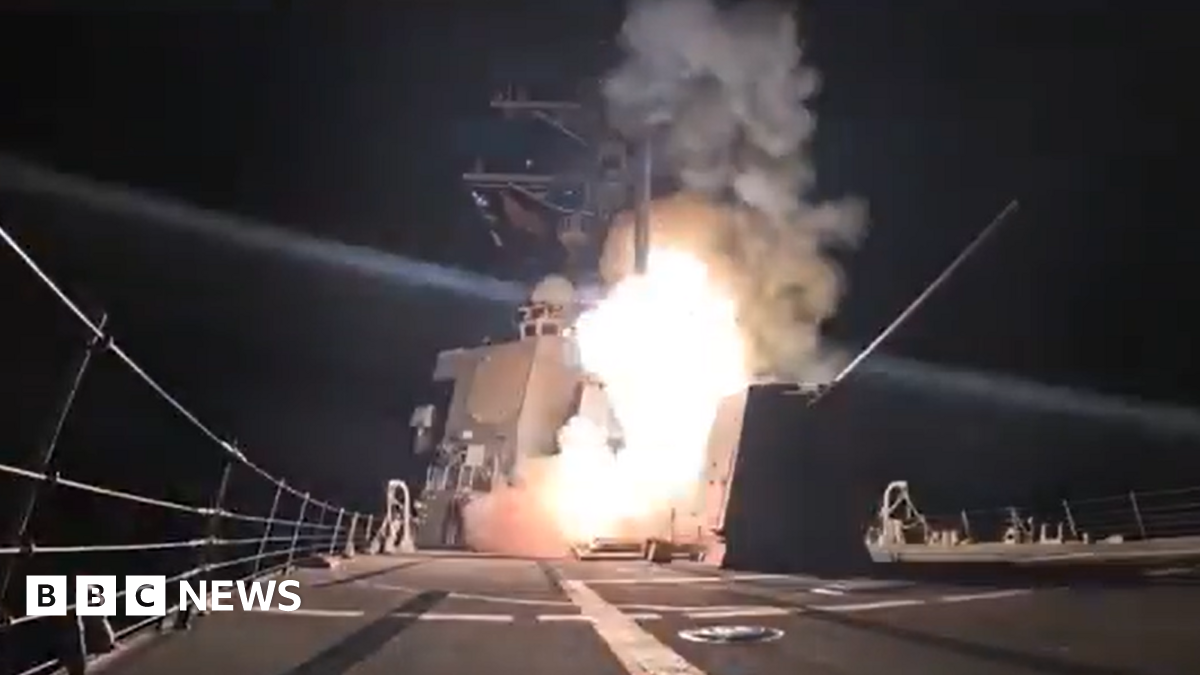
US launches strikes against Islamic State in Nigeria
 www.bbc.co.uk
>> I checked, and Nigeria has lots of oil too with a Global ranking of 10.
 en.wikipedia.org
US launches strikes against Islamic State in Nigeria
President Donald Trump has previously accused the Nigerian government of failing to protect Christians from jihadist groups.
www.bbc.co.uk
>> I checked, and Nigeria has lots of oil too with a Global ranking of 10.
Oil reserves in Nigeria - Wikipedia

VCheng
THINK TANK: CONSULTANT
>> I checked, and Nigeria has lots of oil too with a Global ranking of 10.
Did you check your own source for this gem of wisdom?
"Nigerian Foreign Minister Yusuf Maitama Tuggar told the BBC it was a "joint operation" and had "nothing to do with a particular religion"."

hussain0216
Elite Member
The U.S is a pirate at the moment, irrational, stupid, dangerous
Worse still, I don't think it will even work, is more likely to inflame the situation
Worse still, I don't think it will even work, is more likely to inflame the situation
VCheng
THINK TANK: CONSULTANT
The U.S is a pirate at the moment, irrational, stupid, dangerous
Worse still, I don't think it will even work, is more likely to inflame the situation
That is some nicely collaborative "piracy"!

"Tuggar said the strikes had been planned "for quite some time" and had used intelligence information provided by Nigeria. He also did not rule out further strikes."

Users who are viewing this thread
Total: 1 (members: 0, guests: 1)


