US Defence related thread

I suppose the same place Iran found it?
you are the one that claimed such a right exists under UNCLOS, not me. don't change the topic, stand by your arguments like a man.

tell us where in UNCLOS any country has the right to not only board a commercial oil tanker to investigate whether it is stateless but to then seize it and its property (as you claimed) ?
 
you are the one that claimed such a right exists under UNCLOS

And I posted it above already. To help you understand, please re-read the following:

Once a vessel is deemed stateless, the “jurisdictional impediments” of exclusive flag State jurisdiction are removed
 
And I posted it above already.
what you posted says a state has the right to board a ship temporarily, not to then seize it. I will repost what you provided below to remind you:

In these circumstances, warship personnel are authorized to board the ship and conduct a limited inquiry/search to determine whether there is any evidence of registration, such as papers or statements from the ship’s master, that identify a State of registration

so I ask you for the third time, where in UNCLOS does it say that any country has the right to not only board a commercial oil tanker to investigate whether it is stateless but to then seize it and its property (as you claimed) ?

I am not even going to waste time asking you to square the circle and prove the US is merely boarding these ships to verify its registration, LOL.
 
what you posted says a state has the right to board a ship temporarily, not to then seize it. I will repost what you provided below to remind you:

In these circumstances, warship personnel are authorized to board the ship and conduct a limited inquiry/search to determine whether there is any evidence of registration, such as papers or statements from the ship’s master, that identify a State of registration

To help you understand, please re-read the following:

Once a vessel is deemed stateless, the “jurisdictional impediments” of exclusive flag State jurisdiction are removed
 
To help you understand, please re-read the following:

Once a vessel is deemed stateless, the “jurisdictional impediments” of exclusive flag State jurisdiction are removed
I appreciate English may not be your first language, but the wording provided does not provide for a right to seize assets as soon as it is determined that the ship is stateless.

is the US boarding the ships to determine if they are stateless, or to stop any oil from being sent to Venezuela per US Government statements?
 
but the wording provided does not provide for a right to seize assets as soon as it is determined that the ship is stateless.

It does. There is no jurisdictional impediment in dealing with a stateless vessel.
 
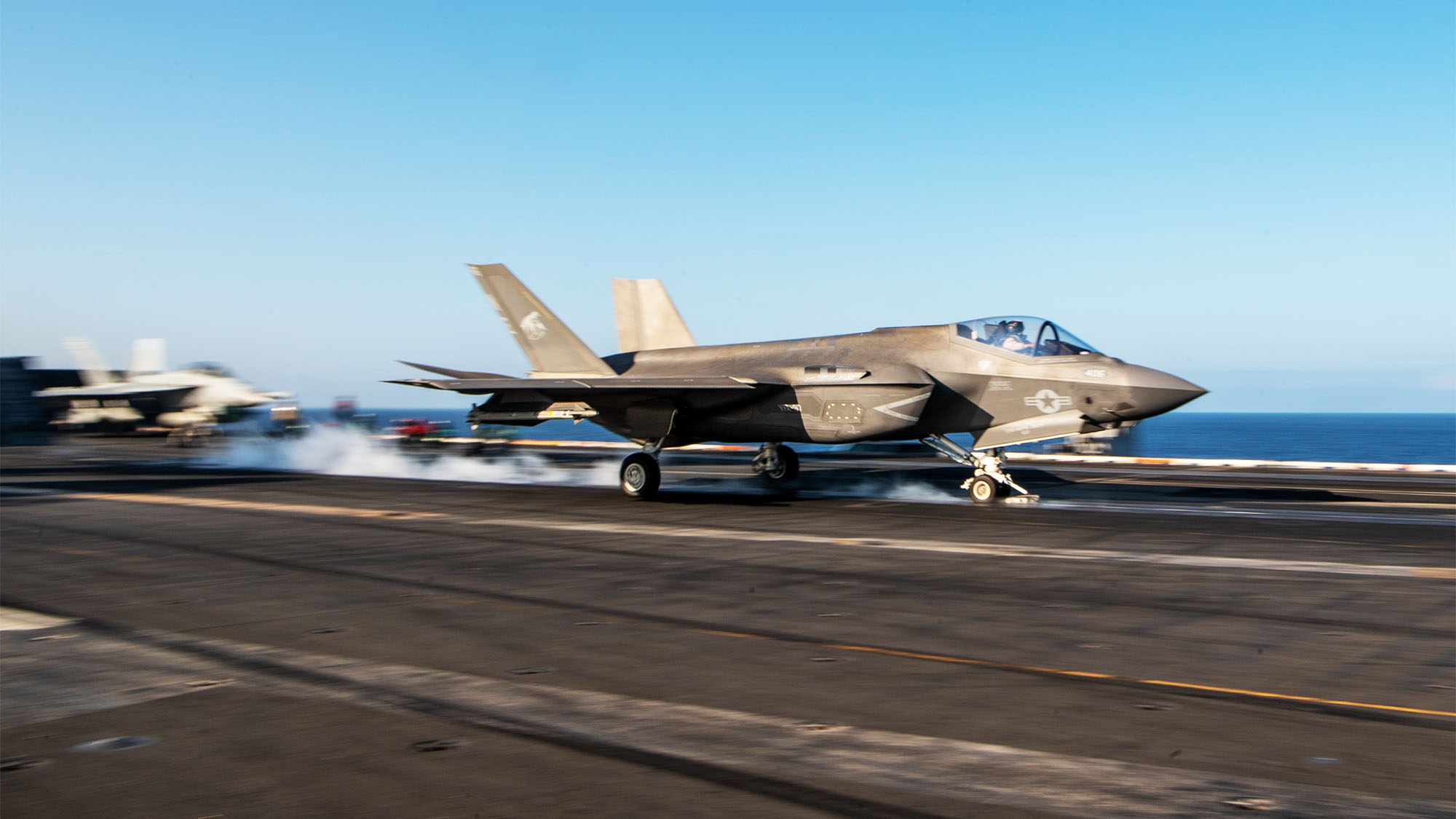
Emergency US Navy award to Leonardo UK to provide BriteCloud active Expendable decoys.

It is so urgent that they expect mass delivery for... 2026.

So here come the questions,

1.- Why to rush in purchasing and integrating an active radio frequency decoy in a "stealth" aircraft so urgently?.

2.- That points that F35 can be detected by radar enough to be shoot down via illuminator radars. Home on jam guidance is easy to deceive, F35 just need to shut down his radar to deceive the missile, but if this aircraft needs a urgent active decoy it is because it is essentially trackable even with turned off onboard radar.


3.- 4 Gen and 4.5 Gen aircraft have techniques to avoid incoming missiles. One of them is ejecting inboard weapons and pushing the trust to maximum, allowing via high speed to deplete the rocket (or ramjet) engine of the incoming missile. But F35 with notably slow maximum speed and low weight-trust ratio makes this technique much more dangerous.

4.- Pentagon recently cut the total procurement of F35 to nearly a half, and starting to press for the 6 Gen aircraft program.

All in all seems that Pentagon is loosing the faith in this program and indirectly recognizing it is not enough to confront the new air defense systems.
 
Emergency US Navy award to Leonardo UK to provide BriteCloud active Expendable decoys.

It is so urgent that they expect mass delivery for... 2026.

So here come the questions,

1.- Why to rush in purchasing and integrating an active radio frequency decoy in a "stealth" aircraft so urgently?.

2.- That points that F35 can be detected by radar enough to be shoot down via illuminator radars. Home on jam guidance is easy to deceive, F35 just need to shut down his radar to deceive the missile, but if this aircraft needs a urgent active decoy it is because it is essentially trackable even with turned off onboard radar.


3.- 4 Gen and 4.5 Gen aircraft have techniques to avoid incoming missiles. One of them is ejecting inboard weapons and pushing the trust to maximum, allowing via high speed to deplete the rocket (or ramjet) engine of the incoming missile. But F35 with notably slow maximum speed and low weight-trust ratio makes this technique much more dangerous.

4.- Pentagon recently cut the total procurement of F35 to nearly a half, and starting to press for the 6 Gen aircraft program.

All in all seems that Pentagon is loosing the faith in this program and indirectly recognizing it is not enough to confront the new air defense systems.

i dont think ive ever seen a post more full of mental gymnasics
 
I’m sure it has nothing to do with Nigeria being Africa’s largest oil producer.
 

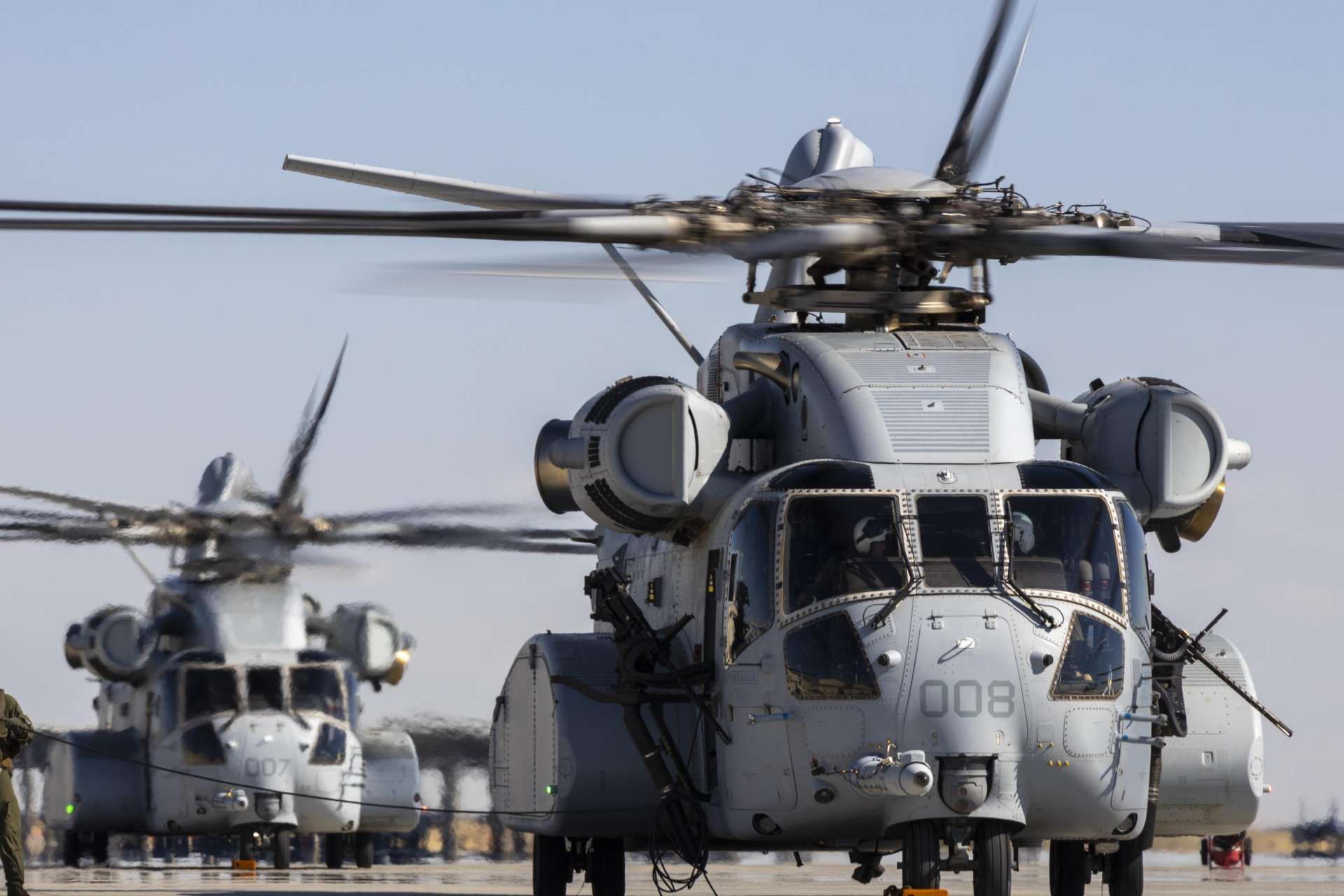
U.S. to Procure 12 CH-53K Helicopters for Marine Corps Under FY2026 Acquisition Plan​


The U.S. Marine Corps has secured funding for 12 CH-53K King Stallion heavy-lift helicopters in Fiscal Year 2026 as part of the Department of War budget released on December 29, 2025. The investment signals a decisive shift from limited fielding to sustained production, strengthening Marine aviation lift capacity and industrial stability.

The Marine Corps’ most powerful helicopter is no longer a niche capability entering service in limited numbers. With FY2026 defense budget planning documents indicating funding for approximately a dozen CH-53K King Stallion aircraft, Marine aviation planners are signaling that the heavy-lift platform is moving beyond cautious initial fielding toward a more stable production rhythm. This transition is supported by a multiyear procurement framework involving the Department of Defense, the U.S. Navy, and manufacturer Sikorsky, aimed at stabilizing production and reducing long-term acquisition costs.


The U.S. Marine Corps has secured FY2026 funding for CH-53K King Stallion helicopters, signaling a shift toward sustained production (Picture Source: NAVAIR / U.S. Marines Corps)

The U.S. Marine Corps has secured FY2026 funding for CH-53K King Stallion helicopters, signaling a shift toward sustained production (Picture Source: NAVAIR / U.S. Marines Corps)


The CH-53K now serves as the most powerful heavy-lift helicopter in U.S. military history, with an external lift capacity of up to 36,000 pounds using its center cargo hook. It is designed to transport 27,000 pounds of payload over a distance of 110 nautical miles in high-temperature, high-altitude conditions, meeting the most demanding lift requirements set by the Marine Corps. Powered by three GE Aerospace T408-GE-400 turboshaft engines generating more than 22,500 total shaft horsepower, the aircraft delivers a substantial increase in lift and mission capability compared to the legacy CH-53E Super Stallion.


Beyond raw power, the CH-53K incorporates a range of modern technologies intended to improve operational effectiveness and survivability. A fully integrated fly-by-wire flight control system enhances stability and safety, particularly in degraded visual environments, while reducing pilot workload during complex external lift operations. Composite main rotor blades and a split-torque main gearbox enable higher lift performance without increasing rotor diameter, preserving compatibility with existing amphibious assault ships and expeditionary operating sites.

The helicopter is equipped with a digital glass cockpit featuring large-area multifunction displays, integrated mission planning systems, and networked avionics. Survivability enhancements include ballistic-tolerant fuel tanks, a crashworthy airframe, and integrated threat detection and countermeasure systems designed to support operations in contested environments. Secure communications, satellite connectivity, and rapid reconfiguration options allow the aircraft to support a wide range of missions, from troop transport and casualty evacuation to sustained logistics resupply.

FY2026 funding plans include both procurement funding for new aircraft and advance procurement allocations intended to secure long-lead components for future production lots. This approach aligns with the Navy’s and Marine Corps’ objective of establishing a predictable multiyear production cadence, supporting supplier stability, workforce retention, and improved logistical resilience across the industrial base.

The CH-53K’s primary mission remains ship-to-shore transport of heavy equipment, including Joint Light Tactical Vehicles, artillery systems, and other expeditionary logistics assets essential to forward-deployed Marine Air-Ground Task Forces. Its marinized design, corrosion-resistant materials, and automated blade-folding system enable sustained operations from amphibious assault ships and in saltwater environments, reinforcing its role within Expeditionary Advanced Base Operations concepts focused on contested maritime logistics.

As the United States Marine Corps continues to implement distributed force design concepts and expands its operational focus on the Indo-Pacific and other maritime theaters, the CH-53K is increasingly positioned as a central element of its tactical mobility architecture. FY2026 represents an important phase in this transition, as procurement levels remain steady and the aircraft’s presence expands across operational squadrons and training units.

Although the program experienced cost growth, schedule pressure, and technical maturation challenges earlier in its lifecycle, the CH-53K has entered a period of more stable production and growing operational confidence. The continued reliance on a multiyear procurement structure reflects both improved industrial maturity and the Pentagon’s assessment of the platform’s long-term relevance to amphibious and expeditionary operations. The FY2026 posture for the CH-53K highlights a sustained commitment to recapitalizing Marine Corps heavy-lift aviation while reinforcing a long-term investment in high-performance rotary-wing capabilities adapted to evolving operational demands.
 

The US Air Force’s Biggest Problem Isn’t Russia Or China Anymore

By Jack Buckby
Published Dec. 30, 2025

Synopsis: The U.S. Air Force is attempting a sweeping modernization push, replacing aging Cold War-era aircraft with next-generation systems meant to preserve air dominance into the mid-21st century. In fact, the Air Force’s biggest problem isn’t China or Russia, persay, but getting ready to deal with the modernization needs to tackle both nations if a war ever occurred.

-The effort spans NGAD’s sixth-generation “family of systems,” continued F-35A procurement, F-15EX buys as a near-term hedge, and the B-21 Raider stealth bomber—plus critical enablers like the KC-46 tanker and T-7 trainer.

-But the bill is enormous, and the “divest to invest” strategy is politically difficult as Congress resists retiring legacy fleets. With China modernizing quickly, the real question becomes not whether the Air Force can afford it—but how it can’t.

The Big Problem: Can the Air Force Afford NGAD, B-21, F-35, and F-15EX All at Once?

In recent years, the United States Air Force has pushed ahead with an ambitious program to modernize nearly every primary aircraft type in its inventory – and despite budget pressures and schedule slippage, those efforts are moving ahead (essentially) as planned.

From next-generation fighters to stealth bombers and new trainer jets, the service is attempting to replace aging Cold War-era platforms with high-tech systems designed to maintain U.S. military dominance well into the mid-21st century.

Those efforts come as the fast pace of Chinese military growth becomes increasingly alarming, and as defense budgets constantly shift, forcing the Air Force and the Pentagon into a situation where affordability and strategic necessity are constantly at odds.

What the Air Force Is Buying – and What It Will Cost

The U.S. Air Force’s Fiscal Year 2026 budget reflects the scale of the ongoing investments. The service requested approximately $209.6 billion to operate and modernize its forces – an increase of nearly $25 billion over the previous year – with significant funds earmarked for new aircraft procurement and research and development.

At the heart of the modernization is the Next Generation Air Dominance (NGAD) program – a sixth-generation fighter family of systems that includes both a crewed fighter and a fleet of connected unmanned “loyal wingman” drones.

NGAD has been repeatedly framed by Air Force leadership as essential to countering advanced adversary air defenses and maintaining air superiority, which by all measures it is – but details on cost and procurement numbers are still far off from being accurate or confirmed.

Industry reporting and analysis have suggested that the program will be one of the most expensive in Air Force history, with estimates that individual platforms could cost more than existing fighters to procure and operate.

And that seems perfectly likely, given the cutting-edge technologies that will need to be integrated at scale.

Meanwhile, the Air Force’s current fighter fleet modernization efforts include the Lockheed Martin F-35A Lightning II. In the FY2025 defense budget, the Pentagon asked for roughly $12.4 billion to procure F-35 aircraft and support ongoing development, including 42 F-35As for the Air Force.

The Joint Strike Fighter Program – which birthed the F-35 – is the largest U.S. aircraft procurement effort ever undertaken, with total development and production costs projected at more than $485 billion for thousands of jets across all services.

And alongside stealth fighters, the Air Force is also buying F-15EX Eagle II aircraft as a near-term hedge. The multirole jets are meant to replace aging F-15C/D models and are less expensive on a per-aircraft basis than stealth platforms – but that being said, the costs remain substantial.

Recent budget activity surrounding F-15EX purchases has indicated a cost of $3.1 billion for planned purchases of two dozen aircraft – an acquisition designed to maintain force structure while newer systems begin to enter service. Reports also suggest that the Air Force could increase F-15EX procurement to 36 jets annually with sufficient funding.

But arguably the most visible part of the modernization program is the B-21 Raider, in part because the aircraft and its predecessor, the B-2 Spirit, are so iconic.

The upcoming stealth bomber, intended to replace both the B-1 and B-2 fleets, is under development by Northrop Grumman and is designed to carry both conventional and nuclear weapons; the Air Force is already aiming for at least 100 aircraft.

Should analysts get their way, procurement could reach 200. Unit costs have been reported to be extraordinarily high, however, at as much as $800 million per aircraft – a figure that reflects the complexity of the program.

Lawmakers even approved an additional $1 billion in funding for bomber infrastructure to support construction and basing improvements.

Beyond fighters and bombers, the Air Force is also investing in support platforms like the KC-46A tanker, used for aerial refueling, and the T-7A Red Hawk trainer, designed to replace the decades-old T-38 fleet. These systems are critical to sustainment and force generation, but they add billions more to the overall cost of modernization.

Can the Air Force Afford It?

With all that spending, it’s hard to ignore the question: Can we afford this?

Service leadership has repeatedly stressed the concept of “divest to invest,” arguing that retiring legacy aircraft is necessary to free up funds for advanced systems – but congressional resistance to retiring older platforms complicates the trade-off.

Budget pressure from other defense priorities is creating tension over funding allocation. In short: it’s a mess.

Some argue that the Air Force’s planned procurement rates still fall short of what would be needed to counter major threats.

Some reports have indicated that to meet stated force structure goals fully, the Air Force would need to buy roughly 100 F-35s and more than three dozen F-15EXs annually – far above current production levels and potentially pushing industry capacity to the limit.

And while it could be argued that spending must be reined in, it’s essential to consider the context underpinning all the decisions being made: China’s rapid military modernization.

The Pentagon’s annual China Military Power Report has shown just how much sustained growth the People’s Liberation Army continues to see in capabilities, spanning advances in fighter aircraft, missile systems, and integrated air defenses.

And while China’s defense budget remains lower on paper than that of the United States, its industrial base has been rapidly expanding production capacity for modern combat aircraft, iterating more quickly than that of the United States, and presenting a significant challenge for U.S. planners who must balance both quality and quantity of American assets.

Ultimately, the question may not be “can we afford it?” but “how can we afford it?”

Without continued U.S. development and significant investments in American infrastructure and industrial systems, the U.S. risks exposing itself to new vulnerabilities as China increases production tempo and narrows the technological-capability gap with the world’s most significant air force.
 
"The sky is falling! The sky is falling!". - Chicken Little. :D
 
As percentage of GDP, the US is still spending less than it did during the Cold War.
 

Users who are viewing this thread

Back
Top