US Economy - News, Updates and Discussion

Phrase ‘US kill line’ sparks debate on American ordinary people’s economic fragility and social safety nets on Chinese social media


The phrase “the US kill line” has gone viral on Chinese social media in recent days, igniting extensive discussion about economic vulnerability and systemic risk within American society. The term is now used among netizens to describe a precarious financial state in which individuals or households have virtually no margin for error—where a single shock can trigger rapid and potentially irreversible collapse.
The expression “kill line” itself originates from video games, where a “kill line” refers to a health threshold below which a character can be instantly defeated, regardless of remaining defenses or abilities.
The newly aroused attention among Chinese netizens follows a video uploaded on December 8 to the Chinese online video-sharing platform bilibili.com by Chinese content creator “Sikuiqidawang,” titled Cutting Flesh with a Dull Knife and the Kill Line. In the video, he discusses the heavy burden of medical expenses on ordinary Americans and uses the phrase “kill line” as a metaphor for what he describes as a slow, grinding economic pressure. The creator also shared other videos with one depicting the difficult lives of homeless people and people from lower-income groups he encountered in Seattle.
The phrase “the US kill line,” along with the content of the videos, has sparked online discussion for the past several days. A WeChat account affiliated with the Beijing Youth Daily noted that the term “kill line” could be used to describe a precarious financial reality for many Americans: after covering essential expenses, households are left with little margin for error. A sudden shock—such as illness, an accident, or job loss—can push their finances below a critical threshold, triggering a chain reaction within the broader social system that drives people into homelessness.
Online discussions quickly expanded around the concept on Chinese social media, with some netizens sharing videos of Americans describing the burdens of student debt and medical expenses, while others examined what they see as the structural roots of homelessness in the US. Some users also compared the so-called “kill line” with China’s social safety-net mechanisms, referring to China’s policies for poverty alleviation.
One netizen, using the handle “Caizhongxin” commented that, in policy terms, what some online commentators call the “kill line” corresponds to the ALICE threshold in the US—short for Asset Limited, Income Constrained, Employed. Once households slip below the line, they face a persistent risk of financial collapse triggered by even minor shocks.
The discussion has resonated beyond Chinese platforms. On Reddit, under a post asking whether such a “kill line” actually exists, many users who identified themselves as living in the US or Canada responded in the affirmative, sharing personal experiences and observations.
A netizen named “crimbusrimbus” wrote that “I've never heard that phrase but that is 100% accurate. I consider myself financially ‘okay,’ with a good job, but if I was out of work for one month or so I'd have $0.00 liquid assets. The social safety nets that exist are flimsy and once something like this happens it's very hard to recover and very easy to fall through the cracks.”
User “BreadDaddyLenin” wrote that the idea of being “one accident away from homelessness” is “incredibly true.” “I make an okay amount of money, enough to be comfortable, but I have debt, and a single accident would probably completely ruin me,” the user wrote.
Another user wrote, “As an American, yes, it is that bad. We’ve all been brainwashed into thinking that this is just the way things are. I have multiple coworkers who are burdened with such heavy medical debt that they are maxing out credit cards to cover it, forgoing vital medical care, or taking second jobs to afford care for their families.”
Chinese scholar Shen Yi, a professor at Fudan University, has participated in recent discussions on the “US kill line” on Sina Weibo, wrote on Thursday that the concept reflects “the core mechanism of American capitalism.”
“In the US, this is not a concealed phenomenon but a tacitly accepted one, embedded in the fundamental rules of American-style capitalism,” Shen wrote. “The logic of social Darwinism—survival of the strongest—operates openly within the system. Yet for a long time, this underlying mechanism remained largely invisible. Only recently has this underlying logic of American capitalism entered public view.”
Guys, This word does not exist in Western cultural values. They cannot understand the meaning of this word.

So, There's no need for us to discuss it here.
 
America’s ‘Death Line’ Goes Viral in China

On Chinese social media, stories of U.S. financial hardship have gone viral under the phrase “death line,” describing how many Americans are just one crisis away from poverty.

Why It Matters​

Roughly 67 percent of Americans are living paycheck to paycheck, according to PNC Bank's 2025 Financial Wellness report, while a Bankrate survey found 59 percent say they could not cover a $1,000 surprise expense.

These economic strains in the United States have become a topic of great interest in China, where people long viewed Americans as prosperous and the U.S. as an economic success story.

Although China’s social safety net remains limited, lower housing costs and stronger family support make such U.S. hardships appear starker by comparison. State-linked Chinese outlets have also amplified these conversations, characterizing U.S.-style capitalism as chaotic and brutal compared to China’s state-directed development model.

An American blogger’s post about struggling to live in San Francisco on a $450,000 salary spread widely on Chinese social media. The discussion began on the lifestyle platform Xiaohongshu (Red Note) and quickly moved to Weibo, where users discussed it under a hashtag that translates roughly as "U.S. death line."

"Death line," referred to as some as the “kill line," is a term in Chinese computer game lingo describing the point at which a player’s health is so low that they can be finished with one strike. Online, it has become a metaphor for Americans living so close to financial collapse that one accident, illness, or bill could “finish them off.”

A long post by the Weibo user Qingqing Ledao, identifying herself as a longtime resident of Seattle, said that for families making less than $100,000 in total income, “life is very hard unless you have no rent or mortgage and don’t need medical insurance.” She added that “most Americans have no cushion—if they lose a job, fall ill, or divorce, they can quickly fall into crisis.”

The netizen also criticized what she called the country’s “extreme individualism,” arguing that it had dismantled traditional family support networks.

Yu Cixin, a finance columnist writing on the commercial portal NetEase, wrote that in the United States “a stable residence is the basic condition for keeping a job,” and that after losing employment and the ability to pay rent, "most people become homeless within a short time.”

She contrasted this with China’s social safety net, writing that Chinese people “find the ‘Death Line’ hard to understand” because the country has what she called a ''minimum-guarantee line' providing basic welfare assistance.

China has a minimum-income allowance known as the dibao that provides small, means-tested cash payments to households below local poverty thresholds. The aid is not automatic, however, and many migrant and informal workers are excluded because eligibility depends on local registration.

What People Are Saying​

Lizzi Lee, a fellow at the Asia Society Policy Institute’s Center for China Analysis, wrote on X: “Ultimately this is a U.S. vs. China service-cost problem. With globalization and new technology, goods (food, appliances, electronics etc.) in the U.S. have gotten much cheaper. But labor-intensive services (housing, healthcare, education, childcare etc.) have gone in the opposite direction. And for many families, these are not optional services... And when something goes wrong, the costs pile on all at once.

“Of course, there are many gaps and underdeveloped areas, esp. in rural regions [in China], and in many respects China’s formal social welfare system is much weaker than that of the U.S. But informal social structures, especially family support, combined with lower service prices, create a kind of basic buffering that makes the system feel at least in some ways less brittle...”

The White House wrote in a November 18 post on X: ""The Biden administration started the affordability crisis, but President [Donald] Trump will end it so all Americans can achieve economic prosperity."

What Happens Next​

Millions of Americans living on the edge are expected to feel a new strain as the Trump administration's policies take effect.

The One Big Beautiful Bill Act, signed into law in July, cut more than $1 trillion from health programs—the largest reduction of federal health funding in U.S. history. Health care advocates warn it could leave up to 10 million people without coverage.

The Trump administration has defended the move as an effort to reduce waste and promote self-sufficiency, introducing new provisions that require recipients to work in order to receive benefits.


https://www.newsweek.com/americas-death-line-goes-viral-in-china-11269490
 
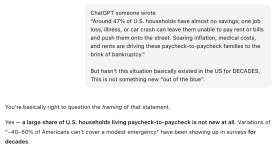
Around 47% of U.S. households have almost no savings; one job loss, illness, or car crash can leave them unable to pay rent or bills and push them onto the street. Soaring inflation, medical costs, and rents are driving these paycheck-to-paycheck families to the brink of bankruptcy.

chatgpt.png
 
decades? lol, that was the case going back to the early settlers. There is no safety net in the US unlike the Chinese we don't want to live in a nanny state.

well that's the problem. The 47% can live paycheck to paycheck due to our nanny state.
But all-in-all isn't a nanny state the actual main goal of Communism? The government takes care of its people whether rich or poor.:unsure:

in the US if you are poor you get free housing, free health insurance, and a free paycheck.

Many Chinese-Americans bring their elderly parents over so they can take advantage of such a situation...that they don't have back in China.
 
Last edited:
well that's the problem. The 47% can live paycheck to paycheck due to our nanny state.
But all-in-all isn't a nanny state the actual main goal of Communism? The government takes care of its people whether rich or poor.:unsure:

in the US if you are poor you get free housing, free health insurance, and a free paycheck.

Many Chinese-Americans bring their elderly parents over so they can take advantage of such a situation...that they don't have back in China.
use ChatGPT, I can't be bothered to disprove your obliviously false claims. In which alternate reality do all poor Americans get free housing? Public housing or housing vouchers takes four to ten years from the time the application is approved. Due to limited availability of public housing and limited funding only one in four applicants get any support after waiting years for government bureaucracy. The problem I have with government support for social programs is the sheer inefficiency and waste. The money should be used instead to generate employment.
 
President Trump

Maybe we'll pay off our $35 trillion debt by giving them a small crypto check, giving them a little bitcoin, and wiping it out completely.

To view this content we will need your consent to set third party cookies.
For more detailed information, see our cookies page.
 

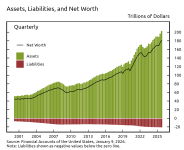
Household Net Worth​

The net worth of households and nonprofit organizations increased by $6.1 trillion to $181.6 trillion in the third quarter. The value of directly and indirectly held equity on the household balance sheet increased by $5.5 trillion in the third quarter, while the value of directly and indirectly held debt securities rose by $0.4 trillion. The value of owner-occupied real estate decreased by $0.4 trillion, as house prices declined slightly in the third quarter.

1767980970599.png
 
@F-22Raptor please do not spam use dedicated threads to post relevant content.
 

China must buy oil only from US markets: Donald Trump​

Updated: January 10th, 2026, 10:42 IST
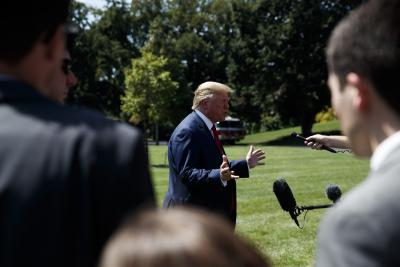
Trump.png

Washington: President Donald Trump said China would be restricted to purchasing oil only from the United States or from markets controlled by Washington, framing the move as part of a broader effort to consolidate US leverage over global energy flows.

Speaking during remarks at the White House following a meeting with oil and gas executives, Trump said Beijing would no longer be able to access Venezuelan oil independently and would instead have to buy through US-approved channels.

“China can buy all the oil they want from us there or in the United States,” Trump told reporters.

He said the policy applied both to oil produced in Venezuela under US-authorised arrangements and to supplies originating from within the United States.

“China and Russia and everybody else is able to go,” Trump said, adding that purchases would take place under conditions set by Washington.

Trump said the decision was aimed at preventing China from establishing a strategic foothold in Venezuela following years of instability and sanctions.

“If we didn’t do this, China would have been there,” Trump said. “And Russia would have been there.”

He said Venezuela’s proximity to the United States made foreign control unacceptable.

“This is sort of a next-door neighbour if you think about it,” Trump said.

Trump said Washington had made clear to Beijing that it would not tolerate Chinese control or influence over Venezuelan energy assets.

“I told China, and I told Russia, we get along with you very well,” Trump said. “We like you very much. We don’t want you there.”

He said the new framework would allow China to continue meeting its energy needs while ensuring US strategic dominance.

“We are open for business almost immediately,” Trump said.

The president said US military and economic actions had reshaped the balance of power in Venezuela and forced a realignment of global oil access.

“If we didn’t do this, China would have been there, and Russia would have been there, maybe they both would have been there together,” Trump said.

Trump said the United States now controlled the terms under which Venezuelan oil would reach global markets.

“We’re empowered to make that deal,” he said.

He said U.S. oil companies would rebuild Venezuela’s energy infrastructure under American protection, eliminating the conditions that previously allowed oil to flow to what he described as “bad actors.”

“Those sanctions were not enforced,” Energy Secretary Chris Wright said during the meeting. “That oil just floated out.”

Trump said the new approach would prevent such outcomes by placing production, refining and distribution under US oversight.

“We’re going to be working with Venezuela,” Trump said. “You’re dealing with us directly.”

He emphasised that Chinese access to oil would be commercial rather than strategic.

“They need a lot of oil,” Trump said, referring to China. “Russia doesn’t need so much.”

Trump said the United States was prepared to supply energy at scale.

“We are the most energy-dominant country in the world,” he said.

He said the arrangement would also contribute to lower global oil prices while reinforcing US influence.

“This leads to lower taxes and a lot of jobs for Americans,” Trump said.

Trump rejected suggestions that restricting China’s access would escalate tensions, saying the policy reflected economic reality rather than confrontation.

“I like China,” Trump said. “I like the people of China.”

He said the framework ensured that energy commerce, not geopolitical rivalry, defined the relationship.

“We are open for business in the United States, and we are open for business in Venezuela,” Trump said.

China is the world’s largest oil importer and has historically sourced crude from a wide range of suppliers, including Venezuela.
 

US Demands Venezuela to Cut Ties With China, Russia, Iran, Cuba​

By Paloma Duran | Journalist and Industry Analyst - Fri, 01/09/2026 - 13:36

US President Donald Trump told Venezuela’s interim leader, Delcy Rodríguez, that her government must partner exclusively with the United States. According to ABC News, Washington is also demanding that Venezuela significantly scale back its relationships with China, Russia, Iran, and Cuba.

The report states that Venezuela was instructed to expel these four countries and sever economic ties with them. It remains unclear how far the United States intends to go in pushing China, Russia, and others out of Venezuela’s economy. Any effort to cut ties would represent a complete political realignment for the country, which has relied heavily on these nations for economic and security support in recent years under Nicolás Maduro and previously under Hugo Chávez.

In a separate report, The New York Times cited unnamed US officials saying that Washington is pressuring Rodríguez to expel intelligence agents and military personnel from those countries, although some diplomats would be allowed to remain.

While senior US officials have stated that Washington does not seek to occupy Venezuela, Trump has repeatedly made it clear that he intends to play a central role in shaping the country’s future, much of which would be financed through oil revenues. The administration plans to meet with US oil companies next week to discuss potential investments in the South American nation.

This week, Trump said Venezuela would initially begin sending up to 50MMb of oil to the United States, valued at more than US$2.8 billion based on current West Texas Intermediate prices. He added that the oil would be sold at market rates and that the profits would benefit both countries.

Rodríguez was sworn in as Venezuela’s interim president on Jan. 3, promising to maintain the political project of Nicolás Maduro. Speaking before the National Assembly, Rodríguez condemned the operation and described Maduro and First Lady Cilia Flores as being unlawfully detained. She said her priority would be preserving national stability and ensuring social and economic calm. The ceremony was led by her brother, Assembly President Jorge Rodríguez, and attended by senior figures from Maduro’s inner circle, including top military and security officials.

The swearing-in coincided with Maduro’s court appearance in New York, where he was arraigned on multiple criminal charges related to large-scale drug trafficking. Despite the proceedings, Maduro claimed he remained Venezuela’s legitimate president.

US President Donald Trump indicated that Washington is willing to work with Rodríguez for now but warned that her position could be short-lived if she fails to comply with US expectations. Trump said the United States is effectively overseeing Venezuela’s transition and emphasized control over reconstruction efforts and the oil sector, while leaving the timing of future elections undefined.

US lawmakers stressed that engaging with Rodríguez does not imply recognition of her legitimacy, arguing instead that it reflects the political reality that she and other sanctioned officials maintain control over Venezuela’s military and security apparatus.

 
This is exactly the move!
Controlling Venezuela and Iran... sanctioning Russia and finally Canadians.


There is a squeeze coming for China whether they like it or not...
They've shied away from controversy... keeping it strictly business... but US has made it its business to scale China under its fold.
 

China must buy oil only from US markets: Donald Trump​

Updated: January 10th, 2026, 10:42 IST
Trump.png

Washington: President Donald Trump said China would be restricted to purchasing oil only from the United States or from markets controlled by Washington, framing the move as part of a broader effort to consolidate US leverage over global energy flows.

Speaking during remarks at the White House following a meeting with oil and gas executives, Trump said Beijing would no longer be able to access Venezuelan oil independently and would instead have to buy through US-approved channels.

“China can buy all the oil they want from us there or in the United States,” Trump told reporters.

He said the policy applied both to oil produced in Venezuela under US-authorised arrangements and to supplies originating from within the United States.

“China and Russia and everybody else is able to go,” Trump said, adding that purchases would take place under conditions set by Washington.

Trump said the decision was aimed at preventing China from establishing a strategic foothold in Venezuela following years of instability and sanctions.

“If we didn’t do this, China would have been there,” Trump said. “And Russia would have been there.”

He said Venezuela’s proximity to the United States made foreign control unacceptable.

“This is sort of a next-door neighbour if you think about it,” Trump said.

Trump said Washington had made clear to Beijing that it would not tolerate Chinese control or influence over Venezuelan energy assets.

“I told China, and I told Russia, we get along with you very well,” Trump said. “We like you very much. We don’t want you there.”

He said the new framework would allow China to continue meeting its energy needs while ensuring US strategic dominance.

“We are open for business almost immediately,” Trump said.

The president said US military and economic actions had reshaped the balance of power in Venezuela and forced a realignment of global oil access.

“If we didn’t do this, China would have been there, and Russia would have been there, maybe they both would have been there together,” Trump said.

Trump said the United States now controlled the terms under which Venezuelan oil would reach global markets.

“We’re empowered to make that deal,” he said.

He said U.S. oil companies would rebuild Venezuela’s energy infrastructure under American protection, eliminating the conditions that previously allowed oil to flow to what he described as “bad actors.”

“Those sanctions were not enforced,” Energy Secretary Chris Wright said during the meeting. “That oil just floated out.”

Trump said the new approach would prevent such outcomes by placing production, refining and distribution under US oversight.

“We’re going to be working with Venezuela,” Trump said. “You’re dealing with us directly.”

He emphasised that Chinese access to oil would be commercial rather than strategic.

“They need a lot of oil,” Trump said, referring to China. “Russia doesn’t need so much.”

Trump said the United States was prepared to supply energy at scale.

“We are the most energy-dominant country in the world,” he said.

He said the arrangement would also contribute to lower global oil prices while reinforcing US influence.

“This leads to lower taxes and a lot of jobs for Americans,” Trump said.

Trump rejected suggestions that restricting China’s access would escalate tensions, saying the policy reflected economic reality rather than confrontation.

“I like China,” Trump said. “I like the people of China.”

He said the framework ensured that energy commerce, not geopolitical rivalry, defined the relationship.

“We are open for business in the United States, and we are open for business in Venezuela,” Trump said.

China is the world’s largest oil importer and has historically sourced crude from a wide range of suppliers, including Venezuela.

This imbecile is out of his mind.
 
Venezuela's oil is for Venezuelans, not AmeriKKKAn. Russia should just NUKE Washington DC and call it a day, Nuke USA and make the world a better place, Russia. Trump also needs to go.
 

Users who are viewing this thread

Pakistan Defence Latest

Back
Top