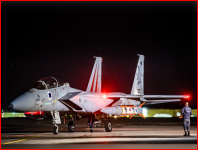
PAF J-10CE News, Updates and Discussion

Status
Not open for further replies.
Fair enough... I may be wrong but I think we will see a couple of IOC J-35 in Pakistan for evaluation in 2026.
A year or so for thorough testing and then some PAF requirements will be given to Chinese. By end 2027, they will be completed and first 4-6 aircraft will be inducted in 2028.
With a block building approach, rest of them will be completed by 2030.
This is just my personal analysis and can be completely off. Things will become more clear in a year or so.
I think this is a reasonable estimate for the timeline of J-35s....

Spend two years on evaluation and testing and recommending the changes.

Once approved, it will hardly take one year or two for Chinese factories to deliver the whole 40 or so J-35s lot since by 2028 they will be producing 80-100 per year anyway.

Last but not the least is that we have time, not that we are in a hurry because IAF will still be buying and receiving obsolete Rafales in 2030.....while PAF would have had jumped ahead to 5th Gen......unless pissraelis try to do something stupid between now and 2030 in which case J-35s will need to be fast tracked.

This gives us 3-4 years to sort the financing.
 
What major difference Export version of J35 have other then language
if the J-35A is for export, ie a J-35AE then other than encryption keys and communication protocols for communication, what else is required to sell a fully functional J-35AE ? Surely there is a fully functional flyaway model on offer for sale. If a client "wants" addition changes, then they can request that, but surely an export sale can be made without "customizing?" with the ecosystem of weapons that will be bought alongside the plane ?
Regarding this issue, we've already had extensive discussions in the main J-35 thread. I'll reiterate the points here.

There are currently three different versions of the J-35:

J-35 Naval Pre-production Version: This version uses the WS-21 engine. The target engine for the naval version is the WS-19 naval variant, but this engine has not yet completed testing. Therefore, the navy is initially procuring a batch of J-35s (WS-21 version) for use, and will proceed with large-scale procurement after the WS-19 naval variant is completed.

J-35 Air Force Version: In the early stages of development, SAC used the WS-21 engine for related work. Before the 2024 Chinese New Year, the J-35 equipped with the WS-19 engine completed its maiden flight, and its performance indicators fully met the requirements of the PLAAF. Therefore, the PLAAF skipped the early version using the WS-21 engine and directly procured the official version using the WS-19 engine (i.e., the J-35A).

However, SAC did produce a few J-35s using the WS-21 engine. These aircraft are identical to the J-35A except for the engine. During last year's 2024 Zhuhai Airshow and the 2025 military parade, due to the limited number of J-35A (WS-19) aircraft, J-35 (WS-21) aircraft also participated in the flight demonstrations. Within the military-industrial system, only the J-35 using the WS-19 engine is called the J-35A. However, news media generally refer to them all as J-35A.

These J-35s using the WS-21 engine will be repurposed later. Some will go to museums, while others, after removing PLAAF-specific systems, will be handed over to CATIC to become demonstration models for international customers, i.e., the FC-31/J-35 export version.

This provides international customers with a direct experience. However, the final version obtained by the customer will be determined after the customer selects the configuration.

Again.
According to current information, the WS-19 engine is not for export.

Summary:
The first version successfully developed was the FC-31/J-35 export version (with WS-21 engine).
This was followed by the J-35 naval pre-production version (with WS-21 engine).
Then came the J-35A, the official PLAAF version (with WS-19 engine).
The official naval version of the J-35 (with WS-19 engine) is expected to have its maiden flight sometime in 2026.

I don't know if I've explained this clearly enough...
 
In fact I'm a bit confused ... besides a maybe darker colour scheme and the missing IFR-probe I don't see any !

View attachment 167721
IFR is not the difference between them. I have already provided images to verify this earlier.

CATIC currently only has one J-10CE (DEMO). It's the same fighter jet that appeared at the Zhuhai Airshow. You can find relevant pictures for a detailed comparison.

So far, I have found two subtle differences. I am still looking for more subtle differences.

You can try it too; it's quite interesting.
 
Regarding this issue, we've already had extensive discussions in the main J-35 thread. I'll reiterate the points here.

There are currently three different versions of the J-35:

J-35 Naval Pre-production Version: This version uses the WS-21 engine. The target engine for the naval version is the WS-19 naval variant, but this engine has not yet completed testing. Therefore, the navy is initially procuring a batch of J-35s (WS-21 version) for use, and will proceed with large-scale procurement after the WS-19 naval variant is completed.

J-35 Air Force Version: In the early stages of development, SAC used the WS-21 engine for related work. Before the 2024 Chinese New Year, the J-35 equipped with the WS-19 engine completed its maiden flight, and its performance indicators fully met the requirements of the PLAAF. Therefore, the PLAAF skipped the early version using the WS-21 engine and directly procured the official version using the WS-19 engine (i.e., the J-35A).

However, SAC did produce a few J-35s using the WS-21 engine. These aircraft are identical to the J-35A except for the engine. During last year's 2024 Zhuhai Airshow and the 2025 military parade, due to the limited number of J-35A (WS-19) aircraft, J-35 (WS-21) aircraft also participated in the flight demonstrations. Within the military-industrial system, only the J-35 using the WS-19 engine is called the J-35A. However, news media generally refer to them all as J-35A.

These J-35s using the WS-21 engine will be repurposed later. Some will go to museums, while others, after removing PLAAF-specific systems, will be handed over to CATIC to become demonstration models for international customers, i.e., the FC-31/J-35 export version.

This provides international customers with a direct experience. However, the final version obtained by the customer will be determined after the customer selects the configuration.

Again.
According to current information, the WS-19 engine is not for export.

Summary:
The first version successfully developed was the FC-31/J-35 export version (with WS-21 engine).
This was followed by the J-35 naval pre-production version (with WS-21 engine).
Then came the J-35A, the official PLAAF version (with WS-19 engine).
The official naval version of the J-35 (with WS-19 engine) is expected to have its maiden flight sometime in 2026.

I don't know if I've explained this clearly enough...
The internet has a very short memory. Even after explaining everything there will be another repeat of this exact topic
 
Regarding this issue, we've already had extensive discussions in the main J-35 thread. I'll reiterate the points here.

There are currently three different versions of the J-35:

J-35 Naval Pre-production Version: This version uses the WS-21 engine. The target engine for the naval version is the WS-19 naval variant, but this engine has not yet completed testing. Therefore, the navy is initially procuring a batch of J-35s (WS-21 version) for use, and will proceed with large-scale procurement after the WS-19 naval variant is completed.

J-35 Air Force Version: In the early stages of development, SAC used the WS-21 engine for related work. Before the 2024 Chinese New Year, the J-35 equipped with the WS-19 engine completed its maiden flight, and its performance indicators fully met the requirements of the PLAAF. Therefore, the PLAAF skipped the early version using the WS-21 engine and directly procured the official version using the WS-19 engine (i.e., the J-35A).

However, SAC did produce a few J-35s using the WS-21 engine. These aircraft are identical to the J-35A except for the engine. During last year's 2024 Zhuhai Airshow and the 2025 military parade, due to the limited number of J-35A (WS-19) aircraft, J-35 (WS-21) aircraft also participated in the flight demonstrations. Within the military-industrial system, only the J-35 using the WS-19 engine is called the J-35A. However, news media generally refer to them all as J-35A.

These J-35s using the WS-21 engine will be repurposed later. Some will go to museums, while others, after removing PLAAF-specific systems, will be handed over to CATIC to become demonstration models for international customers, i.e., the FC-31/J-35 export version.

This provides international customers with a direct experience. However, the final version obtained by the customer will be determined after the customer selects the configuration.

Again.
According to current information, the WS-19 engine is not for export.

Summary:
The first version successfully developed was the FC-31/J-35 export version (with WS-21 engine).
This was followed by the J-35 naval pre-production version (with WS-21 engine).
Then came the J-35A, the official PLAAF version (with WS-19 engine).
The official naval version of the J-35 (with WS-19 engine) is expected to have its maiden flight sometime in 2026.

I don't know if I've explained this clearly enough...
Thanks for such detail information
 
Yes, only CM-400.

But I don't get something here. We talk about PAF as a separate entity but that is far from reality. If some other service can complement me in 1 role, it is better to use my meager resources for other weapons.
From strict operational point of view, there is no problem in this approach by Pakistan. Joint Ops means all forces (land, air, sea, space, cyber) work in unisome but this creates a serious perception management problem. Now, after this realization from your side, what must I do with claims of Air Cdr, (R) Khalid Chishti sahib who told after May conflict that on 10th May, within 4-5 hours, PAF threw more ordinance on Indian targets than it could manage in 17 days of 1965? He then continued that it was his initial calculations and then he confirmed this from AHQ as well. And he repeated this in his multiple interviews. Now it is evident, it was not true even if we combine the PA and PAF engagements of enemy targets on that particular day. This kind of narrative building leads to natural questions about proofs etc. It is not that we have some kind of anti-PAF agenda here.
 
@HemlockKhalid/AeronautIR
Has PAF ever explored SOWs like Blue sparrow and Silver sparrow, Israelis fired those from their F16s at Qatar.
PAF has looked into putting something domestic on the F-16s and firing them via tablet interface(like Ukranians do with AGM-88s and Ipads) but that would risk further OEM issues and sanctions especially when there is openness for selling new F-16s and upgrades with the current US government.
 
From strict operational point of view, there is no problem in this approach by Pakistan. Joint Ops means all forces (land, air, sea, space, cyber) work in unisome but this creates a serious perception management problem. Now, after this realization from your side, what must I do with claims of Air Cdr, (R) Khalid Chishti sahib who told after May conflict that on 10th May, within 4-5 hours, PAF threw more ordinance on Indian targets than it could manage in 17 days of 1965? He then continued that it was his initial calculations and then he confirmed this from AHQ as well. And he repeated this in his multiple interviews. Now it is evident, it was not true even if we combine the PA and PAF engagements of enemy targets on that particular day. This kind of narrative building leads to natural questions about proofs etc. It is not that we have some kind of anti-PAF agenda here.
TBH I never batted an eye on any of his claims, tufail kaiser is the only guy whose words I give any value to. Chistis I just a propogandist and there is nothing wrong in his approach if the IAF chief can claim 6 aircraft shit down by S400 than we can cut chisti a bit of Slack.
 
@HemlockKhalid/AeronautIR
Has PAF ever explored SOWs like Blue sparrow and Silver sparrow, Israelis fired those from their F16s at Qatar.
When did Israeli integrated these missiles with F-16s? Last I checked they were trying to integrate BM with their F-15s which makes more sense as well.
1766909497821.png
 
PAF has looked into putting something domestic on the F-16s
Raad or something more along the line of ALBM?.
and firing them via tablet interface(like Ukranians do with AGM-88s and Ipads) but that would risk further OEM issues and sanctions especially when there is openness for selling new F-16s and upgrades with the current US government.
Do we really need new F16s? If it's to become bomb truck than Akinjis and S2 would do the job at cheaper cost with Al-rasoob. Even the Americans themselves cleared pak won't be getting any C7s
 
When did Israeli integrated these missiles with F-16s? Last I checked they were trying to integrate BM with their F-15s which makes more sense as well.
View attachment 167905
F15 and F16s both are compatible.
They had integrated these missiles to both F16s and F15s. Before LORA.
 
Raad or something more along the line of ALBM?.

Do we really need new F16s? If it's to become bomb truck than Akinjis and S2 would do the job at cheaper cost with Al-rasoob. Even the Americans themselves cleared pak won't be getting any C7s
This is the argument has been had for ages. Please see my earlier post in the F-16 thread on the subject for information. I would kindly request to please dispute it technically and with figures if you wish to do so. I cannot reply to "I don't like the US relationship" or plain emotional discourse.

Here is a summary:
Pakistan has operated the F-16 for more than 40 years. That alone should give pause to anyone casually suggesting a wholesale replacement. Four decades is not just fleet age. It is accumulated investment, sunk cost, institutional muscle memory, and a fully amortized ecosystem that most air forces would hesitate to walk away from.

Pakistan already has hardened shelters, maintenance depots, simulators, ground equipment, software systems, and trained personnel built specifically around the F-16. That investment is already paid for. A new platform does not fit neatly into that structure. It requires new tooling, new diagnostic equipment, new simulators, new software licenses, and often new base modifications. None of this is optional. All of it costs money.

There is also the cost of lost efficiency. Pakistan’s engineers, technicians, and pilots understand the F-16 deeply. They know how it behaves at the edge of the envelope. They know which components fail first in local conditions. They know how to stretch availability during surge operations. That kind of expertise does not show up in procurement spreadsheets, but it has real financial value. Losing it means higher error rates, lower availability, and more expensive maintenance during the early years of a new platform.

If the F-16 were only a bomb truck, then yes, systems like Akinci or the S2 paired with Al-Rasoob make financial sense. Unmanned platforms are cheaper per flight hour, don’t risk pilots, and are well suited for permissive strike roles. For stand-off weapons delivery against fixed targets, they are efficient and increasingly capable.

But the F-16 has never been just a bomb truck in PAF service. Its value sits in air defense, strike escort, counter-air, and high-end deterrence roles. That is where drones, even advanced ones, still fall short. Akinci carrying munitions does not replace a manned fighter with radar, electronic warfare, data fusion, and the ability to dynamically react in contested airspace.

On cost, this is where the argument usually flips. Buying new F-16s is expensive and politically constrained. That is a given. But upgrading existing airframes is a very different financial profile. A deep upgrade package is a fraction of the cost of introducing a new manned fighter type. More importantly, Pakistan already paid for the infrastructure, training, spares, and doctrine around the F-16. Walking away from that ecosystem to replace it with either a new fighter or drones does not save as much money as it appears once sustainment and readiness are factored in.

Drones and fighters are not interchangeable line items. They solve different problems. Akinci can supplement the force. It can take on strike and ISR roles and free up F-16 hours. That actually strengthens the case for keeping the F-16 fleet, because it reduces wear while preserving high-end capability.

On the C7 point, that is not new information. Pakistan was never going to receive the latest F-16 variants. But that does not make the current fleet obsolete. Modern radars, avionics refreshes, electronic warfare upgrades, and weapons integration can keep existing jets credible for another decade or more.

So the real question is not “do we need new F-16s?” It is “do we need to throw away 40 years of sunk cost and institutional experience?” Drones should complement the F-16, not be used as an argument to retire it. The cheapest and most stable option remains upgrading what Pakistan already understands, operates, and can sustain.
 
Status
Not open for further replies.

Users who are viewing this thread

Back
Top