Afghanistan: General News and Discussion

@Blain2

Blain sb,

They lost to the British, Soviets dominated them and Americans did not lose a SINGLE tactical battle against them.

But the Afghans won every strategic war. The invaders had to leave everytime.

All the talk of "graveyard of superpowers" etc. is propaganda. The superpowers lost interest in a land that gives little and is landlocked.

And yet everytime, these superpowers invaded AFG, they soon went into terminal decline, one way or the other.

Not that Pakistan has any interest in "invading" Afghanistan.

Well, many of my Pakistani brethren here want just that.

Regards
"won every strategic war"? The invaders left for various reasons. In the case of Soviets, they could not get to the warm waters because Pakistan was in the way and ruining their stabilization efforts (with Saudi and US support) inside Afghanistan, so they packed up and left.

Americans came and destroyed Al-Qaeda completely. That was their goal post 9/11. Nation-building was a distraction that they had not signed up for so they left it incomplete. Job done.

America is nowhere in decline. USSR had other issues that precipitated their decline including non-competitive economy, Europe getting tired of their influence etc etc.

In any case, it is absolutely essential for Indians to counter any or everything Pakistanis state about Afghanistan so, carry on. :)
 
"won every strategic war"? The invaders left for various reasons. In the case of Soviets, they could not get to the warm waters because Pakistan was in the way and ruining their stabilization efforts (with Saudi and US support) inside Afghanistan, so they packed up and left.

Americans came and destroyed Al-Qaeda completely. That was their goal post 9/11. Nation-building was a distraction that they had not signed up for so they left it incomplete. Job done.

America is nowhere in decline. USSR had other issues that precipitated their decline including non-competitive economy, Europe getting tired of their influence etc etc.

In any case, it is absolutely essential for Indians to counter any or everything Pakistanis state about Afghanistan so, carry on. :)
Afghanistan should be open season for all Indians stepping foot there - akin to what the Israelis did to the Iranians. Its the same damn policy being played out since both are Aryan blood brothers and use the same strategy to push for influence.
 

Assistant to Taliban intelligence chief killed at home in Kabul: Sources​


by The Frontier Post

photo_2025-12-27_22-12-08-1024x619-1-810x490.jpg


KABUL (Amu tv): An assistant to the Taliban’s intelligence chief was killed in an explosion at his home in Kabul, local sources said on Saturday.

The man, identified by the sources as Numan, an aide to Abdul Haq Wasiq, the head of the Taliban’s intelligence agency, was killed when an explosion occurred inside his house in the Botkhak area of Kabul on Friday, Dec. 26.

The blast also wounded his son, the sources said.

Taliban have not commented publicly on the incident or disclosed the cause of the explosion.

However, informed sources said the incident appeared suspicious and may have involved explosives concealed inside a gas cylinder, which detonated while it was inside the house.

There was no immediate claim of responsibility.
 

Khalilzad in Kabul for talks on bilateral engagement​


by The Frontier Post

G9QGYgKaQAAa-f6-1024x722-1-810x571.jpg


KABUL (Pajhwok): Minister of Foreign Affairs Mawlawi Amir Khan Muttaqi has said there are opportunities to expand ties with the United States across various fields through sustained dialogue.

He made the remarks during a meeting with former US Special Representative for Afghanistan Reconciliation Zalmay Khalilzad in Kabul, the Ministry of Foreign Affairs (MoFA) said on Sunday.

In a statement, the ministry said the discussions focused on ways, opportunities and challenges related to the development of bilateral relations between Afghanistan and the United States.
 

India delivers ambulances to Afghanistan amid growing health cooperation​


by The Frontier Post

India-delivers-ambulances-to-Afghanistan-amid-growing-health-cooperation-810x487.jpg


KABUL (Amu tv): India has delivered a batch of ambulances to Afghanistan as health cooperation between the two countries continues to strengthen.

In October, during a visit by Afghanistan’s Foreign Minister Amir Khan Muttaqi to India, New Delhi announced its plan to donate 20 ambulances to Afghanistan as a gesture of goodwill.

The delivery forms part of the expanding partnership between the two countries in the healthcare sector. Recently, Afghanistan’s Minister of Public Health, Noor Jalal Jalali, visited New Delhi and noted that Kabul is exploring alternative avenues for procuring medicines, reducing reliance on Pakistan.
 

Turkey detains more than 42,000 illegal Afghans this year​


by The Frontier Post

Turkiye.jpg


KABUL (Pajhwok): Turkey detained 152,000 undocumented migrants during the past one year, with Afghans making up the largest group, the country’s Migration Authority said.

According to the Turkey Migration Authority’s statement, more than 152,000 illegal migrants were detained in the country since the beginning of 2025, including more than 42,000 Afghans.

After Afghans, the most arrested people in the country were citizens of Syria, Uzbekistan, Turkmenistan and Iran.

According to a new investigation by the BBC, Afghan refugees currently live in more than 100 countries around the world and their registered number exceeds six million.

These figures were compiled based on the United Nations High Commissioner for Refugees and official censuses of various countries.
 
To view this content we will need your consent to set third party cookies.
For more detailed information, see our cookies page.
 
To view this content we will need your consent to set third party cookies.
For more detailed information, see our cookies page.
 

Pakistan, Afghanistan test quieter diplomacy​


Both sides step back from public rhetoric to reset ties; Pakistan insists on verifiable counterterror steps

Kamran Yousa
f
December 29, 2025

tribune


ISLAMABAD: Pakistan and Afghanistan appear to be making a renewed but cautious push to overcome their deep-seated differences over the banned Tehreek-e-Taliban Pakistan (TTP), with recent developments suggesting a deliberate effort by both sides to tone down public posturing even as a broader breakthrough remains elusive.

While a visible stalemate persists on core security concerns, particularly Islamabad's demand that Afghan soil must not be used for cross-border attacks, behind-the-scenes diplomacy seems to have yielded at least one tangible outcome: a lowering of rhetoric and an emphasis on dialogue over confrontation.

Sources said mediators wanted both sides to at least lower public rhetoric in order to create a positive atmosphere for talks. According to them, mediators persuaded the Taliban regime in Kabul to take certain steps such as issuing Fatwa and unambiguous public statement from their leadership on addressing Pakistan's security concerns.

This shift has been reflected in a series of carefully worded statements from Kabul and Islamabad over the past week, following a significant religious intervention by Afghan clerics.
 
Afghan Ulema recently issued a fatwa barring Afghans from carrying out attacks beyond the country's borders, a move welcomed in Islamabad as a potential confidence-building measure rather than a definitive solution.

Shortly after the fatwa, Afghanistan's Interior Minister Sirajuddin Haqqani publicly reassured Pakistan that Afghan soil would not be used against any other country. His remarks were widely viewed by Pakistani officials as part of a broader attempt to de-escalate tensions and rebuild a minimum level of trust.

On Saturday, Deputy Prime Minister and Foreign Minister Ishaq Dar welcomed Haqqani's statement, praising his emphasis on resolving outstanding issues through negotiations rather than confrontation.

The response from Kabul came swiftly.

On Sunday, Sirajuddin Haqqani welcomed Dar's remarks as well as a separate statement issued by Pakistani religious scholars in Karachi, who had urged both governments to resolve their differences through dialogue. Haqqani underlined the importance of engagement, signalling Kabul's receptiveness to non-military avenues for easing tensions.
 
Afghanistan's Foreign Minister Amir Khan Muttaqi welcomed the scholars' call, noting that religious leaders have historically played a constructive role during periods of tension and have often helped guide societies toward prudent decisions.


The growing involvement of religious voices on both sides appears to be aimed at creating political and moral space for de-escalation at a time when formal diplomatic channels have struggled to deliver results.

Despite multiple rounds of talks, progress has been limited. Following the inconclusive end to recent discussions between delegations of Taliban regime and Pakistan, Dar confirmed that further engagements had taken place in Saudi Arabia.

However, he acknowledged that those talks, like earlier ones hosted by Turkiye and Qatar, failed to yield concrete outcomes.

The admission underscores the depth of the impasse. Pakistan has repeatedly insisted that improved ties hinge on verifiable action against the TTP, which Islamabad says operates from Afghan territory.

Kabul, for its part, has maintained that it does not allow its soil to be used against any country, while often framing the issue as an internal Pakistani challenge.
 
To view this content we will need your consent to set third party cookies.
For more detailed information, see our cookies page.
 

Opium poppy ban has hit Afghan farmers hard: UN

AFP
December 30, 2025

1767103314007.png

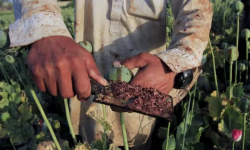
Raw opium from a poppy head is seen at a poppy farmer’s field on the outskirts of Jalalabad

KABUL: Farmers in northern Afghanistan have yet to make up for lost income since the Taliban government banned poppy production for opium three years ago, the United Nations said on Monday.

The ban has slashed poppy production overall to just 10,200 hectares this year, “one of the lowest levels ever recorded” in Afghanistan, the UN Office on Drugs and Crime said.

However, it also resulted in a shift from traditional growing areas in the south to northern provinces further from the control of Taliban authorities.

In Badakhshan on the border with Tajikistan, surveyed in the agency’s most recent report, poppy production has jumped since the Taliban returned to power in 2021.

In that province and in nearby Kunduz and Balkh, “on average, 85 per cent of families… reported either no replacement or only partial replacement of their poppy income” after abandoning production, the report found.
 

Afghan Taliban visit Bangladesh ahead of elections

AFP
December 30, 2025

• Senior envoy meets religious leaders in push for political clout
• Religious parties eye resurgence in February polls
• Bangladeshi officials label trip as ‘personal’

DHAKA: Afghan Taliban officials have held meetings with religious leaders in Bangladesh during a visit aimed at expanding political ties, officials in Dhaka said on Monday, as the country’s leaders manoeuvre for influence ahead of elections due in February.

Kabul’s Ministry of Foreign Affairs’ Director General Noor Ahmad Noor met senior figures including Mamunul Haque, leader of the Khelafat-i-Majlish party.

The meetings took place during a week-long stay that comes at a sensitive time for the South Asian nation, which is navigating a fragile transition under an interim government. Haque told AFP that Noor had visited the seminary he oversees. “It was a courtesy call, as we run one of the largest madrassas in the country,” Haque said. “He visited some other madrassas as well.”

While religious diplomacy appeared central to the itinerary, trade was also on the agenda. Abu Sayem Khaled, president of the Bangladesh-Afghanistan Chamber of Commerce, told AFP that the visit also sought to expand commercial ties between the two nations.

The interim government has not officially commented on the diplomatic exchange. However, a foreign ministry official, speaking on condition of anonymity, described Noor’s trip as “personal”.

The visit occurs as Bangladesh prepares for its first election since a mass uprising toppled the autocratic government of Sheikh Hasina in 2024.
 
To view this content we will need your consent to set third party cookies.
For more detailed information, see our cookies page.
 

Users who are viewing this thread

Latest Posts

Back
Top