Vietnam Defense and News forum

Nothing wrong with infrastructure investment even not profitable
The problem is most of those countries get infrastructure built by Chinese companies, Chinese workers, Chinese money. Worse, they can’t afford it, and they get infrastructure without bidding.
But no worry, that’s not our problem we learned the lesson with Hanoi urban railway.
And once we learn how to build, we will export Chinese model to other countries but using Vietnamese money, Vietnamese workers, Vietnamese technology.
Win win

Infrastructure such as high-speed rail should not be profitable. It is a tool for government subsidies to stimulate economic development, not a profit-making tool.

If your high-speed rail can make a profit, it proves that it is an unqualified tool. It is not subsidizing the social economy but sucking blood from it. At this point, you should lower the ticket price to allow more people to take the high-speed rail.

The construction of high-speed rail in Indonesia did indeed utilize Chinese loans, and the Indonesian government should not fantasize about using high-speed rail profits to repay the loans, as this would harm the overall profitability of the society and economy. The Indonesian government has more channels to obtain taxes and profits, and they can repay loans instead of infrastructure such as high-speed rail.
 
Nothing wrong with infrastructure investment even not profitable
The problem is most of those countries get infrastructure built by Chinese companies, Chinese workers, Chinese money. Worse, they can’t afford it, and they get infrastructure without bidding.
But no worry, that’s not our problem we learned the lesson with Hanoi urban railway.
And once we learn how to build, we will export Chinese model to other countries but using Vietnamese money, Vietnamese workers, Vietnamese technology.
Win win
Vietnam will not acquire high-speed rail technology.

I told you before, the cultural characteristics and national habits of the Vietnamese are too much like the Chinese, and your govt is also a complete copy of the Chinese govt.

Global high-speed rail powers would not be foolish enough to cultivate a small China as a competitor.
 
Vietnam will not acquire high-speed rail technology.

I told you before, the cultural characteristics and national habits of the Vietnamese are too much like the Chinese, and your govt is also a complete copy of the Chinese govt.

Global high-speed rail powers would not be foolish enough to cultivate a small China as a competitor.
Vietnamese think Chinese are foolish enough to readily give up their hard earned HSR core tech to Vietnam, so are other countries such as Japan and Germany are not likely to give up their HSR tech for free. Even with the scale of its HSR market, China wasn't able to get HSR core tech from other countries in exchange for market shares in the early stage of China's HSR development, that's why no country ever built any Chinese HSR. I think Vietnamese are just dreaming now.
 
Vietnamese think Chinese are foolish enough to readily give up their hard earned HSR core tech to Vietnam, so are other countries such as Japan and Germany are not likely to give up their HSR tech for free. Even with the scale of its HSR market, China wasn't able to get HSR core tech from other countries in exchange for market shares in the early stage of China's HSR development, that's why no country ever built any Chinese HSR. I think Vietnamese are just dreaming now.
Yes. This is a high-speed rail route that is just 1,500km, with a total budget of less than $70 billion The Vietnamese have overestimated its attractiveness.
 
Vietnam will not acquire high-speed rail technology.

I told you before, the cultural characteristics and national habits of the Vietnamese are too much like the Chinese, and your govt is also a complete copy of the Chinese govt.

Global high-speed rail powers would not be foolish enough to cultivate a small China as a competitor.
Of course no country is helping us to build a HSR. But there is a trick (probably from China).
We don’t seek help from foreign governments because we will never get it we seek technology transfer from companies.
What we need is a starting point.
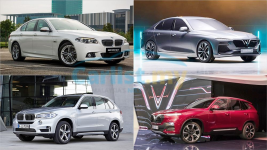
For example to kickstart car manufacturing Vinfast licensed BMW technology. It got patents to build two older models. 2 old chassis, 2 older motors and an outdated production process. That’s all. Vinfast makes the rest.
As for HSR that will be the same playbook.

1767418415972.png
 
Vietnamese think Chinese are foolish enough to readily give up their hard earned HSR core tech to Vietnam, so are other countries such as Japan and Germany are not likely to give up their HSR tech for free. Even with the scale of its HSR market, China wasn't able to get HSR core tech from other countries in exchange for market shares in the early stage of China's HSR development, that's why no country ever built any Chinese HSR. I think Vietnamese are just dreaming now.

Dude, Indonesia HSR operational cost get profit, but it will be a lost if it needs to pay the interest and annual loan payment.

All HSR needs gov subsidy, including in Europe and China. Previously the system is set to not get gov subsidy, but now it will be treated like other mass transportation system like our MRT/LRT/KRL (Commuter Line) and BRT that get gov subsidy

So Just like other Indonesia public transportation system, now Jakarta Bandung HSR get gov subsidy. It is not something uncommont. You dont see many international media outlet barking anymore after my gov under Prabowo decide to give subsidy for the HSR project.

Our gov annual state budget is around half Vietnam overall GDP, so I think you dont need to worry on the payment part, inshaAllah we have the ability to pay it.

To view this content we will need your consent to set third party cookies.
For more detailed information, see our cookies page.


Actually as now PT KAI under Danantara superholding, PT KAI who operate the system can also be helped by the superholding fund, but gov under Prabowo prefer to give direct subsidy from the state like the way the gov treat other public transportation system

For Danantara, if they are given responsibility to give the subsidy, inshaAllah, it is able to do so

Here is the example of Danantara capability, we have 1000 SOE, and it is just one (Antam) of them (not the biggest SOE in Indonesia)


Luhut: Whoosh Is Now Able to Cover Its Own Operational Costs
Zahwa Madjid
2–3 minutes

View attachment 169453
Photo: Chair of the National Economic Council (DEN), Luhut Binsar Pandjaitan, riding the Whoosh High-Speed Train to attend a briefing for prospective officers at SESKOAD. (Instagram/luhut.pandjaitan)


Jakarta, CNBC Indonesia – Chair of the National Economic Council (DEN), Luhut Pandjaitan, revealed the latest condition of the Jakarta–Bandung High-Speed Rail (KCJB) Whoosh amid the ongoing controversy surrounding its debt.

Through his Instagram account, @luhut.pandjaitan, Luhut shared moments of himself using the Whoosh train from Jakarta to Bandung to attend an officer briefing at Seskoad last Thursday (30/10/2025).

According to Luhut, Whoosh has now become financially self-sufficient, as the company is able to cover its own operational costs.

“Regardless of the pros and cons, the fact is that Whoosh is now able to cover its own operational expenses and has served more than 12 million passengers since it began operations in October 2023 until February 2025,” Luhut said via his Instagram account @luhut.pandjaitan, as quoted on Friday (31/10).

He believes that Whoosh’s achievements mark an initial step toward the efficient and responsible management of large-scale projects.

Luhut also said he chooses Whoosh because it is more time-efficient. A trip to Bandung that previously took 3–4 hours by car or conventional train can now be completed in a maximum of 60 minutes using Whoosh.

“Every time I travel to Bandung, I always choose this mode of transportation because of its time efficiency. Trips that used to take 3–4 hours can now be completed in just 30–60 minutes,” Luhut said.

He emphasized that Whoosh has become proof that the courage to make strategic decisions can lead Indonesia toward national self-reliance.

“Whoosh is proof that the courage to make strategic decisions is the beginning of national self-reliance,” Luhut concluded.


if financial sound but why Indonesia seeks loan extension to 60 years? incredible long. Not only you are indebted to China for 60 years but consider the interests you pay in 60 years.
Usually debt should be paid back as soon as possible if capable. Otherwise you only make other people rich.
But never mind. Saigon and Hanoi plan each 1,000km extensive urban railway network, combined 2,000km in length. Interesting is always how to get the technology.

1767424339755.png
 
if financial sound but why Indonesia seeks loan extension to 60 years? incredible long. Not only you are indebted to China for 60 years but consider the interests you pay in 60 years.
Usually debt should be paid back as soon as possible if capable. Otherwise you only make other people rich.
But never mind. Saigon and Hanoi plan each 1,000km extensive urban railway network, combined 2,000km in length. Interesting is always how to get the technology.

View attachment 169517

Duh, it is something normal for developing countries like Indonesia that has many things that needs to spend and develops

280 million and with large areas that need to build. That is business perspective to lengthen the loan, we can logically just complete the loan payment this year if it is really what gov wants.

Indonesia yearly state budget is around half Singapore entire GDP but Singapore only has 5 million people and small land that already been fully developed
 

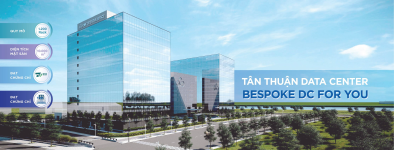
Vietnam Draws More Than $7 Billion in AI Data Center Investments, Reshaping Enterprise Infrastructure​

ADAM PITMAN
SHARE THIS POST

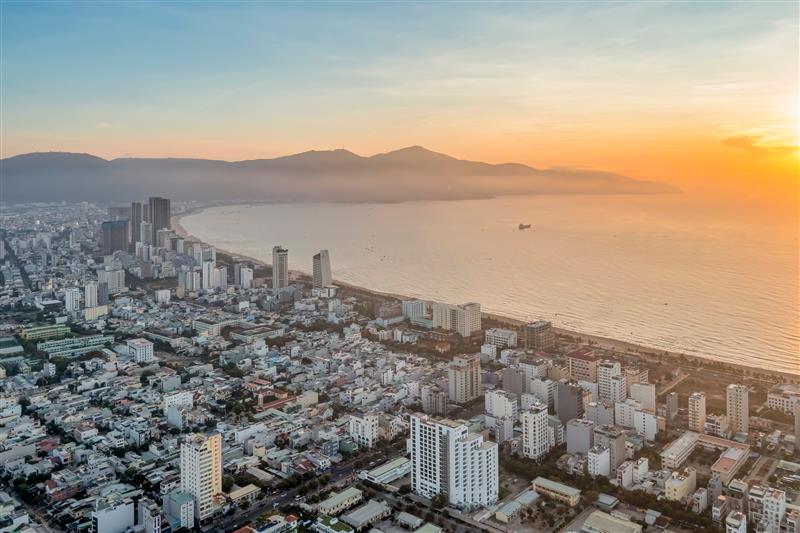
The coast of Da Nang with the city against the beach and ocean

1767427828186.png

This week, Create Capital Vietnam and Haimaker.ai announced plans to build a nationwide AI-focused data center network totaling about $1 billion.

The joint venture, called Vietnam Data Gen (VDG), will develop the project in three stages, starting in Da Nang and expanding nationwide. The facilities are designed to support GPU-intensive workloads for government, banks, telecom operators, and technology firms.

The announcement follows a flurry of AI infrastructure projects that have mobilized more than $7 billion nationwide in the past 6 months. Vietnam’s new AI law and state-led digital strategy are driving the investment, which could change the way companies deploy enterprise systems in Southeast Asia.

Layered AI and Enterprise Data Center Strategy

Vietnam’s new data center projects are creating a layered ecosystem, with specialized facilities targeting AI, general enterprise, and international workloads. This structure offers diverse options for companies designing regional IT and ERP systems.

AI-specialized capacity

VDG is building 100 MW of phased capacity, starting with 10–20 MW in Da Nang and expanding nationwide. Kinh Bac City Development’s Tan Phu Trung AI campus also targets large-scale AI model training, with 200 MW and roughly 100,000 GPUs.

Commercial hyperscale

State-owned Viettel is developing two facilities—140 MW at Tan Phu Trungand 60 MW at An Khanh—that integrate its own AI solutions, while CMC Corporation is rolling out 120 MW across Hanoi and Ho Chi Minh City for enterprise clients and has also partnered with Samsung C&T on a separate data center hub in Ho Chi Minh City, with a 30 MW first phase and a planned 100 MW expansion.

International hub

The UAE-based G42 consortium is investing $2 billion in a Ho Chi Minh City “AI Factory,” and the Singapore-based ST Telemedia’s joint venture with VNG is establishing facilities for multinational clients. Google, meanwhile, is considering a plan to build a data center in Ho Chi Minh City to support cloud services.

The projects form a market-driven ecosystem shaped by government incentives. This specialization gives businesses more options to match infrastructure with operational priorities. Enterprises and vendors can now select infrastructure tailored to specific latency, cost, and compute requirements, rather than relying on a one-size-fits-all model.


The $7 Billion AI and Data Center Surge

In recent months, Vietnam has drawn more than $7 billion in announced and proposed investment for AI and data center projects. It is leading the expansion of the country’s digital infrastructure, as well as its emergence as an alternative to traditional regional hubs.

This includes the previously mentioned investments by VDG ($1 billion), Kinh Bac City Development’s Tan Phu Trung AI campus ($2 billion), Viettel’s An Khanh facility ($665 million), CMC Corporation’s existing data center chain ($250 million), the G42 “AI Factory” proposal in Ho Chi Minh City ($2 billion), and ST Telemedia–VNG’s two upcoming Ho Chi Minh City sites (not disclosed), as well as IPTP Networks’ $200 million Da Nang project and the government’s roughly $639 million National Data Centre No.1.

On top of these, Samsung C&T and CMC have agreed a separate $1.3 billion hyperscale data center hub in Ho Chi Minh City, with a 30 MW first phase and a planned 100 MW expansion, and Google is weighing its first large data center investment in Vietnam.

Regulatory incentives drive the market. Vietnam’s AI law, effective March 2026, mandates pre-market conformity for high-risk AI systems in sectors including finance, healthcare, justice, and labor. Meanwhile, state-led infrastructure investments and digital sovereignty initiatives inform commercial conditions, and capacity constraints intensify demand.

The combination of heavy investment, policy incentives, and infrastructure scarcity is creating a highly competitive market for AI and enterprise computing services.

The expanded network enables deployment models once cost-prohibitive, including multi-site ERP instances, real-time disaster recovery, and regional failover systems. Early alliances among ERP providers and system integrators will help determine where enterprise computing infrastructure takes shape in the country and regionally.

In this market, investment timing, location, and strategic partnerships may matter more than sheer capacity in determining long-term advantage.

What This Means for ERP Insiders

ERP deployment in Vietnam just became more feasible. The investment surge lets local enterprises host ERP systems with lower latency, greater reliability, and regulatory compliance, supporting growth in Vietnam’s fast-growing, export-driven economy.

Vietnam offers a cost and investment advantage for enterprise infrastructure. Construction costs and electricity rates are among the lowest in the region, while state-backed incentives accelerate deployment. Companies can achieve high-performance ERP hosting at a fraction of Singapore’s cost, making Vietnam an increasingly attractive option for regional enterprise systems.

New infrastructure enables regional ERP deployment. Many companies have shifted supply chains or operations to Vietnam and can now host ERP systems and critical data there too, allowing businesses to move up the global value chain. This positions Vietnam as a hub for enterprise systems, supporting broader Southeast Asia strategies.
 
it looks funny but means serious.
drone live fire excercise with bomb run
To view this content we will need your consent to set third party cookies.
For more detailed information, see our cookies page.
 
construction update
APEC summit 2027 at the island of Phu Quoc
pretty quick progress
cost $836 million
16 ha lands from the sea
6 months since breaking ground 95% land reclamation complete,
20% construction of buildings, roads, canals complete

To view this content we will need your consent to set third party cookies.
For more detailed information, see our cookies page.
 
the Marines have the most toughest job in the army.
carrying 40kg of weapons and military gears, able to swim 5km, marching days and nights
To view this content we will need your consent to set third party cookies.
For more detailed information, see our cookies page.
 
The second version of human robots
They are more flexible, can carry 40kg of weight, can recharge automatically if low on battery.
To view this content we will need your consent to set third party cookies.
For more detailed information, see our cookies page.
 
Much better than version 1 previously
above robots made in Vietnam compared to robots made in China below
To view this content we will need your consent to set third party cookies.
For more detailed information, see our cookies page.
 
PTH-122 gets automatic loading system.
Firing rate 5-6 rounds a minute
To view this content we will need your consent to set third party cookies.
For more detailed information, see our cookies page.


1767448384233.png
 

Japan’s TBM Takes Carbon Capture To Vietnam’s Coal Heartland​

byVasil Velev
December 30, 2025
2 minute read
Japan’s TBM Takes Carbon Capture To Vietnam’s Coal Heartland - Carbon Herald
Image: TBM
Japanese carbon solutions company TBM is moving deeper into Southeast Asia with a project aimed at turning coal plant emissions into construction and manufacturing inputs.

TBM said it has signed a memorandum of understanding with VAPCO, the operator of the coal fired Vung Ang II Thermal Power plant in Vietnam’s Ha Tinh Province, and Viet Hai Trading and Transportation, a major local construction group. The three partners plan to build a carbon capture and utilization facility that converts carbon dioxide from the power plant into calcium carbonate materials by reacting the gas with steel slag supplied by Viet Hai.

The project is designed to operate at industrial scale, with annual targets that include capturing and repurposing roughly 160,000 metric tons of carbon dioxide, consuming about 400,000 metric tons of steel slag that would otherwise go to waste, and generating close to 210,000 metric tons of CCU calcium carbonate for use in construction and manufacturing applications.


TBM plans to utilize CO2 for construction materials​

Under the proposed project, carbon dioxide captured at the Vung Ang II plant would be chemically synthesized into CCU calcium carbonate. That material is expected to be used in construction applications in Vietnam and potentially exported through Viet Hai’s distribution network.

IMG_6190-1024x683.jpg
Agreement signing ceremony between the companies. Image: TBM

The partners also plan to manufacture CR LIMEX, a composite material made by blending the carbon derived calcium carbonate with resin, with the aim of expanding into higher value uses such as interior building materials, civil engineering products and substitutes for petroleum based plastics.

TBM has promoted its carbon utilization technology internationally, including at the World Economic Forum meeting in Davos in early 2024. The company says its approach advances Japan’s GX decarbonization strategy by accelerating timelines for carbon reuse technologies.

The agreement reflects a pragmatic approach to decarbonization in fast growing economies that remain heavily dependent on coal. Vietnam recorded economic growth of over 7% in 2024, but more than half of its electricity still comes from coal fired generation. Policymakers have pledged to reach net zero emissions by 2050, yet replacing existing power capacity quickly is viewed as risky for energy security.

Vietnam’s strategy mirrors moves in China and India, where governments are exploring ways to reduce emissions from coal fleets without shutting them down. For companies like TBM, Vietnam offers a test case for whether carbon can be transformed from a liability into a commercial raw material at scale.
 

Users who are viewing this thread

Country Watch Latest

Back
Top