Venezuela - US Conflict: News, Updates

Whole region holds its breath as Colombian president deploys forces

José Carlos Cueto
BBC Mundo correspondent, reporting from Colombia

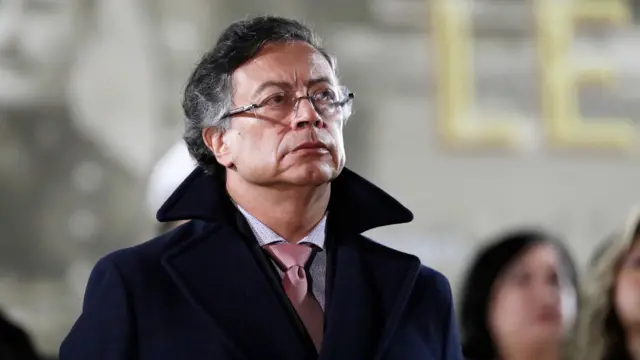
A headshot of Colombian President Gustavo Petro who looks beyond the camera. People standing behind him have been blurred


Colombian President Gustavo Petro

After a national security council meeting that began at 03:00 local time (08:00 GMT), Colombian President Gustavo Petro announced the deployment of public forces along the Venezuelan border.

From Bogotá, preparations are under way for a possible massive influx of Venezuelan refugees following the US attacks in Caracas and other areas of the country.

The region holds its breath amid further reports of the alleged capture of Venezuelan President Nicolás Maduro and his wife, Cilia Flores, as announced by President Donald Trump.

Petro has repeatedly called for peace and dialogue since the first explosions were reported in Caracas.
 
To view this content we will need your consent to set third party cookies.
For more detailed information, see our cookies page.


To view this content we will need your consent to set third party cookies.
For more detailed information, see our cookies page.


Better photo
 
Colombia and Venezuela share more than 2,000 km of land border - and throughout history, economic and security crises in both nations have driven millions to seek refuge on either side.

It is an unprecedented moment for Venezuela that will have direct consequences in more countries - Colombia is on the front line.
 
Colombia and Venezuela share more than 2,000 km of land border - and throughout history, economic and security crises in both nations have driven millions to seek refuge on either side.

It is an unprecedented moment for Venezuela that will have direct consequences in more countries - Colombia is on the front line.

Colombia nowadays also has a leader that Trump doesn't like...
 

What we know, and what we don't

Charlotte Hadfield
BBC Live reporter

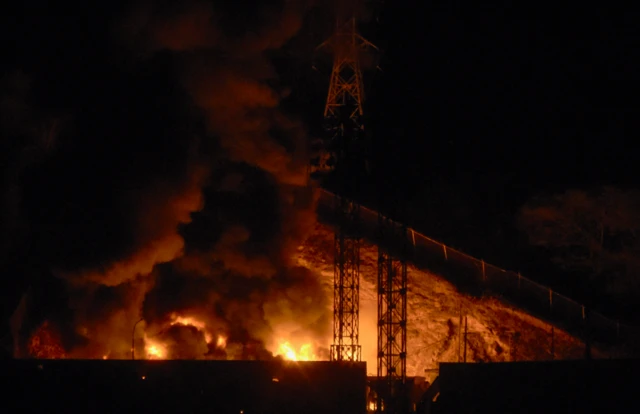
An explosion in Caracas, Venezuela.


What we know

  • Donald Trump says the US launched a "large-scale strike" on Venezuela
  • He adds Venezuela's President Nicolas Maduro, and his wife, have been captured and "flown out of the country"
  • The US army's Delta Force carried out the operation to capture Maduro, officials tell the BBC's US partner CBS News
  • Venezuela has announced a state of national emergency and said it rejects and denounces "military aggression"
  • United States Secretary of State Marco Rubio anticipates no further action against Venezuela, says Republican Senator Mike Lee
  • This is the biggest US military build-up in the Americas since the Cold War and follows weeks of heightened tension, writes our correspondent Will Grant
What we don't know

  • Where President Maduro and his wife are
  • If there are any deaths or casualties caused by the strikes
  • The extent of any damage to parts of Venezuela following the attack
  • How many strikes and their locations - we'll bring you more on that shortly
  • More details of why Trump decided to take this action - we're expecting to hear more from him at a news conference at 16:00 GMT
 
To view this content we will need your consent to set third party cookies.
For more detailed information, see our cookies page.


Another strategic defeat for the Russians
 

This is an event without modern precedent​


Joe Inwood
World affairs correspondent

If, as claimed, the US has sent Delta Force into the heart of the Venezuelan capital and extracted the sitting president, along with his wife, it is unlike anything we have seen before.

The closest comparison would be the capture of Panamanian leader Manuel Noriega, also by special forces, on this very day in 1990.

Both men had recently claimed victory in disputed elections, both had been accused by the US of involvement in drug trafficking and both had been preceded by significant US military build-up.

But Noriega's capture followed a short, decisive, war between the two countries, in which Panamanian forces were quickly overwhelmed.

He had taken refuge in the Vatican embassy, where he remained for 11 days.

Eventually Noriega was persuaded to leave after the use of “psychological warfare” - specifically the constant playing of loud rock music, including The Clash, Van Halen and U2.

He was taken back to the US, where he was convicted of drugs offences.

Details of the operation to capture Nicholas Maduro are yet to emerge, but it seems to have been an operation even more ambitious in its scope - succeeding in extracting the President and his wife without the use of conventional ground forces.

His fate is unclear, but one would imagine it will end in a US prison.
 
I gotta say something that not many people will like:

Back in the '80s Venezuela was the richest country in South America. We're talking about big money. They were way ahead of every other south american country. However,they didn't have a solid economic policy for the future,I don't remember the details,but they didn't have good plans for investments and a sustainable economy that would keep making money for them,so when oil prices fell,they had problems.

So anyway,then came the communists. They turned Venezuela into a "socialist" country and fucked up the economy even more. Then came the sanctions and that ruined the country completely.

Now,as much as most of you guys here don't want to admit this,Maduro was a bad guy. He was ruined the country. His idiotic policies brought poverty to the majority of the country. The ones not affected by it were some of the elite and his fanatic supporters.

From 2018 onwards,I've talked with dozens of women from Venezuela and even more from neighboring countries. The situation for the common people is very very bad economically. We're talking about crazy inflation and even problems getting basic medicine and food often. I've seen Mad Max style videos years ago,where bikers swarmed an oil truck to get the oil. Capital controls and ban on dollar trade.

The country turned poverty,because of this guy who won't step down. And all these years both Russia and China took advantage of this,buying cheap oil from Venezuela and not giving back anything significant. These are the facts.
They are populist promises of big welfare to win democratic elections.
It is a classic pitfall of an election democracy meets Latino left-wing populism.
 

Users who are viewing this thread

Country Watch Latest

Back
Top