China dominates humanoid robot market as commercialization accelerates this year,More than half of humanoid robot companies are in China

Beijingwalker

VIP Member
Joined
Nov 4, 2011
Messages
92,132
Reaction score
113,006
Reputation
2,141.0
Country of Origin
Country of Residence

China dominates humanoid robot market as commercialization accelerates this year​

China's rapid advancements in humanoid robots highlight fierce competition and collaboration in the tech sector.

Published 2025.03.10. 15:41

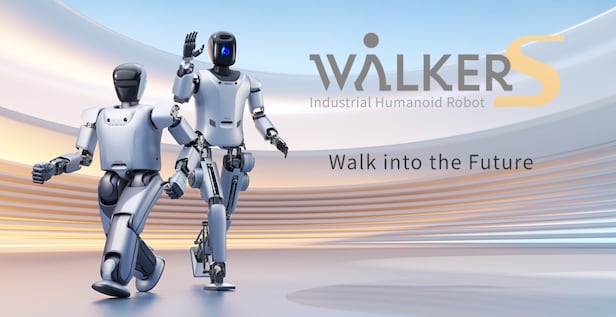
The Chinese representative humanoid robot corporation Ubitek's Walker S series. /Courtesy of Ubitek's website


The Chinese representative humanoid robot corporation Ubitek's Walker S series. /Courtesy of Ubitek's website

Chinese robotics manufacturers are accelerating their efforts to secure a foothold in the emerging market for humanoid robots. Not only are representative Chinese humanoid robot corporations such as Ubitech, but also local startups that have secured investment funds are on the brink of commercializing humanoid robots. Domestic home appliance corporations such as Samsung Electronics and LG Electronics are also speeding up their business preparations, including personnel placement.

◇ "More than half of publicly listed companies developing humanoid robots are in China"
According to Morgan Stanley on the 10th, about 56% of the more than 100 publicly listed companies worldwide engaged in humanoid robot development are headquartered in China. Additionally, 45% of corporations that produce customized robots are also based in China. The Hong Kong South China Morning Post (SCMP) reported, "China is solidifying its position as a leader in the humanoid robot market, with expectations that many companies will achieve mass production and commercialization this year."

With the emergence of the artificial intelligence (AI) market, forecasts suggest that the humanoid robot industry will grow. According to market research firm MarketsandMarkets, the humanoid robot market, which was valued at approximately $2.03 billion last year, is expected to grow to $13.25 billion (about 19.19 trillion won) by 2029. The application of generative AI technologies to humanoid robots is driving increased demand across various industries, including education, healthcare, and retail.

The Chinese government has rolled up its sleeves to foster the humanoid robot industry. Targeting to achieve world-class technological capabilities by 2027, 17 government ministries have jointly formed a national consortium involving robot corporations and academic institutions, offering subsidies, tax benefits, and encouraging public-private research collaboration without reservation.

Private corporate investments are also active. According to data from IT주지 analyzing the Chinese venture capital market, during January and February of this year, humanoid robot development startups secured about 2 billion yuan (about 400 billion won) through 20 investments. This figure marks an increase from the 1.2 billion yuan raised through four investments a year ago.

Collaboration is also underway between Chinese tech companies and humanoid robot manufacturers. Ubitech, a leading Chinese humanoid robot corporation, will integrate Baidu’s self-developed AI model "Ernie Bot" into its humanoid robot, "Walker S." Foxconn, a partner of Apple and the world’s largest contract manufacturer, also plans to establish a joint laboratory with Ubitech to commercialize humanoid robots in areas such as product transportation, sorting, adhesion, and quality inspection.

Chinese autonomous driving car company Xiaopeng plans to mass-produce industrial humanoid robots similar to Level 3 autonomous driving next year. He Xiaopeng, CEO of Xiaopeng Motors, noted during the National People's Congress on the 8th (local time), "Currently, humanoid robots are primarily at the early Level 2 stage, but for them to be truly commercialized, they must exhibit Level 3 capabilities, that is, the integrated abilities of hands, feet, mouth, eyes, and brain."
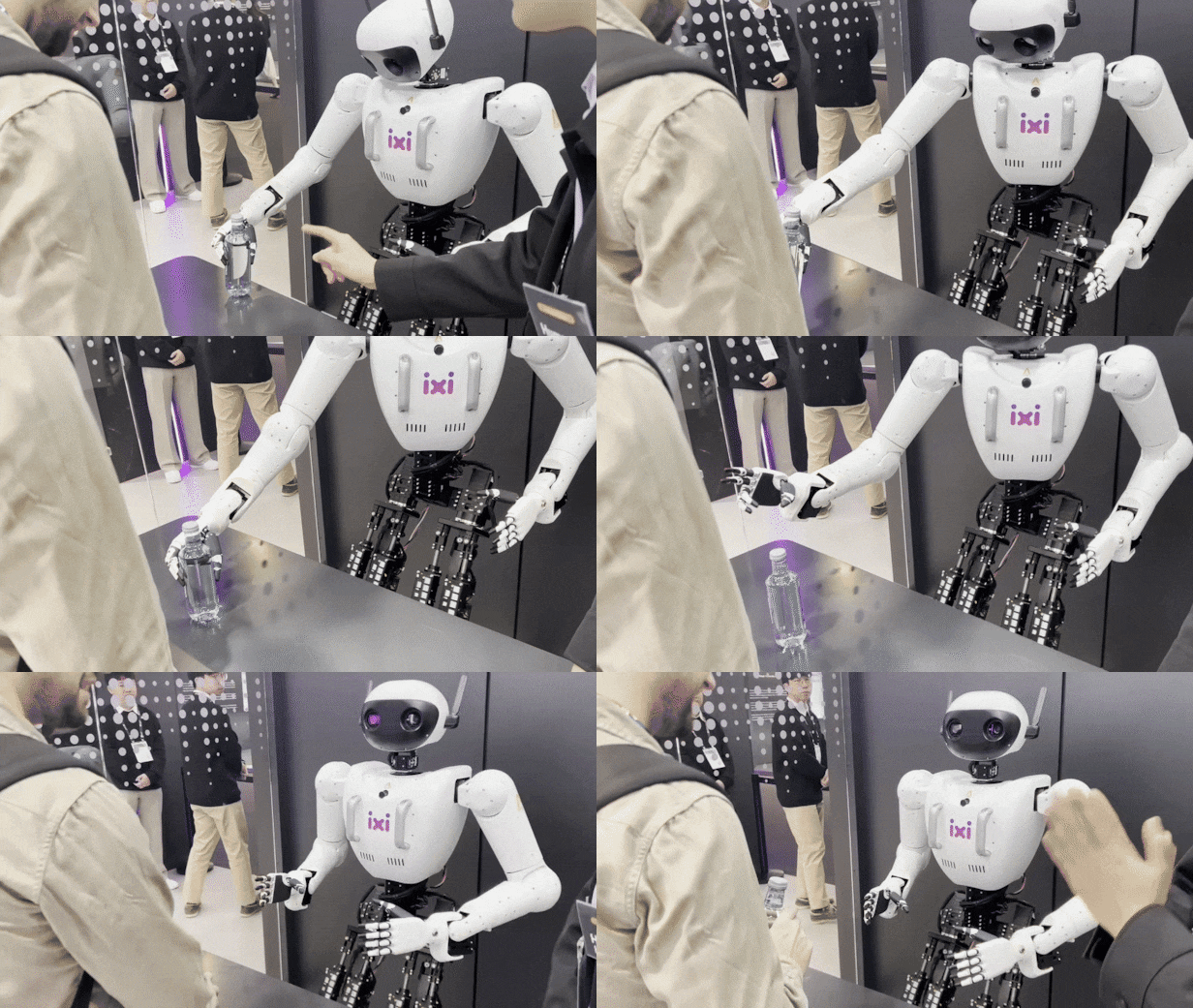
The LG Uplus humanoid robot Alice is seen handing a gift to a visitor. /Courtesy of ChosunBizDB


The LG Uplus humanoid robot Alice is seen handing a gift to a visitor. /Courtesy of ChosunBizDB
◇ Samsung Electronics, LG Electronics also tightening their grip on the humanoid market

Domestic home appliance corporations, including Samsung Electronics and LG Electronics, are also focusing on enhancing their competitiveness by securing personnel in the humanoid robot market. Samsung Electronics reportedly has recently assigned more than 40 personnel to its Future Robot Promotion Group. The Future Robot Promotion Group was established last year as a direct organization under Vice Chairman Han Jong-hee after Samsung acquired a stake in Rainbow Robotics, a robot platform specialized company. Samsung’s investment arm, Samsung Next, participated in securing investments in global humanoid firms like 1X Technologies.

LG Electronics has also revealed its humanoid project plans. LG Electronics President Cho Joo-wan stated at the world’s largest IT exhibition, "CES 2025", that the company is in progress with concepts for home robots and humanoid robots. At LG Electronics, the Robot Advanced Research Institute under the Chief Technology Officer (CTO) is focusing on securing advanced humanoid technologies.

An industry official stated, "Korea currently lacks a strong foundation in the AI software sector responsible for the brain functions of robots" but added that "in hardware areas like manufacturing, there is a long-standing expertise and advantage accumulated in appliances and semiconductors."
 

Inside the world of humanoid robots in Shanghai, China​

To view this content we will need your consent to set third party cookies.
For more detailed information, see our cookies page.
 

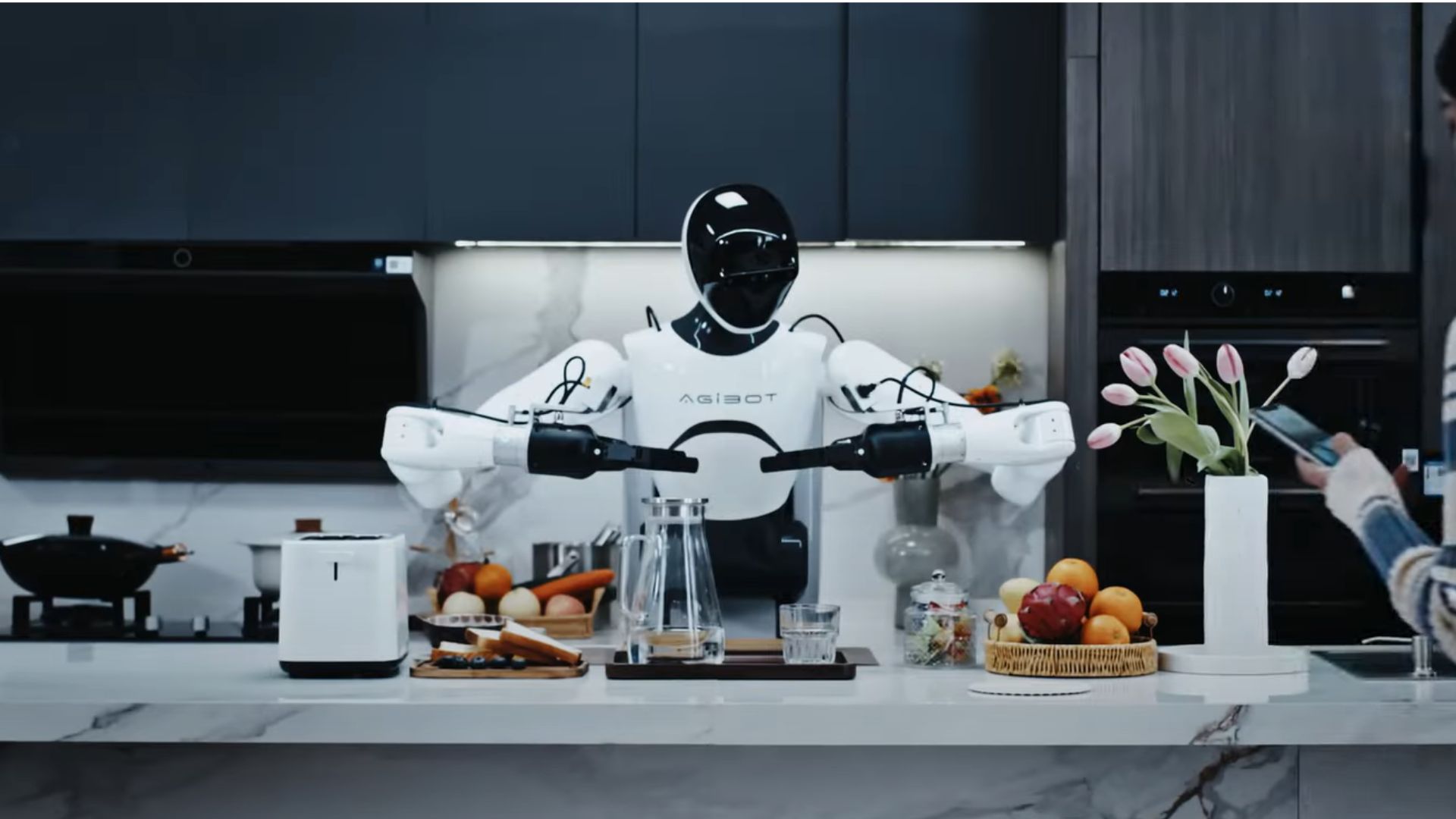
China’s humanoid robot gets butler brain to make toast, coffee, serve drinks​

GO-1’s vision-language AI helps robots interpret actions, plan steps, and execute tasks efficiently using image and video data.​

Mar 11, 2025 07:58 AM EST

image

The model utilizes internet-scale heterogeneous data to establish a solid foundation for scene and object understanding.

AgitBot/YouTube
Chinese robotics player AgiBot has introduced a new AI model designed to enhance humanoid robots’ ability to perform real-world tasks.

Named Genie Operator-1 (GO-1), the system processes vast image and video data to help robots better interpret human actions.

GO-1 uses vision-language models to process large amounts of images and videos, helping robots better understand human actions. Its planning and action algorithms enable the robot to map out steps and execute movements to complete tasks efficiently, according to the company.

In late 2024, AgiBot released AgiBot World, a large-scale robotics dataset with over 1 million trajectories across 217 tasks in five domains. According to Agibot, GO-1 is a generalist embodied foundation model built on this extensive dataset.

AI-powered task execution​

AgiBot introduces the Vision-Language-Latent-Action (ViLLA) framework to enhance robot learning by combining vision, language, and action modeling.

It improves how robots understand scenes and perform tasks by using high-quality datasets and large-scale internet videos. Unlike traditional models that directly link actions to vision and language inputs, ViLLA predicts latent action tokens, creating a bridge between perception and execution.

The framework comprises two key components: a Vision-Language Model (VLM) and a Mixture of Experts (MoE). The VLM processes vast amounts of multimodal data from the internet to build scene understanding and language comprehension.

The MoE has two parts: the Latent Planner, which learns general action patterns from various sources, including human actions and different robot embodiments, and the Action Expert, which is trained on over a million real-world robot demonstrations to refine movement execution.

According to the firm, the VLM first interprets the scene by analyzing force signals, pictures, and verbal inputs. After that, the Latent Planner generates a structured plan by forecasting action sequences.

Ultimately, the Action Expert converts these forecasts into accurate, practical motions. Robots can carry out intricate jobs more precisely and effectively thanks to this hierarchical method, which increases flexibility in real-world situations.

Smarter robot learning​

AgiBot GO-1 uses advanced AI to improve how robots learn and perform tasks. While AgiBot World is the largest real-world robot dataset, action-labeled data is still limited.

To address this, GO-1 presents latent actions, which use past and present frames to help robots comprehend movement. By transferring knowledge from many data sources, this method increases robots’ adaptability.

The Latent Planner uses a specific transformer model to forecast action sequences. Learning from various human-robot interactions enhances action planning and handles intermediate outputs from the Vision-Language Model (VLM).

According to AgiBot, the Action Expert improves movement execution in the interim. Although it has the same AI foundation, it creates exact action sequences using a denoising technique to guarantee fluid and accurate movements.

In tests across five tasks, GO-1 outperformed state-of-the-art models, improving success rates from 46 percent to 78 percent. It demonstrated significant progress in tasks like replenishing beverages and pouring water. The Latent Planner’s efficacy in action planning was demonstrated by the 12 percent performance gain it produced.

AgiBot claims that GO-1’s capacity to learn from both human and robot data enables it to adjust to novel tasks, function with various robots, and constantly advance in real-world scenarios.

“AgiBot GO-1 will accelerate the widespread adoption of embodied intelligence, transforming robots from task-specific tools into autonomous agents with general intelligence. It will play a greater role across various domains, including manufacturing, service, and household applications, paving the way for a more versatile and intelligent future,” said the firm in a statement.


China dominates global humanoid robot market with over 80% of installations

AgiBot and Unitree help China capture bulk of global deployments in 2025 as market heads for sixfold growth by 2027, report says​


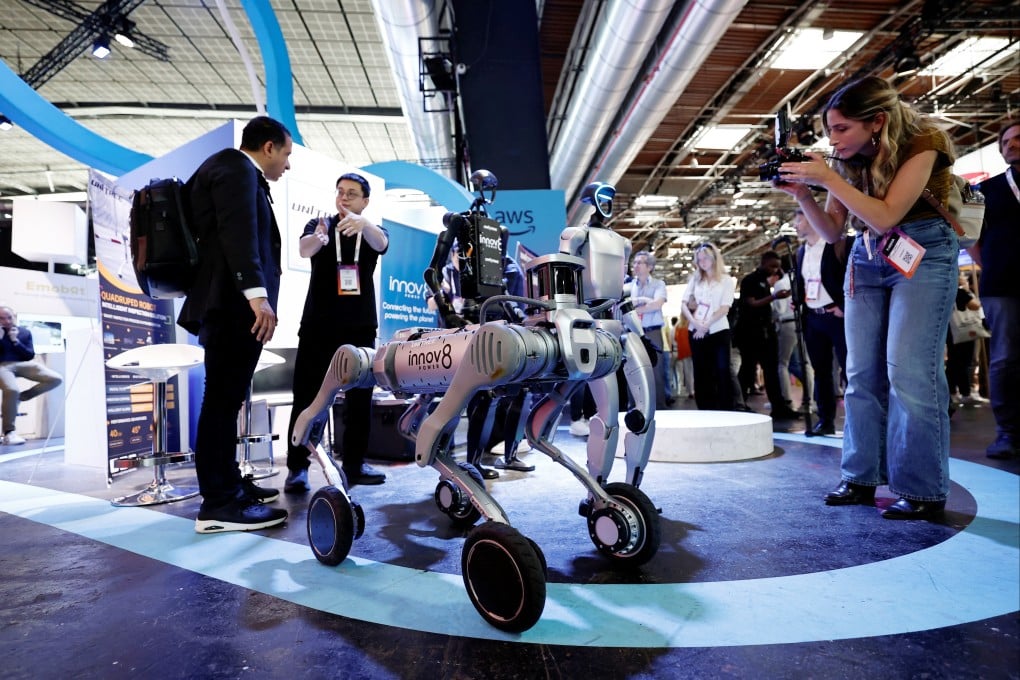
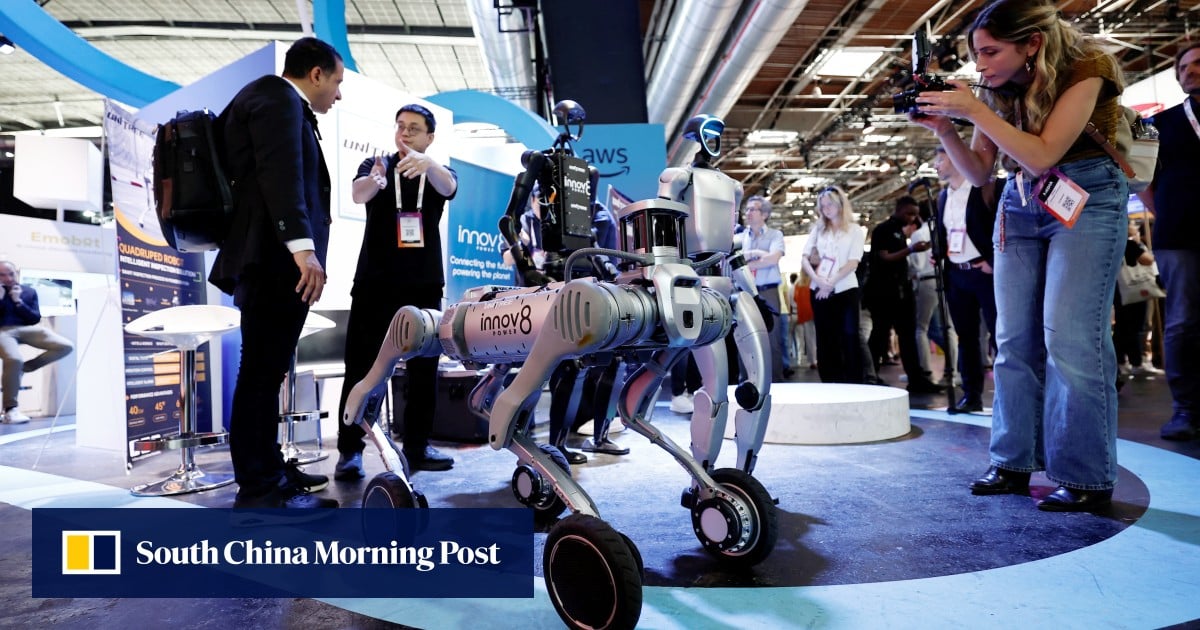
Visitors take pictures of Unitree robots at a fair in Paris. Photo: Reuters

Iris Dengin Shenzhen
Published: 5:00pm, 16 Jan 2026

China accounted for more than four out of five humanoid robot installations globally in 2025, driven by domestic start-ups AgiBot and Unitree Robotics, as mass production and commercialisation accelerated, according to a report by Counterpoint Research.
A total of 16,000 humanoid robots were installed globally in 2025, mainly for data collection and research, as well as in the logistics, manufacturing, and automotive sectors, according to Counterpoint data released on Wednesday.

The market was projected to exceed 100,000 units by 2027, a sixfold growth from 2025, with logistics, manufacturing and automotive uses expected to make up 72 per cent of all installations, the research firm said.

“The next two years will see more humanoid enterprises commercialising the mass-production versions of robots, and their performance will largely determine the development pace of the whole industry,” Counterpoint said.

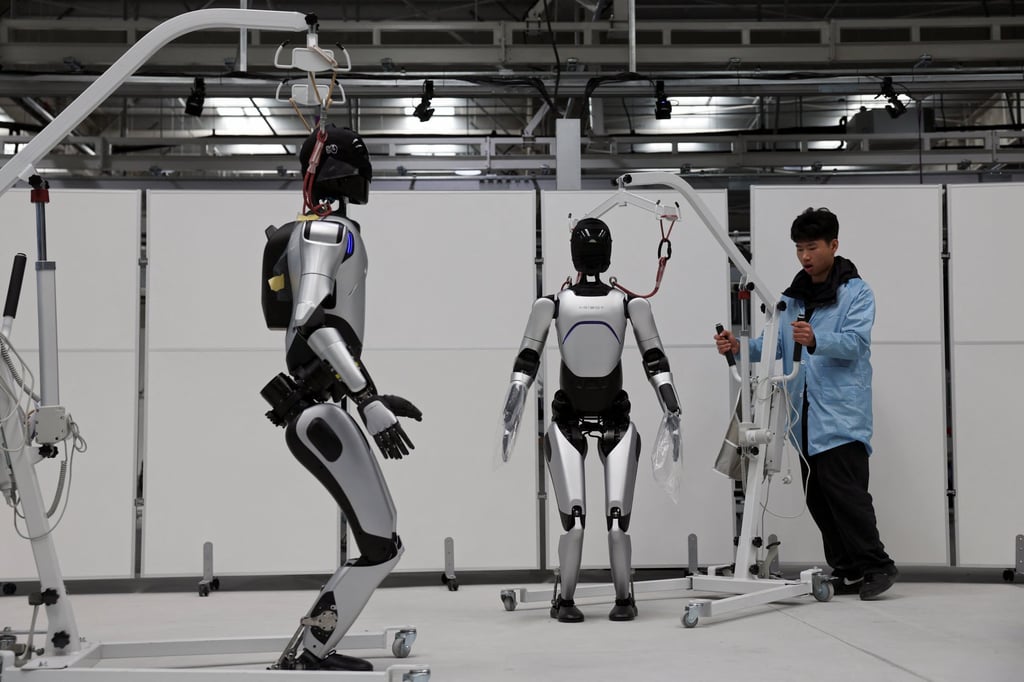
Tests are conducted on humanoid robots at an AgiBot factory in Shanghai. Photo: Reuters

Tests are conducted on humanoid robots at an AgiBot factory in Shanghai. Photo: Reuters

Shanghai-based AgiBot led the market with a 30.4 per cent share of installations worldwide in 2025, followed by Hangzhou-based Unitree’s 26.4 per cent.

AgiBot’s diverse product range and open-source strategy helped drive commercial deployment across various sectors, while Unitree gained attention with its expertise in dynamic motion and balance control, Counterpoint said.

 
Yes, genocidal Zionist neoliberals are shaking in their boots. Very dangerous. LOL **** off.
This is how the machines start!

With "innocent" servant robots!

To view this content we will need your consent to set third party cookies.
For more detailed information, see our cookies page.
 
This is how the machines start!

With "innocent" servant robots!

To view this content we will need your consent to set third party cookies.
For more detailed information, see our cookies page.

China is the most deserving of great power. It is by far the most responsible and humane superpower.
 
Your own minister said it

To view this content we will need your consent to set third party cookies.
For more detailed information, see our cookies page.

He also said he's a Marxist liberal and he used to rent out a mansion with a pool for 5,000 euros per week,has cars,bikes and bank accounts in Switzerland.
 
He also said he's a Marxist liberal and he used to rent out a mansion with a pool for 5,000 euros per week,has cars,bikes and bank accounts in Switzerland.
But even among US allies, they favor China over US, why?

The NATO Countries Favoring China Over The US


PUBLISHED
JAN 15, 2026 AT 11:38 AM EST

The image of the U.S. among NATO countries has weakened over the last year while approval for China across the alliance has increased, according to a Gallup survey.

The poll of NATO member states showed median approval of China’s leadership rising and that of Washington falling in 2025. Newsweek has conducted NATO for comment.

Why It Matters​

NATO unity has been tested since 2022, with China giving support—although was officially neutral on—Russia’s full-scale invasion of Ukraine.

This has coincided with a deterioration in U.S.-China relations amplified by a trade war, increased Chinese investment across southern and central Europe, as well as messaging from President Donald Trump casting doubt on his commitment to NATO.

Gallup’s data highlights a drop in U.S. approval across NATO and an increase in backing for China, at a sensitive geopolitical time amid the war in Ukraine, unrest in Iran and Trump’s strikes on Venezuela and claims on Greenland.

微信图片_2026-01-17_005906_010.png

What To Know

The poll of people in 31 NATO member states took place between March 27 and October 30 2025, before U.S. military action in Venezuela, after which Trump has reiterated his desire to seize the territory of Greenland from NATO founding member Denmark.

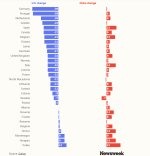
The survey, with a margin of error ranging from 3.4 to 5.4 percent, showed that Washington and Beijing now have similar approval ratings across NATO with median approval of Beijing’s leadership rising eight points to 22 percent, its largest single-year gain on record.

This is one percentage point higher than the 21 percent of the U.S. whose approval ratings dropped by 14 percent from the previous year.

Approval of U.S. leadership went down by at least 10 points in 18 NATO member states, but in only three of these—Spain, Italy and Belgium—did China see double-digit increases in approval, with little change in most other members.

China saw significant gains, including in Slovenia, Greece, Hungary, and Turkey, according to Gallup.

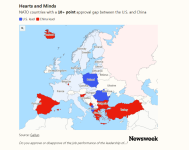
As Newsweek’s map shows, China has significantly higher ratings than the U.S. in eight member states of at least 10 points. These are Slovenia, Luxembourg, Turkey, Bulgaria, Spain, Montenegro, Iceland and Greece.

On the other hand, the U.S. leads China in three countries—Poland, Albania and Romania. The remaining 20 member states have the U.S. and China on roughly similar ratings.

Gallup said that public support for U.S. and Chinese leadership is once again on par, which is a return to what it was like under previous Republican administrations.

Hearts and Minds​

Percentage point change in approval of the U.S. and China between 2024 and 2025, in NATO countries
微信图片_2026-01-17_005747_114.png

U.S. Action In Venezuela And Iran

The opinion in NATO towards the U.S. comes amid tensions over whether Trump will order military strikes on Iran in response to a crackdown against protests that threaten its ruling regime, coming soon after the U.S. military captured Venezuela leader Nicolas Maduro.

Beijing will be keenly watching what the U.S. does next in Iran, with Craig Singleton, senior China fellow at the Foundation for Defense of Democracies (FDD) telling Newsweek that Trump-ordered strikes would likely be met with "rhetorical restraint in Beijing."

This is because two complex military operations in two regions just two weeks apart would reinforce a core assessment inside China’s system that U.S. military might remains unmatched, and Washington will use it when it judges the risks manageable, he said.

Beijing would likely respond with condemnations and calls for restraint, but the deeper takeaway would be that China’s partnerships offer little protection when the United States decides to act. "Venezuela made that clear regionally," Singleton said, and Iran would underscore it globally.

What People Are Saying​

Gallup survey: "Although the U.S. and China have similar median approval ratings across NATO, China has significantly higher ratings than the U.S. in eight member states, whereas the U.S. leads China in three."

What Happens Next​

The opinion within NATO members could shift further following Trump’s latest pronouncements to acquire Greenland, in which he has not ruled out military force, a move which Denmark has warned would spell the end of the alliance.

 
Because you literally have shit for brains being brainwashed by Zionist neoliberal propaganda. The West is literally ruled by pedophile genocidal monsters with government funds absconded by billionaire donors and the Zionist military industrial complex. While in China, over $10 trillion was spent on building the world's most advanced infrastructure, free healthcare, free universities and cutting edge technologies provided at a low cost for it's citizens to improve their lives.

You literally live in Bizarro world where reality is turned upside down but you are not aware of it because of how deeply indoctrinated and shallow you are.
 

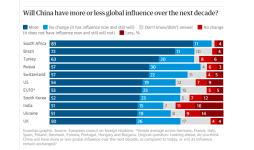
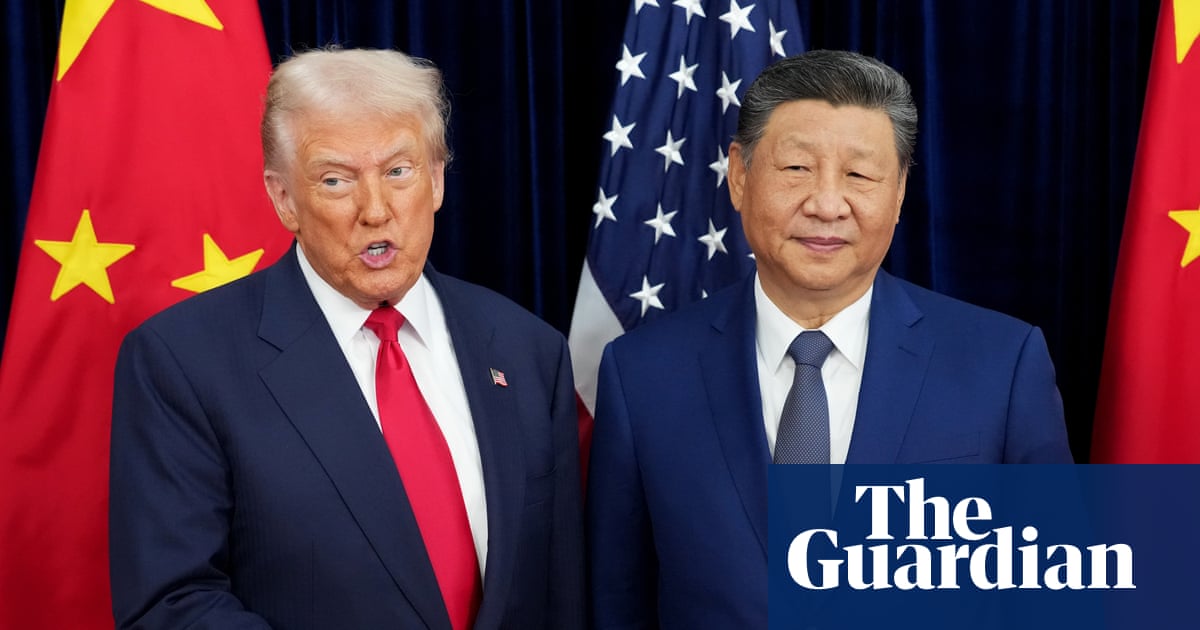
Trump is making China – not America – great again, global survey suggests​

US is less feared by its traditional adversaries, while its allies feel ever more distant, results show

Thu 15 Jan 2026 00.01 GMT

微信图片_2026-01-17_011717_295.png

 
Because you literally have shit for brains being brainwashed by Zionist neoliberal propaganda. The West is literally ruled by pedophile genocidal monsters with government funds absconded by billionaire donors and the Zionist military industrial complex. While in China, over $10 trillion was spent on building the world's most advanced infrastructure, free healthcare, free universities and cutting edge technologies provided at a low cost for it's citizens to improve their lives.

You literally live in Bizarro world where reality is turned upside down but you are not aware of it because of how deeply indoctrinated and shallow you are.
If China is so super,what are you doing in USA among the liberal zionists?
 

Users who are viewing this thread

Pakistan Defence Latest

Latest Posts

Back
Top